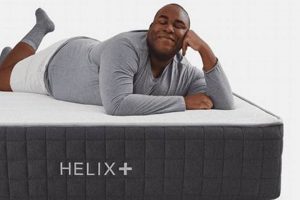
A California King mattress represents a specific bed size, longer and narrower than a standard King. Selecting the optimal choice involves considering factors like individual sleep preferences, body type, and budget. The decision hinges on finding a product that delivers the appropriate support, comfort, and durability for a restful night’s sleep. For example, individuals prioritizing legroom and those with smaller bedrooms may find this particular size advantageous.
The relevance of choosing appropriately stems from the direct impact on sleep quality and physical well-being. A well-suited sleeping surface can improve spinal alignment, reduce pressure points, and contribute to a more restorative sleep cycle. Historically, such mattresses have catered to taller individuals who found standard sizes inadequate. The market has expanded to offer various constructions and materials, addressing a diverse range of needs and preferences.
The following sections will delve into key aspects of selecting a suitable option, including material types, construction methods, support features, and considerations for specific sleeping positions. Evaluating these elements will assist in making an informed purchasing decision. Subsequent discussions will also cover factors such as warranties, sleep trials, and price points.
Guidance for Optimal Selection
The pursuit of a superior sleep experience necessitates careful consideration. Evaluating specific mattress features and aligning them with individual needs is crucial for achieving optimal comfort and support.
Tip 1: Prioritize Support Requirements: Assess individual body weight and sleeping position. Side sleepers often benefit from softer surfaces that contour to the body, while back and stomach sleepers may require firmer support to maintain spinal alignment.
Tip 2: Evaluate Material Composition: Explore various material types, including memory foam, latex, innerspring, and hybrid constructions. Memory foam excels in pressure relief, latex offers responsiveness and durability, innerspring provides traditional support, and hybrids combine features from different categories.
Tip 3: Consider Edge Support: Edge support refers to the firmness of the mattress perimeter. Robust edge support prevents sagging and allows for full utilization of the sleeping surface, particularly beneficial for couples or individuals who sleep near the edge.
Tip 4: Examine Temperature Regulation: Certain materials, such as gel-infused memory foam or latex, promote airflow and dissipate heat, preventing overheating during sleep. Individuals prone to night sweats should prioritize mattresses with enhanced cooling features.
Tip 5: Review Warranty and Sleep Trial Policies: A comprehensive warranty protects against manufacturing defects, while a sleep trial allows for risk-free testing of the mattress in a home environment. Thoroughly review the terms and conditions of both policies before purchasing.
Tip 6: Account for Budget Constraints: Mattress prices vary significantly depending on materials, construction, and brand reputation. Establish a realistic budget and compare options within that range, prioritizing quality and durability over solely focusing on the lowest price point.
Tip 7: Assess Motion Isolation: Motion isolation minimizes the transfer of movement across the mattress surface. This feature is particularly important for couples, as it prevents disturbances caused by one partner’s movements from affecting the other.
Selecting appropriately is paramount for achieving restful sleep and maintaining long-term physical well-being. By adhering to these guidelines, individuals can make an informed decision and invest in a mattress that aligns with their unique needs and preferences.
The subsequent section will address common misconceptions surrounding mattress selection and provide strategies for avoiding potential pitfalls.
1. Support

Support is a foundational element in the selection of a California King mattress. It directly influences spinal alignment, pressure point relief, and overall sleep quality, making it a critical determinant in identifying the most suitable option.
- Spinal Alignment
Maintaining correct spinal alignment is essential for preventing back pain and promoting restful sleep. A properly supportive mattress will conform to the body’s natural curves, preventing the spine from sagging or arching excessively. A too-soft surface can lead to spinal misalignment, while an overly firm surface may create pressure points. Choosing the appropriate level of firmness based on individual sleeping position and body weight is crucial for maintaining optimal spinal health. For instance, a side sleeper typically requires a softer mattress to allow the shoulder and hip to sink in, while a back sleeper generally needs a firmer surface to prevent the hips from sagging.
- Pressure Relief
Pressure points, commonly located at the shoulders, hips, and knees, can disrupt sleep by causing discomfort and restlessness. A supportive mattress will distribute body weight evenly, minimizing pressure on these sensitive areas. Materials like memory foam and latex are known for their pressure-relieving properties, contouring to the body and cushioning sensitive areas. Individuals with joint pain or arthritis may particularly benefit from mattresses designed to alleviate pressure points. Conversely, mattresses that lack adequate support can exacerbate pressure point discomfort, leading to fragmented sleep and pain.
- Core Stabilization
The mattress core, often constructed from innerspring coils or high-density foam, provides the primary support structure. The core’s firmness and responsiveness determine the overall stability and longevity of the mattress. A well-constructed core will prevent excessive sagging and ensure consistent support across the entire sleeping surface. Hybrid mattresses, which combine a coil core with layers of foam, are designed to offer a balance of support and comfort. The core’s ability to maintain its shape and prevent sinking is vital for long-term comfort and spinal alignment.
- Edge Support Enhancement
Edge support refers to the structural reinforcement around the perimeter of the mattress. Strong edge support prevents the edges from collapsing under weight, allowing individuals to utilize the full sleeping surface and providing a stable seating edge. This is particularly important for couples who share a bed or for individuals who tend to sleep near the edge of the mattress. Mattresses with weak edge support can lead to a feeling of rolling off the bed and may reduce the overall usable sleeping area. Reinforced edges contribute to the mattress’s overall durability and longevity.
The multifaceted nature of support underscores its importance in the selection process. Choosing a California King mattress that adequately addresses these support-related factors is essential for achieving restful sleep, maintaining spinal health, and ensuring long-term comfort. Individual ne
eds and preferences must be carefully considered to identify the mattress that provides the optimal level of support.
2. Comfort

The concept of comfort, when applied to a California King mattress, transcends mere subjective feeling; it is a complex interplay of support, pressure relief, and temperature regulation that directly impacts sleep quality and overall well-being. A surface designed to promote comfort minimizes tossing and turning, reduces the likelihood of pressure-induced aches, and facilitates a deeper, more restorative sleep cycle. The effect of an uncomfortable mattress, conversely, manifests in disrupted sleep, increased stress hormones, and potentially, the exacerbation of pre-existing musculoskeletal conditions. Real-world examples illustrate this point: individuals with fibromyalgia often require mattresses with specific pressure-relieving properties to manage pain, while those with sleep apnea benefit from surfaces that promote optimal spinal alignment for unrestricted breathing. Therefore, understanding the precise components that contribute to comfort is not merely a matter of preference but a practical necessity for selecting a sleeping surface conducive to health.
Achieving optimal comfort necessitates considering individual sleeping styles and body types. A side sleeper, for instance, requires a surface that allows the shoulders and hips to sink in, maintaining spinal alignment and preventing pressure buildup. Memory foam and latex materials are often favored for this purpose, as they conform to the body’s contours. Back sleepers, on the other hand, typically benefit from a firmer surface that provides adequate support and prevents the hips from sagging. Hybrid mattresses, combining innerspring coils with comfort layers, can offer a balance of support and pressure relief suitable for back sleepers. Stomach sleepers generally require a firmer surface to prevent excessive spinal curvature. The practical application of this understanding lies in the ability to assess one’s own sleep needs and select a mattress that directly addresses them, rather than relying solely on generalized recommendations or marketing claims.
In summary, comfort, within the context of selecting a California King mattress, is a multifaceted and critical consideration. It is intrinsically linked to support, spinal alignment, and pressure relief, directly influencing sleep quality and overall health. Understanding the individual components of comfort, considering personal sleep styles, and critically evaluating material properties are essential steps in selecting a sleeping surface that effectively promotes restorative rest. Challenges remain in objectively quantifying comfort, but a thorough understanding of individual needs, coupled with informed evaluation of mattress features, allows for a more precise and beneficial selection.
3. Durability

Durability, in the context of a California King mattress, signifies its capacity to maintain its original support, comfort, and structural integrity over an extended period of use. This attribute is paramount in determining the long-term value and overall satisfaction derived from the investment. The selection of a durable mattress mitigates the need for frequent replacements, thereby reducing long-term costs and environmental impact.
- Material Resilience
The inherent resilience of the materials used directly impacts the mattresss lifespan. High-density foams, robust innerspring systems, and tightly woven fabrics contribute to enhanced resistance against sagging, indentation, and wear. Lower-quality materials, conversely, degrade more rapidly, leading to diminished support and comfort over time. For example, a mattress incorporating high-density memory foam is likely to exhibit greater resistance to body impressions compared to one constructed with low-density foam. The implications extend to the overall sleep experience; a material that maintains its form ensures consistent support and pressure relief throughout the mattresss usable life.
- Construction Integrity
The method of construction significantly influences a mattresss ability to withstand stress and maintain its shape. Reinforced seams, robust edge support systems, and a well-engineered internal structure contribute to enhanced durability. Mattresses constructed with meticulous attention to detail and adherence to stringent quality control standards are less prone to premature failure. Examples include mattresses with reinforced coil systems that minimize motion transfer and prevent sagging. The consequences of inadequate construction manifest as uneven support, premature wear, and reduced overall comfort.
- Warranty Coverage
Warranty coverage serves as an indicator of a manufacturer’s confidence in its product’s durability. A comprehensive warranty, extending over a significant period, provides assurance against manufacturing defects and premature degradation. The terms and conditions of the warranty, including the covered issues and the required procedures for claims, should be carefully scrutinized. While a long warranty does not guarantee exceptional durability, it offers a degree of protection against unexpected failures. However, it is essential to note that warranties typically do not cover normal wear and tear. Its inclusion of evidence and assurance of the products lifetime expectations.
- Resistance to Degradation
Exposure to environmental factors, such as humidity, temperature fluctuations, and improper handling, can accelerate the degradation of a mattress. Materials with inherent resistance to these factors contribute to enhanced durability. For example, latex mattresses exhibit natural resistance to mold and mildew, making them well-suited for humid environments. Similarly, mattresses with breathable covers can mitigate the accumulation of moisture, reducing the risk of material breakdown. The ability to withstand environmental stressors directly impacts the mattress’s lifespan and overall performance.
These elements collectively determine the durability of a California King mattress. By considering these facets, one can make an informed decision, selecting a product that offers long-term value and sustained sleep quality. The implications of choosing a durable product extend beyond mere cost savings, encompassing improved sleep hygiene, reduced environmental impact, and enhanced overall well-being.
4. Materials
The selection of materials is a foundational determinant of a California King mattress’s overall performance, influencing factors such as support, comfort, durability, and temperature regulation. Understanding the properties of various materials is, therefore, crucial for identifying an option that aligns with individual needs and preferences. The composition of a mattress directly impacts its ability to provide adequate spinal alignment, pressure relief, and a comfortable sleep environment.
- Foam Density and Type
Foam, particularly memory foam and polyurethane foam, is a common component in mattresses, contributing to pressure relief and contouring. Higher density foams generally offer greater support and durability compared to lower density alternatives. Memory foam, known for its
viscoelastic properties, conforms to the body, distributing weight and reducing pressure points. Polyurethane foam provides a more responsive feel, offering cushioning and support. The specific density and type of foam utilized significantly impacts the mattress’s overall feel and longevity. For example, a high-density memory foam layer can enhance pressure relief and support, while a low-density foam layer may compress quickly, leading to sagging and reduced comfort. - Innerspring Coil Systems
Innerspring mattresses rely on coil systems to provide support and stability. The gauge and configuration of the coils influence the mattress’s firmness and responsiveness. Individually wrapped coils, also known as pocketed coils, minimize motion transfer, reducing disturbances caused by a partner’s movements. Continuous coil systems offer a more uniform support structure. The type and arrangement of the coils determine the mattress’s overall support level and ability to isolate motion. A higher coil count generally indicates greater support and durability. The coil system interacts with the comfort layers to provide a balanced sleep experience.
- Latex Composition
Latex, derived from rubber trees, is a resilient and durable material that offers both support and comfort. Dunlop latex, produced through a continuous pouring process, tends to be denser and firmer than Talalay latex, which undergoes a vacuum molding process, resulting in a softer feel. Latex is naturally hypoallergenic and resistant to dust mites, making it a suitable option for individuals with allergies. The type of latex used influences the mattress’s firmness, responsiveness, and overall feel. A mattress constructed with natural latex offers a sustainable and durable alternative to synthetic foams, providing both comfort and support. The breathable nature of latex promotes airflow, contributing to temperature regulation.
- Cover Fabrics and Quilting
The fabric used for the mattress cover plays a role in breathability, moisture management, and overall comfort. Natural fibers, such as cotton and wool, are breathable and absorbent, promoting airflow and regulating temperature. Synthetic fabrics, such as polyester, may offer enhanced durability and stain resistance. The quilting pattern and fill materials in the cover can influence the mattress’s surface feel and cushioning. A quilted cover with natural fibers enhances breathability and comfort, while a tightly woven synthetic cover offers greater durability. The cover material interacts directly with the sleeper’s skin, influencing the overall sleep experience.
In conclusion, the selection of materials profoundly influences a California King mattress’s performance and suitability for individual needs. Each material contributes unique properties that impact support, comfort, durability, and temperature regulation. A thorough understanding of these material characteristics empowers individuals to make informed purchasing decisions, selecting a mattress that aligns with their specific requirements and preferences.
5. Size

The dimensions of a California King mattress are a critical consideration in the selection process, directly influencing comfort, space utilization, and suitability for individual needs. Its unique proportions longer and narrower than a standard King present both advantages and limitations that must be carefully evaluated.
- Room Dimensions and Layout
The size of the bedroom dictates the feasibility of accommodating a California King mattress. Smaller bedrooms may feel cramped with such a large mattress, hindering maneuverability and affecting the overall aesthetic. Larger rooms, conversely, can comfortably accommodate the dimensions, allowing for ample space around the bed and the integration of other furniture. Careful measurement of the room and consideration of furniture placement are essential before making a purchase. An oversized mattress in a small room can create a claustrophobic environment, while a smaller mattress in a large room may appear disproportionate.
- Individual Height and Sleeping Style
For taller individuals, the extra length of a California King mattress provides crucial legroom, preventing feet from hanging off the end of the bed. This is particularly relevant for individuals exceeding six feet in height. Sleeping style also influences size considerations. Those who sprawl out or share the bed with a partner may benefit from the increased surface area. Conversely, individuals who sleep in a more compact position or reside in smaller spaces may find a standard Queen or King size sufficient.
- Bedding and Accessories Compatibility
The distinctive dimensions of a California King mattress require specific bedding sizes. Standard King sheets and bed frames are incompatible, necessitating the purchase of California King-sized accessories. This adds to the overall cost and limits the availability of bedding options. Failure to utilize correctly sized bedding can result in ill-fitting sheets, discomfort, and premature wear of the mattress. Before acquiring a California King, one must ensure the availability and affordability of appropriately sized bedding and accessories.
- Transportation and Maneuverability
The larger size of a California King mattress poses logistical challenges during transportation and setup. Moving the mattress into the bedroom may require wider doorways and staircases. Maneuvering the mattress within the room can also be difficult, particularly in confined spaces. Consideration should be given to the ease of transporting and setting up the mattress before making a purchase. Inadequate planning can result in damage to the mattress or the surrounding environment. Professional movers may be required to handle the larger dimensions safely.
The size of a mattress is integral to the overall sleep experience and must be considered in conjunction with other factors, such as support, comfort, and material composition. A California King mattress, with its unique dimensions, offers advantages for certain individuals and spatial contexts but also presents limitations. Thorough assessment of these factors ensures a well-informed decision, optimizing both comfort and practicality.
6. Price

The price of a California King mattress represents a significant factor in the purchasing decision, acting as both a constraint and a reflection of the materials, construction, and technology incorporated into the product. Higher-priced mattresses often correlate with the use of premium materials, such as high-density memory foam, natural latex, or advanced innerspring systems. These materials contribute to enhanced support, durability, and comfort, potentially justifying the increased cost. Conversely, lower-priced options may utilize less expensive materials, potentially compromising long-term performance and longevity. For instance, a mattress featuring individually wrapped coils and multiple layers of high-density foam will typically command a higher price than one with a basic innerspring system and minimal comfort layers. The importance of price lies in its direct impact on the value proposition, balancing initial investment with expected lifespan and performance. Selecting a mattress solely based on the lowest price point may result in compromised sleep quality and premature replacement, ultimately negating any initial cost savings.
The relationship between price and perceived value is not always linear. Marketing strategies, brand reputation, and retail markups can influence the final price, potentially obscuring the true cost-to-performance ratio. Therefore, a comprehensive assessment requires evaluating the specific features and materials of the mattress, comparing specifications across different brands and price points. Furthermore, considering warranties and sleep trial periods can mitigate the risk associated with purchasing a higher-priced mattress, offering a safety net in case the product fails to meet expectations. An example is a memory foam mattress, sold by multiple retailers at various prices. By comparing the foam density, thickness of the comfort layers, and warranty terms, consumers can determine whether the price difference reflects genuine value or simply brand inflation. Sales and discounts can also play a significant role, allowing consumers to acquire higher-quality mattresses at more accessible prices. The real-world implication of understanding price as a component is to encourage informed decision-making, shifting the focus from mere cost to long-term value.
In conclusion, while price serves as a crucial consideration in selecting a California King mattress, it should not be the sole determining factor. The integration of price with an evaluation of materials, construction, warranty, and sleep trial policies provides a more holistic assessment of the product’s value. The challenge remains in navigating the complex landscape of mattress pricing, where perceived value may not always align with actual performance. A pragmatic approach involves conducting thorough research, comparing specifications, and considering individual sleep needs to ensure that the chosen mattress offers a balance of quality, comfort, and affordability. This comprehensive understanding contributes to a more successful and satisfying purchase.
Frequently Asked Questions
The following questions address common inquiries and concerns regarding the selection and maintenance of California King mattresses. These answers aim to provide clarity and facilitate informed decision-making.
Question 1: What distinguishes a California King mattress from a standard King mattress?
A California King mattress is longer and narrower than a standard King. The dimensions typically measure 72 inches wide by 84 inches long, whereas a standard King measures 76 inches wide by 80 inches long. The California King is often preferred by taller individuals seeking additional legroom.
Question 2: What factors should be considered when determining the ideal firmness level?
Body weight, sleeping position, and personal preference influence the optimal firmness level. Side sleepers generally benefit from a softer surface to accommodate shoulder and hip pressure points. Back and stomach sleepers often require a firmer surface to maintain spinal alignment.
Question 3: How often should a California King mattress be rotated or flipped?
Rotating a mattress every three to six months can promote even wear and extend its lifespan. Flipping, if the mattress is designed to be flipped (some are not), can also contribute to more uniform usage and prevent localized sagging.
Question 4: What types of bed frames are compatible with a California King mattress?
Specific bed frames designed to accommodate the 72×84 inch dimensions are required. Standard King bed frames are incompatible and may lead to inadequate support or damage to the mattress.
Question 5: How can the lifespan of a California King mattress be maximized?
Using a mattress protector, rotating the mattress regularly, providing adequate support with a compatible bed frame, and avoiding excessive weight or pressure on specific areas can contribute to increased longevity.
Question 6: What are common signs that a California King mattress needs replacement?
Sagging, visible wear and tear, persistent discomfort, increased back pain, and disrupted sleep are indicators that a replacement mattress may be necessary. A significant decline in support or comfort should prompt consideration of a new mattress.
These FAQs represent a condensed overview of important considerations related to California King mattresses. Further research and evaluation are encouraged to ensure a suitable choice.
The subsequent section will address potential challenges associated with California King mattress ownership and provide strategies for overcoming them.
Concluding Assessment
The preceding analysis has explored salient aspects of the California King mattress, encompassing support, comfort, durability, materials, size, and price. Identifying the best cal king mattress necessitates a meticulous evaluation of individual needs and a critical assessment of product specifications. A failure to consider these factors may result in a suboptimal sleep experience and premature degradation of the investment.
The selection of a suitable mattress is not merely a matter of preference but a fundamental component of overall well-being. Therefore, a diligent and informed approach is paramount. Further research and consultation with qualified professionals are encouraged to facilitate a purchase that aligns with long-term health and financial considerations.
![Top Best Affordable Mattress Companies of [Year] Reviewed | Organic & Natural Mattress Buyer’s Guide: Non-Toxic Sleep Solutions](https://mattressworldpa.com/wp-content/uploads/2025/07/th-7840-300x200.jpg "Top Best Affordable Mattress Companies of [Year] Reviewed Organic & Natural Mattress Buyer’s Guide: Non-Toxic Sleep Solutions")

![Top-Rated: Best Firm Innerspring Mattress [Guide & Reviews] | Organic & Natural Mattress Buyer’s Guide: Non-Toxic Sleep Solutions](https://mattressworldpa.com/wp-content/uploads/2025/07/th-7838-300x200.jpg "Top-Rated: Best Firm Innerspring Mattress [Guide & Reviews] Organic & Natural Mattress Buyer’s Guide: Non-Toxic Sleep Solutions")

![Top Spots: Best Place to Buy Twin Mattress [Guide] | Organic & Natural Mattress Buyer’s Guide: Non-Toxic Sleep Solutions](https://mattressworldpa.com/wp-content/uploads/2025/07/th-7836-300x200.jpg "Top Spots: Best Place to Buy Twin Mattress [Guide] Organic & Natural Mattress Buyer’s Guide: Non-Toxic Sleep Solutions")