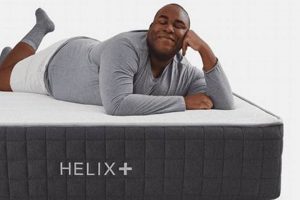
A sleep surface manufactured primarily with foam, and possessing high consumer satisfaction based on aggregate reviews and ratings, represents a notable segment within the bedding market. These products are evaluated across multiple criteria, including comfort, support, durability, and value, with the aggregated evaluations determining their position relative to competitors. An example would be a memory foam mattress receiving consistently high marks for pressure relief and motion isolation across numerous customer feedback channels.
The significance of these highly regarded products lies in their capacity to improve sleep quality, which in turn impacts overall health and well-being. The benefits extend beyond mere comfort, often encompassing enhanced spinal alignment, reduced pressure points, and minimized partner disturbance. Historically, advancements in foam technology have driven the evolution of these mattresses, leading to improved materials and construction methods, ultimately enhancing the user experience.
The following sections will delve into the different types of foam used in mattress construction, explore the critical factors influencing consumer ratings, and provide a framework for evaluating various options available on the market. This analysis will further discuss the impact of sleep position and body type on optimal mattress selection, alongside providing considerations for budget and desired features.
Tips Regarding Highly Ranked Foam Bedding
Selecting a foam mattress that consistently receives top evaluations requires careful consideration of several key factors. These tips provide guidance on navigating the market and identifying a product that aligns with individual needs and preferences.
Tip 1: Understand Foam Density. Density significantly impacts the durability and support of the mattress. Higher density foams generally offer greater longevity and resistance to compression. For instance, a mattress with a base layer of 2.0 PCF (pounds per cubic foot) density foam is likely to outlast one with a 1.5 PCF density base.
Tip 2: Evaluate Indentation Load Deflection (ILD). ILD, also known as firmness, measures the force required to compress the foam. Individuals should consider their preferred firmness level, which is often dictated by sleep position and body weight. A side sleeper, for example, may benefit from a lower ILD rating to allow for greater pressure relief on the hips and shoulders.
Tip 3: Examine Construction Quality. Construction quality directly impacts the mattress’s lifespan and performance. Features such as reinforced edges, durable stitching, and high-quality cover materials contribute to a more resilient product. Close inspection of these elements can reveal potential weaknesses.
Tip 4: Research Third-Party Certifications. Certifications such as CertiPUR-US or OEKO-TEX Standard 100 indicate that the foam has been tested for harmful substances and emissions. Prioritizing mattresses with these certifications promotes a healthier sleep environment.
Tip 5: Scrutinize Warranty Terms. A comprehensive warranty protects against defects in materials and workmanship. Thoroughly review the warranty terms and conditions, paying attention to coverage duration, exclusions, and claim procedures. A longer warranty generally reflects the manufacturer’s confidence in the product’s durability.
Tip 6: Consider Motion Isolation Capabilities. Motion isolation is crucial for individuals who share a bed. Foam mattresses excel at absorbing movement, minimizing partner disturbance. Reading reviews and comparing specifications can help determine the effectiveness of motion isolation.
Tip 7: Assess Temperature Regulation. Foam can retain heat, leading to discomfort for some sleepers. Explore mattresses with cooling technologies, such as gel-infused foam or breathable covers, to mitigate heat buildup. Researching and comparing these features is beneficial.
Prioritizing these considerations ensures a more informed purchase decision, maximizing the potential for a comfortable and supportive sleep experience. Ultimately, selecting a suitable foam mattress involves balancing individual needs with available features and construction qualities.
The next section will present a comparative analysis of several popular foam mattress models, further illustrating the application of these tips in practical scenarios.
1. Comfort

Comfort constitutes a primary driver influencing consumer evaluations of foam mattresses and is intrinsically linked to the determination of products earning the designation of “best rated.” The subjective experience of comfort arises from the interaction between the mattress surface and the sleeper’s body, dictating pressure distribution, spinal alignment, and perceived relaxation. Inadequate comfort leads to restless sleep, discomfort, and potential musculoskeletal issues, directly impacting user satisfaction. For instance, a mattress lacking sufficient contouring in the shoulder region for a side sleeper may create pressure points, resulting in discomfort and a lower rating.
The importance of comfort extends beyond immediate gratification. A comfortable mattress facilitates restorative sleep, contributing to improved cognitive function, mood regulation, and physical well-being. This connection between comfort and health underscores its significance in the overall assessment of a mattress’s value. Manufacturers strive to engineer foam mattresses that cater to diverse sleep preferences and body types, incorporating features such as zoned support systems, varying foam densities, and specialized surface treatments to enhance comfort levels. The success of these efforts is reflected in customer ratings and reviews, often emphasizing the degree of pressure relief and overall sleep quality achieved.
Ultimately, the pursuit of a highly rated foam mattress hinges on achieving a high degree of comfort tailored to individual needs. While other factors such as support and durability contribute to the overall evaluation, comfort remains a central determinant, driving purchasing decisions and shaping consumer perceptions of product quality. Understanding the nuances of comfort, its relationship to sleep quality, and its impact on overall well-being is crucial for both consumers seeking an optimal sleep solution and manufacturers aiming to deliver products that meet evolving market demands. Challenges persist in quantifying and standardizing the subjective experience of comfort, highlighting the need for continued research and innovation in mattress design and materials science.
2. Support
Support constitutes a foundational pillar in the assessment of foam mattresses, directly correlating with spinal alignment, pressure distribution, and overall sleep quality. Its efficacy significantly influences whether a mattress earns the designation of “best rated,” shaping consumer perceptions and impacti
ng long-term user satisfaction.
- Spinal Alignment and Posture
Maintaining proper spinal alignment throughout the sleep cycle is paramount. Adequate support ensures the spine maintains its natural curvature, preventing muscle strain and reducing the likelihood of back pain. A foam mattress lacking sufficient support may allow the hips or shoulders to sink excessively, leading to misalignment and discomfort. For example, a side sleeper requires a mattress that conforms to their body while preventing excessive sinking, thereby maintaining spinal neutrality.
- Pressure Distribution
Effective pressure distribution minimizes concentrated stress on specific areas of the body, such as the hips, shoulders, and knees. By evenly distributing weight across the mattress surface, a supportive foam mattress reduces the risk of pressure sores and improves blood circulation. Consider a mattress with zoned support, which features varying levels of firmness in different areas to accommodate the unique pressure points of the body.
- Edge Support and Stability
Edge support refers to the firmness and stability of the mattress perimeter. Adequate edge support prevents the feeling of rolling off the bed and maximizes the usable sleep surface. Mattresses with reinforced edges offer enhanced stability, making them suitable for individuals who sleep near the edge or frequently sit on the side of the bed. Weak edge support can diminish overall comfort and usability.
- Long-Term Durability and Sag Resistance
A supportive mattress retains its shape and firmness over time, resisting sagging and maintaining its structural integrity. Durable materials and robust construction contribute to long-term support, ensuring consistent performance and preventing premature degradation. Mattresses with high-density foam layers are generally more resistant to sagging and provide sustained support throughout their lifespan.
In summary, the level and quality of support provided by a foam mattress directly determine its ability to promote healthy sleep posture, minimize pressure points, and maintain its structural integrity over time. These factors are crucial in the evaluation process and significantly contribute to whether a foam mattress is considered among the “best rated” by consumers and industry experts alike. The presence of these elements, combined with material science innovations, are the core differentiators for mattresses across a range of budgets and performance claims.
3. Durability

Durability serves as a critical determinant in the long-term consumer assessment of foam mattresses, directly influencing whether a product achieves and maintains a designation as “best rated.” The fundamental connection lies in the cause-and-effect relationship between the mattress’s ability to withstand prolonged use and its sustained comfort and support performance. A highly rated mattress, initially praised for its pressure relief and spinal alignment, will experience a decline in consumer satisfaction if its materials degrade prematurely, leading to sagging, indentations, or a general loss of structural integrity. This degradation negates the initial benefits, impacting sleep quality and potentially contributing to discomfort or pain. For example, a memory foam mattress employing low-density foam may initially provide exceptional contouring but, over a relatively short period, develop permanent body impressions, diminishing its support and comfort levels, thereby forfeiting its “best rated” status.
The practical significance of understanding the durability aspect extends to both consumers and manufacturers. For consumers, recognizing the factors contributing to a mattress’s longevity empowers informed purchasing decisions. This includes scrutinizing foam density, construction techniques, and warranty terms. Higher density foams generally exhibit greater resistance to compression and degradation. Reinforced edge support and durable cover materials also contribute to overall product lifespan. Warranty coverage provides a degree of protection against premature failure, although it is essential to understand the specific terms and conditions. Manufacturers, conversely, must prioritize durability in their design and material selection processes to maintain a competitive edge and ensure long-term customer loyalty. This may involve investing in higher-quality materials, employing advanced construction techniques, and conducting rigorous testing to assess product performance over time. Products that consistently demonstrate superior durability establish a positive reputation, driving sales and solidifying their position in the market.
In conclusion, durability is inextricably linked to the concept of a “best rated foam mattress.” While initial comfort and support are primary considerations, the long-term ability of the mattress to maintain these qualities is essential for sustained consumer satisfaction. Challenges remain in accurately predicting mattress lifespan and quantifying the impact of various usage patterns on material degradation. However, a focus on high-quality materials, robust construction, and comprehensive testing provides a pathway to creating foam mattresses that not only excel in initial performance but also deliver long-term value, contributing to their enduring designation as “best rated” within the bedding industry.
4. Value

Value, in the context of foam mattresses, transcends simple price comparisons and encompasses a multifaceted assessment of benefits relative to cost. This element plays a crucial role in determining whether a product earns a “best rated” designation. The inherent link lies in the consumer’s perception of whether the mattress’s performance, features, and longevity justify the investment. A low-priced mattress that quickly loses its shape or provides inadequate support, despite its initial affordability, represents poor value. Conversely, a more expensive mattress that delivers exceptional comfort, durability, and support over an extended period is perceived as offering superior value, potentially contributing to a “best rated” assessment. For example, a memory foam mattress with advanced cooling technology and a 10-year warranty, while priced higher than competing models, might achieve a “best rated” status due to its demonstrated ability to enhance sleep quality and maintain its performance characteristics over time, thus justifying the initial cost.
The practical significance of understanding value stems from its direct impact on consumer satisfaction and repeat purchases. Consumers seeking a “best rated foam mattress” often prioritize long-term benefits over short-term cost savings. They analyze factors such as material quality, construction techniques, and warranty coverage to predict the mattress’s lifespan and its ability to consistently deliver on its promises. Mattress manufacturers, therefore, must focus on optimizing the value proposition of their products by balancing performance, features, and price. This requires careful consideration of material sourcing, manufacturing efficiency, and marketing strategies. Furthermore, transparency regarding product specifications and performance data is crucial for building consumer trust and reinforcing the perception of value. For instance, providing detailed information about foam density, ILD ratings, and third-party certifications empowers consumers to make informed purchasing decisions and accurately assess the value offered b
y a particular mattress model. The inclusion of features such as enhanced breathability, zoned support systems, or antimicrobial treatments can also contribute to a stronger value proposition, provided these features are effectively communicated and demonstrably improve the sleep experience.
In summary, value is an indispensable component in the determination of a “best rated foam mattress.” It represents the culmination of product attributes, performance characteristics, and pricing considerations. Achieving a high-value rating requires a strategic approach that prioritizes long-term benefits, transparent communication, and a commitment to delivering exceptional sleep experiences. The challenges involve accurately quantifying the subjective aspects of comfort and support and effectively communicating the long-term value proposition to consumers. By focusing on these aspects, both consumers and manufacturers can navigate the complexities of the mattress market and identify products that truly represent exceptional value for the investment.
5. Materials
The composition of materials significantly dictates a foam mattress’s performance characteristics and its potential to be considered among the “best rated.” The intrinsic connection stems from the materials’ direct influence on comfort, support, durability, and temperature regulation. Inferior materials often lead to premature degradation, inadequate support, and discomfort, directly impacting consumer satisfaction and negatively affecting rating scores. For instance, a mattress constructed with low-density polyurethane foam may exhibit initial comfort but will likely compress and lose its supportive properties within a short timeframe, resulting in body impressions and compromised spinal alignment. Conversely, a mattress utilizing high-density memory foam, natural latex, or advanced gel-infused foams demonstrably enhances comfort, durability, and temperature regulation, contributing to higher consumer ratings and increased market competitiveness.
Understanding the importance of material selection holds practical significance for both consumers and manufacturers. Consumers benefit by scrutinizing material specifications, seeking out certifications such as CertiPUR-US, and comparing material densities and composition. This enables informed purchase decisions based on anticipated performance and longevity. Manufacturers, on the other hand, must prioritize material quality and innovation to differentiate their products and meet evolving consumer expectations. The integration of materials like plant-based foams, phase-change materials, or open-cell foam structures directly addresses concerns about off-gassing, heat retention, and overall environmental impact. Consider a mattress incorporating a layer of copper-infused memory foam; this material not only enhances pressure relief but also provides antimicrobial properties and aids in temperature regulation, resulting in a more hygienic and comfortable sleep environment.
In conclusion, materials constitute a critical foundation for a “best rated foam mattress.” The selection and integration of high-quality, performance-driven materials directly influence comfort, support, durability, and overall consumer satisfaction. While challenges exist in accurately assessing material performance and communicating technical specifications to consumers, a focus on material innovation and transparency remains essential for manufacturers seeking to achieve and maintain a “best rated” status within the competitive mattress market. The continued advancement in material science promises to further enhance the performance and longevity of foam mattresses, solidifying the connection between materials and overall product rating.
6. Temperature
Temperature regulation within a foam mattress exerts a considerable influence on sleep quality and, consequently, impacts its potential to achieve a “best rated” designation. Thermal comfort is paramount for undisturbed sleep, with deviations from the optimal temperature range leading to restlessness and reduced sleep efficiency. Therefore, a mattress’s capacity to effectively manage heat retention and dissipation directly correlates with consumer satisfaction and overall product assessment.
- Foam Density and Airflow
Foam density directly affects airflow and heat retention. High-density foams, while providing enhanced support and durability, tend to restrict airflow, leading to heat buildup. Conversely, lower density foams allow for greater air circulation but may compromise support. The ideal “best rated foam mattress” strikes a balance, often incorporating specialized open-cell structures or convoluted designs to promote airflow while maintaining adequate support. Examples include mattresses with strategically placed ventilation channels or those utilizing foams with inherently lower densities.
- Material Composition and Thermal Conductivity
The thermal conductivity of the materials used in a foam mattress significantly influences its temperature regulation capabilities. Memory foam, while known for its conforming properties, can trap heat due to its closed-cell structure. The integration of materials such as gel-infused foams, copper particles, or phase-change materials aims to enhance thermal conductivity, drawing heat away from the sleeper’s body. A “best rated foam mattress” often incorporates these materials to mitigate heat retention and create a more comfortable sleep environment. Real-world applications include mattresses specifically marketed for hot sleepers, emphasizing the cooling properties of their material composition.
- Cover Fabric and Breathability
The mattress cover plays a crucial role in regulating temperature and wicking away moisture. Breathable fabrics, such as cotton, bamboo, or specialized performance textiles, allow for air circulation and facilitate the evaporation of perspiration. Covers with moisture-wicking properties contribute to a cooler and drier sleep surface. A “best rated foam mattress” typically features a cover designed to enhance breathability and temperature regulation, often constructed from natural fibers or advanced synthetic materials. For instance, covers utilizing Tencel or Outlast technology are commonly found in mattresses targeting consumers concerned about overheating.
- Construction and Layering Techniques
Mattress construction and layering techniques significantly impact temperature regulation. The strategic placement of different foam layers, combined with ventilation channels and breathable materials, can optimize airflow and minimize heat buildup. A “best rated foam mattress” frequently employs a multi-layered construction, incorporating a combination of supportive base foams, temperature-regulating comfort layers, and breathable cover materials. Examples include mattresses with a top layer of gel-infused memory foam over a convoluted layer of high-density support foam, designed to enhance both comfort and airflow.
These factors collectively contribute to a foam mattress’s ability to regulate temperature and provide a comfortable sleep environment. The effectiveness of these strategies directly impacts consumer satisfaction and influences whether a mattress achieves a “best rated” designation. Continual innovation in materials and construction techniques is essential for addressing concerns about heat retention and optimizing the thermal performance of foam mattresses.
Frequen
tly Asked Questions
This section addresses common inquiries regarding highly rated foam mattresses, providing factual information to aid in informed purchasing decisions.
Question 1: What distinguishes a “best rated” foam mattress from other foam mattresses?
A “best rated” foam mattress typically demonstrates superior performance across multiple criteria, including comfort, support, durability, and value. These mattresses consistently receive positive reviews and high ratings from a significant number of users, indicating a high level of overall satisfaction.
Question 2: How are mattress ratings determined, and what factors should be considered?
Mattress ratings are usually determined by aggregating customer reviews, expert evaluations, and objective testing data. Factors to consider include the source of the ratings, the number of reviews, and the specific criteria used in the evaluation. Independent review sites and verified customer feedback provide valuable insights.
Question 3: Are “best rated” foam mattresses suitable for all sleep positions?
While many “best rated” foam mattresses cater to a variety of sleep positions, individual preferences and body types should be considered. Side sleepers often benefit from mattresses with enhanced pressure relief, while back and stomach sleepers may require firmer support to maintain spinal alignment.
Question 4: What is the expected lifespan of a “best rated” foam mattress, and how can its longevity be maximized?
The lifespan of a highly rated foam mattress typically ranges from seven to ten years, depending on factors such as material quality, usage patterns, and maintenance. Regular rotation, the use of a mattress protector, and proper support from the bed frame can help maximize longevity.
Question 5: Do “best rated” foam mattresses tend to retain heat, and what features mitigate this issue?
Traditional memory foam can retain heat. However, many “best rated” foam mattresses incorporate cooling technologies such as gel-infused foam, open-cell structures, and breathable covers to mitigate heat retention and improve temperature regulation.
Question 6: Is a higher price point always indicative of a “best rated” foam mattress?
While a higher price point can reflect superior materials and construction, it does not guarantee a “best rated” designation. Value should be assessed by considering the balance between price and performance, evaluating features, durability, and warranty coverage.
Careful consideration of these FAQs enables a more informed decision when selecting a foam mattress. Remember to weigh the different factors applicable to particular needs.
The subsequent section will present guidance on proper mattress maintenance and care.
In Summary
The preceding exploration elucidates that the designation of a “best rated foam mattress” is earned through a confluence of factors. These include optimized comfort and support characteristics, material durability, value relative to cost, and effective temperature regulation. These elements, when synthesized successfully, result in heightened consumer satisfaction and positive market evaluations. The pursuit of this designation necessitates a commitment to quality in material selection, construction techniques, and ongoing technological innovation.
The information presented provides a framework for discerning high-performing foam mattresses amidst a competitive market. Informed consumers armed with this knowledge are better equipped to make purchasing decisions aligned with their individual needs and preferences. Continued research and development in sleep technology are essential for advancing the performance and longevity of foam mattresses, ensuring sustained improvements in sleep quality and overall well-being.
![Top Best Affordable Mattress Companies of [Year] Reviewed | Organic & Natural Mattress Buyer’s Guide: Non-Toxic Sleep Solutions](https://mattressworldpa.com/wp-content/uploads/2025/07/th-7840-300x200.jpg "Top Best Affordable Mattress Companies of [Year] Reviewed Organic & Natural Mattress Buyer’s Guide: Non-Toxic Sleep Solutions")
![Top-Rated: Best Firm Innerspring Mattress [Guide & Reviews] | Organic & Natural Mattress Buyer’s Guide: Non-Toxic Sleep Solutions](https://mattressworldpa.com/wp-content/uploads/2025/07/th-7838-300x200.jpg "Top-Rated: Best Firm Innerspring Mattress [Guide & Reviews] Organic & Natural Mattress Buyer’s Guide: Non-Toxic Sleep Solutions")

![Top Spots: Best Place to Buy Twin Mattress [Guide] | Organic & Natural Mattress Buyer’s Guide: Non-Toxic Sleep Solutions](https://mattressworldpa.com/wp-content/uploads/2025/07/th-7836-300x200.jpg "Top Spots: Best Place to Buy Twin Mattress [Guide] Organic & Natural Mattress Buyer’s Guide: Non-Toxic Sleep Solutions")