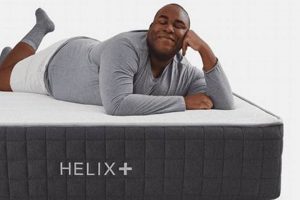
The assessment of a sleep surface’s appropriateness often involves evaluating its degree of resistance to compression. This characteristic is a key factor for individuals with specific orthopedic requirements or preferences for sleep support. A surface exhibiting minimal give, or substantial unyieldingness, aims to provide a consistent and stable plane for recumbency.
Such a selection can offer several advantages. For individuals experiencing lower back discomfort, a more supportive sleep environment can promote proper spinal alignment, potentially mitigating pain. Historically, firmer sleeping arrangements were recommended to prevent excessive sinking and maintain a more neutral posture throughout the night, although individual needs vary significantly.
Subsequent sections will delve into detailed comparisons of mattress materials, construction techniques that contribute to varying degrees of firmness, and considerations for specific physical conditions when choosing an optimal sleep surface. Understanding these factors is crucial for making an informed decision that supports restful sleep and overall well-being.
Guidance on Selecting a Supportive Sleep Surface
Optimizing sleep quality often begins with selecting a sleep surface that caters to individual physiological needs. The following recommendations provide guidance when prioritizing substantial support in a mattress.
Tip 1: Prioritize Spinal Alignment: The primary function of a supportive mattress is to maintain natural spinal curvature during sleep. Evaluate whether the chosen mattress prevents excessive sinking of the hips or shoulders, which can lead to discomfort.
Tip 2: Consider Body Weight: Individuals with higher body mass generally require a more substantial sleep surface to prevent bottoming out and ensure adequate support. Lower weight individuals may find such mattresses too unyielding.
Tip 3: Evaluate Sleeping Position: Stomach sleepers often benefit from a less yielding surface to prevent excessive arching of the back. Side sleepers should ensure adequate shoulder and hip support without excessive pressure points.
Tip 4: Research Core Construction: Mattresses with high-density foam or innerspring cores typically offer more significant support compared to softer, low-density materials.
Tip 5: Assess Layer Composition: While the core provides the primary support, the comfort layers should complement this. Thinner, denser comfort layers atop a firm core often yield the desired balance.
Tip 6: Conduct Thorough Testing: Whenever possible, test the mattress in a sleep environment similar to one’s own. Spend a sufficient amount of time lying in various sleep positions to evaluate its comfort and support.
Tip 7: Review Warranty and Return Policies: A comprehensive warranty and a generous return policy are crucial. These provide a safety net should the chosen mattress prove unsuitable after an extended trial period.
Adherence to these guidelines can substantially improve the likelihood of selecting a sleep surface that promotes healthy spinal alignment and reduces discomfort. These considerations form a solid foundation for enhancing sleep quality and overall well-being. Subsequent sections of this article will address specific material properties and construction techniques.
1. Spinal Alignment

Maintaining correct spinal alignment during sleep is a primary objective when selecting a supportive mattress. Deviations from a neutral spinal posture can exacerbate existing musculoskeletal issues or contribute to the development of new ones. The relationship between spinal alignment and mattress firmness is, therefore, of paramount importance.
- Support Layer Integrity
A mattress with adequate firmness resists excessive compression, preventing the pelvis or torso from sinking too deeply. This resistance is crucial for preserving the natural curvature of the spine, particularly in the lumbar region. A loss of support layer integrity over time can compromise spinal alignment, even if the mattress initially provided adequate support.
- Pressure Point Mitigation
While firmness is necessary, excessive rigidity can create concentrated pressure points, particularly at the shoulders and hips for side sleepers. Compromised alignment results from the body’s attempt to alleviate these pressure points. A balance is required: enough support to prevent sagging, yet sufficient contouring to distribute pressure evenly.
- Sleeping Position Compatibility
The optimal firmness level varies depending on sleeping position. Stomach sleepers generally require a firmer surface to prevent excessive spinal extension. Side sleepers may need a slightly softer surface with targeted support to maintain lateral alignment. Back sleepers often benefit from a moderate firmness that supports the natural lumbar curve.
- Individual Physiological Factors
Body weight, muscle mass, and pre-existing conditions influence the ideal firmness level. Individuals with higher body mass typically require a firmer mattress to achieve adequate support. Those with specific spinal conditions, such as scoliosis or spinal stenosis, should consult with a healthcare professional to determine the most appropriate mattress firmness.
Ultimately, the selection of a mattress designed to promote spinal alignment should be based on a comprehensive assessment of individual needs and preferences. While a firmer mattress is often associated with enhanced support, it is crucial to consider pressure point mitigation, sleeping position, and individual physiological factors to ensure optimal spinal health.
2. Pressure Distribution

Efficient pressure distribution is a key criterion in evaluating a sleep surface’s suitability, particularly when assessing mattresses designed for increased support. An ideal sleep environment minimizes concentrated stress points, preventing localized discomfort and promoting healthy circulation.
- Surface Conformity
While a firmer mattress generally offers enhanced spinal support, its capacity to conform to the body’s contours is crucial for effective pressure distribution. A surface that is excessively rigid may create concentrated pressure at bony prominences such as the hips, shoulders, and heels. Conversely, materials with inherent elasticity can redistribute weight more evenly, reducing stress on sensitive areas. The material composition significantly influences the degree of surface conformity.
- Interface Layer Thickness
The thickness and density of the comfort layers positioned above the primary support core play a vital role in pressure modulation. These layers act as an interface between the body and the more unyielding core. Thicker,
lower-density interface layers may provide greater cushioning, reducing pressure peaks. However, excessive thickness can compromise overall support if the layers lack sufficient resilience. - Zoned Support Systems
Zoned support systems, which incorporate varying degrees of firmness across different mattress regions, can optimize pressure distribution. These systems often feature firmer support in the lumbar region and slightly softer support in the shoulder and hip areas. Such configurations aim to maintain spinal alignment while minimizing pressure point development. The effectiveness of zoned support is contingent on accurate mapping of body weight distribution.
- Material Elasticity and Hysteresis
The elastic properties of mattress materials, including their capacity to recover their original shape after compression, influence pressure distribution over time. Materials with high hysteresis exhibit energy loss during compression and decompression, potentially leading to localized pressure build-up. Materials with superior elasticity maintain more consistent pressure distribution throughout the sleep cycle.
Achieving optimal pressure distribution on a supportive sleep surface requires a delicate balance between firmness, conformity, and material properties. A mattress that effectively distributes pressure minimizes the risk of discomfort, promotes healthy circulation, and enhances overall sleep quality. Careful consideration of the factors listed above is crucial in selecting a mattress that meets individual needs and preferences.
3. Durable Support
The long-term effectiveness of a mattress hinges on its ability to provide consistent support over its lifespan. In the context of a “firm mattress best,” durability assumes paramount importance, as the intended benefits of firmness spinal alignment, pressure distribution, and overall sleep posture are contingent on sustained structural integrity. A mattress initially classified as “firm” that degrades rapidly loses its supportive qualities, negating its intended advantages. The material composition, construction methods, and usage patterns directly influence the durability of support.
Consider the case of high-density foam core mattresses. A well-constructed, high-density foam core can maintain its shape and resilience for several years, providing consistent support. Conversely, low-density foam, even if initially firm, is prone to compression and sagging, leading to a loss of support and compromised spinal alignment. Similarly, innerspring mattresses rely on the gauge and temper of the coils. Higher gauge coils and proper tempering ensure that the springs retain their tension and supportive capacity over time. Premature coil degradation results in uneven support and discomfort. Real-world scenarios frequently demonstrate that cheaper mattresses, often marketed as “firm,” exhibit significantly shorter lifespans due to the use of lower-quality materials and construction techniques.
Understanding the relationship between durable support and the long-term benefits of a firm mattress is crucial for informed purchasing decisions. Consumers should prioritize mattresses constructed with high-quality materials and proven construction methods to ensure consistent support and long-term value. While the initial firmness may be a key selection criterion, the mattress’s ability to maintain that firmness over time is ultimately what determines its worth. The challenge lies in objectively assessing material quality and construction, necessitating careful research and consideration of warranty provisions. Ensuring durable support translates to a sustained investment in sleep quality and spinal health.
4. Motion Isolation

Motion isolation, or the ability of a mattress to minimize the transfer of movement across its surface, is a significant consideration when evaluating sleep quality, particularly in the context of a shared bed. While firmness primarily addresses spinal alignment and support, its influence on motion isolation warrants careful examination. A surface optimized for firmness may not inherently excel in motion isolation; therefore, a balance must be struck to accommodate both requirements. For example, a very firm innerspring mattress, while offering substantial support, often exhibits heightened motion transfer due to the interconnectedness of the coils. Each movement on one side of the bed propagates to the other, potentially disturbing a sleeping partner. In contrast, a firm memory foam mattress, owing to its viscoelastic properties, tends to absorb movement more effectively, limiting its transmission across the surface.
The effectiveness of motion isolation in a firm mattress is directly influenced by the materials used in its construction and the layering configuration. A common approach involves combining a firm support core with viscoelastic or latex comfort layers. The firm core provides the necessary spinal support, while the comfort layers absorb and dampen movement. This combination is often seen in hybrid mattresses, which aim to blend the benefits of different mattress types. A practical example illustrating the importance of motion isolation is the scenario of a light sleeper sharing a bed with someone prone to frequent tossing and turning. A mattress with poor motion isolation would lead to disrupted sleep, whereas one with effective isolation would minimize disturbances.
In conclusion, while firmness contributes to spinal support and proper sleep posture, motion isolation is a distinct attribute that significantly impacts sleep quality in shared sleeping environments. A successful “firm mattress best” choice necessitates careful consideration of material composition and layering techniques to achieve a desirable balance between support and motion isolation. The challenge lies in identifying mattresses that effectively minimize motion transfer without compromising the essential benefits of firmness. This understanding is crucial for selecting a sleep surface that caters to both individual support needs and the shared sleep experience.
5. Edge Support

Edge support, often an overlooked characteristic of sleep surfaces, directly influences the functional sleep area and overall longevity of a mattress. In the context of a mattress aiming to provide optimal firmness, inadequate edge support can negate the intended benefits of a firm sleeping surface. Edge integrity is crucial for individuals utilizing the full mattress width, and for those who rely on the edge for support when entering or exiting the bed.
- Sleep Surface Maximization
Effective edge support ensures that the usable sleep surface extends to the perimeter of the mattress. A mattress with weak edges may compress significantly when weight is applied near the edge, reducing the effective sleeping area and creating a feeling of instability. For example, individuals sharing a bed often require the full mattress width, and compromised edge support can lead to one or both individuals feeling as though they are rolling off the edge. This issue is particularly pronounced in mattresses that are otherwise firm and supportive in the center.
- Ease of Ingress and Egress
St
able edges provide a secure point of support when sitting on the side of the bed or when transitioning from a seated to a standing position. This is particularly important for individuals with mobility limitations or those recovering from injuries. A lack of edge support can create a sense of instability, increasing the risk of falls. A real-world application is seen in healthcare settings, where robust edge support is a key consideration in selecting mattresses for patient safety and comfort. - Structural Integrity and Sag Prevention
Strong edge support contributes to the overall structural integrity of the mattress, preventing premature sagging and extending its lifespan. Mattresses with reinforced edges are less likely to develop impressions or deformities over time, particularly along the perimeter. This is crucial for maintaining consistent support across the entire sleep surface. The impact of this structural element is evident in comparing mattresses with and without edge reinforcement after several years of use; those without reinforcement tend to exhibit noticeable edge sagging.
- Compatibility with Adjustable Bases
Mattresses used in conjunction with adjustable bed bases require robust edge support to maintain their shape and functionality when the base is articulated. Inadequate edge support can lead to deformation of the mattress, compromising its comfort and support characteristics. This consideration is increasingly relevant as adjustable bases gain popularity, and consumers should ensure that their chosen mattress has the necessary edge reinforcement to withstand the stresses imposed by articulation.
The presence of robust edge support is essential for maximizing the utility and lifespan of a firm mattress. By maintaining a consistent sleeping surface, facilitating ease of use, and preserving structural integrity, edge support complements the core benefits of firmness, ensuring a more comfortable and supportive sleep experience.
6. Material Density

The correlation between material density and the effectiveness of a firm mattress is a fundamental determinant of its support characteristics and long-term durability. Material density, expressed as mass per unit volume, directly influences a mattress’s ability to resist compression and maintain its structural integrity over time. A mattress advertised for its firmness relies heavily on the density of its constituent materials to deliver the intended level of support. Inadequate material density leads to premature sagging, uneven support, and a diminished lifespan, effectively negating the benefits associated with a firm sleeping surface. For example, a high-density memory foam mattress will provide significantly more resistance to compression and superior contouring compared to a low-density counterpart.
High material density is particularly critical in the core support layer of a mattress. This layer, responsible for providing the foundational support, must possess sufficient density to prevent excessive sinking, particularly in the hip and shoulder regions. In the context of innerspring mattresses, the density of the foam or fiber padding surrounding the coils also plays a role in overall firmness and support. Furthermore, the gauge of the innerspring coils themselves indirectly relates to density; higher gauge coils, indicative of thicker wire, contribute to a denser and more supportive spring system. In real-world examples, a mattress with a high-density latex core often exhibits superior firmness and resilience compared to one constructed with lower-density polyurethane foam, highlighting the direct impact of material density on performance.
The challenge in selecting a “firm mattress best” lies in objectively assessing material density, as manufacturers’ specifications may not always accurately reflect actual densities. Consumers should prioritize mattresses from reputable brands that provide detailed information regarding material composition and density ratings. Understanding the profound link between material density and mattress performance is crucial for making an informed purchase that ensures sustained support and long-term value. While firmness is often the initial selection criterion, the underlying material density is the ultimate determinant of whether that firmness translates into lasting comfort and orthopedic benefit.
Frequently Asked Questions About Firm Mattresses
The following section addresses common inquiries regarding the selection, benefits, and suitability of firm mattresses. The information presented aims to provide clarity and dispel misconceptions surrounding the properties of these sleep surfaces.
Question 1: What constitutes a “firm” mattress?
Firmness refers to the degree of resistance a mattress offers to compression. A firm mattress exhibits minimal give when pressure is applied, providing a stable and unyielding sleep surface. Firmness is subjective and can vary across manufacturers.
Question 2: Are firm mattresses exclusively beneficial for back pain?
While firm mattresses are often recommended for individuals experiencing lower back discomfort due to their support of spinal alignment, the suitability varies depending on individual physiology, sleeping position, and specific medical conditions. Consultation with a healthcare professional is advisable.
Question 3: Do firm mattresses preclude comfort?
Firmness and comfort are not mutually exclusive. Modern firm mattresses often incorporate comfort layers, such as memory foam or latex, to provide pressure relief without compromising underlying support. The objective is to achieve a balance between support and comfort.
Question 4: How does sleeping position influence the appropriateness of a firm mattress?
Stomach sleepers often benefit from a firmer mattress to prevent excessive spinal extension. Side sleepers may require a slightly softer surface with targeted support to accommodate shoulder and hip contours. Back sleepers typically find moderate firmness provides optimal spinal alignment.
Question 5: Is edge support a universal feature of firm mattresses?
Edge support, the reinforcement of the mattress perimeter, is not automatically inherent in all firm mattresses. Mattresses with reinforced edges provide a more stable sleeping surface and facilitate ease of ingress and egress. Edge support is a feature that should be specifically evaluated.
Question 6: How does material density relate to the long-term performance of a firm mattress?
Material density is a critical determinant of mattress durability and support. High-density materials resist compression and maintain their shape over time, ensuring sustained support and preventing premature sagging. Low-density materials degrade more rapidly, compromising mattress performance.
The information provided above aims to address fundamental queries concerning firm mattresses. Careful consideration of individual needs and preferences remains paramount when selecting a sleep surface.
The subsequent section will explore specific mattress types and constructions that contribute to varying degrees of firmness and support.
Firm Mattress Selection
The preceding examination has underscored the multifaceted nature of evaluating sleep surfaces prioritizing substantial support. The term “firm mattress best,” while seemingly straightforward, encompasses a complex interplay of factors including spinal alignment, pressure distribution, material density, motion isolation, and edge s
upport. A truly optimal choice necessitates careful consideration of individual physiological needs, sleeping position preferences, and the long-term durability characteristics of various mattress constructions.
The decision to prioritize a firm sleeping surface should be informed by a comprehensive understanding of its potential benefits and limitations. Continued advancements in mattress technology offer the prospect of increasingly sophisticated solutions that address the diverse requirements of individuals seeking enhanced support and improved sleep quality. A vigilant approach to product evaluation, coupled with informed consultation with healthcare professionals when necessary, remains essential for ensuring a sound investment in both sleep and overall well-being.
![Top Best Affordable Mattress Companies of [Year] Reviewed | Organic & Natural Mattress Buyer’s Guide: Non-Toxic Sleep Solutions](https://mattressworldpa.com/wp-content/uploads/2025/07/th-7840-300x200.jpg "Top Best Affordable Mattress Companies of [Year] Reviewed Organic & Natural Mattress Buyer’s Guide: Non-Toxic Sleep Solutions")

![Top-Rated: Best Firm Innerspring Mattress [Guide & Reviews] | Organic & Natural Mattress Buyer’s Guide: Non-Toxic Sleep Solutions](https://mattressworldpa.com/wp-content/uploads/2025/07/th-7838-300x200.jpg "Top-Rated: Best Firm Innerspring Mattress [Guide & Reviews] Organic & Natural Mattress Buyer’s Guide: Non-Toxic Sleep Solutions")

![Top Spots: Best Place to Buy Twin Mattress [Guide] | Organic & Natural Mattress Buyer’s Guide: Non-Toxic Sleep Solutions](https://mattressworldpa.com/wp-content/uploads/2025/07/th-7836-300x200.jpg "Top Spots: Best Place to Buy Twin Mattress [Guide] Organic & Natural Mattress Buyer’s Guide: Non-Toxic Sleep Solutions")