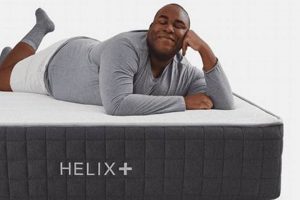
The selection of an appropriate sleep surface represents a significant consideration for individuals who primarily adopt a prone or lateral sleeping posture. A carefully chosen sleep surface can facilitate optimal spinal alignment and pressure point relief. For example, a surface with excessive firmness might exacerbate pressure on the hips and shoulders of a side sleeper, while insufficient support could lead to spinal curvature in a stomach sleeper.
Selecting a suitable sleep surface offers multiple potential advantages, including reduced pain, improved sleep quality, and enhanced long-term musculoskeletal health. Historically, sleep surfaces were rudimentary, consisting of straw or animal hides. Modern materials and construction techniques allow for a range of options tailored to specific sleeping preferences and physiological needs.
The subsequent sections will delve into the factors that contribute to an ideal sleep surface, including material composition, firmness level, and construction methods. These considerations will provide a framework for evaluating available options and selecting a product designed to promote restful and restorative sleep.
Selecting an Optimal Sleep Surface
The following recommendations offer guidance for selecting a sleep surface appropriate for combined stomach and side sleeping preferences. Prioritizing these aspects can significantly impact sleep quality and musculoskeletal health.
Tip 1: Evaluate Firmness: A medium-firm surface generally offers a balance of support and pressure relief. Individuals should assess their subjective comfort level based on body weight and spinal alignment needs.
Tip 2: Consider Material Composition: Memory foam can contour to the body, reducing pressure points. Latex offers a more responsive feel and may promote airflow. Hybrid designs combine these materials with innerspring systems.
Tip 3: Assess Spinal Alignment: The sleep surface should maintain a neutral spinal posture. This requires adequate support to prevent excessive sinking, particularly in the lumbar region.
Tip 4: Prioritize Pressure Relief: Areas of the body in direct contact with the surface, such as the hips and shoulders, require sufficient cushioning to avoid discomfort or pain.
Tip 5: Evaluate Edge Support: Strong edge support prevents roll-off and maximizes the usable sleep surface area. This is particularly important for individuals who sleep near the edge.
Tip 6: Consider Breathability: Materials that promote airflow, such as open-cell foam or breathable fabrics, can help regulate body temperature and prevent overheating during sleep.
Tip 7: Research Warranty and Trial Periods: Review the sleep surface providers warranty and trial period policies. This allows for a risk-free assessment of the products suitability.
Adhering to these guidelines can contribute to the selection of a sleep surface that promotes restful sleep and supports long-term spinal health. The subsequent conclusion will summarize the key considerations discussed.
1. Firmness Level

Firmness level, a critical determinant of sleep surface suitability, directly influences spinal alignment and pressure distribution, particularly for individuals who adopt both prone and lateral sleeping postures. A sleep surface lacking adequate firmness can result in excessive sinking of the hips and torso when sleeping in a prone position, leading to hyperextension of the lumbar spine and potential lower back pain. Conversely, a surface that is excessively firm may not allow sufficient contouring for side sleepers, creating pressure points on the shoulders and hips.
Selecting an appropriate firmness level involves a balancing act to accommodate the distinct biomechanical requirements of each sleeping position. A medium-firm mattress, for instance, often provides sufficient support for the lumbar region while also offering adequate cushioning for the shoulders and hips during side sleeping. However, individual preferences and body weight significantly influence the optimal firmness. A heavier individual may require a firmer surface to maintain spinal alignment in either position, whereas a lighter individual might find a medium-firm surface excessively rigid.
Therefore, selecting the most suitable sleep surface necessitates careful consideration of both sleeping postures, body weight, and individual comfort preferences. The chosen firmness level should effectively mitigate spinal misalignment in the prone position while also providing adequate pressure relief for lateral sleeping. This balance is essential for minimizing musculoskeletal discomfort and promoting restful sleep.
2. Material Composition

The material composition of a sleep surface directly influences its suitability for individuals who alternate between stomach and side sleeping positions. Different materials exhibit varying degrees of firmness, contouring ability, and breathability, all of which contribute to spinal alignment and pressure relief. For example, memory foam conforms closely to the body’s contours, potentially alleviating pressure points for side sleepers but possibly lacking sufficient support for stomach sleepers, leading to spinal misalignment. Latex, conversely, offers a more responsive and resilient surface, potentially providing better support for stomach sleeping while still offering some degree of contouring for side sleeping.
Hybrid mattresses, which combine innerspring systems with layers of memory foam or latex, represent a common strategy for addressing the competing needs of stomach and side sleepers. The innerspring core provides overall support and structure, while the comfort layers offer targeted pressure relief. The specific combination of materials and their respective thicknesses can be adjusted to achieve a desired balance between support and contouring. For example, a hybrid mattress with a thicker layer of high-density foam may offer better support for stomach sleeping, whereas a thinner layer of softer memory foam might prioritize pressure relief for side sleeping.
Ultimately, the ideal material composition depends on individual preferences and specific needs. Individuals should consider factors such as body weight, sleeping habits, and any pre-existing musculoskeletal conditions when evaluating mattress materials. Careful consideration of these factors, combined with research and potentially in-person testing, facilitates selection of a sleep surface that promotes optimal spinal alignment and minimizes pressure points, regardless of sleeping position.
3. Spinal Alignment

Maintaining proper spinal alignment during sleep is paramount for musculoskeletal health and restorative rest, particularly for individuals who alternate between prone and lateral sleeping positions. The selection of a sleep surface directly influences the spine’s ability to maintain its natural curvature, thereby mitigating potential pain and promoting long-term well-being. A suboptimal sleep surface can induce spinal misalignment, leading to discomfort, pain, and potentially more serious musculoskeletal issues.
- Neutral Spinal Posture
Achieving a neutral spinal posture involves ensuring the spine maintains its natural curves without excessive flexion or extension. For stomach sleepers, this necessitates a surface that prevents the hips from sinking too deeply, which can lead to hyperextension of the lumbar spine. Side sleepers require a surface that supports the spine in a straight line from the head to the hips, avoiding lateral bending. A sleep surface that facilitates this neutral alignment minimizes stress on the spinal discs and surrounding tissues, reducing the risk of pain and injury.
- Lumbar Support
The lumbar region, or lower back, is particularly vulnerable to misalignment during sleep. Insufficient support in this area can lead to chronic lower back pain. The ideal sleep surface provides targeted support to the lumbar region, preventing excessive sinking and maintaining the natural inward curve of the lower spine. This support is crucial for both stomach and side sleepers, as it helps to distribute weight evenly and reduce stress on the spinal discs.
- Pressure Distribution
Proper spinal alignment facilitates even distribution of pressure across the body, preventing localized areas of excessive stress. When the spine is misaligned, certain areas, such as the hips or shoulders, may bear a disproportionate amount of weight, leading to pressure points and discomfort. A sleep surface that promotes spinal alignment ensures that weight is distributed more evenly, reducing pressure points and improving overall comfort. This is particularly important for side sleepers, who are more prone to developing pressure points on the shoulders and hips.
- Muscular Relaxation
When the spine is properly aligned, the surrounding muscles are able to relax, promoting restful sleep. Conversely, spinal misalignment can lead to muscle tension and spasms, which can disrupt sleep and contribute to chronic pain. A sleep surface that supports proper spinal alignment allows the muscles to relax, reducing tension and promoting a deeper, more restorative sleep. This is essential for both stomach and side sleepers, as it helps to alleviate muscle strain and promote overall musculoskeletal health.
The facets of spinal alignment underscore the importance of selecting a sleep surface that caters to the needs of individuals who sleep in both prone and lateral positions. Addressing these aspects ensures that the chosen surface actively contributes to spinal health, pressure distribution, and muscular relaxation, minimizing the risks associated with spinal misalignment and promoting restorative sleep.
4. Pressure Relief

Pressure relief represents a critical consideration in the selection of an appropriate sleep surface, particularly for individuals who alternate between prone and lateral sleeping positions. The ability of a sleep surface to redistribute body weight and minimize concentrated pressure on bony prominences directly impacts comfort, sleep quality, and long-term musculoskeletal health.
- Shoulder Accommodation (Side Sleepers)
When adopting a lateral sleeping position, a significant portion of body weight is concentrated on the shoulder that is in contact with the sleep surface. Inadequate pressure relief in this area can lead to discomfort, pain, and even nerve compression. An optimal sleep surface for side sleepers should allow the shoulder to sink slightly into the material, effectively redistributing pressure and preventing the formation of localized pressure points. Materials such as memory foam and latex are frequently employed to achieve this level of accommodation. A practical example of this is seen when a sleeper experiences numbness or tingling in the arm after sleeping on a surface that is too firm.
- Hip Support (Side Sleepers)
Similar to the shoulder, the hip also bears a substantial load when sleeping on one’s side. Insufficient pressure relief in the hip region can lead to pain and discomfort, particularly for individuals with pre-existing hip conditions. The ideal sleep surface should contour to the shape of the hip, distributing weight evenly and preventing the formation of pressure points. The selection of an appropriate firmness level is crucial for providing adequate hip support without compromising spinal alignment. For instance, a sleep surface that is too soft may allow the hips to sink too deeply, leading to spinal misalignment, while a surface that is too firm may exacerbate pressure on the hip joint.
- Abdominal Support (Stomach Sleepers)
For individuals who primarily sleep in a prone position, abdominal support is essential for maintaining spinal alignment. Insufficient support in the abdominal region can lead to hyperextension of the lumbar spine, resulting in lower back pain. The sleep surface should provide adequate resistance to prevent excessive sinking of the abdomen, thereby maintaining a neutral spinal posture. Materials with higher density and greater firmness are often preferred for this purpose. An example of the effect is that an excessively soft surface for stomach sleepers will allow the abdomen to sink too low, creating a hammock-like effect with negative consequences for spinal health.
- Weight Distribution
Effective pressure relief is predicated on the ability of the sleep surface to distribute body weight evenly across its surface area. This minimizes localized pressure points and promotes overall comfort. The ideal sleep surface should conform to the body’s contours, providing support where needed and allowing for sinkage where appropriate. Hybrid sleep surfaces, which combine different materials with varying degrees of firmness and contouring ability, are frequently employed to achieve this balanced weight distribution. A hybrid mattress for combined stomach-side sleepers offers a blend of firm support for the stomach while allowing for pressure relief on the side, resulting in a reduction of painful pressure points throughout the night.
These facets of pressure relief underscore the complexities involved in selecting a sleep surface appropriate for individuals who sleep in both prone and lateral positions. The ideal surface must strike a balance between providing adequate support and allowing for sufficient contouring to minimize pressure points and promote spinal alignment. Careful consideration of these factors is essential for ensuring a restful and pain-free sleep experience.
5. Edge Support
Edge support, a structural characteristic of sleep surfaces, is pertinent to individuals seeking an optimal sleep solution, particularly those who alternate between prone and lateral sleeping positions. Adequate edge support contributes to maximizing the usable surface area of the sleep platform and enhancing overall stability, factors that directly impact comfort a
nd sleep quality.
- Roll-Off Prevention
A primary function of robust edge support lies in mitigating the risk of involuntary roll-off during sleep. Individuals who tend to sleep near the periphery of the sleep surface, whether in a prone or lateral position, may experience a sensation of instability or insecurity if the edge lacks sufficient reinforcement. This can lead to disrupted sleep patterns and a perceived reduction in the usable sleep area. A mattress with strong edge support provides a stable boundary, allowing sleepers to utilize the full width of the mattress without fear of rolling off. For a stomach-side sleeper, this is especially vital for the support that maintains spinal position and minimizes unintentional posture changes that might cause discomfort.
- Enhanced Usable Surface Area
Effective edge support increases the perceived and actual usable surface area of the sleep platform. Without adequate reinforcement, the edges of a mattress may compress or sag under weight, effectively reducing the space available for comfortable sleep. This is particularly relevant for couples sharing a sleep surface, as it allows each individual to occupy a greater proportion of the mattress without encroaching on the other’s space. Good edge support ensures that the entire surface of the mattress, including the perimeter, remains firm and supportive.
- Facilitated Entry and Exit
Strong edge support facilitates ease of entry and exit from the sleep surface, particularly for individuals with mobility limitations or those who prefer to sit on the edge of the bed. A stable edge provides a firm surface for sitting, dressing, or performing other activities. Inadequate edge support can make these tasks more difficult and potentially increase the risk of falls. The edge support provides a stable point for entering or exiting the bed, enhancing overall utility and safety.
- Durability and Longevity
The quality of edge support often correlates with the overall durability and longevity of the sleep surface. Mattresses with reinforced edges are less likely to sag or deform over time, maintaining their shape and support characteristics for a longer period. This translates to a more consistent and comfortable sleep experience over the lifespan of the mattress. Conversely, mattresses with weak or non-existent edge support may exhibit premature wear and tear, compromising their overall performance. An optimal level of edge support contributes to the long-term value and satisfaction associated with the product.
The aforementioned facets underscore the integral role of edge support in enhancing the overall sleep experience, especially for individuals who transition between stomach and side sleeping positions. By mitigating roll-off, maximizing usable surface area, facilitating entry and exit, and promoting durability, effective edge support contributes to a more comfortable, stable, and long-lasting sleep surface.
6. Breathability

Breathability, the capacity of a sleep surface to facilitate air circulation and dissipate heat, assumes critical importance in the context of selecting an appropriate mattress, particularly for individuals who alternate between prone and lateral sleeping positions. Thermoregulation during sleep is essential for maintaining comfort and promoting restorative rest. A sleep surface lacking adequate breathability can lead to elevated body temperature, increased perspiration, and disrupted sleep patterns.
- Material Composition and Airflow
The material composition of a mattress directly influences its breathability. Materials such as traditional memory foam, known for its dense structure, can restrict airflow and trap heat. In contrast, open-cell memory foam, latex, and innerspring systems promote greater air circulation, reducing the risk of overheating. For individuals who sleep on their stomach, where a greater surface area of the body is in contact with the mattress, breathable materials are particularly important. The choice of materials significantly impacts heat retention and subsequent sleep comfort.
- Surface Design and Ventilation
The design of the mattress surface can further enhance breathability. Features such as convoluted foam layers, perforated surfaces, and breathable fabrics can facilitate airflow and moisture wicking. These design elements create channels for air to circulate, helping to dissipate heat and prevent the build-up of humidity. These surface enhancements are essential when considering a mattress for stomach and side sleeping as temperature variations can disrupt these sleep positions.
- Humidity Regulation
Breathability plays a vital role in regulating humidity within the sleep environment. A mattress that effectively wicks away moisture can prevent the build-up of humidity, which can contribute to discomfort and promote the growth of mold and bacteria. This is especially relevant for individuals who perspire heavily during sleep. Managing moisture within the sleeping environment contributes to extended mattress lifespan and a consistently hygienic sleep surface.
- Impact on Sleep Quality
The relationship between breathability and sleep quality is direct and significant. A mattress that effectively dissipates heat and regulates humidity can help maintain a stable body temperature throughout the night, reducing the likelihood of sleep disruptions. For those who shift positions frequently, maintaining a consistent temperature level will influence sleep quality. Improved breathability contributes to a more restful and restorative sleep experience, regardless of sleeping position.
The facets of breathability highlight its importance in selecting a sleep surface that promotes both comfort and health, particularly for individuals who transition between stomach and side sleeping positions. By prioritizing materials and design features that enhance airflow and regulate temperature, individuals can optimize their sleep environment and improve their overall sleep quality. A highly breathable mattress is important for both health and optimal sleep quality.
Frequently Asked Questions
The following questions address common concerns and misconceptions regarding the selection of an appropriate sleep surface for individuals who primarily sleep in prone or lateral positions. The information provided aims to offer clarity and guide informed decision-making.
Question 1: What firmness level is generally recommended?
A medium-firm mattress is typically suggested as it offers a balance between support for the spine and pressure relief for the shoulders and hips. However, individual body weight and preferences should be considered.
Question 2: Are specific materials better suited for combined sleeping positions?
Memory foam, latex, and hybrid designs each possess unique properties. Memory foam conforms to the body, while latex provides more responsiveness. Hybrid mattresses combine these materials with innerspring systems for balanced support and comfort.
Question 3: How does one ensure proper spinal alignment?
The sleep surface should maintain a neutral spinal posture, preventing excessive sinking or curvature. Adequate lumbar support is crucial for preventing lower back pain.
Question 4: What constitutes adequate pressure relief?
Areas in direct contact with the sleep surface, such as the hips and shoulders, should experience
minimal pressure. The mattress should distribute weight evenly to prevent localized discomfort.
Question 5: Why is edge support important?
Strong edge support prevents roll-off and maximizes the usable sleep surface area. This is particularly relevant for individuals who sleep near the edge of the mattress or share the bed with a partner.
Question 6: How does breathability contribute to sleep quality?
Materials that promote airflow, such as open-cell foam or breathable fabrics, help regulate body temperature and prevent overheating during sleep. This is essential for maintaining a comfortable sleep environment.
In summary, selecting a sleep surface involves carefully considering firmness, material composition, spinal alignment, pressure relief, edge support, and breathability. These factors contribute significantly to sleep quality and musculoskeletal health.
The subsequent section will summarize key considerations.
Optimal Sleep Surface Selection
The preceding discussion underscores the multifaceted nature of identifying a sleep surface suitable for individuals who alternate between prone and lateral sleeping positions. Considerations encompassing firmness, material composition, spinal alignment, pressure relief, edge support, and breathability collectively determine the efficacy of a given mattress in promoting restorative sleep and mitigating musculoskeletal discomfort. Failure to adequately address these elements may result in compromised sleep quality and potential long-term health consequences.
Therefore, thorough research, careful evaluation of individual needs, and, when possible, practical testing are essential steps in selecting a sleep surface that optimizes spinal health and promotes restful sleep. Investing the necessary time and resources in this process represents a prudent decision, given the significant impact of sleep quality on overall well-being and long-term health outcomes.
![Top Best Affordable Mattress Companies of [Year] Reviewed | Organic & Natural Mattress Buyer’s Guide: Non-Toxic Sleep Solutions](https://mattressworldpa.com/wp-content/uploads/2025/07/th-7840-300x200.jpg "Top Best Affordable Mattress Companies of [Year] Reviewed Organic & Natural Mattress Buyer’s Guide: Non-Toxic Sleep Solutions")

![Top-Rated: Best Firm Innerspring Mattress [Guide & Reviews] | Organic & Natural Mattress Buyer’s Guide: Non-Toxic Sleep Solutions](https://mattressworldpa.com/wp-content/uploads/2025/07/th-7838-300x200.jpg "Top-Rated: Best Firm Innerspring Mattress [Guide & Reviews] Organic & Natural Mattress Buyer’s Guide: Non-Toxic Sleep Solutions")

![Top Spots: Best Place to Buy Twin Mattress [Guide] | Organic & Natural Mattress Buyer’s Guide: Non-Toxic Sleep Solutions](https://mattressworldpa.com/wp-content/uploads/2025/07/th-7836-300x200.jpg "Top Spots: Best Place to Buy Twin Mattress [Guide] Organic & Natural Mattress Buyer’s Guide: Non-Toxic Sleep Solutions")