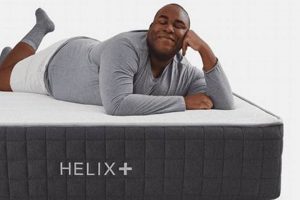
Selecting a compatible sleep surface is crucial for optimal comfort and support when using a bed frame designed with a solid or slatted base. The ideal choice complements this type of frame’s inherent firmness, enhancing pressure relief and spinal alignment. As an illustration, a memory foam model often pairs well, conforming to the body and mitigating potential discomfort arising from the unyielding base.
The compatibility of a sleep surface with this frame type offers numerous advantages. It ensures proper ventilation, preventing moisture buildup and promoting mattress longevity. It also maximizes the frame’s structural integrity, preventing sagging and extending the overall lifespan of the entire bed system. Historically, simpler, thinner mattresses were common, but modern advancements allow for a wider range of options that still work effectively.
The subsequent sections will delve into key considerations when choosing a mattress to use on a platform bed, encompassing material types, thickness guidelines, and considerations for specific sleep preferences.
Tips for Selecting a Compatible Mattress
Choosing a mattress designed for use with a solid or slatted foundation requires careful consideration. The following recommendations provide guidance to ensure optimal comfort, support, and longevity.
Tip 1: Consider Mattress Height: The overall height affects the bed’s profile. A thicker mattress may be appropriate for individuals who prefer a higher sleeping surface, while a thinner mattress can maintain a minimalist aesthetic.
Tip 2: Evaluate Material Compatibility: Memory foam often complements the firmness, providing enhanced pressure relief. Latex offers responsiveness and support. Hybrid models combine elements of both for a balanced feel.
Tip 3: Assess Support Needs: Individuals with back pain may benefit from a firmer mattress that promotes spinal alignment. Softer options are suitable for side sleepers who require more cushioning at pressure points.
Tip 4: Prioritize Breathability: Solid platforms can restrict airflow. Selecting a mattress with breathable materials, such as open-cell foam or innerspring coils, is crucial to prevent heat buildup and promote a comfortable sleep environment.
Tip 5: Confirm Weight Capacity: Ensure the selected mattress does not exceed the weight limit of the frame. This is crucial for maintaining the structural integrity of the bed and preventing premature wear.
Tip 6: Examine Edge Support: Strong edge support is particularly beneficial for individuals who sit on the edge of the bed or share it with a partner. Reinforced edges prevent sagging and maximize the usable sleep surface.
Tip 7: Verify Warranty and Return Policies: A comprehensive warranty provides assurance of quality and durability. Review return policies to ensure satisfaction with the selected product.
By carefully evaluating these factors, consumers can make informed decisions that optimize comfort and support, leading to improved sleep quality and overall well-being.
The following section will present an analysis of specific mattress types to use on a solid or slatted frame, focusing on their individual strengths and weaknesses.
1. Material Compatibility

Material compatibility represents a crucial aspect in determining the suitability of a sleep surface for use on a platform bed. The interaction between the mattress material and the frame’s surface impacts comfort, support, and the overall lifespan of both components. Disregarding material compatibility can lead to premature wear, reduced comfort, and potentially negate the benefits of both the platform bed and the sleep surface.
- Foam Density and Support
Foam density directly affects the support provided by a mattress. High-density foams, such as those found in memory foam or latex models, offer greater resistance to compression, translating to improved support, particularly for heavier individuals. Lower-density foams may compress excessively on a solid platform, potentially leading to sagging and discomfort. The optimal density depends on individual weight and preferred sleep position.
- Breathability and Airflow
Material composition significantly influences airflow and breathability. Solid platform bed bases often restrict ventilation compared to traditional slatted frames. Therefore, mattresses constructed with breathable materials, such as open-cell foam, latex, or innerspring coils, are preferable. These materials facilitate air circulation, dissipating heat and preventing moisture accumulation, which can lead to mold growth and reduced hygiene. In contrast, dense, closed-cell foams may trap heat and moisture.
- Surface Friction and Slippage
The friction between the mattress material and the platform surface affects stability. Some materials, such as smooth latex, may exhibit a lower coefficient of friction, increasing the likelihood of slippage. This can be mitigated by using a non-slip mattress pad or selecting a mattress with a textured surface. Materials with higher friction, like certain woven fabrics, provide greater stability, minimizing movement during sleep. Slippage can be a practical issue, but it can also be a safety issue for some people.
- Conformability and Pressure Relief
The ability of a mattress to conform to the body’s contours is essential for pressure relief. Memory foam excels in this regard, molding to the sleeper’s shape and distributing weight evenly. This reduces pressure points, particularly in the hips and shoulders. Latex offers a similar, though more responsive, conforming effect. Innerspring mattresses, while providing support, may offer less conformability, especially those with a thin comfort layer. Proper conformability is key to maximizing comfort and minimizing the risk of pressure sores.
Therefore, proper consideration of material characteristics enhances compatibility with a solid or slatted foundation, optimizing the sleep experience. The selection of a mattress exhibiting appropriate density, breathability, friction, and conformability contributes to overall comfort, support, and the longevity of the entire bed system.
2. Optimal Thickness

The selection of mattress thickness is a significant determinant in achieving optimal comfort and support on a platform bed. The interplay between mattress height and the frame’s design influences accessibility, aesthetics, and the overall ergonomic profile of the bed. Deviation from optimal thickness guidelines can compromise the user experience, affecting ease of entry and egress, as well as influencing spinal alignment and pressure distribution during sleep. For example, a mattress that is too thin may not provide adequate cushioning, leadi
ng to discomfort and potential pressure points, while an excessively thick mattress can make the bed too high, creating challenges for individuals with mobility limitations. Selecting a mattress thickness that is proportional to the height of the platform frame and the user’s physical needs becomes an essential factor.
The “optimal” thickness range typically depends on factors such as sleeper weight, preferred sleep position, and the presence of underlying medical conditions. Heavier individuals may require a thicker mattress to ensure adequate support and prevent bottoming out, where the sleeper’s body compresses the mattress to the point where it feels the underlying platform. Side sleepers may benefit from a thicker comfort layer to cushion the hips and shoulders, mitigating pressure points. Conversely, individuals with back pain might find a firmer, thinner mattress more conducive to spinal alignment. Real-world examples include individuals who purchased an overly thin mattress and reported experiencing lower back pain due to insufficient support, or individuals who bought a mattress that was too thick, resulting in difficulty getting in and out of bed and increased strain on their joints. Thus, understanding these interactions is critical.
In summary, optimal mattress thickness is not a universally defined value but rather a personalized parameter that must be carefully considered in the context of individual needs and preferences. Challenges arise in accurately assessing these needs, requiring a thorough evaluation of factors such as body weight, sleep position, and any existing health conditions. Balancing these considerations within the broader context of platform bed design ensures that the chosen mattress enhances comfort, promotes proper spinal alignment, and facilitates ease of use. Ignoring thickness considerations can undermine the advantages of a platform bed, leading to a suboptimal sleep experience and potentially exacerbating existing physical discomforts.
3. Adequate Support

Adequate support constitutes a critical element in determining the compatibility and suitability of a mattress for use on a platform bed. The platform bed, characterized by its solid or slatted foundation, necessitates a mattress capable of providing sufficient spinal alignment and pressure distribution. Insufficient support can lead to discomfort, pain, and compromised sleep quality. For instance, a mattress lacking adequate support may cause the sleeper’s spine to misalign, resulting in back pain. Furthermore, inadequate pressure distribution can lead to the development of pressure sores, particularly in individuals with limited mobility. The selection of a mattress that delivers adequate support, therefore, is not merely a matter of comfort but a necessity for maintaining physical well-being.
Real-life examples underscore the practical significance of this understanding. Consider an individual with a history of back problems who selects a mattress for a platform bed without prioritizing support. The resulting lack of spinal alignment exacerbates their condition, leading to chronic pain and reduced mobility. Conversely, an individual who carefully chooses a supportive mattress experiences improved sleep quality, reduced pain, and enhanced overall well-being. Mattress selection can be affected by factors such as firmness, materials used, and internal construction. Individuals with a tendency to sleep on their back often require a firmer mattress to prevent excessive sinking, while side sleepers may benefit from a more conforming model that cushions the shoulders and hips. The platform bed’s inherent rigidity emphasizes the importance of support.
In conclusion, adequate support is an indispensable characteristic of a mattress intended for use on a platform bed. The absence of this feature can have detrimental effects on physical health and sleep quality. Understanding the interrelationship between mattress construction, individual sleep needs, and the platform bed’s support characteristics enables informed decision-making. Challenges remain in accurately assessing individual support requirements, necessitating careful evaluation and potentially professional consultation. Overcoming these challenges leads to a selection that promotes both comfort and long-term spinal health, maximizing the benefits of a platform bed setup.
4. Sufficient Breathability

Sufficient breathability is a pivotal characteristic for any mattress intended for use on a platform bed, influencing factors such as temperature regulation, hygiene, and overall sleep quality. The inherent design of platform beds, often featuring a solid or closely-slatted surface, can impede air circulation beneath the mattress, potentially trapping heat and moisture. Inadequate breathability may create a microclimate conducive to the growth of mold, mildew, and dust mites, compromising hygiene and potentially triggering allergies or respiratory issues. Mattresses lacking sufficient breathability often lead to overheating during sleep, disrupting sleep cycles and causing discomfort. A mattress that facilitates adequate airflow, conversely, helps maintain a comfortable sleeping temperature, reduces moisture buildup, and promotes a healthier sleep environment. For instance, individuals residing in warmer climates or those prone to night sweats will find mattresses with enhanced breathability particularly beneficial. Real-world examples showcase the practical implications: individuals using mattresses with limited airflow on platform beds report experiencing increased night sweats and discomfort, while those with breathable mattresses often report improved sleep quality and reduced allergen exposure. Therefore, selecting a mattress with sufficient breathability for a platform bed is not merely a matter of comfort but a key factor in ensuring a healthy and restorative sleep experience.
The influence of breathability also extends to the longevity of the mattress itself. Trapped moisture can degrade internal components over time, leading to premature sagging, loss of support, and reduced overall lifespan. Mattresses constructed with materials such as open-cell foam, natural latex, or innerspring coils typically exhibit superior breathability compared to those made with dense, closed-cell synthetic foams. The choice of mattress cover also plays a significant role; breathable materials such as cotton or bamboo promote airflow, while synthetic fabrics may restrict it. Hybrid mattresses, combining breathable coil systems with comfort layers made from breathable materials, offer a balanced approach to breathability and support. Mattress manufacturers increasingly incorporate innovative technologies, such as ventilated foam layers or phase-change materials, to further enhance airflow and temperature regulation. Consumers should examine product specifications and reviews to assess the breathability of different mattress options, considering factors such as material composition, construction techniques, and ventilation features. Ignoring the breathability of a mattress intended for use on a solid foundation can lead to premature wear and reduced hygiene, negatively impacting the overall value proposition.
In conclusion, sufficient breathability is an indispensable attribute for mattresses designed for use on platform beds. Its impact extends beyond immediate comfort, influencing hygiene, mattress longevity, and overall sleep quality. Challenges arise in accurately assessing breathability based solely on product descriptions; therefo
re, consumers should prioritize mattresses constructed with breathable materials and featuring design elements that promote airflow. Overcoming these challenges enables informed decision-making, leading to the selection of a mattress that not only provides optimal support and comfort but also maintains a healthy and restorative sleep environment, maximizing the benefits of a platform bed setup. The connection between “Sufficient Breathability” and “best mattress for a platform bed” is integral, demanding careful consideration during the selection process.
5. Weight Capacity Compliance

Weight capacity compliance represents a critical, often overlooked, consideration when selecting a sleep surface for a platform bed. The structural integrity and longevity of both the frame and the mattress are directly influenced by adherence to specified weight limitations. Exceeding the weight capacity can lead to frame damage, mattress degradation, and potential safety hazards.
- Structural Integrity of the Frame
The weight capacity dictates the maximum load the platform bed frame can safely support. Exceeding this limit can cause bending, warping, or even complete structural failure of the frame. This is particularly relevant for solid platform designs that distribute weight across a single surface. Frame failure not only compromises the sleep surface but also presents a potential safety risk to the occupant.
- Mattress Performance and Longevity
Excessive weight can accelerate mattress degradation. Foam mattresses may experience premature compression and sagging, while innerspring mattresses can suffer from coil fatigue and diminished support. Exceeding the weight capacity reduces the mattress’s ability to provide adequate support and pressure relief, ultimately shortening its lifespan. For example, a hybrid mattress designed for 500 pounds might fail to provide sufficient support for occupants weighing a combined 600 pounds, resulting in discomfort and accelerated wear.
- Safety Considerations
Ignoring weight capacity poses safety risks. Frame failure can lead to sudden collapse, potentially causing injury. Moreover, an overloaded mattress may become unstable, increasing the risk of falls. Particularly concerning are situations involving children or individuals with mobility limitations. Prudent selection demands awareness of weight capacity specifications.
- Warranty Implications
Exceeding the specified weight capacity often voids the warranty for both the platform bed frame and the mattress. Manufacturers establish these limits to ensure product performance and safety under intended use conditions. Operating outside these parameters absolves the manufacturer of responsibility for any resulting damage or malfunction. Therefore, adherence to weight capacity is crucial for maintaining warranty coverage.
The relationship between weight capacity compliance and the selection of an appropriate mattress is therefore inextricably linked. Selecting a mattress that, in combination with the occupants, remains within the platform bed’s specified weight limits is essential for ensuring safety, preserving structural integrity, and maximizing the lifespan of the entire sleep system. Overlooking this critical factor undermines the value proposition and potentially compromises occupant safety.
6. Enhanced Edge Support

Enhanced edge support constitutes a significant feature to consider when selecting a compatible mattress for a platform bed. This characteristic refers to the reinforcement along the perimeter of the sleep surface, designed to provide consistent support from edge to edge, rather than a gradual decline in firmness. It has direct implications for usable sleep surface, ease of getting in and out of bed, and overall mattress longevity.
- Expanded Usable Sleep Surface
Enhanced edge support maximizes the usable sleep area. Without it, the edges of a mattress tend to compress under weight, creating an unstable or sloping surface. This becomes particularly relevant for couples or individuals who tend to sleep near the edge of the bed. A reinforced edge ensures consistent support across the entire mattress, preventing the sensation of rolling off and expanding the available sleep surface.
- Improved Ease of Entry and Exit
Strong edge support facilitates easier and more stable transitions in and out of bed. A firm edge provides a stable surface to sit on, particularly beneficial for individuals with mobility limitations or those recovering from injuries. The added stability reduces the risk of falls and provides a more secure sitting platform for dressing or other activities performed at the bedside. Real-world examples include elderly individuals or those with joint pain who find it significantly easier to get out of bed with a mattress offering robust edge support.
- Enhanced Mattress Longevity
Reinforced edges contribute to the overall durability and lifespan of the mattress. Without edge support, the perimeter is more susceptible to sagging and deformation over time, particularly in high-traffic areas. This sagging reduces support and can lead to uneven weight distribution, accelerating wear and tear on the mattress’s internal components. Enhanced edge support mitigates this wear, helping the mattress maintain its shape and support characteristics for a longer period.
- Optimized Weight Distribution
Enhanced edge support contributes to more uniform weight distribution across the mattress. This even distribution reduces stress on specific areas, preventing localized compression and promoting overall support. Without it, weight concentrates toward the center of the mattress, accelerating wear and potentially leading to discomfort. With good edge support, this is avoided.
In summary, enhanced edge support represents a valuable attribute for a mattress intended for use on a platform bed. Its contribution to maximizing usable sleep surface, improving ease of entry and exit, and extending mattress lifespan directly aligns with the goal of selecting a mattress that provides optimal comfort, support, and value. While not universally present in all mattress models, the inclusion of enhanced edge support warrants careful consideration, particularly for individuals seeking to optimize their sleep experience on a platform bed.
Frequently Asked Questions About Platform Bed Mattresses
The following questions address common inquiries regarding the selection and use of mattresses on platform beds. The information provided aims to clarify critical aspects and dispel prevalent misconceptions.
Question 1: What mattress thickness is generally recommended for platform beds?
The recommended thickness varies based on individual preferences and physical needs. However, a range of 10-14 inches is often considered optimal, balancing support and aesthetics. Thinner mattresses may lack sufficient cushioning, while excessively thick models can make the bed too high.
Question 2: Is a box spring necessary when using a mattress on a platform bed?
No, a box spring is typically unnecessary. Platform beds are designed to provide direct support to the mattress, eliminating the need for addition
al foundation. Using a box spring can, in fact, elevate the mattress to an undesirable height and potentially compromise the bed’s aesthetic.
Question 3: What type of mattress is most compatible with a platform bed?
Memory foam, latex, and hybrid mattresses are generally well-suited for platform beds. Memory foam conforms to the body and provides pressure relief, while latex offers responsiveness and support. Hybrid models combine the benefits of both. Innerspring mattresses can also be used, provided they offer adequate support and conformability.
Question 4: How does platform bed construction affect mattress breathability?
Solid platform beds can restrict airflow, potentially trapping heat and moisture. Slatted platforms offer better ventilation. It is crucial to select a mattress with breathable materials, such as open-cell foam or innerspring coils, to mitigate heat buildup and promote a comfortable sleep environment.
Question 5: Can any mattress be used on a platform bed?
While technically feasible, not all mattresses are optimally suited for platform beds. Considerations such as support, thickness, and breathability should guide the selection process. Incompatible mattresses can lead to discomfort, reduced lifespan, and potential damage to the platform frame.
Question 6: How important is edge support in a platform bed mattress?
Edge support is particularly beneficial, especially for individuals who sit on the edge of the bed or share it with a partner. Reinforced edges prevent sagging and maximize the usable sleep surface. A mattress with strong edge support is often a good investment.
Careful attention to mattress type, thickness, support, and breathability ensures a comfortable and supportive sleep experience on a platform bed. Prioritizing these factors can help optimize sleep quality and extend the lifespan of both the mattress and the bed frame.
The subsequent section will explore the specific benefits of different mattress types when paired with platform beds.
Conclusion
The preceding analysis has underscored the multifaceted nature of selecting the best mattress for a platform bed. Considerations spanning material compatibility, optimal thickness, adequate support, sufficient breathability, weight capacity compliance, and enhanced edge support must be rigorously evaluated to ensure both comfort and the longevity of the sleep system. Overlooking these factors can result in a compromised sleep experience and potential structural issues.
The discerning consumer is therefore encouraged to prioritize thorough research and careful assessment of individual needs when making a purchase. By embracing informed decision-making, individuals can maximize the inherent benefits of the platform bed design and cultivate a sleep environment conducive to health and well-being. The long-term value of such diligence far outweighs the immediate convenience of a less considered choice.
![Top Best Affordable Mattress Companies of [Year] Reviewed | Organic & Natural Mattress Buyer’s Guide: Non-Toxic Sleep Solutions](https://mattressworldpa.com/wp-content/uploads/2025/07/th-7840-300x200.jpg "Top Best Affordable Mattress Companies of [Year] Reviewed Organic & Natural Mattress Buyer’s Guide: Non-Toxic Sleep Solutions")

![Top-Rated: Best Firm Innerspring Mattress [Guide & Reviews] | Organic & Natural Mattress Buyer’s Guide: Non-Toxic Sleep Solutions](https://mattressworldpa.com/wp-content/uploads/2025/07/th-7838-300x200.jpg "Top-Rated: Best Firm Innerspring Mattress [Guide & Reviews] Organic & Natural Mattress Buyer’s Guide: Non-Toxic Sleep Solutions")

![Top Spots: Best Place to Buy Twin Mattress [Guide] | Organic & Natural Mattress Buyer’s Guide: Non-Toxic Sleep Solutions](https://mattressworldpa.com/wp-content/uploads/2025/07/th-7836-300x200.jpg "Top Spots: Best Place to Buy Twin Mattress [Guide] Organic & Natural Mattress Buyer’s Guide: Non-Toxic Sleep Solutions")