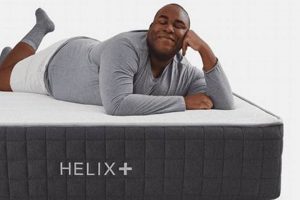
The selection of a suitable sleep surface is paramount for individuals with higher body weights. Factors such as adequate support, pressure relief, and temperature regulation significantly impact sleep quality and overall well-being. A mattress designed to accommodate a larger frame should exhibit enhanced durability and construction to ensure longevity and consistent performance.
Prioritizing a robust and appropriately designed mattress can lead to improved spinal alignment, reduced joint pain, and a more restful night’s sleep. This, in turn, contributes to better daytime function, enhanced physical recovery, and potentially reduced risk of developing certain health complications. Historically, standard mattresses have often proven inadequate for this demographic, leading to discomfort and premature wear.
Therefore, a detailed examination of mattress types, construction materials, and key features pertinent to accommodating heavier individuals is essential. The ensuing discussion will delve into specific criteria to consider when choosing a mattress designed to provide optimal comfort and support for individuals with a higher body mass index.
Key Considerations for Selecting an Appropriate Mattress
Choosing a mattress that adequately supports individuals with a higher body weight requires careful attention to specific construction elements and material properties. The following guidelines provide critical insights into making an informed purchasing decision.
Tip 1: Prioritize Coil Count and Gauge: Mattresses with a higher coil count and lower gauge (thicker) coils offer superior support and durability. These features are essential for preventing sagging and maintaining proper spinal alignment over time.
Tip 2: Opt for High-Density Foam: When considering foam mattresses, prioritize those with high-density foam in the support core. Higher density translates to greater resistance to compression and prolonged lifespan of the mattress.
Tip 3: Evaluate Edge Support: Reinforced edge support is crucial for preventing roll-off and maximizing the usable sleep surface. Strong edge support enhances stability and facilitates easier movement in and out of bed.
Tip 4: Consider Hybrid Models: Hybrid mattresses, which combine innerspring coils with foam layers, often provide an optimal balance of support, pressure relief, and temperature regulation for heavier individuals.
Tip 5: Examine the Mattress Foundation: A sturdy and supportive foundation is just as important as the mattress itself. Ensure the foundation is designed to handle the weight capacity of the mattress and occupants.
Tip 6: Research Weight Capacity: Always verify the manufacturer’s stated weight capacity for the mattress and ensure it comfortably accommodates the combined weight of all users.
Tip 7: Explore Materials for Temperature Regulation: Materials such as gel-infused memory foam or breathable latex can help regulate body temperature and prevent overheating during sleep.
Selecting a mattress with these characteristics can lead to improved sleep quality, reduced pain, and enhanced overall well-being for individuals with a higher body mass index. Focusing on these attributes ensures a longer-lasting and more comfortable sleep experience.
The subsequent sections will explore specific mattress types and brands renowned for their suitability in providing these essential features.
1. Supportive Core

A supportive core is a fundamental attribute of a mattress designed for individuals with higher body weights. The core functions as the primary structural element, responsible for distributing weight evenly and preventing excessive sinking or sagging. Without adequate core support, the mattress will deform prematurely, leading to compromised spinal alignment and increased pressure points, resulting in discomfort and potential long-term health issues. A mattress lacking a robust core fails to provide the necessary resistance to compression, diminishing its ability to maintain proper postural support during sleep.
The material composition and construction of the core directly influence its support capabilities. High-density foam cores, typically used in all-foam mattresses, provide a consistent and conforming support surface. Innerspring cores, particularly those with individually pocketed coils, offer targeted support and minimize motion transfer. Hybrid mattresses combine these core types to leverage the benefits of both. For example, a hybrid mattress featuring a high-gauge coil system combined with a high-density foam comfort layer is often recommended due to its superior ability to distribute weight and alleviate pressure points. Individuals experiencing back pain or joint discomfort may find significant relief with a mattress featuring a strategically engineered supportive core.
In conclusion, a supportive core is not merely a feature but a necessity in a mattress intended for individuals with higher body weights. Its presence directly impacts the mattress’s ability to provide adequate support, maintain proper spinal alignment, and ensure long-term durability. Selecting a mattress with a well-constructed and appropriately dense core is essential for promoting restorative sleep and mitigating potential health issues associated with inadequate support. Neglecting this aspect can lead to a diminished sleep experience and a shortened lifespan of the mattress itself.
2. Durable Materials

The longevity and performance of a mattress are intrinsically linked to the quality of the materials used in its construction, an especially critical factor for individuals with higher body weights. Standard mattresses often exhibit premature degradation when subjected to consistently heavier loads, resulting in sagging, loss of support, and a reduced lifespan. The selection of durable materials, therefore, becomes paramount in ensuring the mattress maintains its structural integrity and continues to provide adequate support over an extended period. Failure to prioritize robust materials leads to a cycle of mattress replacement and potentially exacerbated discomfort.
Specifically, the density of foam, the gauge and composition of innerspring coils, and the strength of the mattress cover directly influence its ability to withstand prolonged use. For example, high-density memory foam or latex exhibits greater resistance to compression than lower-density alternatives, minimizing body impressions and maintaining a consistent sleep surface. Similarly, innerspring mattresses with thicker-gauge coils offer enhanced support and durability compared to those with thinner coils. The mattress cover should also be constructed from a resilient fabric that can withstand repeated friction and stretching.
In summation, the use of durable materials is not merely a desirable attribute but a fundamental requirement for a mattress inte
nded to accommodate individuals with higher body weights. The selection of high-quality foam, robust coils, and resilient fabrics directly impacts the mattress’s ability to provide consistent support, maintain its shape, and ensure a long lifespan, offering a cost-effective and comfortable sleep solution. The correlation between durable materials and the value of sleep quality should always be highly prioritized, since durable material ensures a proper sleep in a mattress.
3. Enhanced Edge Support

Enhanced edge support serves as a critical feature in mattresses designed to accommodate individuals with higher body weights. Standard mattress designs often exhibit insufficient edge support, leading to compression and collapse along the perimeter when subjected to concentrated weight. This compromises the usable sleep surface, increasing the likelihood of roll-off and reducing overall comfort. For heavier individuals, this effect is amplified, potentially causing a feeling of instability and restricting movement during sleep. Effective edge support counteracts these issues, creating a stable and consistent sleep surface across the entire mattress.
The implementation of enhanced edge support typically involves reinforcing the mattress perimeter with high-density foam encasements or strategically placed steel coils. These structural enhancements prevent edge sagging and provide a stable platform for sitting or lying near the edge of the bed. For example, individuals who require assistance getting in and out of bed benefit significantly from robust edge support, as it minimizes the risk of instability and potential falls. Additionally, couples where one or both partners have a higher body weight find that enhanced edge support maximizes the usable sleep area, preventing one partner from feeling displaced or forced toward the center of the mattress.
In summary, enhanced edge support constitutes an integral component of a mattress that adequately addresses the needs of individuals with higher body weights. Its presence promotes stability, maximizes the usable sleep surface, and facilitates easier movement, contributing to improved comfort and overall sleep quality. The absence of this feature can lead to a compromised sleep experience and potentially increase the risk of injury. Therefore, when selecting a mattress, prioritizing models with demonstrably enhanced edge support is essential for achieving optimal comfort and long-term satisfaction. This reinforces the link with “best mattress for fat people”.
4. Weight Capacity
Weight capacity represents a fundamental specification in mattress selection, particularly pertinent when considering suitability for individuals with higher body weights. Overlooking this parameter can result in compromised performance, premature degradation, and potential safety concerns. Understanding and adhering to a mattress’s specified weight capacity is crucial for ensuring adequate support and longevity.
- Structural Integrity and Longevity
Exceeding a mattress’s weight capacity places undue stress on its internal components, including coils, foam layers, and support structures. This accelerated wear and tear can lead to sagging, reduced support, and a significantly shortened lifespan. For instance, a mattress designed for a maximum weight of 250 pounds per side will likely exhibit premature degradation when consistently subjected to 350 pounds per side. This not only compromises comfort but also represents a diminished return on investment.
- Support and Spinal Alignment
A mattress operating beyond its weight limit cannot effectively provide proper spinal alignment. The support core, whether composed of coils or foam, will compress excessively, leading to improper weight distribution and increased pressure points. This can result in back pain, joint stiffness, and disrupted sleep patterns. For example, an individual using a mattress with insufficient weight capacity may experience lower back pain due to inadequate lumbar support and spinal misalignment.
- Warranty Implications
Most mattress manufacturers stipulate specific weight limits within their warranty terms. Exceeding these limits often voids the warranty, leaving consumers financially responsible for repairs or replacements resulting from weight-related damage. Prior to purchase, it is essential to review the warranty details and ensure the mattress’s weight capacity aligns with the intended user’s weight. Failure to do so can result in unexpected expenses and limited recourse in the event of premature mattress failure.
- Safety Considerations
In extreme cases, exceeding a mattress’s weight capacity can compromise its structural integrity to the point of failure, posing a safety risk to the user. This is particularly relevant for platform beds or mattresses with integrated support systems. A mattress that collapses under excessive weight can cause injury and necessitate immediate replacement. Therefore, adhering to the manufacturer’s specified weight limit is paramount for ensuring user safety and preventing potential accidents.
In conclusion, weight capacity constitutes a non-negotiable factor when selecting a mattress for individuals with higher body weights. Choosing a mattress with an appropriate weight rating ensures structural integrity, promotes proper spinal alignment, protects warranty coverage, and safeguards user safety. Failing to consider this specification can lead to compromised comfort, reduced lifespan, and potential health and safety risks.
5. Pressure Relief

Adequate pressure relief is a critical attribute of mattresses designed for individuals with higher body weights. Concentrated weight distribution can exacerbate pressure points, leading to discomfort, pain, and disrupted sleep. A mattress optimized for pressure relief mitigates these issues, promoting restorative sleep and overall well-being.
- Conforming Materials and Weight Distribution
Mattresses incorporating conforming materials, such as memory foam or latex, excel at distributing weight evenly across the sleep surface. These materials contour to the body’s shape, reducing pressure on prominent areas like the hips, shoulders, and knees. For individuals with higher body weights, this conforming ability prevents localized pressure buildup, minimizing discomfort and promoting better circulation. An example would be a memory foam mattress with zoned support, where areas of higher density foam provide extra support where needed, and softer foam allows for deeper compression and cushioning where needed.
- Zoned Support Systems
Zoned support systems strategically vary the firmness of different mattress sections to provide targeted support and pressure relief. For example, a mattress might feature firmer support in the lumbar region and softer support in the shoulder and hip areas. This design optimizes spinal alignment and reduces pressure on sensitive joints. Individuals with higher body weights often benefit from zoned support systems that provide customized comfort and prevent pressure points from developing in critical areas.
Impact on Sleep Quality and HealthEffective pressure relief contributes directly to improved sleep quality and overall health. By minimizing discomfort and pain, a pressure-relieving mattress reduces the frequency of sleep interruptions and promotes more restful sleep. This, in turn, can lead to improved mood, increased energy levels, and reduced risk of developing chronic pain conditions. Individuals with conditions like arthritis or fibromyalgia often find significant relief from mattresses designed to alleviate pressure points.
- Material Selection Considerations
The choice of mattress materials significantly impacts its pressure-relieving capabilities. Memory foam, known for its conforming properties, effectively reduces pressure points but can sometimes trap heat. Latex, particularly natural latex, offers excellent pressure relief with improved breathability. Hybrid mattresses, combining the benefits of both innerspring coils and foam layers, can provide a balance of support and pressure relief. Individuals should carefully consider the material properties and their potential impact on comfort and temperature regulation when selecting a mattress for pressure relief.
In summary, pressure relief is a vital consideration when selecting a mattress designed for individuals with higher body weights. The selection of appropriate materials, the incorporation of zoned support systems, and the overall design of the mattress all contribute to its ability to alleviate pressure points and promote restful sleep. A mattress that effectively addresses pressure relief can significantly improve comfort, reduce pain, and enhance overall well-being.
6. Temperature Regulation

Maintaining a stable core body temperature during sleep is crucial for restorative rest. For individuals with higher body weights, thermoregulation can present a significant challenge, impacting sleep quality and overall well-being. Consequently, the temperature-regulating properties of a mattress are paramount when selecting a sleep surface tailored to their needs.
- Material Breathability
The breathability of mattress materials directly influences heat dissipation. Materials such as open-cell foam, natural latex, and breathable fabrics facilitate airflow, preventing heat buildup. In contrast, dense memory foam can trap heat, leading to discomfort and night sweats. Mattresses incorporating breathable materials contribute to a cooler sleep environment, promoting uninterrupted rest.
- Moisture Wicking Properties
Moisture wicking fabrics draw perspiration away from the body, preventing dampness and promoting evaporative cooling. Materials like Tencel and certain synthetic blends possess inherent moisture-wicking capabilities, enhancing temperature regulation. A mattress incorporating these fabrics helps maintain a dry and comfortable sleep surface, reducing the likelihood of overheating and discomfort.
- Cooling Technologies
Advanced cooling technologies, such as gel-infused foam or phase-change materials, actively regulate temperature by absorbing and dissipating heat. Gel-infused foam draws heat away from the body, providing a cooling sensation. Phase-change materials absorb excess heat and release it when the body temperature drops, maintaining a consistent sleep environment. These technologies can significantly improve temperature regulation, particularly for individuals prone to overheating.
- Mattress Construction
Mattress construction influences airflow and heat dissipation. Hybrid mattresses, which combine innerspring coils with foam layers, often provide better airflow than all-foam mattresses. The coil system allows for greater ventilation, preventing heat buildup. A well-constructed mattress with strategically placed ventilation channels can enhance temperature regulation and promote a cooler sleep environment.
Selecting a mattress with effective temperature regulation is essential for individuals with higher body weights. Prioritizing breathable materials, moisture-wicking fabrics, advanced cooling technologies, and strategic mattress construction promotes a comfortable and restorative sleep experience. Addressing thermoregulation challenges through appropriate mattress selection contributes to improved sleep quality and enhanced overall well-being. These elements are essential for selecting the best mattress for fat people.
Frequently Asked Questions About Mattresses for Heavier Individuals
This section addresses common inquiries regarding mattress selection for individuals with higher body weights, providing evidence-based information to guide informed purchasing decisions.
Question 1: Are standard mattresses suitable for individuals with higher body weights?
Standard mattresses may not provide adequate support and durability for individuals with higher body weights. These mattresses often lack the necessary coil gauge, foam density, and edge support to withstand prolonged use, leading to premature sagging and compromised spinal alignment.
Question 2: What is the recommended weight capacity for a mattress intended for a heavier individual?
The recommended weight capacity varies depending on the mattress type and construction. As a general guideline, it is advisable to select a mattress with a weight capacity exceeding the combined weight of all users by at least 50 pounds to ensure adequate support and longevity.
Question 3: What type of mattress is generally considered the best for heavier individuals?
Hybrid mattresses, combining innerspring coils with high-density foam layers, often provide an optimal balance of support, pressure relief, and temperature regulation for heavier individuals. The coil system offers robust support, while the foam layers contour to the body, minimizing pressure points. All-foam mattresses with high-density cores and latex mattresses are also viable options.
Question 4: How does edge support impact the sleep experience for heavier individuals?
Enhanced edge support is crucial for preventing roll-off and maximizing the usable sleep surface. Strong edge support reinforces the perimeter of the mattress, providing a stable platform for sitting or lying near the edge of the bed. This is particularly beneficial for individuals with mobility limitations or those who share the bed with a partner.
Question 5: What role does temperature regulation play in mattress selection for heavier individuals?
Effective temperature regulation is essential for preventing overheating and promoting restful sleep. Individuals with higher body weights tend to retain more heat during sleep, making breathable materials and cooling technologies particularly important. Mattresses incorporating open-cell foam, gel-infused memory foam, or moisture-wicking fabrics can help regulate body temperature and prevent night sweats.
Question 6: How can the lifespan of a mattress be extended for heavier individuals?
The lifespan of a mattress can be extended through proper maintenance, including regular rotation, the use of a supportive foundation, and the avoidance of excessive weight or pressure on specific areas. Investing in a high-quality mattress protector can also safeguard against spills and stains, prolonging its usability.
In summary, selecting a mattress that adequately supports individuals with higher body weights requires careful consideration of weight capacity, mattress type
, edge support, temperature regulation, and material composition. Prioritizing these factors ensures a comfortable, supportive, and durable sleep surface.
The next section will provide specific mattress recommendations based on the aforementioned criteria.
Determining the Optimal Sleep Solution
The preceding analysis underscores the complexities inherent in selecting a sleep surface for individuals with higher body weights. The “best mattress for fat people,” as it were, is not a singular product, but rather a category of mattresses engineered to address specific support, durability, and comfort requirements. Factors such as coil count, foam density, edge support, weight capacity, pressure relief, and temperature regulation emerge as critical determinants of suitability. A comprehensive assessment of these features is essential to ensuring adequate spinal alignment, minimizing pressure points, and promoting restful sleep.
Ultimately, the pursuit of an appropriate mattress represents an investment in long-term health and well-being. A carefully considered choice, informed by the principles outlined herein, can mitigate potential discomfort, enhance sleep quality, and contribute to improved physical recovery. Prospective purchasers are encouraged to prioritize rigorous research and thorough evaluation to identify a mattress that effectively addresses their individual needs and preferences. The goal remains clear: to facilitate restorative sleep through informed decision-making, ultimately improving life quality.
![Top Best Affordable Mattress Companies of [Year] Reviewed | Organic & Natural Mattress Buyer’s Guide: Non-Toxic Sleep Solutions](https://mattressworldpa.com/wp-content/uploads/2025/07/th-7840-300x200.jpg "Top Best Affordable Mattress Companies of [Year] Reviewed Organic & Natural Mattress Buyer’s Guide: Non-Toxic Sleep Solutions")

![Top-Rated: Best Firm Innerspring Mattress [Guide & Reviews] | Organic & Natural Mattress Buyer’s Guide: Non-Toxic Sleep Solutions](https://mattressworldpa.com/wp-content/uploads/2025/07/th-7838-300x200.jpg "Top-Rated: Best Firm Innerspring Mattress [Guide & Reviews] Organic & Natural Mattress Buyer’s Guide: Non-Toxic Sleep Solutions")

![Top Spots: Best Place to Buy Twin Mattress [Guide] | Organic & Natural Mattress Buyer’s Guide: Non-Toxic Sleep Solutions](https://mattressworldpa.com/wp-content/uploads/2025/07/th-7836-300x200.jpg "Top Spots: Best Place to Buy Twin Mattress [Guide] Organic & Natural Mattress Buyer’s Guide: Non-Toxic Sleep Solutions")