An extra-large-sized sleeping surface, specifically engineered with temperature-regulating materials and construction techniques to mitigate heat retention and promote airflow, constitutes a segment of the bedding market. This product category aims to provide a more comfortable and restorative sleep experience, particularly for individuals prone to overheating during the night. For instance, a bed in this category might incorporate gel-infused memory foam or breathable fabrics to dissipate body heat.
The value of such products lies in their ability to improve sleep quality. Reduced overheating can lead to fewer sleep disruptions, deeper sleep cycles, and improved overall well-being. Historically, innovations in bedding materials and manufacturing have steadily aimed to address temperature-related sleep issues, reflecting a growing awareness of the impact of sleep environment on health and performance. These advancements offer a tangible solution to a widespread problem affecting a significant portion of the population.
The following sections will delve into the specific technologies employed, the factors to consider when selecting such a product, and the potential benefits users can expect to experience.
Guidance on Selecting a Temperature-Regulating Extra-Large Bed
Optimizing sleep temperature requires careful consideration of various product attributes and individual needs. The subsequent guidance provides crucial factors to evaluate before purchase.
Tip 1: Material Composition. Evaluate the materials utilized within the mattress construction. Gel-infused memory foam, open-cell foam structures, and breathable fabrics like Tencel or cotton are known for their ability to dissipate heat effectively. Avoid materials known for heat retention, such as traditional memory foam without cooling enhancements.
Tip 2: Airflow Design. Examine the mattress design for features that promote airflow. Look for models with ventilated layers, convoluted foam surfaces, or specialized channel systems designed to facilitate the movement of air and prevent heat build-up within the mattress core.
Tip 3: Temperature Regulation Technology. Research and understand the specific cooling technology employed. Phase change materials (PCMs), which absorb and release heat to maintain a consistent temperature, are a common feature in advanced cooling mattresses. Ensure the technology is compatible with your body temperature preferences.
Tip 4: Thickness and Density. Consider the overall thickness and density of the mattress. Denser mattresses can sometimes retain more heat. A balanced approach, incorporating cooling technologies within a moderately dense structure, is often optimal for both comfort and temperature regulation.
Tip 5: Mattress Cover Material. The mattress cover plays a crucial role in temperature regulation. Opt for covers made from breathable, moisture-wicking materials. These fabrics help to draw heat and moisture away from the body, promoting a cooler sleep surface.
Tip 6: Consider Adjustable Bases. Evaluate the potential benefits of pairing the mattress with an adjustable bed base. Some adjustable bases offer ventilation features that can further enhance airflow and improve temperature regulation.
Tip 7: Read Reviews and Seek Recommendations. Consult independent product reviews and seek recommendations from trusted sources. Analyze user experiences related to temperature regulation, comfort, and durability to make an informed purchasing decision.
By addressing these crucial factors, a more informed decision can be made when selecting an extra-large, temperature-regulating sleeping surface, promoting a more comfortable and restorative sleep experience.
The final section will summarize key features and benefits before providing concluding remarks.
1. Material Breathability
Material breathability is a foundational element in the design and function of a temperature-regulating, extra-large mattress. It refers to the ability of the mattress’s constituent materials, particularly the outermost layers and cover, to permit the passage of air and moisture. This characteristic directly influences heat dissipation and the regulation of the sleeping surface temperature. A mattress lacking adequate breathability will trap body heat, leading to discomfort and potential sleep disruption. For example, a mattress encasement made of non-breathable vinyl will negate the effects of any internal cooling technologies due to its impermeability to air.
The importance of material breathability is exemplified by the widespread use of open-cell foam structures and natural fibers in high-quality temperature-regulating mattresses. Open-cell foams, unlike their closed-cell counterparts, feature interconnected air pockets that facilitate airflow and prevent heat buildup. Similarly, natural fibers such as cotton, linen, and Tencel possess inherent breathability properties, wicking away moisture and promoting air circulation. Conversely, synthetic materials with tight weaves and limited air permeability compromise the cooling efficacy of the mattress.
The practical significance of understanding material breathability lies in its direct impact on sleep quality and comfort. Consumers selecting a temperature-regulating extra-large mattress should prioritize models incorporating breathable materials in both the cover and internal layers. Overlooking this aspect can lead to dissatisfaction, as the promised cooling benefits may not materialize due to the mattress’s inability to effectively dissipate heat and moisture. Prioritizing breathable materials is a critical factor in realizing the intended benefits of these products.
2. Airflow Optimization
Airflow optimization is a critical design parameter for temperature-regulating, extra-large mattresses. Effective ventilation within the mattress structure directly impacts its ability to dissipate body heat and maintain a comfortable sleeping surface. Without adequate airflow, heat accumulates, negating the benefits of cooling materials and compromising sleep quality.
- Convoluted Foam Layers
Convoluted foam, often referred to as “egg crate” foam, introduces channels and grooves into the mattress structure. These undulations create pathways for air to circulate, reducing stagnant areas and facilitating heat dissipation. This is crucial in memory foam mattresses, which are often criticized for their heat retention properties. An example would be a convoluted layer directly beneath the sleeping surface, allowing air to move away from the body.
- Ventilated Side Panels
Ventilated side panels, typically constructed of breathable mesh or perforated fabric, are incorporated into the mattress border. These panels act as exhaust ports, allowing warm air to escape and promoting a constant flo
w of air through the mattress core. The effectiveness of side panels depends on the permeability of the materials used and the overall design of the mattress enclosure. - Open-Cell Foam Structure
The cellular structure of the foam materials dictates its breathability. Open-cell foams, characterized by interconnected air pockets, offer superior airflow compared to closed-cell foams. This allows for better ventilation and heat dissipation within the mattress. The type of foam used is an important consideration for a cooling mattress.
- Channeling and Venting Systems
Some manufacturers incorporate specialized channeling and venting systems within the mattress design. These systems involve strategically placed channels or vents that direct airflow and prevent heat buildup in specific areas. Examples include vertical channels running through the mattress core or perimeter venting designed to exhaust warm air along the edges.
These airflow optimization strategies, when effectively implemented, enhance the performance of temperature-regulating, extra-large mattresses. The presence and effectiveness of these features are key factors for consumers seeking to mitigate heat retention and improve their sleep environment.
3. Heat Dissipation Technology
Effective temperature regulation in extra-large mattresses relies heavily on the integration of heat dissipation technology. These technologies counteract the natural tendency of mattresses to retain body heat, a common cause of sleep discomfort. The mechanisms employed vary, but all aim to facilitate the transfer of heat away from the sleeper, promoting a cooler and more restful sleep environment.
- Phase Change Materials (PCMs)
PCMs are substances that absorb and release heat as they transition between solid and liquid states at a specific temperature range. In mattresses, PCMs are often incorporated into the fabric cover or foam layers. As the sleeper’s body temperature rises, the PCM absorbs the excess heat, maintaining a cooler surface temperature. This process is reversible; when the sleeper cools down, the PCM releases the stored heat. An example is microencapsulated PCM infused into the mattress cover, creating a dynamic thermal buffer.
- Gel-Infused Memory Foam
Traditional memory foam is known for its heat retention properties. Gel-infused memory foam mitigates this issue by incorporating gel particles or beads within the foam matrix. These gel particles enhance the foam’s thermal conductivity, allowing heat to dissipate more efficiently. The gel acts as a heat sink, drawing heat away from the body and distributing it across the mattress. An illustration would be a mattress featuring a top layer of gel-infused memory foam designed to contour to the body while minimizing heat buildup.
- Copper-Infused Materials
Copper, a highly conductive metal, is increasingly used in mattress materials. Copper-infused foam or fabric is purported to draw heat away from the body and promote a cooler sleeping environment. Additionally, copper possesses antimicrobial properties, potentially inhibiting the growth of bacteria and fungi within the mattress. A cooling mattress employing copper-infused foam is anticipated to provide both thermal regulation and hygienic benefits.
- Ventilated Foam Structures
The physical structure of the foam can significantly impact heat dissipation. Ventilated foam structures, such as open-cell foam or convoluted (egg-crate) foam, promote airflow within the mattress. These structures create channels and pathways for heat to escape, preventing it from becoming trapped within the mattress core. An example is a mattress using convoluted foam as a transition layer to facilitate ventilation between the comfort layer and the support core.
The selection and integration of appropriate heat dissipation technologies are crucial for producing extra-large mattresses that effectively regulate temperature. The choice of technology often depends on factors such as cost, manufacturing complexity, and the desired level of cooling performance. Furthermore, combining multiple heat dissipation technologies can result in a synergistic effect, enhancing the overall cooling efficacy of the mattress.
4. Size and Dimensions

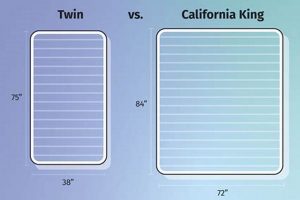
The “king” designation in a “cooling mattress king” is inextricably linked to size and dimensions, as it defines the standardized physical space the mattress occupies. This characteristic directly influences thermal performance and the individual sleeper’s experience. A larger surface area requires a proportionally greater capacity for heat dissipation to maintain a consistent temperature across the entire sleeping surface. For instance, a cooling technology effective in a smaller mattress may prove inadequate in a king-sized variant if the dissipation capacity is not scaled appropriately. Therefore, the dimensions necessitate robust cooling mechanisms to counteract the increased potential for heat retention inherent in a larger mattress volume.
Furthermore, the distribution of body heat across a king-sized mattress differs from that of smaller sizes, especially when accommodating multiple sleepers. The increased width and length create zones where heat concentration may vary significantly. As an example, if two individuals sleep close together on a “cooling mattress king,” the area between them will likely require more intensive cooling technology compared to the edges of the mattress. Consequently, the design must account for these thermal gradients, potentially incorporating zoned cooling systems or materials with varying heat transfer coefficients. Real-world cases of dissatisfaction often stem from uneven cooling performance, where one area of the mattress remains warmer than others, disrupting sleep.
In conclusion, the size and dimensions of a “cooling mattress king” are not merely descriptive attributes but critical determinants of its cooling efficacy. The increased surface area and potential for uneven heat distribution demand enhanced cooling technologies and thoughtful design considerations. Failure to adequately address these dimensional challenges can result in compromised thermal performance and reduced user satisfaction, underscoring the importance of understanding these relationships in the context of temperature regulation.
5. Support and Comfort
The properties of support and comfort are integral considerations in the evaluation of any mattress, including a cooling mattress king. These characteristics directly influence sleep quality and are inextricably linked to the overall thermal performance of the sleeping surface. Achieving an optimal balance between support and comfort is essential for realizing the intended benefits of a temperature-regulating mattress.
- Contour and Pressure Relief
Contour refers to the mattress’s ability to conform to the sleeper’s body shape, distributing weight evenly and reducing pressure points. Adequate contour is crucial for preventing discomfort and promoting proper spinal alignment. In the context of a cooling ma
ttress king, materials used for contouring must also possess effective heat dissipation properties. For example, gel-infused memory foam can provide both contour and cooling, but its effectiveness hinges on the gel’s thermal conductivity and the foam’s breathability. Insufficient contour can lead to pressure buildup, disrupting sleep and negating the benefits of temperature regulation. - Spinal Alignment and Postural Support
Proper spinal alignment is essential for preventing back pain and promoting healthy sleep posture. A mattress that provides adequate postural support maintains the natural curvature of the spine, reducing strain on muscles and ligaments. The support system of a cooling mattress king, often composed of innersprings or high-density foam, must be engineered to provide consistent support across the entire sleeping surface. Compromised support can lead to discomfort, muscle stiffness, and reduced sleep quality, regardless of the mattress’s cooling capabilities. For example, a poorly designed innerspring system can create pressure points and disrupt spinal alignment, even if the comfort layers offer effective cooling.
- Surface Firmness and Feel
The firmness and feel of a mattress are subjective preferences that significantly impact comfort. Some individuals prefer a firm sleeping surface, while others favor a softer feel. The ideal firmness level for a cooling mattress king depends on factors such as body weight, sleeping position, and personal comfort preferences. The surface material should also be breathable and contribute to the overall cooling effect. A mismatch between firmness and individual needs can result in discomfort, restlessness, and a diminished perception of the mattress’s cooling capabilities.
- Edge Support and Usable Surface Area
Edge support is the structural reinforcement along the perimeter of the mattress. Strong edge support maximizes the usable sleeping surface area, preventing roll-off and providing a stable edge for sitting. This is especially important on a king-size mattress, where occupants might be positioned near the edges. Weak edge support reduces usable space and can contribute to a feeling of instability, diminishing both comfort and the perceived value of the cooling features. Effective edge support should maintain its integrity over time and not trap heat, which could counteract the cooling effects of the mattress’s core.
In summary, support and comfort are not independent qualities but interconnected elements that profoundly affect the efficacy of a cooling mattress king. An optimal mattress design integrates both support and comfort features with temperature-regulating technologies, ensuring a sleep experience that is both restful and thermally balanced. Failure to address either of these aspects can compromise the overall performance of the mattress and reduce user satisfaction.
6. Moisture Management

Moisture management is a critical, though often overlooked, component of a temperature-regulating extra-large mattress. The accumulation of moisture, primarily from perspiration, significantly reduces the effectiveness of cooling technologies and diminishes overall sleep comfort. When humidity builds within the mattress, it creates a thermal barrier, impeding the dissipation of heat and fostering an environment conducive to microbial growth. Consequently, mattresses designed to promote cooling must actively manage moisture to maintain their intended function. The capacity of a mattress to wick away and dissipate moisture directly affects its ability to regulate temperature and provide a comfortable sleep environment.
The implementation of effective moisture management strategies involves careful material selection and design considerations. Breathable fabrics, such as Tencel or specialized performance knits, are often employed in mattress covers to facilitate moisture wicking. These materials draw perspiration away from the body, allowing it to evaporate more readily. Additionally, internal mattress layers may incorporate moisture-wicking fibers or ventilation channels to promote airflow and prevent moisture buildup within the mattress core. An absence of such features will likely result in a damp, uncomfortable sleep surface, irrespective of the mattress’s other cooling technologies. The correlation between material selection and moisture management effectiveness is demonstrably clear.
In summation, moisture management is an indispensable element in the design and function of a cooling mattress king. Its effectiveness directly impacts the mattress’s ability to regulate temperature, maintain hygiene, and provide a comfortable sleep experience. By integrating breathable materials, moisture-wicking technologies, and appropriate ventilation systems, manufacturers can mitigate the negative effects of moisture accumulation and enhance the overall performance of these specialized sleep products. The practical significance of understanding moisture management underscores its importance in selecting a temperature-regulating mattress designed to deliver lasting comfort and optimal sleep quality.
Frequently Asked Questions
The following section addresses common inquiries and clarifies key aspects regarding temperature-regulating, extra-large mattresses. These answers aim to provide a comprehensive understanding of the technology and its implications for sleep quality.
Question 1: What is the primary benefit of a cooling mattress king?
The primary benefit lies in its ability to mitigate heat retention, promoting a cooler sleep environment. This can lead to reduced sleep disruptions, improved sleep quality, and enhanced overall comfort, particularly for individuals prone to overheating during sleep.
Question 2: How do these mattresses differ from traditional mattresses?
Unlike traditional mattresses, temperature-regulating models incorporate specialized materials and designs engineered to dissipate heat and enhance airflow. This can include gel-infused foam, breathable fabrics, and ventilation channels, features typically absent in standard mattresses.
Question 3: Are these mattresses suitable for all sleepers?
While beneficial for many, the suitability of a cooling mattress king depends on individual preferences and thermal needs. Individuals who tend to sleep cold may find the cooling effect undesirable. It is advisable to consider personal temperature sensitivities before making a purchase.
Question 4: How long does the cooling effect typically last throughout the night?
The duration of the cooling effect varies depending on the specific technology employed and environmental factors such as room temperature and bedding materials. Some mattresses utilize phase-change materials designed to regulate temperature throughout the night, while others provide a more immediate but potentially shorter-lived cooling sensation.
Question 5: Do these mattresses require special care or maintenance?
Care requirements typically align with those of standard mattresses. Regular rotation can promote even wear. It is crucial to follow the manufacturer’s instructions for cleaning and avoid using harsh chemicals that could damage the cooling technologies.
Question 6: Is the price significantly higher compared to conventional king-size mattresses?
Generally, temperature-regulating mattresses command a higher price point due to the specialized materials and advanced engineering involved in their construction. However, pricing varies de
pending on the brand, technology, and specific features offered.
In conclusion, a cooling mattress king presents a viable option for individuals seeking to improve sleep quality by mitigating heat-related discomfort. Careful consideration of individual needs and preferences is recommended before making a purchase.
The next section will offer concluding remarks summarizing key advantages and factors to consider when investing in this type of product.
Concluding Remarks
This exploration of the “cooling mattress king” category has illuminated the critical factors influencing temperature regulation and overall sleep quality. The effectiveness of such a sleeping surface hinges on material breathability, optimized airflow, advanced heat dissipation technologies, appropriate size, adequate support, and efficient moisture management. Each element contributes to the ultimate goal of mitigating heat retention and fostering a comfortable, restorative sleep environment.
The decision to invest in a “cooling mattress king” warrants careful consideration of individual needs and preferences. Given the potential for enhanced sleep quality and the implications for long-term well-being, a thorough understanding of these technologies and their impact is essential. Further research into specific brands and models is encouraged to ensure a purchase aligned with personal requirements and expectations.
![Ultimate Tempur-Pedic King Size Mattress [Guide & Review] | Organic & Natural Mattress Buyer’s Guide: Non-Toxic Sleep Solutions](https://mattressworldpa.com/wp-content/uploads/2025/07/th-8395-300x200.jpg "Ultimate Tempur-Pedic King Size Mattress [Guide & Review] Organic & Natural Mattress Buyer’s Guide: Non-Toxic Sleep Solutions")