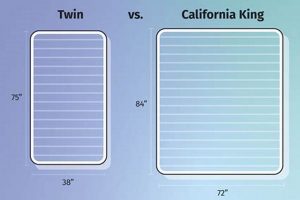
An expansive sleeping surface with a yielding top layer provides increased personal space and enhanced pressure relief. This bedding configuration is designed to accommodate multiple sleepers comfortably while minimizing motion transfer and conforming to the body’s contours. The result is often a cradling sensation and a reduction in pressure points, particularly beneficial for side sleepers and individuals with joint pain.
This type of sleep system caters to those prioritizing comfort and spaciousness. Historically, larger beds were a symbol of luxury and were reserved for the wealthy. Today, the emphasis has shifted toward promoting restorative sleep and catering to diverse sleep preferences. Benefits include improved sleep quality for couples who share a bed, enhanced comfort for individuals who move frequently during sleep, and the potential for better spinal alignment due to reduced pressure on the shoulders and hips.
The selection of appropriate bedding depends on individual needs and preferences, including factors such as sleeping position, body weight, and any pre-existing health conditions. Understanding these considerations is critical for making an informed purchasing decision that will ultimately contribute to improved sleep hygiene and overall well-being. Further details on material composition, construction methods, and suitability for different individuals will be explored.
Selection Guidance for Enhanced Sleep Comfort
The following guidance addresses key factors in selecting a large, compliant sleep surface designed to enhance comfort and promote restorative sleep.
Tip 1: Prioritize Support Core Integrity: Evaluate the underlying support structure. While the surface layer provides initial comfort, the core’s stability prevents sagging and ensures long-term spinal alignment. Consider innerspring coil counts, foam densities, or hybrid constructions.
Tip 2: Examine Material Composition: Investigate the materials used in the comfort layers. Memory foam offers contouring and pressure relief, while latex provides responsiveness and breathability. Consider CertiPUR-US certified foams to minimize off-gassing and ensure material safety.
Tip 3: Assess Motion Isolation Capabilities: Evaluate the mattress’s ability to minimize motion transfer. This is particularly important for couples where one partner is a restless sleeper. Individually wrapped coils and dense foam layers contribute to enhanced motion isolation.
Tip 4: Consider Edge Support Reinforcement: Evaluate the reinforcement of the edges. Strong edges prevent roll-off and maximize the usable sleep surface. Look for features like reinforced coils or high-density foam encasements.
Tip 5: Evaluate Temperature Regulation Features: Assess the materials’ ability to regulate temperature. Overheating can disrupt sleep. Look for features like gel-infused memory foam, breathable fabrics, or open-cell foam structures.
Tip 6: Research Third-Party Certifications: Seek certifications like OEKO-TEX Standard 100, which ensure materials are tested for harmful substances. These certifications provide assurance of product safety and quality.
Tip 7: Understand the Firmness Scale: Be aware that “soft” can vary significantly between manufacturers. Consult firmness scales (typically ranging from 1-10) and read reviews to gauge the actual feel and level of compliance.
Careful attention to these factors promotes a more informed purchase. The selection of appropriate bedding directly influences sleep quality, impacting physical and cognitive function.
Further analysis of specific product features and technological advancements will provide a more complete understanding of this bedding category.
1. Expansive sleep surface

An expansive sleep surface is a defining characteristic of a “king size soft mattress” and a primary driver of its perceived benefits. The dimensions, typically 76 inches wide and 80 inches long, inherently provide increased individual space. This augmented area directly impacts sleep quality, particularly for couples or individuals who tend to move during the night. A larger sleep zone mitigates disturbances, reducing the likelihood of contact between sleepers and minimizing the transmission of motion. For instance, a couple accustomed to a smaller bed might experience frequent awakenings due to the other person’s movements. The increased space afforded by a “king size soft mattress” alleviates this problem, creating a more tranquil sleep environment.
The importance of an expansive sleep surface extends beyond mere comfort. It facilitates a more natural sleep posture, allowing individuals to stretch out and change positions without restriction. This can be particularly beneficial for individuals with back pain or other musculoskeletal conditions, as it reduces pressure points and promotes better spinal alignment. Consider a person who sleeps on their side: a restricted sleeping surface can force them into a contorted position, exacerbating discomfort. The extra width and length of a king-size bed allows them to maintain a more ergonomic posture, potentially alleviating pain and improving overall sleep quality. In essence, the space acts as a preventative measure against constrained sleep positions and associated discomforts.
Understanding the practical significance of an expansive sleep surface is crucial for consumers when evaluating mattress options. While the “soft” component addresses comfort preferences related to firmness, the “king size” descriptor speaks to the practical considerations of space and movement. The combination of these features aims to address fundamental needs: a comfortable sleeping surface and adequate room to sleep undisturbed. Despite the benefits, it’s important to acknowledge the challenges associated with larger mattresses, such as increased cost and space requirements. Nevertheless, the expansive sleep surface remains a central advantage of a “king size soft mattress,” offering potential improvements in sleep quality and overall well-being.
2. Conforming comfort layers
Conforming comfort layers are integral to the functional definition and intended user experience of a “king size soft mattress.” These layers, typically composed of materials such as memory foam, latex, or fiber blends, are engineered to mold to the body’s contours. This adaptation is not merely aesthetic; it directly impacts pressure distribution and spinal alignment. The causal relationship is clear: the degree of conformity provided by these layers dictates the level of pressure relief experienced by the sleeper. A well-designed conforming layer reduces pressure points on areas such as the shoulders, hips, and knees, common sources of discomfort during sleep. The absence or inadequacy of such layers compromises the mattress’s ability to provide comfortable and restorative rest.
The importance of conforming layers is amplified in a “king size soft mattress” due to its larger surface area and intended use by multiple individuals with potentially varying body types and sleeping positions. The ability of the mattress to accommodate these differences hinges on the effectiveness of its conforming layers. For example, a couple may have disparate pressure point needs; one partner might be a side sleeper requiring significant shoulder and hip cushioning, while the other might sleep on their back and need more uniform support. A well-designed system of conforming layers can adapt to these individual needs, providing personalized comfort across the entire surface of the mattress. This contrasts with firmer or less adaptable mattresses, which often force sleepers to adjust to the mattress rather than the other way around. Practical application of this understanding involves carefully considering the density, composition, and thickness of the comfort layers when selecting a “king size soft mattress.”
In summary, conforming comfort layers are not merely an optional feature but a core component of the functional definition of a “king size soft mattress.” They directly influence pressure relief, spinal alignment, and overall sleep quality. While the benefits are substantial, challenges remain in balancing conformity with adequate support and durability. Understanding the interplay between material properties, construction techniques, and individual sleep needs is paramount to making an informed purchase decision. The combination of conforming comfort with the expansive sleep surface ultimately defines the potential for restorative sleep provided by this type of mattress.
3. Pressure point relief

Pressure point relief is a primary design objective for a “king size soft mattress” and a key determinant of its suitability for specific individuals. The design intends to alleviate concentrated stress on bony prominences such as the hips, shoulders, and knees during sleep. Insufficient pressure relief causes discomfort, disrupts sleep cycles, and can exacerbate existing musculoskeletal conditions. A direct causal relationship exists between the surface properties of the mattress and the degree of pressure reduction experienced by the sleeper. Consider, for instance, an individual with arthritis: prolonged pressure on affected joints can lead to inflammation and pain, significantly hindering sleep quality. A “king size soft mattress” with effective pressure-relieving components aims to mitigate these effects, allowing for a more restful and restorative sleep period.
The practical significance of pressure relief is amplified by the “king size” dimension of the mattress. This larger surface area is often shared by two individuals, each with unique body contours and pressure distribution patterns. Therefore, the mattress must provide sufficient contouring and support to accommodate these individual variations. For example, a lighter-weight individual may find sufficient pressure relief on a moderately soft surface, while a heavier person will need a more substantial degree of cushioning to prevent bottoming out and subsequent pressure buildup. Further, sleeping position is critical: side sleepers typically require more focused pressure relief in the shoulder and hip regions, whereas back sleepers may benefit from a more uniform distribution of support. Mattress manufacturers often address these requirements by incorporating multiple layers of varying density and firmness, engineered to provide targeted pressure relief across the entire sleep surface.
In summary, pressure point relief is not merely a desirable attribute but a functional necessity for a “king size soft mattress.” It directly influences sleep quality, comfort, and overall well-being. While technological advancements in materials and construction techniques have improved the capacity for targeted pressure reduction, challenges remain in achieving optimal results for all individuals. The selection of an appropriate “king size soft mattress” necessitates a careful evaluation of individual needs, sleeping habits, and any pre-existing health conditions, thereby ensuring that the mattress effectively addresses the specific requirements for pressure point relief and promotes a healthy sleep environment.
4. Motion isolation ability
Motion isolation ability is a critical performance parameter for a “king size soft mattress,” directly impacting sleep quality, particularly for co-sleeping individuals. The characteristic softness, while contributing to initial comfort, can amplify motion transfer across the mattress surface. Inadequate motion isolation results in disturbances when one sleeper shifts positions, gets in or out of bed, or experiences restless sleep. The direct effect is fragmented sleep patterns and diminished restorative sleep for the other sleeper. Consider a scenario where one partner routinely awakens early: without effective motion isolation, the other partner’s sleep will be consistently interrupted, leading to cumulative sleep deprivation. Effective motion isolation is not a luxury but a functional requirement for minimizing sleep disruption in shared sleep environments.
Achieving optimal motion isolation in a “king size soft mattress” necessitates specific design and material choices. Individually wrapped coils, rather than interconnected coil systems, are frequently employed to minimize the transmission of movement. Dense memory foam or latex layers, strategically positioned within the mattress construction, also dampen motion transfer by absorbing and dissipating energy. The practical application of this principle is evident in mattresses that incorporate a “pocketed coil” system coupled with a high-density memory foam comfort layer. This combination effectively isolates movement at its source, preventing it from propagating across the sleep surface. The selection of appropriate materials and construction methods directly influences the magnitude of motion transfer and, consequently, the degree of sleep disturbance experienced by co-sleepers.
In conclusion, motion isolation ability is a non-negotiable attribute for a “king size soft mattress” intended for shared sleep environments. The combination of a large surface area and compliant comfort layers necessitates a deliberate focus on mitigating motion transfer. While material science and engineering offer solutions for enhancing motion isolation, challenges remain in balancing this performance parameter with other desirable characteristics such as comfort, support, and durability. Informed purchasing decisions require careful consideration of mattress construction, material composition, and independent testing data related to motion isolation performance, ultimately influencing the quality of sleep experienced by both individuals sharing the bed.
5. Temperature regulation

Temperature regulation is a critical factor influencing sleep quality and is particularly relevant in the context of a “king size soft mattress.” The size and material composition can either exacerbate or mitigate heat retention, necessitating careful consideration of temperature-regulating features.
- Material Breathability
The breathability of ma
ttress materials directly impacts air circulation and heat dissipation. Dense memory foam, while offering pressure relief, tends to retain heat. Conversely, open-cell foams, latex, and natural fibers like cotton and wool promote airflow, reducing heat buildup. The choice of materials significantly influences the microclimate within the sleep environment. For instance, a mattress encased in a tightly woven synthetic fabric will restrict airflow compared to one with a more porous natural fiber cover. - Ventilation Systems
Some “king size soft mattresses” incorporate active or passive ventilation systems to enhance airflow. These systems can range from strategically placed ventilation channels within the foam layers to perforated surfaces designed to promote air exchange. The effectiveness of these systems depends on their design and the overall material composition of the mattress. A mattress with ventilation channels may still retain heat if the surrounding materials are not sufficiently breathable.
- Phase Change Materials (PCMs)
PCMs are substances that absorb and release heat to maintain a consistent temperature. These materials can be integrated into mattress covers or comfort layers to mitigate temperature fluctuations. PCMs can help regulate the sleeper’s body temperature by absorbing excess heat when the sleeper is warm and releasing it when the sleeper is cool. This technology aims to create a more stable and comfortable sleep environment. Consider, for example, a PCM-infused mattress cover that reduces heat buildup during the initial hours of sleep, preventing overheating and promoting deeper rest.
- Surface Area Considerations
The large surface area of a “king size soft mattress” inherently presents a greater potential for heat accumulation compared to smaller mattresses. Body heat is distributed across a wider area, but the overall volume of heat can be substantial, particularly when two individuals are sharing the bed. Therefore, effective temperature regulation strategies are essential to prevent overheating and maintain a comfortable sleep temperature. Simply put, a larger mattress necessitates more robust temperature management features.
The interplay between these factors determines the overall thermal performance of a “king size soft mattress.” Material selection, ventilation design, and the incorporation of advanced technologies like PCMs contribute to a mattress’s ability to regulate temperature and promote a comfortable sleep environment. Consumers must evaluate these features in relation to their individual sleep preferences and environmental conditions to ensure optimal thermal comfort and sleep quality.
6. Long term support
Sustained structural integrity is paramount for any mattress, but assumes heightened importance in the context of a “king size soft mattress.” The expansive surface area and compliant comfort layers place increased demands on the underlying support system. Degradation of this support over time compromises comfort, spinal alignment, and overall sleep quality.
- Core Material Durability
The composition and density of the core materials directly influence the lifespan and load-bearing capacity of the mattress. High-density foams, robust coil systems, and reinforced perimeter edges contribute to long-term structural stability. For instance, a low-density foam core will compress prematurely under the weight of multiple sleepers, resulting in sagging and uneven support. Conversely, a core constructed with high-density polyurethane or latex foam is more resistant to compression and deformation over time.
- Coil System Integrity
In innerspring mattresses, the gauge and construction of the coils play a crucial role in maintaining long-term support. Thicker gauge coils offer greater resistance to deformation and provide more consistent support across the mattress surface. Furthermore, the type of coil system, whether interconnected or individually pocketed, affects the distribution of weight and the transmission of motion. A well-designed coil system will maintain its shape and responsiveness over years of use, preventing sagging and ensuring proper spinal alignment.
- Edge Support Reinforcement
Reinforced edge support prevents edge collapse and maximizes the usable sleep surface. Without adequate edge support, the perimeter of the mattress will compress and deform over time, making it difficult to sleep comfortably near the edges. Edge support systems typically consist of high-density foam encasements or additional coils positioned along the perimeter of the mattress. A robust edge support system contributes to the overall stability and longevity of the mattress, particularly for individuals who sleep near the edge of the bed.
- Sag Resistance and Warranty
Sag resistance is a primary indicator of long-term support and overall durability. Mattress warranties often specify an acceptable level of sagging before a claim can be made. Monitoring the mattress for signs of sagging or unevenness is essential for assessing its long-term performance. Reputable manufacturers conduct rigorous testing to evaluate sag resistance and provide warranties that reflect the expected lifespan of the product. A comprehensive warranty provides assurance of the manufacturer’s commitment to quality and long-term support.
The sustained support provided by a “king size soft mattress” is a function of the materials, construction, and design. Degradation of this support impacts comfort, spinal alignment, and overall sleep quality. Careful consideration of these factors and adherence to the manufacturer’s care instructions will maximize the lifespan and performance of the mattress.
7. Material durability

The longevity and sustained performance of a “king size soft mattress” are inextricably linked to the durability of its constituent materials. Premature degradation compromises support, comfort, and hygiene, directly impacting the value proposition of such a significant investment.
- Foam Density and Resilience
Foam density, measured in pounds per cubic foot (PCF), dictates resistance to compression and permanent deformation. Higher density foams, typically exceeding 2.5 PCF for polyurethane and 4 PCF for memory foam, exhibit superior resilience and maintain their structural integrity over extended use. Conversely, low-density foams are prone to sagging and indentation, diminishing both support and comfort. For example, a “king size soft mattress” with a low-density comfort layer will exhibit noticeable body impressions within a relatively short timeframe, compromising its intended performance.
- Coil Gauge and Tempering
In hybrid or innerspring models, coil gauge, a measure of wire thickness, and the tempering process significantly influence durability. Lower gauge (thicker) coils provide greater resistance to deformation and offer enhanced support for heavier individuals. Tempering, a heat treatment process, increases the steel’s elasticity and resistance to permanent bending. A “king size soft mattress” with inadequately tempered coils will exhibit diminished support along the perimeter and in areas of concentrated weight, leading to uneven sleep surfaces and reduced lifespan.
- Fabric Strength and Abrasion Resist
anceThe ticking, or outer fabric encasing the mattress, must withstand constant abrasion and resist tearing. Durable fabrics, such as tightly woven polyester blends or natural fibers like cotton treated for stain resistance, offer superior protection against wear and tear. A “king size soft mattress” with a fragile or loosely woven ticking is susceptible to rips and tears, compromising the integrity of the internal components and potentially voiding the warranty.
- Adhesive Stability and Lamination Integrity
The adhesives used to bond the various layers of the mattress must maintain their integrity over time and under varying environmental conditions. Low-quality adhesives can degrade, leading to delamination of the comfort layers and compromising the overall structural stability of the mattress. For example, a “king size soft mattress” where the comfort layers separate from the support core will exhibit unevenness and diminished support, rendering it uncomfortable and potentially unusable.
These interconnected factors directly influence the long-term performance and economic value of a “king size soft mattress.” Selecting a mattress constructed with high-quality, durable materials is essential for maximizing lifespan and ensuring sustained comfort and support. Consideration of these factors mitigates the risk of premature degradation and ensures a more rewarding long-term investment.
Frequently Asked Questions
The following questions address common inquiries regarding the selection, maintenance, and suitability of a king size soft mattress. This information aims to provide clarity and facilitate informed decision-making.
Question 1: What distinguishes a “soft” mattress from other firmness levels?
A “soft” mattress is characterized by a high degree of surface compliance, conforming readily to body contours and providing minimal resistance to pressure. This generally translates to a firmness rating of 3 or less on a scale of 1 to 10, where 1 represents the softest and 10 the firmest. The selection is subjective, depending on individual sleep preferences and support needs.
Question 2: Is a “king size soft mattress” appropriate for individuals with back pain?
While the conforming nature of a soft mattress may provide initial comfort, its suitability for individuals with back pain requires careful consideration. A lack of adequate underlying support can exacerbate spinal misalignment and pressure point discomfort. A consultation with a healthcare professional is recommended to determine the optimal firmness level based on individual medical history and condition.
Question 3: What is the recommended weight capacity for a “king size soft mattress”?
The weight capacity varies depending on the construction and materials used. Typically, a “king size soft mattress” is designed to accommodate a combined weight of up to 500-600 pounds. Exceeding this limit can accelerate wear and tear, compromising support and potentially voiding the warranty. Consult the manufacturer’s specifications for specific weight capacity guidelines.
Question 4: How should a “king size soft mattress” be properly maintained to maximize its lifespan?
Proper maintenance includes regular rotation (every 3-6 months) to distribute wear evenly, the use of a protective mattress cover to prevent stains and spills, and periodic vacuuming to remove dust mites and allergens. Avoid jumping or standing on the mattress, as this can damage the internal components. Refer to the manufacturer’s instructions for specific cleaning recommendations.
Question 5: What are the potential drawbacks of a “king size soft mattress”?
Potential drawbacks include a tendency to retain heat, reduced edge support compared to firmer models, and a higher degree of motion transfer unless specifically designed with motion isolation technology. The softness may also be unsuitable for stomach sleepers or individuals who require firm spinal support.
Question 6: What factors should be considered when comparing different “king size soft mattress” options?
Key factors include material composition (foam density, coil type, fabric quality), construction techniques (layering, edge support), temperature regulation features, motion isolation capabilities, warranty terms, and independent reviews. Evaluating these aspects ensures a comprehensive assessment of value and suitability.
In conclusion, selecting a “king size soft mattress” requires a thorough understanding of individual sleep needs, preferences, and potential limitations. This information serves as a starting point for a more in-depth evaluation of available options.
The next section will delve into specific product recommendations and provide comparative analyses based on the discussed criteria.
King Size Soft Mattress
This exploration has illuminated the multifaceted considerations surrounding the selection and utilization of a “king size soft mattress”. From its expansive surface area and conforming comfort layers to the critical aspects of pressure point relief, motion isolation, temperature regulation, long-term support, and material durability, each attribute contributes to the overall sleep experience. The analysis underscores that the inherent softness must be balanced with adequate support, necessitating careful evaluation of material composition and construction techniques.
The suitability of a “king size soft mattress” is ultimately contingent upon individual needs and preferences. While the conforming nature may appeal to some, others may require firmer support for optimal spinal alignment. Therefore, prospective purchasers are encouraged to conduct thorough research, consult with sleep professionals if necessary, and prioritize long-term value over initial cost. The investment in a quality sleep surface should be viewed as an investment in long-term health and well-being.
![Ultimate Tempur-Pedic King Size Mattress [Guide & Review] | Organic & Natural Mattress Buyer’s Guide: Non-Toxic Sleep Solutions](https://mattressworldpa.com/wp-content/uploads/2025/07/th-8395-300x200.jpg "Ultimate Tempur-Pedic King Size Mattress [Guide & Review] Organic & Natural Mattress Buyer’s Guide: Non-Toxic Sleep Solutions")