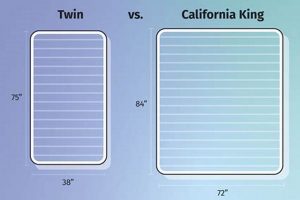
A smaller bed frame component designed for queen-sized beds paired with a significantly larger mattress intended for king-sized beds presents a configuration challenge. This mismatch often arises from individuals seeking to utilize existing furniture while accommodating a desire for increased sleeping surface. The result is an overhang of the mattress on either side, or both sides, of the headboard.
The practice may be adopted for aesthetic or pragmatic reasons. Individuals may prioritize the cost savings associated with reusing a headboard. Others might find a particular headboard’s style preferable to available king-sized options. While offering a potential solution to budgetary or design constraints, it’s important to acknowledge potential drawbacks. These may include a visually unbalanced appearance, lack of proper support for the mattress edges, and potential for damage to both the headboard and the mattress over time.
Considerations beyond simple aesthetics and cost savings are crucial when contemplating this arrangement. The dimensions, structural integrity, and intended use of the bed influence the suitability of this pairing. Subsequent discussion will explore potential modifications, design adaptations, and alternative solutions to achieve a balanced and supportive sleep environment when faced with these dimensional discrepancies.
Tips for Pairing a Queen Headboard with a King Mattress
Successfully integrating a queen headboard with a king mattress requires careful planning and execution. The following tips address key considerations for achieving a visually appealing and structurally sound arrangement.
Tip 1: Measure Accurately: Precisely measure both the headboard width and the king mattress width. This provides a clear understanding of the overhang on each side. Note the height of the headboard in relation to the mattress to prevent obscuring the design.
Tip 2: Prioritize Stability: King mattresses are significantly heavier than queen mattresses. Ensure the bed frame, separate from the headboard, is designed to support the weight of a king mattress and occupants. Reinforcement may be necessary.
Tip 3: Consider Wall Mounting: Detaching the headboard from the bed frame and mounting it directly to the wall allows for independent positioning. This compensates for the size discrepancy and prevents stress on the queen headboard.
Tip 4: Add Side Tables: Strategically positioned side tables can visually balance the overhang created by the larger mattress. Choose tables with widths that minimize the exposed mattress edge.
Tip 5: Explore Upholstery Solutions: Consider adding upholstered panels to the sides of the headboard. This can effectively extend the headboards width, creating a cohesive and intentional design. Ensure the upholstery complements the headboard’s existing material.
Tip 6: Use Decorative Pillows: King-size pillows, arranged thoughtfully, can visually reduce the perceived overhang. Employing a layered approach with varying sizes and textures adds depth and obscures the size difference.
Effectively addressing these considerations enhances the visual appeal, structural integrity, and overall comfort of the bed. Proper planning mitigates potential issues associated with the size mismatch.
The subsequent sections will address common challenges and offer advanced design strategies to further integrate this atypical pairing into a cohesive bedroom aesthetic.
1. Dimension Mismatch

The inherent disparity in dimensions between a queen headboard and a king mattress forms the crux of challenges and opportunities when these elements are combined. This mismatch necessitates careful consideration of aesthetics, support, and potential modifications to achieve a cohesive and functional bedroom setup.
- Overhang and Visual Imbalance
The most immediate consequence is the mattress extending beyond the headboard’s width. This overhang disrupts the visual harmony of the bed, creating an unbalanced appearance. For instance, a king mattress, typically 76 inches wide, paired with a standard queen headboard (60 inches) results in an 8-inch overhang on each side. This asymmetry can detract from the overall design and perceived elegance of the bedroom.
- Compromised Support
A queen headboard is designed to attach to a queen-sized bed frame. Using a king mattress on a non-king frame can compromise support, particularly at the mattress edges. The weight distribution is uneven, potentially leading to sagging or accelerated wear on the mattress, especially along the unsupported edges. This lack of proper support can also impact sleep quality and contribute to discomfort.
- Attachment Difficulties
Standard headboard attachments are engineered for size-matched bed frames. Adapting a queen headboard to a king-sized frame may require custom modifications or workarounds. Drilling new holes, using adapter plates, or relying on wall mounting are common solutions. However, these alterations can compromise the structural integrity of the headboard or the bed frame if not executed correctly.
- Design Limitations
The dimension mismatch restricts design choices. The queen headboard becomes a focal point constrained by the larger mattress, limiting the ability to introduce other decorative elements. For example, bedside tables must be carefully selected and positioned to compensate for the overhang, potentially restricting the type and size of furniture that can be used. Furthermore, the height of the headboard may appear disproportionately small compared to the overall bed size.
These facets underscore the challenges posed by the dimensional discrepancy. Mitigating these challenges requires strategic planning and creative solutions. Failing to address them can compromise the bed’s appearance, comfort, and longevity. Therefore, careful consideration of these aspects is paramount when opting to pair a queen headboard with a king mattress.
2. Structural Support

The ability of a bed setup to withstand applied forces and maintain its integrity is paramount. When pairing a queen headboard with a king mattress, structural support becomes a critical consideration due to the inherent size and weight discrepancies. The following points detail crucial aspects of structural integrity in this context.
- Bed Frame Adequacy
The bed frame, independently of the headboard, bears the primary load of the mattress and occupants. A frame designed for a queen mattress may lack the necessary support for a king mattress, leading to sagging, instability, or eventual failure. Reinforcement with additional slats, center supports, or a complete frame replacement might be required to ensure adequate weight distributi
on and prevent damage to both the mattress and the frame itself. The existing frame needs to handle the additional weight that comes with a king mattress. - Headboard Attachment Integrity
The method by which the queen headboard is attached to the king-sized bed frame plays a vital role in overall stability. Standard queen headboard mounting hardware may not be suitable for the wider king frame. Modification or custom fabrication of brackets may be necessary to ensure a secure and robust connection. Wall mounting the headboard is a strategy to bypass the need for direct frame attachment, transferring the headboard’s weight to the wall structure and increasing overall bed stability.
- Load Distribution and Stress Points
An improperly supported king mattress placed on a queen frame creates uneven load distribution, concentrating stress on specific points of the frame and headboard attachments. Over time, this localized stress can cause warping, cracking, or complete breakage of the frame components. Addressing this requires careful analysis of load paths and reinforcement of vulnerable areas. For example, adding legs in the center of the king-sized bedframe, where queen-sized frames do not normally have them, is essential to disperse the weight that will accumulate.
- Material Strength and Compatibility
The materials used in the bed frame and headboard influence their capacity to withstand stress. A solid wood frame offers greater strength and durability compared to particleboard or lightweight metal. Ensuring compatibility between the headboard and frame materials is also essential. A heavy queen headboard attached to a flimsy metal frame might cause instability, regardless of the frame’s size. Therefore, materials should be evaluated for their weight-bearing capacity.
The structural integrity of a bed utilizing a queen headboard with a king mattress is not merely an aesthetic consideration but a functional imperative. Failure to address these concerns can lead to discomfort, mattress damage, frame failure, and potential safety hazards. Prioritizing robust support mechanisms is fundamental to ensuring the longevity and functionality of the bed.
3. Visual Aesthetics

Visual aesthetics play a crucial role when pairing a queen headboard with a king mattress, impacting the overall harmony and perceived balance of the bedroom space. The success of this unconventional pairing hinges on mitigating the inherent size discrepancy and creating a visually cohesive design.
- Proportion and Scale
The size difference between the headboard and mattress can create a visual imbalance, where the headboard appears too small for the bed. Successfully managing proportion involves carefully considering the headboard’s height, width, and style relative to the larger mattress. A tall headboard with vertical design elements can create a sense of height that partially offsets the increased width of the king mattress. For example, adding visually weighty bedside tables can help to fill the visual void created on either side of the queen headboard. Conversely, a low or overly ornate headboard can be overwhelmed by the king mattress, resulting in an awkward aesthetic.
- Color and Texture Coordination
Strategic use of color and texture can minimize the visual impact of the size difference. Choosing a headboard in a neutral color that blends with the wall color or bedding helps to visually expand its perceived size. Incorporating textured fabrics or patterns on the headboard can also draw the eye and distract from the mattress overhang. In contrast, a brightly colored or heavily patterned headboard will accentuate the size discrepancy, making the king mattress appear even wider. Coordinating these elements creates an overall harmony.
- Negative Space Management
The exposed space on either side of the headboard due to the wider king mattress presents an opportunity for creative design solutions. Thoughtful placement of bedside tables, lamps, or decorative objects can fill this negative space and create a balanced visual composition. Conversely, leaving the space empty can highlight the mismatch and create an unfinished look. For instance, matching floor lamps or plants of equal height on both sides can create symmetry and draw attention away from the mattress’s extended width.
- Bedding and Accessories
The choice of bedding and accessories significantly contributes to the overall aesthetic. King-sized bedding that drapes elegantly over the sides of the mattress can soften the hard lines of the overhang and create a more cohesive look. Using decorative pillows of varying sizes and textures can also add visual interest and distract from the size difference. Minimizing overly patterned or busy bedding can prevent it from competing with the headboard and overwhelming the space. Solid or simply designed beddings are helpful for creating harmony.
These elements of visual aesthetics are integral to successfully integrating a queen headboard with a king mattress. When executed thoughtfully, the size discrepancy can be minimized, resulting in a visually pleasing and harmonious bedroom environment.
4. Headboard Mounting

Headboard mounting is a crucial aspect of successfully integrating a queen headboard with a king mattress. The standard attachment mechanisms designed for queen-sized beds often prove inadequate or incompatible with the wider dimensions of a king-sized frame. This necessitates alternative approaches to secure the headboard and ensure stability. Improper mounting can lead to a variety of issues, including wobbling, detachment, and potential damage to both the headboard and the bed frame. Moreover, the visual appeal of the bed is compromised if the headboard is not securely and properly positioned.
Several mounting solutions exist. One option involves adapting the existing queen-sized frame or headboard with modification kits or custom brackets to accommodate the king-sized bed frame. These kits provide the necessary hardware to bridge the size gap and ensure a secure connection. Another approach is to detach the headboard completely from the bed frame and mount it directly to the wall. This method offers greater flexibility in terms of positioning and eliminates the need for frame modifications. Wall mounting also transfers the headboard’s weight to the wall structure, potentially enhancing stability. However, it requires careful consideration of wall type and the use of appropriate mounting hardware to prevent damage. For example, using wall anchors that are not designed to hold the weight of the headboard might make the headboard unstable or create damage to the wall.
Effective headboard mounting is not merely a matter of aesthetics; it is essential for the structural integrity and safety of the bed. Properly securing the headboard prevents it from shifting or falling, minimizing the risk of injury. Furthermore, a well-mounted headboard contributes to the overall stability of the bed, enhancing sleep quality and prolonging the lifespan of both the mattress and the bed frame. The selection of the appropriate mounting technique should be carefully considered based on the specific characteristics of the headboard, the bed frame, and the wall structure to maximize stability, safety, and visual appeal.
5. Bed Frame Compati
bility
The concept of bed frame compatibility assumes heightened importance when combining a queen headboard with a king mattress. A standard queen-sized bed frame is dimensionally inadequate to properly support a king mattress. This dimensional mismatch leads to a variety of structural and stability issues. For example, a queen frame lacks the width and support required for a king mattress, causing overhang and potential sagging of the mattress edges. This, in turn, accelerates wear on the mattress and compromises sleep comfort. The absence of adequate support also increases the risk of frame failure under the increased weight of the larger mattress. The incompatibility can further strain the attachment points between the headboard and the frame, weakening the connection and potentially causing the headboard to become unstable.
Addressing this incompatibility requires careful consideration and often necessitates modifications. One approach involves using a king-sized bed frame and adapting the queen headboard to fit. This may involve custom fabrication of brackets or modifications to the headboard itself. Alternatively, the headboard can be detached from the frame entirely and mounted directly to the wall, bypassing the need for frame attachment. However, this approach requires careful assessment of the wall’s structural capacity to support the headboard’s weight. In real-world scenarios, individuals seeking cost savings or a specific aesthetic may attempt to use a queen frame with a king mattress, only to encounter issues with mattress support, frame stability, and eventual structural failure. Therefore, recognizing the incompatibility is a critical first step in developing a safe and functional bed setup.
In summary, bed frame compatibility is a non-negotiable component of successfully integrating a queen headboard with a king mattress. Ignoring this factor leads to compromised structural integrity, reduced mattress lifespan, and potential safety hazards. While creative solutions may mitigate some of the challenges, a comprehensive understanding of the dimensional and weight-bearing requirements is essential for achieving a stable, comfortable, and long-lasting bed.
6. Overhang Management

Overhang is an inevitable consequence of combining a smaller queen headboard with a larger king mattress. The wider king mattress extends beyond the edges of the queen headboard, creating a visual and functional issue that demands careful management. This is not merely an aesthetic concern; the unsupported edges of the mattress are susceptible to sagging and accelerated wear. Inconsistent weight distribution can compromise the mattress’s structural integrity, shortening its lifespan and potentially affecting sleep quality. For instance, individuals who frequently sit on the edges of the bed might notice a gradual breakdown of the mattress material in these unsupported areas.
Effective overhang management encompasses a range of strategies to minimize the negative impact of this dimensional mismatch. One common approach involves strategically positioning bedside tables or other furniture pieces to visually balance the overhang. The presence of these elements can distract from the exposed mattress edges and create a more cohesive design. Another technique is the use of bedding and accessories, such as carefully draped blankets or strategically placed pillows, to conceal or minimize the perceived overhang. In situations where aesthetics are paramount, custom-made side panels can be attached to the headboard to extend its width, providing a more seamless integration with the king mattress. Each of these solutions aims to address the functional and visual challenges posed by the overhang, contributing to a more balanced and aesthetically pleasing bedroom environment.
Ultimately, successful overhang management is an integral component of effectively utilizing a queen headboard with a king mattress. Ignoring this aspect can result in an unbalanced and visually unappealing bed setup, as well as potential damage to the mattress itself. By implementing thoughtful design strategies and prioritizing structural support, it is possible to mitigate the negative effects of the overhang and achieve a comfortable and aesthetically pleasing sleeping space. The key lies in recognizing the challenges presented by the size discrepancy and proactively addressing them through carefully considered design choices.
7. Stability Concerns

The implementation of a queen headboard with a king mattress inherently introduces stability concerns due to dimensional and weight distribution disparities. A queen headboard, designed for a narrower bed frame, often lacks adequate attachment points or structural support to accommodate the increased width and mass of a king mattress. This discrepancy can manifest as wobbling, tilting, or even complete detachment of the headboard, particularly with normal use or accidental impact. For instance, leaning against an inadequately secured headboard can place undue stress on the attachment points, leading to gradual loosening or sudden failure. A practical example involves a scenario where a poorly attached headboard falls forward, posing a potential hazard to occupants and damaging adjacent furniture. Understanding these stability concerns is vital for ensuring user safety and preventing property damage.
Further compounding these issues is the uneven weight distribution resulting from the king mattress extending beyond the queen-sized bed frame. The unsupported edges of the mattress can create leverage, placing additional strain on the headboard and its connection to the frame. This is particularly problematic if the bed frame itself is not designed to support the weight of a king mattress, potentially leading to sagging or structural failure of the frame. One common consequence is accelerated wear and tear on the mattress, especially along the unsupported edges, resulting in reduced comfort and longevity. Addressing these concerns requires a multifaceted approach, including reinforcing the bed frame, utilizing secure headboard attachment methods (such as wall mounting or custom brackets), and ensuring proper weight distribution across the bed structure.
In conclusion, stability concerns are an unavoidable and critical consideration when employing a queen headboard with a king mattress. Neglecting these concerns can lead to a range of adverse outcomes, from compromised user safety to accelerated wear and tear on both the bed frame and mattress. Prioritizing robust attachment methods, adequate frame support, and careful weight distribution is essential for mitigating these risks and achieving a stable, safe, and long-lasting bed setup. The practical significance of this understanding lies in preventing accidents, prolonging the lifespan of bedding components, and ensuring a comfortable and secure sleep environment.
Frequently Asked Questions
This section addresses common inquiries regarding the pairing of a queen headboard with a king mattress. The information presented aims to provide clarity and guide informed decision-making.
Question 1: Is it structurally sound to use a queen headboard with a king mattress?
The structural soundness of such an arran
gement depends heavily on the support provided by the bed frame itself. A king-sized frame is essential to properly support the mattress. The queen headboard, if securely attached to a king frame, serves primarily as a decorative element and does not contribute significantly to the overall structural integrity.
Question 2: What are the aesthetic considerations when pairing a queen headboard with a king mattress?
The primary aesthetic concern is the overhang of the mattress beyond the width of the headboard. This can create a visually unbalanced appearance. Strategic placement of bedside tables and appropriately sized bedding can help to mitigate this imbalance.
Question 3: How can a queen headboard be securely attached to a king-sized bed frame?
Secure attachment often requires modification or custom-fabricated brackets. Wall mounting the headboard is an alternative solution, bypassing the need for frame attachment entirely. In any scenario, ensure appropriate hardware suitable for the weight and dimensions is utilized.
Question 4: Does using a queen headboard with a king mattress void the mattress warranty?
The impact on the mattress warranty depends on the specific terms and conditions outlined by the manufacturer. Improper support, leading to mattress damage, may void the warranty. Review the warranty documentation carefully.
Question 5: What is the recommended height for a queen headboard when used with a king mattress?
The recommended height is subjective and depends on personal preference and the overall bedroom design. However, a taller headboard can help to visually balance the increased width of the king mattress, minimizing the perceived size discrepancy.
Question 6: Are there any safety concerns associated with using a queen headboard with a king mattress?
Safety concerns arise primarily from inadequate headboard attachment and insufficient frame support. An unstable headboard poses a risk of falling or causing injury. Ensure the headboard is securely mounted and the bed frame is capable of supporting the weight of the king mattress.
In summary, pairing a queen headboard with a king mattress presents both aesthetic and structural challenges. Addressing these challenges with careful planning and appropriate modifications is essential for achieving a safe and visually pleasing outcome.
The following section provides potential design solutions to address the identified challenges.
Conclusion
The preceding analysis has explored the complexities inherent in utilizing a queen headboard with a king mattress. Key considerations include dimensional discrepancies, structural integrity, visual aesthetics, and potential safety hazards. While the combination may present cost-saving or aesthetic advantages, individuals must carefully address the associated challenges to ensure a stable, comfortable, and visually balanced bed setup.
Ultimately, informed decision-making is paramount. Prioritize a comprehensive evaluation of structural support, secure attachment methods, and visual harmony. By addressing these critical factors, individuals can mitigate potential risks and achieve a functional and aesthetically pleasing outcome. Failure to do so may result in compromised safety, accelerated wear, and a diminished sleep experience.
![Ultimate Tempur-Pedic King Size Mattress [Guide & Review] | Organic & Natural Mattress Buyer’s Guide: Non-Toxic Sleep Solutions](https://mattressworldpa.com/wp-content/uploads/2025/07/th-8395-300x200.jpg "Ultimate Tempur-Pedic King Size Mattress [Guide & Review] Organic & Natural Mattress Buyer’s Guide: Non-Toxic Sleep Solutions")