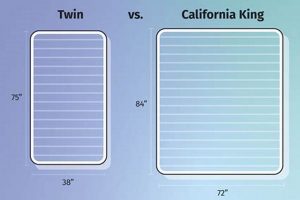
A specialized sleeping surface designed for recreational vehicles, specifically tailored to fit the dimensions of a camper, typically offering increased width compared to standard RV mattresses while remaining shorter than a residential king. This type of bedding solution often prioritizes comfort and space efficiency within the limited confines of a mobile living environment. For example, some models incorporate memory foam or latex for pressure relief and support during travel.
The significance of a properly sized and comfortable sleeping platform in a camper relates directly to the overall travel experience. Adequate rest contributes to improved driver alertness and passenger well-being. Historically, RV mattresses were often viewed as an afterthought, resulting in discomfort and sleep disruption. Modern iterations, however, emphasize ergonomic design and durable construction to withstand the rigors of road travel. This shift reflects a growing understanding of the importance of sleep quality for recreational travelers.
The following article delves into the specific characteristics, advantages, and considerations associated with choosing a bedding solution optimized for camper configurations. Detailed information regarding materials, dimensions, and comparative analyses will be presented to provide a comprehensive overview for potential purchasers.
Camper King Mattress Selection
Optimizing sleep quality within a camper environment necessitates careful mattress selection. The subsequent guidelines offer insight into key factors influencing the purchase decision.
Tip 1: Measure Available Space Accurately: Prior to any purchase, precisely measure the designated mattress area within the camper. Account for any obstructions, such as wheel wells or built-in furniture. Deviations from standard dimensions are common in RVs.
Tip 2: Prioritize Mattress Material: Consider the pros and cons of various mattress materials. Memory foam offers conforming support and pressure relief. Latex provides breathability and responsiveness. Innerspring mattresses may be more affordable but can be less durable for travel.
Tip 3: Evaluate Firmness Level: Determine the optimal firmness level based on individual sleep preferences and physical requirements. A firmer mattress can provide better support for back sleepers, while a softer mattress may be preferable for side sleepers.
Tip 4: Assess Thickness and Weight: Be mindful of the mattress’s thickness and weight. A thicker mattress may offer greater comfort but can reduce headroom. A heavier mattress can impact fuel efficiency and overall vehicle weight.
Tip 5: Consider Motion Isolation: If sharing the camper with a partner, evaluate the mattress’s ability to isolate motion. Memory foam and pocketed coil mattresses typically excel in this area, minimizing sleep disturbance caused by movement.
Tip 6: Evaluate Breathability: Consider the mattresss breathability, especially in warm climates. Mattresses with breathable covers and open-cell foam construction can help regulate temperature and prevent overheating.
Tip 7: Check for Certifications: Look for certifications such as CertiPUR-US, which ensures the mattress foam has been tested for harmful substances and meets specific emissions standards.
Selecting the correct bedding solution is crucial for camper comfort. By considering these factors, one can optimize rest and recuperation during travels. The following sections will delve into the cleaning and maintenance associated with camper mattresses.
1. Dimensions and Fit

The dimensional compatibility between a sleeping surface and the available space within a camper directly impacts user comfort and functionality. Precise measurement and careful consideration of fit are essential when selecting a “camper king mattress” to ensure optimal utilization of the limited area.
- Standard vs. Custom Dimensions
Standard “camper king mattress” sizes offer a balance between width and length, typically wider than a full-size mattress but shorter than a residential king. However, RV manufacturers often utilize non-standard dimensions to maximize space utilization, necessitating custom-sized mattresses to achieve a perfect fit. Failure to account for these variations can result in wasted space or an ill-fitting mattress that compromises comfort.
- Obstruction Considerations
Wheel wells, cabinets, and other built-in fixtures can impose limitations on the mattress dimensions. Accurate measurements must incorporate these obstructions to prevent the mattress from interfering with existing structures. In some cases, modifications to the camper’s interior may be required to accommodate the desired mattress size. However, these alterations should be carefully evaluated to avoid compromising structural integrity or functionality.
- Access and Maneuverability
The dimensions of a “camper king mattress” also affect its ease of installation and removal. A mattress that is too large may be difficult to maneuver through doorways or hallways, complicating the setup process. Furthermore, consider the ability to rotate or flip the mattress for even wear and tear. Adequate clearance around the mattress is essential for convenient access and maintenance.
- Impact on Living Space
The overall dimensions and fit of the “camper king mattress” directly influence the available living space within the camper. An oversized mattress can encroach upon walking areas and limit storage capacity. Therefore, it is crucial to strike a balance between sleeping comfort and spatial efficiency. Careful planning and accurate measurements are essential to maximize the usable space within the camper’s interior.
In summary, the selection of a “camper king mattress” necessitates a comprehensive understanding of the interplay between mattress dimensions and the camper’s interior configuration. Ignoring these factors can lead to compromised comfort, reduced functionality, and inefficient use of space. A precise fit, accounting for all obstructions and accessibility considerations, is paramount for achieving optimal sleeping arrangements within a mobile living environment.
2. Material Composition

The material composition of a “camper king mattress” is fundamentally linked to its performance, durability, and overall suitability for use within a recreational vehicle. The selection of materials directly influences factors such as support, temperature regulation, and resistance to wear and tear, all of which are critical considerations in the often-challenging environment of a camper. For instance, a mattress employing low-density foam may offer initial comfort but is likely to degrade rapidly under consistent use and temperature fluctuations, leading to sagging and diminished s
upport. Conversely, a mattress incorporating high-density memory foam or latex can provide superior support and longevity, albeit potentially at a higher cost.
The practical significance of understanding material composition extends to the ability to mitigate common issues associated with RV travel. Moisture accumulation, a frequent concern in campers, can be addressed through the use of breathable materials such as open-cell foam or natural fibers in the mattress cover. These materials promote airflow, reducing the likelihood of mold and mildew growth. Furthermore, the choice of materials affects the mattress’s weight, which is a critical factor in fuel efficiency and vehicle handling. Lighter materials, such as certain types of foam or hybrid constructions, can help minimize the overall weight of the camper, leading to improved fuel economy and reduced wear on the vehicle’s suspension.
In conclusion, the material composition of a “camper king mattress” is not merely a matter of comfort preference but a critical determinant of its performance, durability, and suitability for the unique demands of RV travel. Careful consideration of material properties, including density, breathability, and weight, is essential for selecting a mattress that provides lasting comfort, resists environmental challenges, and contributes to the overall efficiency of the recreational vehicle. The interplay of these factors necessitates a thorough understanding of material science principles when making a purchase decision.
3. Support and Comfort

The relationship between support and comfort in a “camper king mattress” is paramount to ensuring adequate rest and well-being during travel. The design and materials directly impact spinal alignment, pressure distribution, and overall sleep quality, which are critical considerations within the limited confines of a recreational vehicle.
- Spinal Alignment and Ergonomics
Proper spinal alignment is essential for preventing back pain and promoting healthy posture. A “camper king mattress” should provide adequate support to maintain the natural curvature of the spine, particularly during extended periods of rest. Ergonomic designs, incorporating features such as zoned support systems or contoured surfaces, can enhance spinal alignment and reduce pressure points. For example, a mattress with firmer support in the lumbar region can alleviate lower back discomfort. Lack of proper alignment can lead to chronic pain and sleep disturbances.
- Pressure Distribution and Pain Relief
Effective pressure distribution minimizes concentrated stress on specific areas of the body, such as the hips, shoulders, and knees. Materials like memory foam and latex excel at conforming to the body’s contours, distributing weight evenly and reducing pressure points. This is especially important for side sleepers who often experience localized pressure on their shoulders and hips. A “camper king mattress” that effectively distributes pressure can alleviate pain and improve circulation, leading to more restful sleep. Inadequate pressure distribution can result in discomfort, tossing and turning, and disrupted sleep patterns.
- Material Firmness and Personal Preference
The firmness level of a “camper king mattress” is a subjective factor that significantly influences comfort. Firmness preferences vary based on individual body weight, sleeping position, and personal taste. Generally, heavier individuals may require a firmer mattress for adequate support, while lighter individuals may prefer a softer mattress for enhanced comfort. Side sleepers often benefit from a softer mattress that allows their shoulders and hips to sink in, while back sleepers may prefer a firmer mattress that maintains spinal alignment. Selecting the appropriate firmness level is crucial for optimizing comfort and preventing pain or discomfort.
- Motion Isolation and Partner Disturbance
Motion isolation refers to a mattress’s ability to minimize the transfer of movement from one side to the other. This is particularly important for couples sharing a “camper king mattress,” as it prevents sleep disturbances caused by a partner’s movements. Mattresses with pocketed coils or memory foam construction typically offer superior motion isolation compared to traditional innerspring mattresses. Effective motion isolation can significantly improve sleep quality for both partners, leading to a more restful and enjoyable travel experience. Poor motion isolation can result in frequent awakenings and disrupted sleep cycles.
In summation, the interplay between support and comfort in a “camper king mattress” is a multifaceted consideration involving spinal alignment, pressure distribution, firmness preferences, and motion isolation. Attending to these elements is vital for achieving restful sleep and mitigating the physical stresses associated with travel. The careful balance of these factors dictates the overall suitability of the mattress for the unique demands of a camper environment.
4. Durability in Transit

The inherent stresses of vehicular movement place a significant demand on all components within a recreational vehicle, including the sleeping surface. The term “Durability in Transit,” as it pertains to a “camper king mattress,” encompasses the mattress’s capacity to withstand sustained vibrations, temperature fluctuations, and potential impacts associated with road travel without compromising its structural integrity or performance characteristics.
- Material Resilience
The composition of the mattress materials directly correlates with its ability to endure the rigors of travel. High-density foams, reinforced coil systems, and durable fabrics contribute to enhanced resilience against compression, deformation, and abrasion. Substandard materials may exhibit premature degradation, leading to sagging, loss of support, and reduced comfort. For instance, a low-density memory foam may compress permanently after repeated exposure to vibrations, while a tightly woven fabric cover will resist tearing and wear more effectively than a loosely woven alternative.
- Construction Integrity
The method of mattress construction plays a vital role in its overall durability. Bonded seams, reinforced edges, and robust stitching techniques enhance structural stability and prevent separation or unraveling during transit. Mattresses with poorly constructed seams are prone to failure, particularly along stress points. A well-constructed mattress will maintain its shape and integrity, even under prolonged exposure to the dynamic forces encountered during road travel.
- Environmental Resistance
Camper interiors are subject to variations in temperature and humidity, which can impact the longevity of a mattress. Materials resistant to moisture absorption, mold growth, and temperature-induced degradation are essential for maintaining the mattress’s integrity over time. For instance, a mattress with a waterproof or water-resistant cover can prevent moisture from penetrating the inner layers, while breathable materials can help regulate temperature and prevent overheating. A mattress lacking these protective features may deteriorate more rapidly, leading to discomfort and potential health concerns.
- Fastening and Securing Systems
The method of secu
ring the “camper king mattress” within the recreational vehicle contributes to its overall durability. A properly secured mattress is less likely to shift or slide during transit, reducing the risk of damage to the mattress itself and to the surrounding interior. Straps, non-slip surfaces, or custom-fitted platforms can help keep the mattress firmly in place, minimizing wear and tear. An unsecured mattress is more susceptible to friction and abrasion, which can lead to premature degradation and reduced lifespan.
The interplay between these factors determines the long-term performance and value of a “camper king mattress.” Prioritizing durability in transit through careful material selection, robust construction techniques, and effective fastening systems ensures that the mattress provides lasting comfort and support, even under the demanding conditions of recreational vehicle travel. Failure to address these considerations can result in premature mattress failure and a compromised sleep experience.
5. Weight Considerations
The weight of a “camper king mattress” constitutes a critical factor in recreational vehicle operation, influencing fuel efficiency, handling dynamics, and overall vehicle safety. Understanding the implications of mattress weight is essential for optimizing the travel experience and mitigating potential risks.
- Impact on Fuel Efficiency
Excess weight directly reduces fuel economy. A heavier “camper king mattress” increases the overall load on the vehicle, requiring more energy to propel it forward. This results in higher fuel consumption, translating to increased operating costs and a larger carbon footprint. The cumulative effect of additional weight, including the mattress, can be significant over long distances. For example, a difference of 50 pounds in mattress weight can lead to a noticeable increase in fuel consumption during an extended road trip.
- Effects on Vehicle Handling and Stability
The distribution of weight within a camper affects its handling characteristics and stability, particularly during maneuvers such as cornering or braking. A heavier “camper king mattress,” especially if positioned high within the vehicle, raises the center of gravity, potentially compromising stability and increasing the risk of rollovers. Furthermore, excessive weight can strain the vehicle’s suspension system, leading to reduced ride comfort and accelerated wear on components such as shocks and springs. Proper weight distribution is crucial for maintaining safe handling and preventing mechanical failures.
- Adherence to Weight Restrictions and Regulations
Recreational vehicles are subject to weight restrictions imposed by manufacturers and regulatory bodies. Exceeding the vehicle’s Gross Vehicle Weight Rating (GVWR) can lead to serious safety hazards, including brake failure, tire blowouts, and structural damage. A heavier “camper king mattress” contributes to the overall weight load, potentially pushing the vehicle beyond its allowable limits. Adhering to weight restrictions is essential for legal compliance and ensuring safe operation. Regular weighing of the vehicle and careful consideration of all added weight, including the mattress, are necessary to avoid exceeding GVWR.
- Material Composition and Weight Trade-offs
The materials used in a “camper king mattress” significantly impact its weight. High-density foams and innerspring systems tend to be heavier than lighter alternatives such as latex or hybrid constructions. While heavier materials may offer superior support and durability, they also contribute to the overall weight load. Selecting a “camper king mattress” involves balancing the desired level of comfort and support with weight considerations. For example, a thinner mattress made from lightweight materials may be a suitable compromise for individuals prioritizing fuel efficiency and handling over maximum plushness.
In conclusion, the weight of a “camper king mattress” is not merely an incidental characteristic but a critical factor with far-reaching implications for vehicle performance, safety, and regulatory compliance. Careful consideration of mattress weight, in conjunction with other load-bearing components, is essential for optimizing the recreational vehicle experience and mitigating potential risks associated with exceeding weight restrictions or compromising vehicle handling dynamics. Prioritizing lighter materials and mindful weight management contributes to a safer and more efficient travel experience.
Frequently Asked Questions
The following section addresses common inquiries and concerns regarding bedding solutions designed for recreational vehicles. These questions are intended to provide clarity and inform purchasing decisions.
Question 1: What differentiates a camper king mattress from a standard king mattress?
A camper king mattress typically features dimensions tailored specifically for recreational vehicle sleeping spaces. While sharing similar width to a standard king, the camper variant is usually shorter in length to accommodate spatial constraints within campers and RVs.
Question 2: Are camper king mattresses universally compatible with all RV bed frames?
Compatibility varies depending on the RV manufacturer and model. Bed frame dimensions are not standardized across the RV industry. Precise measurements of the designated sleeping area are essential before purchasing a mattress to ensure proper fit.
Question 3: What material considerations are most important for a camper king mattress intended for frequent travel?
Durability, weight, and breathability are paramount. High-density foams, reinforced stitching, and moisture-resistant fabrics are recommended. Lighter materials contribute to improved fuel efficiency and handling. Breathable materials mitigate moisture buildup and promote temperature regulation.
Question 4: How should a camper king mattress be secured within a moving recreational vehicle?
Securement methods vary depending on the RV design. Straps, non-slip pads, or custom-fitted platforms are commonly employed to prevent shifting during transit. Adequate securement minimizes wear and tear on the mattress and prevents potential safety hazards.
Question 5: What is the recommended maintenance protocol for a camper king mattress exposed to varying environmental conditions?
Regular vacuuming removes dust and debris. Periodic airing-out prevents moisture accumulation. The use of a mattress protector safeguards against spills and stains. In humid climates, dehumidifiers can help minimize moisture buildup within the camper.
Question 6: Does the weight of a camper king mattress significantly affect fuel efficiency and vehicle handling?
Weight is a critical consideration. A heavier mattress contributes to increased fuel consumption and can impact vehicle stability. Selecting a lighter mattress, while maintaining adequate support and comfort, is advisable for optimizing fuel efficiency and ensuring safe handling.
Selecting the correct bedding solution is paramount for camper comfort. Understanding these considerations optimizes rest and recuperation during travels.
The following sections will delve into the cleaning and maintenance associated with camper mattresses.
In Summary
This exploration of the specialized bedding, has examined various critical factors affecting purchasing decisio
ns. Dimensions, material composition, support characteristics, durability during transport, and weight considerations each contribute significantly to the suitability of these mattresses for recreational vehicle use. A comprehensive understanding of these elements ensures selection of a bedding solution that optimizes both comfort and functionality within the unique environment of a camper.
The selection of a “camper king mattress” is a decision that demands careful deliberation, recognizing the direct impact on well-being and safety during travel. Prioritizing informed choices grounded in detailed assessment of individual needs and vehicle specifications will ultimately lead to a more positive and restful travel experience. Further research and consultation with experts are encouraged to maximize the return on this significant investment.
![Ultimate Tempur-Pedic King Size Mattress [Guide & Review] | Organic & Natural Mattress Buyer’s Guide: Non-Toxic Sleep Solutions](https://mattressworldpa.com/wp-content/uploads/2025/07/th-8395-300x200.jpg "Ultimate Tempur-Pedic King Size Mattress [Guide & Review] Organic & Natural Mattress Buyer’s Guide: Non-Toxic Sleep Solutions")