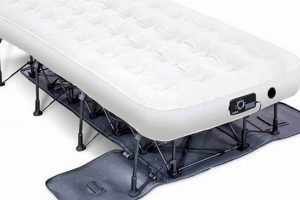
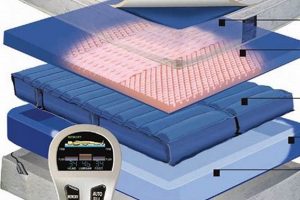
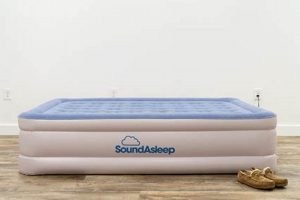
This particular sleep surface technology represents a fusion of traditional innerspring support with advanced comfort layers. The design aims to provide a balance between firm structural integrity and a plush, enveloping feel. Its construction often incorporates individually wrapped coils to minimize motion transfer, topped with layers of memory foam or other cushioning materials intended to mimic the sensation of sleeping on a soft, yielding surface.
The appeal of such a design lies in its attempt to address a broad range of sleep preferences. The underlying spring system offers support and promotes spinal alignment, considered essential for minimizing back pain. The upper layers, designed for enhanced comfort, aim to alleviate pressure points, potentially improving sleep quality. Historically, mattress design has evolved from simple straw-filled ticks to sophisticated engineered systems, reflecting an ongoing quest for optimal rest and recovery.
Understanding the specific components, construction methods, and available options is crucial for determining whether this type of sleep solution aligns with individual needs and preferences. Therefore, a detailed examination of these aspects will provide a comprehensive understanding of its features and potential benefits.
Essential Considerations for Sleep Surface Selection
The following recommendations offer guidance for prospective purchasers to consider before acquiring a new sleep surface. These suggestions aim to optimize the selection process based on individual requirements.
Tip 1: Assess Individual Sleep Preferences: Prior to any purchase, determine preferred sleeping positions (back, side, stomach). This impacts the necessary firmness and support. For example, side sleepers often benefit from a softer surface that contours to the body, while back sleepers may require firmer support for spinal alignment.
Tip 2: Evaluate Support System: Understand the type of spring system incorporated. Individually wrapped coils typically offer superior motion isolation compared to interconnected coil systems. A spouse or partner’s movements are less likely to disturb sleep with individually wrapped coils.
Tip 3: Consider Comfort Layer Materials: Different materials offer varying levels of pressure relief and temperature regulation. Memory foam conforms closely to the body, while latex provides a more responsive feel. Consider potential allergies or sensitivities when choosing materials.
Tip 4: Examine Edge Support: Evaluate the firmness of the mattress edges. Strong edge support prevents sagging and makes it easier to get in and out of bed. Lack of edge support can also reduce the usable sleep surface area.
Tip 5: Research Firmness Levels: Firmness is subjective, but manufacturers often use a scale to indicate relative firmness. It is advantageous to test different firmness levels in person, if possible, to determine individual comfort.
Tip 6: Inquire About Trial Periods and Warranties: A trial period allows for assessing the sleep surface within the home environment. Review warranty details for coverage against defects in materials and workmanship. A longer warranty typically indicates higher confidence in product durability.
Tip 7: Investigate Temperature Regulation Features: Some sleep surfaces incorporate materials designed to dissipate heat and improve airflow. These features can be particularly beneficial for individuals who tend to sleep hot. Look for cooling gels or breathable fabrics.
By carefully evaluating these factors, consumers can make a more informed decision, increasing the likelihood of selecting a sleep surface that promotes restful and restorative sleep.
The following sections delve deeper into specific aspects, providing further insight to aid in the decision-making process.
1. Conforming Comfort

Conforming comfort, in the context of this sleep system, describes the capacity of the upper layers to adapt to the contours of the human body. This adaptation is crucial for pressure redistribution, mitigating concentrated stress on areas such as the hips, shoulders, and knees. The memory foam or similar materials typically employed in the comfort layers of this mattress respond to body weight and temperature, creating a personalized indentation that cradles the sleeper. The cause is weight and heat applied to the mattress; the effect is a conforming surface that can lead to reduced tossing and turning and improved blood circulation. The presence and quality of conforming comfort layers are paramount; without them, the innerspring system alone provides only generalized support, potentially leading to discomfort. A real-life example is the experience of an individual with chronic back pain finding relief due to the pressure-relieving properties of these layers, allowing for deeper and more restful sleep. This practical understanding highlights the connection between material science, biomechanics, and sleep quality.
Furthermore, the specific type and density of the conforming material significantly affect the overall feel and performance. Higher-density memory foam, for instance, tends to offer more support and may be more durable, while lower-density foam provides a softer, more enveloping sensation but may degrade more quickly. Similarly, the thickness of the comfort layers influences the degree of conformance; thicker layers generally offer greater pressure relief. Practical applications of this knowledge include selecting a firmness level and material type that best suits individual body weight, sleeping position, and any pre-existing musculoskeletal conditions. The choice between a firmer, more supportive conforming layer versus a softer, more plush one often dictates the overall satisfaction with the sleep experience.
In summary, conforming comfort is a critical component contributing to the perceived value and effectiveness of this sleep system. Selecting a mattress with inadequate conforming properties can negate the benefits of the underlying innerspring support. Challenges remain in accurately quantifying and standardizing comfort levels, as individual preferences vary widely. However, understanding the material properties and construction techniques that contribute to conforming comfort allows for a more informed selection process, ultimately linking directly to the potential for improved sleep quality and overall well-being.
2. Innerspring Support

Innerspring support constitutes the foundational structural element within the sleep surface. This system provides the primary mechanism for distributing weight and maintaining spinal alignment. Within the context, the innerspring system serves as the base upon which comfort layers are integrated. The type and configuration of the coils directly influence the overall firmness, support level, and durability of the finished product. A well-designed innerspring
system minimizes sagging and prevents excessive compression, ensuring consistent support across the entire sleep surface. A cause and effect relationship exists, whereby the quality and density of the innerspring directly impact the user’s comfort and postural stability during sleep. A practical example includes an individual experiencing inadequate support with a sagging innerspring, leading to back pain and disrupted sleep. Understanding the significance of the innerspring support system is, therefore, critical for evaluating the long-term suitability of this product.
Further analysis reveals various innerspring construction methods, each offering distinct performance characteristics. Bonnell coils, an older and less expensive design, are interconnected, resulting in greater motion transfer. Pocketed coils, conversely, are individually wrapped, minimizing motion transfer and allowing for more independent support. The gauge (thickness) of the wire used in the coils also affects firmness; thicker gauges provide firmer support. The arrangement and density of the coils are engineered to provide targeted support to different areas of the body. Consider an athlete requiring enhanced lumbar support; a system with strategically placed reinforced coils in the lower back region would be advantageous. A real-world application involves understanding the specifications of the innerspring system when comparing different models, ensuring it aligns with individual support requirements and weight distribution.
In conclusion, innerspring support is an indispensable element influencing the overall functionality of this sleep system. Challenges remain in balancing cost considerations with the implementation of advanced innerspring technologies. However, a thorough understanding of the various innerspring types, coil configurations, and wire gauges enables a more discerning selection process. This understanding connects directly to the potential for achieving optimal sleep posture, minimizing discomfort, and maximizing the long-term value and satisfaction derived from the product.
3. Motion Isolation

Motion isolation, as a characteristic of sleep surfaces, plays a crucial role in minimizing sleep disturbances caused by movement. In the context of this mattress, effective motion isolation translates to reduced transfer of movement between sleeping partners, thereby promoting uninterrupted sleep for both individuals. The design and materials employed directly influence the degree to which movement is contained and dampened.
- Individually Wrapped Coils
The implementation of individually wrapped or pocketed coils is a primary mechanism for achieving motion isolation. Unlike interconnected coil systems, each coil functions independently, responding only to direct pressure applied to its immediate area. This prevents movement on one side of the mattress from propagating across the entire surface. For example, if one partner gets out of bed, the other is less likely to be disturbed by the resulting movement. The effectiveness of this component is directly related to the coil density and the individual wrapping material.
- Foam Density and Composition
The density and composition of the foam layers also contribute to motion isolation. Higher-density memory foam or latex can absorb and dissipate energy from movement, further reducing its transmission across the mattress. Certain foam formulations are specifically engineered with viscoelastic properties to dampen vibrations. For instance, a mattress with a high-density memory foam layer may significantly reduce the impact of a partner’s tossing and turning. The specific foam type and its placement within the mattress layers are key factors influencing motion isolation performance.
- Construction Techniques and Layer Arrangement
The arrangement of different layers within the sleep surface is also significant. Strategic placement of damping layers, such as viscoelastic foam, can minimize movement transfer. Certain construction techniques, like reinforced edges, can further contain movement within a specific area of the mattress. As an illustration, a mattress with a high-density foam encasement around the coil system may exhibit superior motion isolation compared to one without such reinforcement. The overall design and assembly process significantly impact motion isolation effectiveness.
- Weight Distribution and Surface Area
Weight distribution across the mattress surface influences motion isolation. A mattress that effectively distributes weight will minimize localized pressure points and reduce the potential for movement to be transmitted. Wider surfaces and strategically placed support zones contribute to a more uniform weight distribution. For example, a larger sleep surface allows each partner more personal space, reducing the likelihood of incidental contact and movement transmission. The overall dimensions and weight capacity of the mattress are factors that indirectly affect motion isolation performance.
In summary, motion isolation is a multifaceted attribute of the product, influenced by multiple design and material choices. Effective motion isolation contributes significantly to uninterrupted sleep, particularly for couples. By understanding the underlying components and construction techniques that contribute to this characteristic, consumers can make a more informed decision when selecting a product that aligns with their specific needs and preferences.
4. Temperature Regulation

Temperature regulation, in the context of this particular sleep system, refers to the mattress’s ability to maintain a comfortable sleeping temperature by managing heat retention and dissipation. Inadequate temperature regulation can lead to overheating, restlessness, and disrupted sleep cycles. The design and materials of the mattress either promote or hinder airflow and moisture wicking, directly impacting the sleeper’s thermal comfort. The cause of overheating is often trapped body heat within the mattress layers; the effect is discomfort and potential sleep disruption. A real-life example includes an individual experiencing night sweats due to poor ventilation within the mattress, leading to fragmented sleep and daytime fatigue. Therefore, understanding temperature regulation mechanisms is paramount when evaluating this type of sleep system.
The innerspring component contributes to temperature regulation by providing inherent ventilation. The air space between the coils allows for the circulation of air, helping to dissipate heat. However, the effectiveness of this ventilation is often limited by the density and composition of the comfort layers. Dense memory foam, while excellent for pressure relief, can restrict airflow and trap heat. Consequently, manufacturers often incorporate design features such as gel infusions, open-cell foam structures, or breathable fabrics to mitigate this issue. A practical application of this understanding involves selecting a model with enhanced ventilation features if one is prone to overheating during sleep. The trade-off between conforming comfort and temperature regulation often necessitates careful consideration of individual needs and preferences.
In conclusion, temperature regulation represents a critical factor influencing sleep quality and overall satisfaction with this type of sleep surface. Challenges persist in balancing the desire for conforming comfort
with the need for effective heat dissipation. Nevertheless, recognizing the materials and design features that promote airflow and moisture wicking allows for a more informed selection process. This understanding connects directly to the potential for achieving restful, temperature-regulated sleep, contributing to improved health and well-being.
5. Edge Reinforcement

Edge reinforcement, in the context of the spring air cloud mattress, refers to structural enhancements designed to bolster the perimeter of the sleep surface. This feature addresses common issues such as edge sagging and compromised support, especially under prolonged use or when sitting on the edge of the mattress. The effectiveness of edge reinforcement directly influences the usable sleep surface and the overall longevity of the mattress.
- Foam Encasement Systems
Foam encasement systems involve surrounding the innerspring core with high-density foam rails. This creates a firm perimeter that resists compression and provides a stable edge for sitting or sleeping near the edge of the mattress. The density and thickness of the foam are critical factors in determining the degree of support. For example, a mattress with a 4-inch, high-density foam encasement will generally exhibit superior edge support compared to one with a thinner, lower-density encasement. The practical implication is increased comfort and stability, particularly for couples sharing the bed.
- Reinforced Coil Perimeters
Some mattresses incorporate a perimeter of thicker-gauge coils to provide additional edge support. These reinforced coils are often integrated with the overall innerspring system to distribute weight and prevent sagging. For instance, a mattress with a perimeter of 13-gauge coils will offer greater resistance to compression than one with a uniform 14-gauge coil system. The result is enhanced durability and a more consistent sleep surface across the entire mattress.
- Edge Spring Units
Edge spring units, also known as border rods, are strategically placed along the edges to provide targeted support. These units are typically made of steel and are designed to prevent the mattress edges from collapsing under pressure. Consider a mattress with a heavy-gauge steel border rod; this feature provides significant edge reinforcement, preventing sagging and maintaining the shape of the mattress over time. The consequence is a more stable and supportive sleep environment, especially for individuals who frequently use the edge of the bed.
- Hybrid Edge Support
Hybrid edge support combines multiple reinforcement techniques, such as foam encasement and reinforced coils, to maximize edge stability. This approach provides a comprehensive solution for preventing edge sagging and maintaining a consistent sleep surface. As an example, a mattress with both a high-density foam encasement and a perimeter of thicker-gauge coils will offer superior edge support compared to mattresses employing only one of these methods. The practical benefit is a more durable and supportive mattress with an extended lifespan.
In summary, edge reinforcement is an integral component of the overall spring air cloud mattress design, directly impacting its durability, comfort, and usable sleep surface area. By understanding the various edge reinforcement techniques and their respective benefits, consumers can make a more informed decision when selecting a mattress that meets their specific needs and preferences. Effective edge support contributes to a more consistent and long-lasting sleep experience.
6. Durability Expectations
The lifespan of a “spring air cloud mattress” is a primary concern for consumers. Durability expectations are directly linked to the materials and construction techniques employed. Premature sagging, loss of support, and degradation of comfort layers are common indicators of a mattress failing to meet reasonable durability standards. A mattress constructed with high-density foam encasements, individually wrapped coils, and durable ticking fabric is inherently more likely to exhibit greater longevity. The cause of reduced durability often stems from lower quality materials or inadequate construction. The effect is a compromised sleep surface that fails to provide adequate support and comfort over time. For example, a mattress with low-density foam comfort layers may exhibit significant compression and sagging within a few years of use, leading to discomfort and the need for premature replacement. The significance of understanding durability expectations lies in maximizing the return on investment and ensuring long-term sleep quality.
Further analysis reveals that factors such as weight distribution, usage patterns, and proper maintenance significantly influence a mattress’s lifespan. A mattress subjected to excessive weight or uneven distribution is more likely to experience accelerated wear and tear. Similarly, neglecting proper rotation and cleaning can contribute to premature degradation. A practical example is a mattress used nightly by a heavier individual exhibiting greater compression compared to the same mattress used by a lighter person. Moreover, failing to address spills or stains can compromise the integrity of the mattress materials. Practical applications of this understanding include rotating the mattress regularly, using a mattress protector, and adhering to manufacturer’s cleaning recommendations.
In conclusion, durability expectations are a critical component in evaluating the value proposition of a “spring air cloud mattress.” While challenges exist in accurately predicting the lifespan of a mattress due to varying usage conditions, understanding the materials, construction techniques, and proper maintenance practices can inform a more discerning purchase decision. This understanding is essential for achieving long-term sleep satisfaction and maximizing the lifespan of the sleep surface.
7. Spinal Alignment

Maintaining proper spinal alignment during sleep is crucial for musculoskeletal health and overall well-being. Spinal alignment, in the context of a “spring air cloud mattress,” refers to the posture of the spine when lying on the mattress, aiming to replicate its natural curvature as closely as possible. A mattress that adequately supports spinal alignment minimizes pressure on intervertebral discs, reduces muscle strain, and promotes restful sleep. Inadequate support can lead to spinal misalignment, resulting in back pain, stiffness, and potentially chronic musculoskeletal issues. The design and construction of a “spring air cloud mattress” directly impact its ability to facilitate proper spinal alignment. The presence of conforming comfort layers combined with a supportive innerspring system theoretically allows the mattress to contour to the body’s shape while maintaining essential support. A real-life example includes an individual with scoliosis finding relief from back pain due to the mattress’s ability to accommodate their unique spinal curvature. The significance of understanding spinal alignment lies in preventing or mitigating sleep-related musculoskeletal problems.
Further analysis reveals that the optimal
degree of spinal support varies based on individual body weight, sleeping position, and pre-existing conditions. Side sleepers generally require a softer surface that allows the shoulders and hips to sink in, maintaining spinal alignment. Back sleepers typically benefit from a firmer surface that prevents excessive sinking and supports the natural lumbar curve. Stomach sleepers often require the firmest support to prevent excessive arching of the lower back. The effectiveness of a “spring air cloud mattress” in promoting spinal alignment can be assessed through trial and error, paying attention to any pain or discomfort experienced in the back or neck. Practical applications of this understanding include selecting a mattress firmness level appropriate for the preferred sleeping position and consulting with a healthcare professional if experiencing chronic back pain. Additionally, adjustable bases can be paired with mattresses to further customize spinal support and alignment.
In conclusion, spinal alignment is a critical factor influencing the therapeutic value of a “spring air cloud mattress.” While challenges exist in achieving universally optimal support due to individual variations, understanding the principles of spinal alignment and selecting a mattress that caters to specific needs is essential. This understanding is essential for minimizing the risk of sleep-related musculoskeletal issues and promoting restorative sleep that contributes to overall health and vitality.
Frequently Asked Questions
The following section addresses common inquiries regarding this type of sleep surface, providing factual information to aid in informed decision-making.
Question 1: What is the expected lifespan of this mattress type?
The lifespan varies depending on usage, weight distribution, and maintenance. Generally, a quality model should provide adequate support and comfort for 7-10 years. However, visible sagging or a decline in support indicates the need for replacement.
Question 2: Is this mattress suitable for individuals with back pain?
Suitability depends on the specific cause and severity of the back pain. The design intends to offer both conforming comfort and innerspring support, which may alleviate some types of back pain. However, consultation with a medical professional is advisable to determine the best mattress type for individual needs.
Question 3: How does this mattress perform in terms of temperature regulation?
Temperature regulation varies depending on the materials used in the comfort layers. Models with gel-infused memory foam or breathable fabrics aim to dissipate heat and improve airflow. However, individuals prone to overheating may still experience some heat retention.
Question 4: What type of foundation is recommended for this mattress?
A solid, supportive foundation is recommended to ensure proper weight distribution and prevent premature sagging. Box springs, platform beds, or adjustable bases are all suitable options, provided they offer adequate support.
Question 5: How should this mattress be cleaned and maintained?
Regular vacuuming is recommended to remove dust and debris. Spills should be addressed promptly with a mild detergent and water. A mattress protector is advisable to prevent stains and prolong the lifespan of the mattress. Rotating the mattress regularly can also help to ensure even wear.
Question 6: What is the warranty coverage typically offered for this mattress?
Warranty coverage varies by manufacturer and model. A standard warranty typically covers defects in materials and workmanship for a specified period, often ranging from 10 to 20 years. It is crucial to review the warranty details carefully to understand the terms and conditions.
Key takeaways include the importance of proper maintenance, realistic lifespan expectations, and the need to consider individual needs when evaluating suitability. Careful consideration of these factors contributes to informed decision-making.
The subsequent section will provide concluding remarks summarizing the key points discussed throughout this analysis.
Conclusion
This exploration of the “spring air cloud mattress” has illuminated key design features, performance expectations, and considerations for prospective purchasers. Emphasis has been placed on conforming comfort, innerspring support, motion isolation, temperature regulation, edge reinforcement, durability, and spinal alignment. These aspects collectively determine the suitability of the product for individual sleep needs and preferences. Understanding the nuances of each attribute is crucial for making an informed decision, ensuring a satisfactory sleep experience.
Ultimately, the selection of a sleep surface is a personal endeavor with far-reaching implications for health and well-being. Continued research and technological advancements in sleep science promise to further refine mattress design, offering even greater customization and targeted support. Individuals are encouraged to carefully weigh their options, prioritizing their specific requirements and seeking expert advice when necessary, to maximize the potential for restorative sleep and improved quality of life.