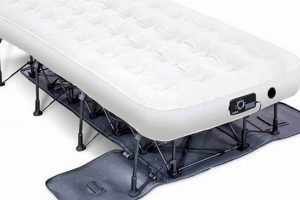
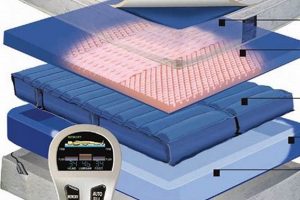
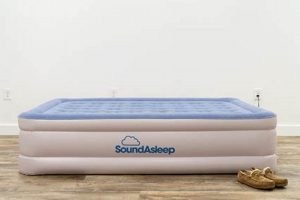
The persistent loss of air from an inflatable sleeping surface is a common issue. This situation describes when an air mattress gradually or rapidly loses its internal air pressure after being inflated, resulting in a less firm and ultimately unusable sleeping surface. This phenomenon can occur shortly after inflation or develop over several hours during use.
The inability to maintain air pressure in such a device presents significant inconveniences. A consistent, supportive sleeping surface is compromised, leading to discomfort and interrupted rest. Furthermore, the need for frequent reinflation becomes a burden, negating the convenience factor typically associated with portable mattresses. Historically, air mattresses provided a practical solution for temporary or mobile sleeping arrangements, but consistent deflation issues diminish their utility and user satisfaction.
Understanding the causes behind this problem, methods for identifying the source of the leak, and strategies for effective repair are crucial for prolonging the lifespan of the product and ensuring a comfortable sleeping experience. The subsequent sections will delve into these areas, offering practical guidance for addressing and resolving the issue.
Addressing Air Mattress Deflation
The following guidelines offer practical solutions for mitigating and preventing air loss in inflatable mattresses. These measures can extend the lifespan of the product and improve user experience.
Tip 1: Conduct a Thorough Inspection. Before each use, examine the entire surface area of the mattress, including seams and valve areas, for visible signs of damage. Tears, punctures, or areas of wear can be primary sources of leaks.
Tip 2: Employ the Soapy Water Test. Mix a solution of mild soap and water. Apply the mixture to the mattress surface, concentrating on seams and around the valve. The presence of bubbles indicates an air leak.
Tip 3: Secure the Valve Mechanism. Ensure the valve is properly closed and sealed. Over-tightening or cross-threading can damage the valve, creating a pathway for air to escape. Follow manufacturer instructions for proper valve closure.
Tip 4: Regulate Inflation Levels. Avoid over-inflation. Excessive air pressure can stress the mattress seams and valve, increasing the likelihood of leaks. Inflate the mattress to the recommended firmness level indicated by the manufacturer.
Tip 5: Utilize Protective Bedding. Employ a mattress protector or fitted sheet. These layers can shield the air mattress surface from abrasion, punctures, and other forms of damage.
Tip 6: Maintain a Clean Environment. Keep the surrounding area free from sharp objects or debris that could puncture the mattress. Vacuum or sweep the floor before placing the mattress.
Tip 7: Store Properly When Not in Use. Deflate the mattress completely, fold it carefully according to manufacturer instructions, and store it in a dry, cool place away from direct sunlight and extreme temperatures. Proper storage prevents material degradation and seam weakening.
Implementing these tips can significantly reduce the incidence of air mattress deflation, leading to a more reliable and comfortable sleeping surface. Consistent attention to these preventive measures is key.
The next section will explore repair techniques and when professional assistance might be required.
1. Material Degradation

Material degradation is a significant contributor to the problem of air mattresses failing to maintain inflation. The breakdown of the materials used in the mattress construction, typically various forms of PVC or similar polymers, can lead to a gradual loss of air retention capabilities. This degradation impacts the structural integrity of the mattress, creating pathways for air to escape.
- Loss of Elasticity
Prolonged exposure to environmental factors such as UV radiation and temperature fluctuations can cause the PVC material to lose its inherent elasticity. This reduced flexibility leads to the formation of microscopic cracks and fissures within the material. These fissures, even if initially small, provide avenues for air to slowly leak out, contributing to gradual deflation.
- Weakening of Seams
The seams of an air mattress are typically the weakest points in its construction. The adhesive or welding processes used to join the material sections can be compromised by material degradation. As the surrounding material becomes brittle, the seams become more susceptible to separation, creating larger and more noticeable leaks. Over time, this results in a more rapid and pronounced deflation.
- Chemical Breakdown
Certain cleaning agents or exposure to specific chemicals can accelerate the degradation process. Harsh solvents or abrasive cleaners can react with the PVC material, weakening its structure and increasing its permeability. This chemical breakdown leads to the material becoming more porous, allowing air to seep through at a faster rate than in undamaged areas. The degradation compromises the entire structural integrity of the mattress.
- Increased Permeability
Material degradation causes an increase in the permeability of the mattress, meaning that the material itself becomes more porous. This allows air molecules to diffuse through the mattress material at a higher rate than in a new mattress. Even if no obvious punctures or seam failures are present, this increased permeability alone can lead to a noticeable and frustrating loss of air pressure over time.
These aspects of material degradation illustrate how the physical properties of an air mattress can deteriorate over time, leading to persistent deflation issues. Recognizing these degradation mechanisms is essential for understanding the limitations of air mattress longevity and the importance of proper care and storage to mitigate their effects.
2. Valve Integrity

The valve assembly directly impacts the air retention capabilities of an inflatable mattress. A compromised valve provides a direct and often subtle pathway for air to escape, contributing significantly to the problem of rapid or gradual deflation. The valve’s design, materials, and proper function are integral to maintaining consistent air pressure within the mattress. Failures in any of these areas compromise the integrity of the entire system.
Valve malfunctions manifest in several forms. Physical damage, such as cracks or breaks in the valve body, can result from mishandling or material fatigue. The sealing mechanism itself, often a rubber or plastic component, may degrade over time, losing its ability to create an airtight barrier. Debris or foreign objects lodged within the valve can also prevent proper sealing. Consider, for example, an air ma
ttress used frequently outdoors; small particles of sand or dirt can easily become trapped within the valve, creating a persistent leak. The absence of a secure seal at the valve’s connection point with the mattress material represents another common failure point, resulting from weakened adhesives or material separation over time.
Maintaining valve integrity is paramount in preventing air loss. Regular inspection for physical damage, careful cleaning to remove debris, and adherence to manufacturer-recommended inflation and deflation procedures are crucial preventative measures. In cases of valve malfunction, replacement is often the most effective solution. Ensuring the replacement valve is compatible with the mattress and properly installed is essential to restoring the air retention capabilities of the device, thereby directly addressing the problem of deflation.
3. Puncture Identification

The relationship between puncture identification and persistent air mattress deflation is direct and causal. Undetected punctures, even those microscopic in size, provide a pathway for compressed air to escape from within the mattress, resulting in a gradual or rapid loss of inflation. The inability to locate and repair these breaches is a primary reason why the inflatable structure fails to maintain its intended firmness and support. The presence of a puncture immediately compromises the airtight seal necessary for proper functionality.
Effective puncture identification is a critical component in addressing mattress deflation issues. Techniques such as the soapy water test are employed to locate the precise point of air leakage. The application of a mild soapy solution to the mattress surface, particularly along seams and in areas suspected of damage, will reveal the presence of escaping air through the formation of bubbles. Accurate identification allows for targeted repair, preventing further air loss. For instance, a small tear caused by contact with a sharp object during storage, if left undetected, can result in the complete collapse of the mattress overnight, rendering it unusable until the breach is located and patched.
In summary, the identification of punctures is fundamental to resolving deflation problems. The absence of effective identification and subsequent repair strategies will inevitably lead to the continued loss of air and the eventual failure of the mattress. Therefore, a systematic approach to puncture detection, coupled with appropriate repair techniques, is essential for maintaining the functionality and extending the lifespan of the inflatable sleeping surface.
4. Seam Weakening
Seam weakening presents a significant factor in the persistent deflation of air mattresses. The seams, where individual pieces of material are joined, represent inherently vulnerable points in the overall structure. A degradation of seam integrity allows for the gradual or rapid escape of pressurized air, directly leading to deflation and compromising the intended functionality of the mattress.
- Adhesive Failure
Many air mattresses utilize adhesives to bond the material layers at the seams. Over time, these adhesives can degrade due to factors such as temperature fluctuations, humidity, or prolonged stress. As the adhesive bond weakens, small gaps form between the layers, creating pathways for air to leak. For example, an air mattress stored in a hot attic may experience accelerated adhesive breakdown, resulting in noticeable deflation upon subsequent use.
- Material Fatigue at Seams
The continuous inflation and deflation cycles of an air mattress place stress on the material surrounding the seams. This repeated stress can lead to material fatigue, causing the material to stretch, thin, or crack in the vicinity of the seam. This weakening effect compromises the seam’s ability to maintain an airtight seal. Consider an air mattress frequently used and re-inflated; the constant pressure exerted on the seams eventually diminishes their structural integrity.
- Manufacturing Defects
Defects introduced during the manufacturing process can contribute to seam weakening. Improper welding, insufficient adhesive application, or misalignment of material layers can all create inherent weaknesses at the seams. These manufacturing flaws may not be immediately apparent but can manifest as leaks after a relatively short period of use. For instance, a seam with inadequate welding may initially hold air but gradually separate under pressure.
- Abrasion and Wear
Friction against the floor or other surfaces can cause abrasion and wear along the seams, particularly on the underside of the mattress. This wear can thin the material and weaken the seam, making it more susceptible to leaks. An air mattress placed directly on a rough surface without a protective barrier is prone to this type of damage, leading to gradual deflation over time.
The cumulative effect of adhesive failure, material fatigue, manufacturing defects, and abrasion at the seams directly contributes to the problem of recurring deflation in air mattresses. Addressing these potential weaknesses through preventative measures and careful usage is crucial for prolonging the lifespan of the mattress and maintaining its ability to provide a reliable sleeping surface.
5. Ambient Temperature
Ambient temperature exerts a notable influence on the internal air pressure of inflatable mattresses, directly impacting their ability to maintain a consistent level of inflation. Fluctuations in the surrounding temperature cause expansion and contraction of the air contained within the mattress, which can manifest as perceived deflation or over-inflation. This effect is governed by fundamental principles of thermodynamics and material science.
- Air Volume Variation
According to Charles’s Law, the volume of a gas is directly proportional to its absolute temperature, assuming constant pressure and mass. As ambient temperature increases, the air within the mattress expands, potentially leading to a feeling of increased firmness. Conversely, when the ambient temperature decreases, the air contracts, resulting in a perceived loss of pressure and a softer sleeping surface. For example, an air mattress inflated during the heat of the day may feel firmer than it did initially when the temperature drops overnight. This variation is not necessarily indicative of a leak, but rather a natural physical response to thermal changes.
- Material Expansion and Contraction
The materials used in air mattress construction, typically PVC or similar polymers, also exhibit thermal expansion and contraction. While the effect is generally less pronounced than that of the enclosed air, changes in temperature can cause the mattress material to subtly expand or contract. This can affect the sealing properties of seams and valves, potentially exacerbating minor leaks or creating new pathways for air to escape. An air mattress exposed to direct sunlight, for instance, may experience a greater degree of material expansion, stressing the seams and increasing the risk of air loss over time.
- Valve Seal Integrity
The effectiveness of the valve seal can be influenced by temperature variations. Extreme cold can cause the valve materials to become less pliable, compromising their ability to create an airtight seal. Conversely, excessive heat can soften the materials, leading to deformation and potential leakage. An air mattress used in sub-freezing temperatures, for example, may experience valve leakage due to the reduced flexibility of the sealing components. Similarly, prolonged exposure to high temperatures can cause the valve to warp, creating a permanent path for air to escape.
- Pressure Fluctuation Over Time
The combined effects of air volume variation and material expansion/contraction can result in a gradual loss of air pressure over extended periods, particularly in environments with significant temperature swings. Even if the mattress is initially inflated to the optimal level, temperature fluctuations can cause it to slowly deflate over several hours or days. This is especially noticeable in camping scenarios where nighttime temperatures are significantly lower than daytime temperatures. Regular monitoring and adjustment of the air pressure may be required to maintain a consistent level of comfort.
In summary, the observed loss of air pressure in an inflatable mattress is often attributable, at least in part, to changes in ambient temperature. These fluctuations directly affect the enclosed air volume and the physical properties of the mattress materials, which can lead to both perceived and actual deflation. Understanding these thermal effects is crucial for accurately diagnosing the cause of air loss and implementing appropriate strategies for maintaining the desired level of inflation.
6. Over-Inflation
The act of over-inflation is a primary contributor to the frequent deflation of air mattresses. Exceeding the recommended air pressure creates undue stress on the internal structure, seams, and valve components. This excessive pressure can lead to irreversible damage, compromising the mattress’s ability to retain air effectively. The direct result is a shortened lifespan and the frustrating experience of continual deflation.
Specifically, over-inflation can cause material stretching and weakening. PVC, the common material in air mattresses, has a limited elasticity. When stretched beyond its capacity, the material undergoes permanent deformation, resulting in microscopic tears or expanded pores. These compromised areas provide pathways for air to escape. Seams, being the most vulnerable points, are particularly susceptible to damage from over-inflation. Excessive pressure can cause seam separation or adhesive failure, leading to significant air leakage. An example includes the use of a high-powered air compressor to inflate an air mattress quickly, which often results in exceeding the recommended pressure and damaging the internal baffles or seams. Consequently, the mattress loses firmness rapidly and requires frequent reinflation.
Preventing over-inflation is crucial for prolonging the lifespan of an air mattress. Adhering strictly to the manufacturer’s recommended inflation levels, typically indicated on the mattress itself or in the accompanying documentation, is essential. The use of a pressure gauge during inflation allows for accurate monitoring. Understanding the potential damage caused by over-inflation empowers users to make informed decisions and avoid practices that contribute to premature deflation. By prioritizing proper inflation techniques, users can significantly reduce the likelihood of encountering recurrent deflation issues.
7. Improper Storage
Inadequate storage practices constitute a significant factor contributing to the recurring deflation issues experienced with air mattresses. The manner in which an air mattress is stored when not in use directly influences its structural integrity and its ability to maintain air pressure over time. Improper storage can lead to various forms of damage that compromise the mattress’s airtight seal, resulting in persistent deflation problems.
- Exposure to Extreme Temperatures
Storing an air mattress in environments with extreme temperatures, such as attics or car trunks during summer, or unheated garages in winter, can accelerate material degradation. High heat can cause the PVC or other polymers to become brittle and lose elasticity, leading to microscopic cracks and weakened seams. Conversely, extreme cold can make the material stiff and inflexible, increasing the risk of tears or punctures during handling. For instance, an air mattress stored in direct sunlight may experience accelerated breakdown of its material, resulting in air leakage even when subsequently used in a moderate environment. This degradation directly impacts the mattress’s capacity to retain air.
- Physical Damage from Sharp Objects
Improper storage often involves placing the air mattress in locations where it is susceptible to physical damage from sharp objects or abrasive surfaces. Contact with nails, screws, splinters, or rough concrete can puncture the mattress material, creating pathways for air to escape. Even if the punctures are initially small, they can gradually enlarge over time due to repeated inflation and deflation cycles. Consider an air mattress stored haphazardly in a cluttered storage room; it may be unknowingly pressed against a sharp object, leading to a slow but persistent leak that results in recurring deflation.
- Folding and Creasing
Incorrect folding techniques or storing the air mattress in a tightly compressed state can create permanent creases and folds in the material. These creases can weaken the material along the fold lines, making it more prone to cracking or tearing. Furthermore, tightly folded areas can put undue stress on the seams, potentially causing them to separate or develop leaks. Storing a mattress tightly packed within a container for extended periods can lead to the formation of these weak points, resulting in deflation issues upon subsequent inflation.
- Exposure to Moisture and Mold
Storing an air mattress in damp or humid environments can promote the growth of mold and mildew. These organisms can attack the mattress material, causing it to degrade and lose its airtight properties. Additionally, moisture can weaken the adhesive used in the seams, leading to separation and air leakage. An air mattress stored in a basement prone to flooding or high humidity levels is at risk of mold and mildew infestation, which can compromise its structural integrity and contribute to persistent deflation issues. Furthermore, bacteria in the air may grow into the airmattress, and degrade the material.
The combined effects of temperature extremes, physical damage, improper folding, and moisture exposure during storage directly contribute to the problem of recurring deflation in air mattresses. Addressing these potential issues through careful storage practices, such as storing the mattress in a climate-controlled environment, protecting it from sharp objects, folding it loosely, and ensuring it is dry before storage, is crucial for prolonging its lifespan and maintaining its ability to provide a reliable sleeping surface. Therefore, understanding and implementing proper storage techniques is essential for preventing and minimizing the frustration associated with air mattress deflation.
Frequently Asked Questions
The following section addresses common inquiries regarding the persistent deflation of air mattresses, providing concise and informative answers to facilitate proper maintenance and troubleshooting.
Question 1: Is gradual air loss normal in an air mattress?
A slight decrease in firmness over several days may be expected due to temperature fluctuations and material stretching. However, rapid or significant deflation indicates a leak or other issue requiring investigation.
Question 2: How can small punctures be located in an air mattress?
The application of a soapy water solution to the inflated mattress surface is an effective method. The formation of bubbles identifies the precise location of escaping air and the presence of a puncture.
Question 3: What types of patches are suitable for repairing air mattress punctures?
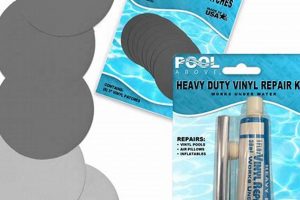
Patches specifically designed for vinyl or PVC materials are recommended. These patches typically employ a strong adhesive that forms a durable bond with the mattress surface, ensuring an airtight seal.
Question 4: Can over-inflation permanently damage an air mattress?
Yes. Exceeding the recommended air pressure can stretch the material beyond its elastic limit, weaken seams, and compromise the valve, leading to irreversible damage and chronic deflation.
Question 5: What is the best way to store an air mattress to prevent damage?
The mattress should be fully deflated, cleaned, and stored in a dry, climate-controlled environment away from sharp objects and extreme temperatures. Loose folding, rather than tight compression, is advised.
Question 6: When should professional repair services be considered for a deflating air mattress?
If the leak source is difficult to locate, the damage is extensive, or self-repair attempts are unsuccessful, seeking professional assistance from a qualified repair technician may be the most effective solution.
Addressing the issues of your air mattress can make your relaxing time or sleeping more comfortable. However, if the problem keep coming and you tried several things, buying a new air mattress may be a good option.
The next section will offer advice on choosing a new air mattress if repair is not feasible.
Addressing the Persistent Deflation Issue
The preceding exploration of the situation where “my air mattress keeps deflating” has illuminated a range of factors contributing to this common problem. From material degradation and seam weakening to valve malfunctions, ambient temperature fluctuations, over-inflation, and improper storage, each element plays a role in the mattress’s inability to maintain air pressure. Accurate diagnosis of the underlying cause is crucial for effective remediation, whether through targeted repairs or preventative measures.
The consistent application of the strategies outlineddetailed inspection, cautious inflation, careful storage, and timely repaircan prolong the useful life of an air mattress. However, should these measures prove insufficient, replacing the mattress may become the necessary course of action to ensure a reliably supportive sleeping surface. Responsible disposal of the old mattress is encouraged to minimize environmental impact.