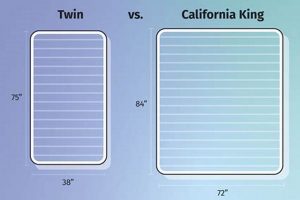
A sleeping surface designed to fit a king-size futon frame provides ample space and comfort. Typically constructed with layers of cotton, foam, and other materials, it serves as both a sofa and a bed. Dimensions usually correspond to standard king-size bed measurements, offering substantial room for individuals or couples.
Opting for larger dimensions provides enhanced comfort and flexibility in living spaces. It eliminates space constraints, rendering the futon a suitable option for guest rooms or individuals who prioritize spaciousness. Furthermore, its versatility allows for use in various settings, addressing both seating and sleeping requirements. Historically, futons have offered an adaptable solution for those seeking multi-functional furniture.
The following sections will delve into the construction materials, comfort considerations, cover options, and maintenance recommendations relevant to selecting the optimal product. Attention will also be given to differentiating factors, such as material composition and thickness, which influence overall performance and lifespan.
Selection and Maintenance Considerations
The following guidance aims to assist in the proper selection and care of a king size futon mattress to ensure longevity and sustained comfort.
Tip 1: Assess Frame Compatibility: Verify that the selected sleeping surface dimensions are precisely compatible with the existing or intended futon frame. Dimensional discrepancies can lead to uneven wear and reduced structural integrity.
Tip 2: Evaluate Material Density: Examine the material composition and density. Higher density materials, such as high-density foam or layered cotton batting, generally offer enhanced support and durability. Lower density options may degrade more rapidly.
Tip 3: Consider Cover Fabric: The cover fabric should be durable and resistant to abrasion. Tightly woven fabrics, such as denim or canvas, offer superior protection against tears and wear. Consider stain-resistant treatments for added protection.
Tip 4: Regularly Rotate and Flip: To ensure even wear and prevent compression in specific areas, consistently rotate and flip the item. This distributes weight and helps maintain uniform thickness over time.
Tip 5: Employ a Mattress Protector: Utilize a mattress protector to shield against spills, stains, and allergens. A waterproof protector is recommended, particularly in environments prone to moisture.
Tip 6: Vacuum Frequently: Vacuum the surface regularly to remove dust, debris, and potential allergens. This preventative measure helps maintain hygiene and extends the product’s lifespan.
Tip 7: Address Stains Promptly: In the event of a spill or stain, address it immediately using appropriate cleaning agents. Consult the manufacturer’s instructions for recommended cleaning methods to avoid damage to the fabric or internal materials.
Adhering to these guidelines will contribute to the preservation of the king size futon mattresss structural integrity, comfort, and appearance.
The subsequent sections will elaborate on specific aspects of care, including detailed cleaning procedures and storage recommendations.
1. Dimensions

Dimensional accuracy is paramount when selecting a king size futon mattress. A mismatch between the futon frame and the mattress dimensions will invariably lead to compromised support, increased wear and tear, and diminished comfort. For instance, a mattress exceeding the frame’s dimensions will overhang, potentially causing premature sagging and uneven weight distribution. Conversely, a mattress smaller than the frame will shift during use, leading to instability and discomfort.
The standardized dimensions of a king-size bed typically serve as the benchmark for this sleeping surface, though minor variations may exist between manufacturers. It is essential to verify the stated measurements against the specific frame intended for use. Consider, as an example, a futon frame designed to accommodate a traditional king-size mattress. An incorrectly sized futon mattress will not only fail to provide adequate support but also hinder the conversion from sofa to bed configuration. Proper fit ensures both functionality and longevity.
Ultimately, the correlation between accurate dimensions and the overall performance of a king size futon mattress is undeniable. Precise measurements contribute directly to the product’s comfort, stability, and durability. Any deviation from standard dimensions or incompatibility with the supporting frame presents a practical challenge, potentially negating any other benefits the mattress might offer.
2. Construction

The construction of a king size futon mattress fundamentally dictates its comfort, durability, and suitability for both sitting and sleeping. Materials and assembly methods directly affect its ability to evenly distribute weight, maintain its shape, and withstand repeated use. For example, a mattress employing layered cotton batting without adequate internal support structures is likely to compress over time, resulting in uneven sleeping surfaces and diminished comfort. The internal arrangement of materials, therefore, has a direct causal effect on the longevity and usability of the overall product.
Consider the practical application of different construction techniques. A futon mattress incorporating a coil spring system, similar to a traditional innerspring mattress, provides enhanced support and resilience compared to those relying solely on foam or fiber fillings. Such construction is particularly relevant for individuals intending to use the futon primarily for sleeping, where support is critical for proper spinal alignment. Alternatively, mattresses constructed with multiple layers of varying density foam offer versatility, providing a balance between cushioning and support suitable for both sitting and sleeping. The selection of construction method should, therefore, align with the intended use of the king size futon mattress.
In summary, the construction of a king size futon mattress is not merely an assembly process but rather a critical determinant of its performance and lifespan. The materials selected, the internal structure implemented, and the overall assembly method each play a vital role in ensuring the product meets the demands of daily use and maintains its integrity over time. Awareness of these construction principles allows for informed purchasing decisions and maximizes the value derived from the item.
3. Comfort
Comfort, in the context of a king size futon mattress, is not merely a subjective sensation, but a critical performance attribute directly influencing its suitability for intended use. T
he level of comfort dictates the quality of sleep experienced when used as a bed and affects the ergonomic support provided when used as a seating surface. Materials, construction, and overall design contribute to this composite characteristic. Inadequate comfort can lead to disrupted sleep patterns, muscular discomfort, and an overall diminished quality of life for the user. For example, a futon mattress lacking sufficient cushioning or proper support will exert pressure points on the body, causing discomfort and potential long-term health implications.
The interplay between material composition and construction techniques significantly dictates the comfort level. Consider a futon mattress filled primarily with low-density foam. While initially feeling soft, it may quickly compress under sustained weight, leading to inadequate support and a diminished comfort experience. Conversely, a futon mattress constructed with multiple layers of high-density foam and integrated support structures offers a more balanced approach, providing both cushioning and consistent support over extended periods. The choice of cover fabric further contributes to comfort; breathable materials promote air circulation and prevent overheating, while textured surfaces may enhance the tactile experience.
In summation, the comfort afforded by a king size futon mattress is a direct consequence of its design and construction. Understanding this relationship enables informed purchasing decisions that prioritize both immediate gratification and long-term ergonomic health. The challenges lie in assessing comfort levels based on specifications alone; in-person evaluation, when possible, is recommended to ensure the selected product aligns with individual preferences and physiological requirements. Neglecting comfort considerations can negate the benefits of a large sleeping surface, rendering the item unsuitable for its intended purpose.
4. Support
Support, when considered within the context of a king size futon mattress, represents a critical performance parameter. It encompasses the ability of the mattress to maintain its structural integrity, distribute weight evenly, and provide proper spinal alignment for the user. Insufficient support leads to discomfort, potential health issues, and a reduced lifespan of the mattress itself. The degree of support offered is directly proportional to the materials used and the construction methods employed.
- Weight Distribution
A fundamental aspect of support is the capacity to distribute weight uniformly across the sleeping surface. In a king size futon mattress, this becomes particularly important due to the larger surface area and potential for multiple occupants. Inadequate weight distribution results in pressure points, concentrated stress on specific areas, and overall discomfort. Mattresses with internal coil systems or strategically layered foam demonstrate superior weight distribution capabilities, mitigating the risk of localized compression and maintaining a consistent sleeping surface.
- Spinal Alignment
Proper spinal alignment is essential for promoting restful sleep and preventing back pain. A king size futon mattress should provide adequate support to maintain the natural curvature of the spine, regardless of the sleeping position. Mattresses lacking sufficient support allow the spine to sag, leading to muscle strain and discomfort. High-density foam or hybrid constructions incorporating springs and foam layers often offer enhanced spinal support, contributing to improved sleep quality and reduced musculoskeletal issues.
- Edge Support
Edge support refers to the stability and resistance to compression along the perimeter of the mattress. Strong edge support prevents the sensation of rolling off the bed and provides a consistent sleeping surface across the entire mattress area. In a king size futon mattress, adequate edge support is particularly crucial for couples sharing the bed, as it maximizes usable sleeping space and minimizes the likelihood of disturbing a partner. Reinforced edge coils or high-density foam perimeters are common features that enhance edge support.
- Material Resilience
The long-term support provided by a king size futon mattress is dependent on the resilience of its constituent materials. Materials such as low-density foam are prone to compression and degradation over time, resulting in a loss of support and diminished comfort. Conversely, high-density foam, coil spring systems, and durable fiber blends maintain their shape and support capabilities for extended periods. The selection of resilient materials is, therefore, a critical factor in ensuring the ongoing performance and lifespan of the mattress.
The various facets of support collectively determine the overall suitability of a king size futon mattress for its intended purpose. Insufficient attention to these factors results in a compromised sleep experience and a reduced lifespan for the product. Therefore, prospective buyers should carefully evaluate the weight distribution, spinal alignment, edge support, and material resilience of any king size futon mattress under consideration to ensure optimal long-term performance and comfort. Comparative analysis of different construction techniques and material compositions offers the most effective means of identifying a mattress that meets individual support requirements.
5. Materials

The composition of a king size futon mattress fundamentally determines its comfort, durability, support, and overall lifespan. Understanding the properties and contributions of various materials is essential for making an informed selection that aligns with individual needs and preferences.
- Cotton Batting
Cotton batting, a traditional filling material, provides a soft and breathable surface. Its inherent capacity for moisture absorption makes it suitable for warmer climates or individuals prone to night sweats. However, cotton tends to compress over time, potentially leading to a reduction in loft and support. Layering techniques and blending with other fibers can mitigate this compression to some extent. In a king size futon mattress, the uniformity of cotton distribution is crucial for even support and comfort across the entire surface area.
- Foam (Polyurethane and Memory)
Polyurethane foam offers a balance of support and cushioning and is commonly used as a core or comfort layer in futon mattresses. Its density influences its firmness and durability; higher density foams provide greater support and resistance to compression. Memory foam, a type of polyurethane foam, conforms to the body’s contours, distributing weight and relieving pressure points. In a king size application, strategically placed foam layers can enhance overall comfort and support, particularly for individuals with specific pressure relief needs. The certification of foam (e.g., CertiPUR-US) indicates adherence to standards for content, emissions, and durability.
- Innerspring Coils
Incorporating innerspring coils into a king size futon mattress provides enhanced support and resilience compared to all-foam or all-fiber constructions. Coil systems distribute weight effectively and maintain their shape over time. The gauge (thickness) and arrangement of the coils influence the firmness and support characteristics. Pocketed coils, individually wrapped in fabric, minimi
ze motion transfer, making them suitable for couples. Hybrid designs combining innerspring coils with foam or fiber layers offer a balance of support and comfort. - Polyester Fiber Blends
Polyester fiber blends are often used as a cost-effective alternative or supplement to cotton batting. These synthetic fibers offer greater resilience and resistance to compression than cotton, contributing to a longer lifespan and consistent support. Blending polyester with cotton can enhance the overall durability and moisture-wicking properties of the futon mattress. However, polyester may not provide the same level of breathability as natural fibers. The specific blend ratio influences the overall feel and performance of the mattress.
The selection of materials for a king size futon mattress is a complex decision-making process influenced by factors such as budget, intended use, and personal preferences. An informed understanding of the properties and trade-offs associated with each material enables consumers to choose a product that aligns with their specific needs and expectations. Hybrid constructions, combining different materials, often represent a compromise aimed at maximizing comfort, support, and durability within a given price range.
6. Cover
The cover of a king size futon mattress functions as a critical protective layer, directly influencing the durability and longevity of the internal materials. Its primary role is to shield the core from spills, stains, dust mites, and abrasion, all of which can compromise the structural integrity and hygiene of the mattress. Consider the consequence of a liquid spill penetrating the cover; moisture absorption into the batting or foam can foster mold growth and accelerate material degradation. Therefore, the cover acts as a preventative barrier, mitigating potential damage and extending the useful life of the futon mattress.
Material selection for the cover is paramount. Durable, tightly woven fabrics like denim or canvas offer superior resistance to tearing and abrasion, especially relevant given the frequent folding and unfolding associated with futons. Furthermore, stain-resistant treatments or laminated backing can enhance the cover’s protective properties, minimizing the impact of spills and facilitating easier cleaning. For instance, a stain-resistant treated cover effectively repels liquid, allowing for quick cleanup and preventing permanent staining. Conversely, a thin, loosely woven cover provides minimal protection, leaving the internal materials vulnerable to damage and contamination.
In summary, the cover represents an integral component of a king size futon mattress, acting as a first line of defense against external elements that can degrade the internal materials and compromise hygiene. Selecting a durable, well-constructed cover is a pragmatic investment that directly contributes to the overall longevity and performance of the mattress, making it a crucial consideration in the purchasing decision. Future discussions may explore cleaning methods and specific fabric types for optimal cover performance.
7. Lifespan
The lifespan of a king size futon mattress represents a crucial performance metric directly influencing its overall value proposition. Longevity is determined by a complex interplay of material quality, construction techniques, usage patterns, and maintenance practices. A shorter lifespan translates to more frequent replacements, increased costs, and potential environmental implications. Therefore, assessing lifespan-related factors is essential for making an informed purchasing decision.
- Material Degradation
Material degradation is a primary factor limiting the lifespan of a king size futon mattress. Components such as cotton batting, foam, and innerspring coils are susceptible to compression, breakdown, and loss of resilience over time. Lower-quality materials exhibit accelerated degradation, leading to diminished support, reduced comfort, and an uneven sleeping surface. For example, a mattress filled with low-density foam may compress significantly within a year or two, necessitating replacement. The selection of durable, high-quality materials is, therefore, paramount in maximizing lifespan.
- Structural Integrity
The structural integrity of a king size futon mattress is directly linked to its construction methods and the quality of its seams and joints. Weak seams or inadequate internal support can lead to shifting materials, sagging, and eventual structural failure. For instance, a mattress with poorly stitched seams may develop tears or unravel over time, compromising its shape and support. Reinforced seams, durable stitching, and robust internal support structures enhance structural integrity and extend the lifespan of the mattress.
- Usage Patterns
The frequency and intensity of use significantly impact the lifespan of a king size futon mattress. Mattresses subjected to daily use as the primary sleeping surface will experience greater wear and tear compared to those used occasionally in guest rooms. The weight and sleeping habits of the user also contribute to wear patterns. For example, a heavier individual may cause accelerated compression in specific areas of the mattress. Adapting usage patterns, such as rotating and flipping the mattress regularly, can help distribute wear and prolong its lifespan.
- Maintenance Practices
Proper maintenance practices play a crucial role in extending the lifespan of a king size futon mattress. Regular cleaning, vacuuming, and stain removal prevent the accumulation of dirt, dust mites, and allergens, which can degrade materials and compromise hygiene. The use of a mattress protector shields the core from spills and stains, preventing moisture absorption and mold growth. Adhering to manufacturer’s cleaning instructions and addressing issues promptly contributes significantly to the overall longevity of the mattress.
In conclusion, the lifespan of a king size futon mattress is a multifaceted attribute determined by material quality, construction, usage patterns, and maintenance. Selecting a mattress constructed with durable materials, employing robust construction techniques, and adhering to recommended maintenance practices maximizes its useful life and provides long-term value. Comparing warranty periods and assessing user reviews can provide further insights into the expected lifespan of specific models. Ultimately, prioritizing lifespan considerations contributes to a more sustainable and cost-effective purchasing decision.
Frequently Asked Questions
The following addresses common inquiries regarding the selection, use, and care of king size futon mattresses, providing factual information to aid informed decision-making.
Question 1: What are the standard dimensions of a king size futon mattress?
A king size futon mattress typically measures approximately 76 inches in width and 80 inches in length. However, minor variations may exist between manufacturers. It is imperative to verify the stated dimensions against the specific futon frame intended for use.
Question 2: What materials are commonly used in the construction of a king size futon mattress?
Common construction materials include cotton batting, polyurethane foam, memory foam, innerspring coils, and polyester fiber blends. The specific combina
tion of materials influences the comfort, support, and durability of the mattress.
Question 3: How frequently should a king size futon mattress be rotated and flipped?
To promote even wear and prevent localized compression, it is recommended to rotate and flip a king size futon mattress every one to three months. This practice distributes weight and helps maintain uniform thickness over time.
Question 4: How can stains be effectively removed from a king size futon mattress cover?
Stain removal methods vary depending on the type of stain and the cover material. Consult the manufacturer’s instructions for recommended cleaning agents and techniques. Prompt stain treatment is essential to prevent permanent discoloration.
Question 5: What is the average lifespan of a king size futon mattress?
The lifespan of a king size futon mattress is influenced by factors such as material quality, usage patterns, and maintenance practices. With proper care, a well-constructed mattress can last for several years. Regular care and quality materials, significantly extend the useful life.
Question 6: Can a king size futon mattress be used as a primary sleeping surface?
A king size futon mattress can serve as a primary sleeping surface, provided it offers adequate support and comfort. Selecting a mattress constructed with high-density foam, innerspring coils, or other supportive materials is crucial for ensuring proper spinal alignment and restful sleep.
Proper selection and consistent maintenance are vital for optimizing the comfort and lifespan of a king size futon mattress. Choosing a mattress aligned with individual needs ensures satisfaction.
The next section will explore relevant warranty considerations and product certifications.
Concluding Remarks on the King Size Futon Mattress
This exploration has underscored the significance of careful consideration when selecting a king size futon mattress. Dimensions, construction, material composition, cover characteristics, and anticipated lifespan are all crucial factors influencing the overall performance and value. The information presented serves to empower informed purchasing decisions, aligning product selection with individual requirements and usage patterns.
Ultimately, the suitability of a king size futon mattress depends on a pragmatic assessment of its attributes relative to specific needs. A thorough understanding of the criteria outlined herein enables individuals to maximize comfort, ensure longevity, and derive optimal utility from this versatile piece of furniture. Continued diligence in maintenance and care will further enhance its value and contribute to sustained satisfaction.
![Ultimate Tempur-Pedic King Size Mattress [Guide & Review] | Organic & Natural Mattress Buyer’s Guide: Non-Toxic Sleep Solutions](https://mattressworldpa.com/wp-content/uploads/2025/07/th-8395-300x200.jpg "Ultimate Tempur-Pedic King Size Mattress [Guide & Review] Organic & Natural Mattress Buyer’s Guide: Non-Toxic Sleep Solutions")