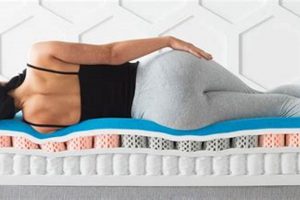
This particular bedding configuration combines the support of a rigid sleeping surface with an added layer of cushioning. The core provides a stable foundation, minimizing sinkage and promoting spinal alignment, while the upper section offers enhanced comfort through a sewn-on or attached plush component. This design seeks to provide a balance between orthopedic advantages and a softer initial feel.
The appeal lies in the potential for both back support and pressure relief. A rigid core often alleviates back pain by preventing excessive spinal curvature during sleep. The additional padded layer can minimize pressure points on areas like the hips and shoulders, contributing to a more restful experience. Historically, this combination emerged as a response to consumer demand for sleeping surfaces that addressed both comfort and postural concerns.
The following discussion will examine the specific construction materials used in these sleeping arrangements, compare the benefits and drawbacks against other mattress types, and provide guidance on selecting an appropriate option based on individual sleeping preferences and physical needs. Further examination will also be given to long-term durability and care considerations.
Selecting a Firm Mattress Pillow Top
The selection process requires careful evaluation of multiple factors to ensure suitability and long-term satisfaction. Prioritize individual sleep needs and health considerations before making a purchase.
Tip 1: Assess Firmness Level: Firmness is subjective. Determine the appropriate firmness level based on sleeping position and body weight. Side sleepers may prefer a slightly softer firm option to alleviate pressure on hips and shoulders, while back and stomach sleepers often benefit from a firmer feel for spinal alignment.
Tip 2: Material Composition Analysis: Examine the materials used in both the support core and the comfort layer. High-density foam, innerspring coils with reinforced edges, or latex are common core materials. The comfort layer may include memory foam, latex, or fiberfill. Material quality impacts durability and temperature regulation.
Tip 3: Evaluate Pillow Top Construction: Consider the pillow top attachment method. A sewn-on pillow top may offer greater durability compared to a loosely attached one. Check for sufficient fill and consistent distribution to avoid sagging or unevenness over time.
Tip 4: Consider Thickness and Height: The overall height should be compatible with the bed frame and fitted sheets. A thicker comfort layer can enhance pressure relief, but may also increase the overall height significantly.
Tip 5: Verify Warranty and Trial Period: A reputable manufacturer will offer a warranty against defects and a trial period. Use the trial period to thoroughly assess the suitability of the sleeping arrangement before committing to the purchase.
Tip 6: Investigate Breathability Features: Adequate airflow prevents heat buildup and promotes a comfortable sleep environment. Look for features such as ventilated foam, breathable fabrics, or coil systems designed to enhance air circulation.
Tip 7: Check Edge Support: Adequate edge support prevents sagging and maximizes the usable sleeping surface. Reinforced edges are particularly beneficial for individuals who tend to sleep near the edge of the bed.
Proper selection involves a balance of firmness, material quality, construction, and individual sleep preferences. Thorough research and careful consideration of these factors will contribute to a more informed decision.
The subsequent section will provide a comparative analysis of the advantages and disadvantages when contrasted with alternative mattress configurations.
1. Supportive Core
The supportive core is a fundamental component of the product, directly influencing its performance and suitability for various sleep preferences. Within this configuration, the core provides the essential structural integrity, resisting compression and ensuring a consistent surface for spinal alignment. Without a robust core, the benefits of the comfort layer would be negated, as the entire structure would be prone to excessive sinking and uneven weight distribution. For instance, an innerspring system with tempered steel coils and reinforced edges provides substantial support, while a high-density foam core minimizes motion transfer and enhances longevity. The selection of core materials and construction methods determines the overall firmness level and the ability to withstand long-term use.
A weaker, less supportive core results in premature sagging, discomfort, and potential exacerbation of back pain. Consider the practical example of two sleeping arrangements: one with a coil core of low gauge steel and another with a high-density foam core. The former is likely to lose its shape and firmness much faster, requiring replacement sooner. Therefore, understanding the characteristics of various core materials is essential in determining product value and long-term cost-effectiveness. The chosen core should possess the capacity to accommodate the sleeper’s weight and sleeping position without significant deformation.
In summary, the supportive core dictates the foundational performance. A well-engineered core will maintain its integrity over time, contributing to a more restful and healthful sleeping experience. Challenges arise when manufacturers prioritize cost savings over material quality in the core construction, leading to compromised support and reduced product lifespan. The relationship between the core and the comfort layer is symbiotic; the core provides the support, while the comfort layer enhances the surface feel.
2. Comfort Layer

The comfort layer is an integral component of any sleeping surface described as a firm mattress pillow top. Its presence mitigates the otherwise unyielding rigidity associated with a firm core, directly impacting the user’s initial tactile experience and perceived pressure relief. The cause-and-effect relationship is straightforward: a firm core provides support, while the comfort layer, positioned atop, attenuates the firmness and provides a degree of cushioning. Without a properly constructed comfort layer, a firm sleeping platform would be functionally equivalent to a hard surface, unsuitable for prolonged rest and potentially detrimental to pressure point areas. Consider a scenario where an individual with joint pain sleeps on a bare, firm surface. The lack of conforming material exacerbates discomfort, disrupting sleep and potentially leading to increased pain levels. The addition of a comfort layer, even a relatively thin one, can significantly alleviate this issue.
Material selection within the comfort layer determines its effectiveness in pressure redistribution and temperature regulation. Memory foam, for example, conforms closely to the body’s contours, minimi
zing pressure on areas such as hips and shoulders. Latex offers a responsive feel with inherent breathability. Fiberfill provides a softer, more traditional cushioning sensation, albeit with potentially lower durability compared to foam or latex. The practical application of this understanding lies in tailoring the comfort layer composition to individual needs and preferences. An athlete with muscle soreness might benefit from the pressure-relieving properties of memory foam, while an individual prone to overheating might prioritize a latex comfort layer for its enhanced airflow.
In summary, the comfort layer is not merely an aesthetic addition; it is a functional element essential to balancing support and comfort within a firm sleeping configuration. Challenges arise when manufacturers use low-density materials or inadequate thicknesses, resulting in premature compression and a diminished sleeping experience. Recognizing the significance of the comfort layer allows consumers to make more informed decisions, aligning their purchase with their specific requirements and ensuring a more restful and restorative night’s sleep. The long-term success of this configuration hinges on the durability and performance of both the firm core and the overlying cushioning component.
3. Pressure Relief
Pressure relief, in the context of sleeping arrangements, refers to the capacity of a surface to minimize concentrated force on prominent skeletal points. With a firm mattress pillow top, the integration of a firm core and a softer upper layer is strategically designed to achieve this objective, mitigating discomfort and promoting undisturbed sleep. This configuration seeks to distribute body weight more evenly, thereby reducing stress on areas such as the hips, shoulders, and spine.
- Conforming Surface Adaptation
The pillow top component, typically composed of materials like memory foam or latex, conforms to the body’s unique contours. This localized adaptation redistributes weight, preventing excessive pressure buildup. For example, a side sleeper’s hip, typically a major pressure point, experiences a gentler cradling effect, reducing the likelihood of pain-induced awakenings. This conforming surface is crucial for individuals with conditions such as arthritis or fibromyalgia, where pressure sensitivity is heightened.
- Weight Distribution and Spinal Alignment
The firm core beneath the pillow top provides foundational support, preventing excessive sinkage. This support is essential for maintaining proper spinal alignment, which, in turn, contributes to effective pressure relief. A misaligned spine can lead to uneven weight distribution, increasing pressure on specific points. By maintaining a neutral spinal posture, a firm core minimizes this risk. Consider the case of a back sleeper: the firm core prevents the lower back from sagging, while the pillow top cushions the scapulae, ensuring even weight distribution.
- Material Selection and Pressure Mapping
The specific materials used in the pillow top directly influence its pressure-relieving capabilities. Different materials exhibit varying degrees of conformability and resilience. Manufacturers often employ pressure mapping technology during development to identify areas of high pressure and optimize material placement accordingly. For instance, a higher density memory foam may be strategically placed in the shoulder region to maximize pressure relief for side sleepers. The interaction between material properties and body positioning is a critical factor in achieving optimal comfort.
- Impact on Circulation
Prolonged pressure on specific areas can impede blood circulation, leading to discomfort and restlessness. Effective pressure relief promotes healthy circulation by allowing blood to flow freely. The integration of a conforming pillow top helps to minimize constriction of blood vessels, particularly in areas like the extremities. This is especially important for individuals with circulatory issues, as improved blood flow can contribute to a more restful and restorative sleep experience.
The connection between these facets illustrates that pressure relief in a firm mattress pillow top is not a singular attribute, but rather a multifaceted outcome resulting from a careful balance of support, conformity, and material selection. The efficacy of this configuration depends on its ability to adapt to individual needs, ensuring both proper spinal alignment and the minimization of concentrated pressure points.
4. Spinal Alignment

Maintaining proper spinal alignment during sleep is paramount for musculoskeletal health. A firm mattress pillow top aims to achieve this by providing a stable, yet cushioned, sleeping surface. The cause-and-effect relationship is evident: the firm core resists excessive sinkage, preventing spinal curvature, while the pillow top layer conforms to the body’s contours, filling in gaps and further promoting a neutral spinal posture. Spinal alignment, therefore, is not merely a desirable feature but a critical component of a properly designed sleeping surface. Consider an individual with scoliosis; an unsupportive sleeping surface can exacerbate spinal misalignment, leading to increased pain and discomfort. A firm sleeping surface pillow top, appropriately selected, can mitigate these effects by providing the necessary support and contouring.
Practical significance arises from the long-term health implications. Chronic spinal misalignment can contribute to a range of problems, including back pain, neck stiffness, headaches, and even nerve impingement. A correctly chosen sleeping platform with a firm support system and conforming comfort layer can significantly reduce these risks. For instance, individuals who spend extended periods sitting during the day often benefit from the support and alignment provided by this type of sleeping arrangement, counteracting the postural stress accumulated throughout the day. The choice of materials also plays a crucial role; high-density foams or innerspring systems in the core provide the necessary firmness, while materials like memory foam or latex in the pillow top offer targeted contouring and pressure relief.
In summary, the link between spinal alignment and a firm support system pillow top is direct and consequential. While individual preferences and specific physical needs vary, the fundamental principle remains: maintaining a neutral spinal posture during sleep is essential for long-term musculoskeletal well-being. Challenges arise when individuals select a sleeping arrangement that is either too soft, leading to excessive sinkage, or too firm, failing to provide adequate contouring and pressure relief. A balanced approach, carefully considering both firmness and comfort, is key to achieving optimal spinal alignment and reaping the associated health benefits.
5. Edge Support

Edge support is a critical, though often overlooked, component of a firm mattress pillow top. The connection between the two is that adequate perimeter reinforcement is essential for maximizing the usable sleeping surface and preventing premature degradation of the mattress structure. A cause-and-effect relationship exists:
insufficient edge support results in sagging edges, diminishing the sleeping area and potentially leading to a feeling of instability, particularly for individuals who sleep near the edge or rely on the mattress edge for support when getting in and out of bed. The integration of robust edge support is, therefore, not merely an aesthetic enhancement but a functional necessity for a firm mattress pillow top to deliver its intended performance over its lifespan. Consider the practical example of an elderly individual who relies on the firm edge of the mattress for stability while rising; inadequate support can increase the risk of falls and injuries.
Further analysis reveals that the specific construction of the edge support system influences its effectiveness. Encased coil systems, reinforced foam perimeters, and strategically placed steel supports are common methods employed to enhance edge stability. The application of these technologies ensures that the perimeter maintains its firmness and shape, preventing the “roll-off” sensation and providing a consistent level of support across the entire mattress surface. Real-world testing demonstrates that mattresses with superior edge support exhibit greater longevity and maintain their structural integrity for a longer period, resisting the compression and deformation that typically occur at the edges over time. The practical significance of this understanding lies in the ability of consumers to discern quality construction and make informed purchasing decisions based on their specific needs and usage patterns.
In conclusion, edge support is intrinsically linked to the overall performance and durability of a firm mattress pillow top. Challenges arise when manufacturers prioritize cost reduction over structural integrity, leading to compromised edge support and a diminished sleeping experience. Recognizing the importance of this component allows consumers to prioritize mattresses with robust edge reinforcement, ensuring a more comfortable, stable, and long-lasting sleeping platform. The consistent support across the entire surface, including the edges, ultimately contributes to improved sleep quality and reduced risk of injury.
6. Durability
Durability, in the context of a firm mattress pillow top, refers to its ability to maintain its support, comfort, and structural integrity over an extended period. A direct correlation exists between the quality of materials and construction techniques used in a firm sleeping arrangement and its longevity. The selection of robust materials, such as high-density foams, tempered steel coils, and durable fabrics, contributes significantly to its capacity to withstand daily use and resist premature wear and tear. A firm mattress pillow top with compromised durability exhibits sagging, loss of support, and diminished comfort, ultimately requiring replacement sooner than a more durable alternative. Consider a sleeping arrangement with low-density foam in the core or a loosely attached pillow top; these design flaws lead to accelerated degradation and a reduced lifespan, rendering the initial cost savings negligible in the long term.
The practical significance of durability becomes evident when evaluating the long-term cost of ownership. While a less durable option may present a lower initial price point, the recurring expense of replacement negates this advantage. Moreover, a decline in sleeping surface quality can negatively impact sleep quality and physical health. For instance, a sagging sleeping arrangement can contribute to back pain and discomfort, leading to reduced productivity and increased healthcare costs. Proper care and maintenance, such as regular rotation and the use of a quality mattress protector, can extend the lifespan, but the inherent durability is largely determined by the initial construction and materials. The presence of a comprehensive warranty from a reputable manufacturer provides an indicator of their confidence in the product’s durability.
In summary, durability is a paramount consideration when evaluating a firm sleeping arrangement pillow top. Challenges arise when consumers prioritize immediate cost savings over long-term value. A durable product offers not only sustained comfort and support but also represents a more sustainable and economical choice in the long run. Understanding the factors that contribute to durability allows consumers to make informed purchasing decisions, ensuring a comfortable and healthy sleep environment for years to come.
7. Temperature Regulation

Temperature regulation, in the context of a firm sleeping arrangement with a pillow top, refers to its ability to maintain a comfortable sleeping temperature, preventing overheating or excessive cooling. The correlation between the materials used in its construction and its capacity for temperature regulation is direct. A firm support structure with poor airflow and a pillow top constructed from heat-retentive materials contributes to an elevated sleeping temperature. This, in turn, can disrupt sleep and reduce overall rest quality. The practical significance of this attribute is heightened for individuals who tend to sleep hot or reside in warmer climates. If a mattress fails to dissipate body heat effectively, discomfort and restlessness ensue, undermining the potential benefits of a firm support system and pressure-relieving pillow top.
The breathability of both the support core and the pillow top materials significantly impacts heat dissipation. Open-cell foam structures, coil-based support systems, and naturally breathable fibers, such as cotton or wool, promote air circulation and facilitate the removal of excess heat. Conversely, closed-cell foams and synthetic materials with limited airflow can trap heat, creating an uncomfortable sleeping environment. Practical application involves selecting a mattress with features specifically designed to enhance breathability. For instance, gel-infused memory foam, which is designed to draw heat away from the body, or a pillow top encased in a breathable knit fabric can improve temperature regulation. Likewise, a coil-based support system allows for greater airflow compared to a solid foam core.
In summary, effective temperature regulation is a critical aspect of a firm sleeping arrangement pillow top, directly influencing sleep comfort and overall satisfaction. Challenges arise when manufacturers prioritize cost savings over material breathability. A well-designed sleeping arrangement should prioritize materials and construction techniques that promote airflow and dissipate heat, ensuring a comfortable and restorative sleep experience. Understanding the interplay between materials and temperature regulation empowers consumers to make informed decisions, selecting a sleeping arrangement that aligns with their individual thermal preferences and sleep needs.
Frequently Asked Questions
The following questions address common inquiries and misconceptions regarding firm sleeping arrangements with a pillow top construction.
Question 1: What is the primary benefit of combining a firm mattress with a pillow top?
The combination aims to provide balanced support and comfort. The firm core promotes spinal alignment, while the pillow top layer offers pressure relief, potentially mitigating discomfort associated with purely firm sleeping surfaces.
Question 2: Is a firm mattress pillow top suitable for all sleeping positions?
Suitability varies. Back
and stomach sleepers often benefit from the firm support, while side sleepers may require a thicker pillow top to adequately cushion pressure points on the hips and shoulders.
Question 3: How does the pillow top affect the overall firmness?
The pillow top introduces a degree of initial softness, but the underlying firmness of the core should still be perceptible. The thickness and density of the pillow top material will influence the degree of perceived softness.
Question 4: What materials are commonly used in the pillow top layer, and how do they differ?
Common materials include memory foam, latex, and fiberfill. Memory foam conforms closely to the body, latex offers a responsive feel, and fiberfill provides a softer, more traditional cushioning sensation. Each material possesses distinct advantages and disadvantages regarding pressure relief, temperature regulation, and durability.
Question 5: How does one maintain a firm sleeping arrangement pillow top to prolong its lifespan?
Regular rotation helps distribute wear evenly. A quality mattress protector safeguards against stains and moisture. Adhering to the manufacturer’s cleaning instructions is essential. Avoid placing excessive weight on specific areas, such as the edges.
Question 6: What factors should be considered when selecting a firm mattress with a pillow top?
Consider individual sleeping position, body weight, material composition, pillow top thickness, edge support, and warranty. Evaluate firmness levels in person whenever possible, and take advantage of trial periods to assess suitability.
Understanding these key aspects facilitates a more informed decision-making process, ensuring the selection of a sleeping arrangement that aligns with individual needs and preferences.
The subsequent section will provide a comparative analysis of different types of firm sleeping arrangement pillow top, exploring variations in construction and material composition.
In Conclusion
This exploration of the firm sleeping surface pillow top configuration has underscored the critical balance between support and comfort. Key points include the significance of material selection in both the core and comfort layers, the importance of adequate edge support for maximizing the usable sleeping surface, and the role of temperature regulation in promoting restful sleep. The integration of a firm core for spinal alignment with a conforming pillow top for pressure relief represents a strategic design intended to cater to a diverse range of sleep preferences and physical needs.
The informed selection of a firm support system with pillow top rests upon a comprehensive understanding of its constituent components and their interplay. As manufacturers continue to innovate with new materials and construction techniques, consumers are encouraged to prioritize thorough research and individual needs assessment to ensure a sleeping environment that promotes long-term health and well-being. The ultimate success of any sleeping arrangement hinges on its ability to provide sustained support, pressure relief, and temperature regulation, thereby contributing to a restful and restorative sleep experience.