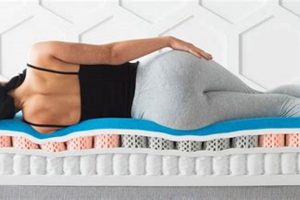
Mattress selection often involves a crucial decision point: the level of support and conforming comfort provided. One end of the spectrum offers robust resistance to compression, maintaining a consistent, unyielding surface. The opposite prioritizes gentle give, contouring to the body’s shape for pressure relief. These differing characteristics dictate the overall sleep experience.
Choosing between these options impacts spinal alignment, pressure point distribution, and ultimately, sleep quality. Individuals with back pain, for example, might find greater relief with one over the other. Considerations for back and stomach sleepers often involve firmer surfaces for posture support, while side sleepers may prefer a plusher feel for shoulder and hip cushioning. Historically, innerspring construction dominated, offering primarily firmer feels; however, advancements in materials like memory foam and latex have expanded the range of available comfort levels.
The subsequent sections will delve into the specific advantages and disadvantages of each type, providing a detailed comparison to assist in making an informed choice that aligns with individual needs and preferences. Topics covered will include the impact on different sleep positions, considerations for body weight, and the types of materials commonly associated with each comfort level.
Guidance for Optimal Mattress Selection
Selecting the correct mattress type profoundly influences sleep quality and physical well-being. Careful consideration of individual needs and preferences is paramount.
Tip 1: Body Weight Consideration: Individuals with higher body mass may benefit from a firmer mattress to ensure adequate support and prevent excessive sinking. Conversely, lighter individuals may find sufficient support and enhanced comfort from a plusher mattress.
Tip 2: Primary Sleep Position: Back sleepers typically require a balance of support and cushioning. A medium-firm mattress is often suitable. Stomach sleepers also generally benefit from firmer support to prevent spinal misalignment. Side sleepers frequently experience pressure points at the shoulders and hips; a plusher mattress can alleviate this discomfort.
Tip 3: Pain Management: Individuals with chronic back pain should consult with a medical professional to determine the optimal support level. A firmer mattress may be recommended to promote spinal alignment. Those with joint pain may find relief with a plusher mattress that conforms to the body’s contours.
Tip 4: Partner Preferences: If sleeping with a partner, consider a mattress that minimizes motion transfer. Hybrid mattresses with individually wrapped coils can be beneficial. Compromise on a medium-firm option if preferences diverge significantly.
Tip 5: Trial Period Utilization: Many mattress retailers offer trial periods. Take advantage of this opportunity to assess comfort and support levels in a home environment.
Tip 6: Material Composition: Different materials offer varying degrees of firmness and plushness. Memory foam conforms closely to the body, providing pressure relief. Latex offers a more responsive and resilient feel. Innerspring mattresses typically provide firmer support. Research the properties of each material before making a purchase.
Implementing these strategies can significantly enhance the likelihood of selecting a mattress that promotes restorative sleep and reduces physical discomfort.
The subsequent section will address specific mattress types and construction methods that cater to different firmness and plushness preferences.
1. Spinal Alignment

Maintaining proper spinal alignment during sleep is crucial for minimizing back pain, preventing musculoskeletal issues, and promoting overall health. The relationship between spinal alignment and mattress firmness is direct; the ideal firmness level supports the natural curvature of the spine, preventing it from sagging or arching excessively.
- Neutral Spine Position
A neutral spine position, where the spine maintains its natural curves, is the primary goal. A mattress that is too soft allows the heavier parts of the body, such as the hips, to sink too deeply, causing spinal misalignment. Conversely, a mattress that is too firm may not conform to the body’s contours, creating pressure points and preventing the spine from settling into its natural alignment.
- Support for Different Sleep Positions
The optimal firmness level varies depending on sleep position. Back sleepers generally benefit from a medium-firm mattress that supports the natural lumbar curve. Side sleepers require a mattress that conforms to the shoulders and hips, allowing the spine to remain aligned. Stomach sleepers often need a firmer mattress to prevent the midsection from sinking too far, which can lead to lower back pain.
- Influence of Body Weight
Body weight significantly affects the degree to which a mattress compresses. Individuals with higher body weights typically require a firmer mattress to prevent excessive sinking and maintain spinal alignment. Lighter individuals may find sufficient support and pressure relief with a plusher mattress.
- Long-Term Health Implications
Consistent spinal misalignment over time can contribute to chronic back pain, nerve compression, and other musculoskeletal problems. Selecting a mattress that promotes proper spinal alignment is an investment in long-term health and well-being. Regular assessment of mattress support and timely replacement when necessary are essential for maintaining optimal spinal health.
In conclusion, the choice between a firm and a plush mattress should be guided by the goal of achieving and maintaining proper spinal alignment. Considering individual sleep position, body weight, and any pre-existing back conditions is crucial for selecting the mattress that best supports spinal health and promotes restful sleep. A mattress trial period is highly recommended to assess the impact on spinal alignment before making a final purchase.
2. Pressure Relief
Pressure relief, in the context of mattresses, refers to the mattress’s ability to minimize concentrated stress on specific areas of the body during sleep. This characteristic is directly influenced by mattress firmness. Firmer surfaces distribute weight more evenly, which can reduce pressure buildup in some individuals. However, the lack of conforming ability may simultaneously create pressure points, particularly at bony prominences such as the hips, shoulders, and knees, particularly in side sleepers. Conversely, plusher surfaces conform more closely to the body’s contours, reducing peak pressure by distributing weight over a larger area. The effect of each type depends greatly on individual anatomy and sleep position.
An example of th
is can be seen in individuals suffering from arthritis or fibromyalgia, where joint pain is a significant concern. A plusher mattress may provide substantial relief by cradling the joints and reducing compressive forces. Conversely, some individuals with lower back pain might find that a firmer mattress offers the necessary support to prevent the spine from sagging, indirectly alleviating pressure on spinal discs and nerves. The practical significance of understanding this relationship lies in tailoring the mattress choice to specific physical needs. Without careful consideration, an unsuitable mattress can exacerbate existing pain conditions or even contribute to the development of new ones. Hospital beds, for instance, often incorporate pressure-relieving technologies, such as alternating air cells or specialized foam, to prevent bedsores in patients with limited mobility.
In summary, pressure relief is a critical determinant of mattress comfort and its potential impact on physical health. While firmer mattresses promote even weight distribution, plush mattresses excel at conforming to body contours and minimizing peak pressure points. The ideal choice is highly individualized, depending on factors such as sleep position, body weight, and pre-existing health conditions. Understanding these nuances enables informed mattress selection, maximizing the potential for restorative sleep and minimizing the risk of pain and discomfort. Therefore, a thorough assessment of personal needs is essential before deciding upon a particular firmness level.
3. Support Level
Support level, in the context of mattress selection, fundamentally defines the mattress’s capacity to maintain spinal alignment and resist excessive compression under body weight. It is a core differentiator between mattress types, inextricably linked to the “firm versus plush mattress” spectrum. A direct correlation exists: firmer mattresses inherently offer greater resistance to compression, providing a higher degree of support. Conversely, plusher mattresses, characterized by their softer surface layers, yield more readily to pressure, offering less overall support. The support level directly influences the sleeper’s posture during rest. Insufficient support can lead to spinal misalignment, potentially exacerbating back pain or contributing to musculoskeletal issues. For instance, a heavier individual using a plush mattress may experience significant sinking, resulting in a curved spinal position. Conversely, a lighter individual on a very firm mattress may find it lacks the necessary conforming properties, leading to pressure point discomfort as the body cannot evenly distribute its weight. This understanding is significant because it dictates the efficacy of the mattress in promoting restful sleep and mitigating physical discomfort.
Real-world examples highlight the practical importance of selecting the appropriate support level. Consider the case of individuals recovering from spinal surgery. Medical professionals often recommend firmer mattresses to provide stable support, preventing further strain on the healing tissues. In contrast, individuals with conditions such as fibromyalgia, characterized by widespread musculoskeletal pain, may benefit from the pressure-relieving properties of a plusher mattress, as it reduces stress on sensitive areas. Furthermore, mattress manufacturers often utilize different construction techniques and materials to manipulate the support level. For example, a mattress with a high coil count and thicker gauge coils will generally provide greater support than one with fewer coils and thinner gauge. Similarly, the density and composition of foam layers significantly impact the mattress’s overall support characteristics. Hybrid mattresses combine these different elements, allowing manufacturers to tailor the support level to specific comfort preferences.
In summary, support level is a critical component of mattress design and selection, intrinsically tied to the “firm versus plush mattress” concept. The ideal support level is determined by a complex interplay of factors, including body weight, sleep position, and individual physical needs. While firmer mattresses offer greater resistance to compression and enhanced spinal alignment, plusher mattresses prioritize pressure relief. Selecting the appropriate support level is essential for promoting restful sleep, minimizing pain, and maintaining long-term spinal health. The challenge lies in accurately assessing individual needs and preferences and then matching them to the specific support characteristics of available mattresses. Future research should focus on developing more objective methods for quantifying support levels and providing personalized recommendations based on individual biomechanical profiles.
4. Body Weight

Body weight is a primary determinant in selecting a mattress. A heavier individual exerts greater force on the mattress surface, causing it to compress more significantly than it would under a lighter load. This compression directly impacts the perceived firmness and support offered by the mattress. Consequently, a mattress that feels appropriately firm to a person of lower weight may feel excessively soft and unsupportive to someone of higher weight. Conversely, a mattress designed to be firm enough for a heavier individual might feel unyielding and uncomfortable to a lighter person, potentially creating pressure points due to insufficient conforming.
The selection of a mattress without considering body weight can have tangible consequences. For instance, an individual exceeding 250 pounds who chooses a plush mattress may experience excessive sinking, leading to spinal misalignment and potential back pain. The lack of adequate support prevents the spine from maintaining its natural curvature during sleep. Conversely, an individual weighing less than 150 pounds selecting a firm mattress may experience discomfort due to the mattress’s inability to conform to the body’s contours, resulting in pressure on the hips and shoulders, particularly when sleeping on their side. This emphasizes the need for mattress manufacturers to provide clear weight guidelines for their products, allowing consumers to make informed decisions based on their individual characteristics.
In summary, body weight is not merely a factor to consider, but rather a foundational element in mattress selection. Its influence on the perceived firmness and support necessitates careful evaluation to ensure spinal alignment and pressure relief are adequately addressed. Ignoring this connection can lead to discomfort, pain, and compromised sleep quality. Addressing the challenge of individualized mattress selection requires both increased consumer awareness and clearer, weight-specific guidance from mattress manufacturers, enabling a more personalized and effective approach to achieving optimal sleep support.
5. Sleep Position

Sleep position significantly influences the perceived comfort and support derived from a mattress. The ideal firmness level accommodates the body’s natural alignment in each position, minimizing pressure points and promoting restful sleep. Disregarding sleep position when selecting a mattress can lead to discomfort, pain, and disrupted sleep patterns.
- Side Sleeping
Side slee
ping concentrates pressure on the shoulders and hips. A plusher mattress allows these areas to sink in, maintaining spinal alignment and alleviating pressure. A firmer mattress may create pressure points, leading to discomfort and potential nerve compression. Individuals who primarily sleep on their side often benefit from a mattress with a softer comfort layer that contours to the body’s shape. - Back Sleeping
Back sleeping requires a balance of support and cushioning. A medium-firm mattress typically provides adequate support for the lumbar region while conforming to the natural curvature of the spine. A mattress that is too firm may not provide sufficient cushioning, while one that is too soft may allow the hips to sink too far, disrupting spinal alignment. Back sleepers generally need a mattress that prevents the spine from arching excessively or sagging unnaturally.
- Stomach Sleeping
Stomach sleeping is often considered the least ergonomically sound position due to the strain it places on the neck and lower back. A firmer mattress is generally recommended to prevent the midsection from sinking too far, which can lead to spinal misalignment and lower back pain. A softer mattress may exacerbate this issue. Stomach sleepers should prioritize a mattress that offers significant support to maintain a relatively neutral spinal position.
- Combination Sleeping
Combination sleepers, who switch between multiple positions throughout the night, require a mattress that can accommodate various support needs. A medium-firm mattress with responsive support and conforming comfort layers often provides a suitable compromise. The mattress should be able to adapt to different pressure points and maintain spinal alignment regardless of the sleep position. Hybrid mattresses, combining the benefits of innerspring and foam technologies, are frequently a good choice for combination sleepers.
In summary, understanding the relationship between sleep position and mattress firmness is crucial for achieving optimal sleep comfort and support. The ideal firmness level varies depending on whether one primarily sleeps on their side, back, stomach, or a combination of positions. Selecting a mattress that aligns with individual sleep habits is essential for minimizing pressure points, maintaining spinal alignment, and promoting restful sleep. Consulting with a sleep specialist or utilizing trial periods can assist in making an informed decision.
Frequently Asked Questions
This section addresses common inquiries regarding the selection of mattresses based on their firmness or plushness characteristics, aiming to clarify their impact on sleep quality and physical well-being.
Question 1: What is the primary difference between a firm and a plush mattress?
A firm mattress offers greater resistance to compression, providing a more supportive and less yielding surface. A plush mattress, conversely, conforms more readily to the body’s contours, offering enhanced pressure relief through its softer surface layers. The choice dictates the overall sleep experience.
Question 2: How does body weight influence the choice between a firm and a plush mattress?
Individuals with higher body mass generally benefit from a firmer mattress to prevent excessive sinking and maintain spinal alignment. Lighter individuals may find sufficient support and enhanced comfort from a plusher mattress.
Question 3: Which sleep position benefits most from a firm mattress?
Stomach sleepers often benefit from a firmer mattress to prevent the midsection from sinking too deeply, which can lead to spinal misalignment and lower back pain. Back sleepers also generally require a firmer surface for adequate support, though a medium-firm option is often suitable.
Question 4: Which sleep position benefits most from a plush mattress?
Side sleepers frequently experience pressure points at the shoulders and hips; a plusher mattress can alleviate this discomfort by conforming to the body’s contours and distributing weight more evenly.
Question 5: Can a firm mattress alleviate back pain?
A firmer mattress can provide support for spinal alignment, which may alleviate certain types of back pain. However, the optimal firmness level depends on the specific cause of the pain and individual preferences. Consultation with a medical professional is advisable.
Question 6: Are there specific materials associated with either firm or plush mattresses?
Innerspring mattresses typically provide firmer support. Memory foam and latex mattresses can be manufactured in a range of firmness levels, but are often associated with plusher feels due to their conforming properties. Hybrid mattresses combine different materials to achieve a specific balance of support and comfort.
In summary, selecting the appropriate mattress firmness or plushness requires careful consideration of individual body weight, sleep position, and any pre-existing health conditions. A trial period is recommended to assess comfort and support levels before making a final purchase.
The subsequent sections will delve into the technological advancements in mattress construction and their impact on sleep quality, providing insights into the latest innovations in sleep surfaces.
Firm Versus Plush Mattress
The preceding exploration clarifies that the choice between a firm versus plush mattress is not arbitrary but rather a critical decision impacting spinal alignment, pressure distribution, and overall sleep quality. Considerations of body weight, preferred sleep position, and existing musculoskeletal conditions are paramount in determining the optimal level of support and conforming comfort. A misalignment of these factors can lead to discomfort, pain, and compromised rest.
The long-term implications of mattress selection necessitate a deliberate and informed approach. Consumers are encouraged to critically evaluate their individual needs and seek out opportunities for product testing and professional consultation. Investing in a mattress that aligns with specific biomechanical requirements is an investment in long-term health and well-being, underscoring the significance of this choice.