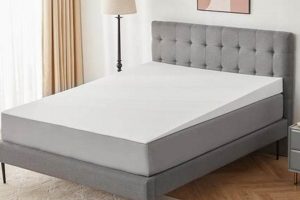
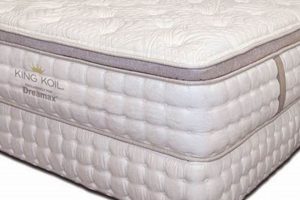
A king-sized sleep surface combined with a powered foundation offers individualized comfort and support. The foundation, often controlled electronically, allows for raising and lowering the head and foot sections of the bed. This configuration aims to improve sleeping posture and overall rest quality. For example, a person might elevate their legs slightly to alleviate lower back pressure, or raise their head to reduce snoring.
The primary advantage lies in enhanced ergonomic support. Individuals can customize the bed’s position to alleviate pressure points and improve spinal alignment. This can lead to improved circulation, reduced pain, and greater comfort. Historically, adjustable beds were largely confined to hospital settings; however, advancements in technology and design have made them increasingly accessible and desirable for home use, especially for those seeking personalized sleep solutions.
The remainder of this article will delve into specific features, benefits, and considerations when selecting such a sleep system. Topics covered will include the range of adjustability offered by different models, compatibility with various mattress types, potential health advantages, and factors to consider during the purchasing process.
Selecting an Adjustable King Bed System
The following guidelines offer crucial insights for individuals contemplating the purchase of a king-sized adjustable bed system. Careful consideration of these points will contribute to a well-informed decision and ensure optimal satisfaction.
Tip 1: Mattress Compatibility Assessment. Prior to purchase, confirm the mattress under consideration is explicitly designed for use with adjustable foundations. Mattresses not engineered for flexibility may experience premature wear or damage when repeatedly contoured.
Tip 2: Motor Durability and Noise Evaluation. Investigate the motor’s specifications, focusing on its weight capacity and noise level during operation. A robust motor will ensure longevity, while a quiet motor minimizes sleep disturbance.
Tip 3: Range of Adjustability Verification. Scrutinize the foundation’s range of motion. Consider the maximum elevation angles achievable for both the head and foot sections to ensure they meet personal comfort and therapeutic requirements.
Tip 4: Remote Control Functionality and Ergonomics. Evaluate the remote control’s design and ease of use, particularly in low-light conditions. Backlit buttons and intuitive layouts are preferable for convenient operation.
Tip 5: Warranty Coverage and Service Options. Thoroughly review the warranty terms offered by the manufacturer, paying close attention to the duration of coverage and the procedures for claiming repairs or replacements.
Tip 6: Weight Capacity Limits. Determine the weight capacity. Ensure the adjustable foundation’s stated weight capacity exceeds the combined weight of the mattress and all users to prevent premature failure.
Tip 7: Consider Additional Features. Some adjustable base models offer additional features like massage, USB charging ports, or under-bed lighting. Evaluate whether these features align with individual needs and preferences.
These considerations will assist in identifying a suitable product that delivers optimal comfort, support, and long-term value.
The next section provides insights into the potential health benefits.
1. Customized support

Customized support, in the context of an adjustable king-sized bed, refers to the capacity of the system to conform to individual physiological needs and preferences. This is achieved through the independent articulation of the head and foot sections of the bed, allowing users to modify the sleeping surface to alleviate pressure points, improve spinal alignment, and enhance overall comfort. The core benefit lies in the bed’s ability to adapt to varying body types, sleeping positions, and specific medical conditions, thereby providing a tailored sleep experience that is unobtainable with a conventional flat mattress.
The significance of customized support manifests in various real-life scenarios. For instance, individuals suffering from acid reflux may benefit from elevating the head of the bed to reduce nocturnal symptoms. Conversely, those experiencing lower back pain might find relief by raising the legs slightly, thereby reducing pressure on the lumbar region. Athletes could utilize the adjustability to promote post-exercise recovery by elevating the legs to improve circulation. Furthermore, couples with differing sleep preferences can leverage the king size to configure their respective sides of the bed according to their individual requirements, promoting harmonious sleep.
In summary, customized support is a defining characteristic of an adjustable king bed, influencing its effectiveness in addressing individual comfort and health needs. The practical application of this feature extends to a broad spectrum of users, ranging from individuals seeking general comfort enhancement to those requiring specific therapeutic benefits. The challenges associated with maximizing customized support include selecting a compatible mattress and understanding the range of adjustability offered by different models; overcoming these challenges results in a markedly improved sleep quality.
2. Pressure relief
The capacity for pressure relief is a core attribute of an adjustable base king mattress system. This functionality stems from the ability to modify the sleeping surface’s contour, thereby redistributing body weight and minimizing concentrated pressure on specific areas such as the hips, shoulders, and lower back. The consequence of this pressure redistribution is a reduction in discomfort, improved circulation, and potentially, a decrease in pain levels for individuals with specific medical conditions. The importance of pressure relief as a component is highlighted by its direct impact on sleep quality and overall well-being. For example, a person suffering from arthritis may experience significant pain reduction by adjusting the mattress to alleviate pressure on inflamed joints.
Practical application of pressure relief is evident in the customization options offered by the adjustable base. By elevating the head and/or foot of the bed, users can fine-tune the sleeping surface to achieve an optimal level of support and pressure distribution. This is particularly useful for individuals with conditions like sleep apnea, where elevating the head can improve breathing, or those with edema in the legs, where elevating the legs can promote fluid drainage. Furthermore, the king size of the mattress allows couples with different pressure relief needs to adjust their respective sides of the bed independently, ensuring personalized comfort for each individual.
In summary, pressure relief is a fundamental benefit derived from the adjustabl
e functionality of a king mattress system. Its practical significance lies in its ability to address specific comfort and medical needs, leading to improved sleep quality and overall well-being. The challenges associated with maximizing pressure relief involve selecting a suitable mattress material and understanding the range of adjustability offered by the base. Overcoming these challenges allows users to harness the full potential of the system, resulting in a more restful and therapeutic sleep experience. The effectiveness in pressure relief is dependent on the mattress composition, motor operation of the base, and other considerations.
3. Ergonomic positioning

Ergonomic positioning, in relation to an adjustable base king mattress, pertains to the alignment and support of the musculoskeletal system during sleep. The adjustable nature of the base allows for modifications in the sleeping surface’s angle and contour, promoting optimal spinal alignment and reducing strain on joints and muscles. This feature is crucial because improper sleeping posture can exacerbate existing conditions, such as back pain, or contribute to the development of new musculoskeletal issues. The king size of the mattress allows two individuals to independently adjust their sides, accommodating differing ergonomic needs.
Consider the scenario of an individual recovering from a spinal injury. The adjustable base enables precise positioning to minimize stress on the affected area, facilitating healing and reducing pain. Similarly, a person with chronic hip pain can elevate their legs slightly to alleviate pressure on the hip joint. Pregnant women may find that adjusting the angle of the upper body provides relief from back pain and improves breathing. In each of these examples, the adjustable base king mattress serves as a tool to achieve ergonomic positioning, mitigating discomfort and promoting healthier sleep habits. Moreover, ergonomic positioning minimizes tossing and turning during the night.
Achieving optimal ergonomic positioning presents the challenge of understanding individual needs and properly configuring the adjustable base. Furthermore, selecting a mattress that complements the adjustability of the base is critical. However, by understanding the principles of ergonomics and choosing appropriate equipment, individuals can leverage the benefits of an adjustable base king mattress to improve sleep quality, reduce pain, and promote overall musculoskeletal health.
4. Motorized adjustability
Motorized adjustability is the foundational technology underpinning the functionality of an adjustable base king mattress system. This powered mechanism enables the user to manipulate the position of the mattress, offering a range of customized comfort and support options. The implications of this feature extend from enhanced sleep quality to potential therapeutic benefits, making it a central aspect of these systems.
- Independent Head and Foot Articulation
Motorized adjustability allows for independent movement of the head and foot sections of the mattress. This permits the user to elevate either end to a desired angle, facilitating activities such as reading or watching television in bed, and potentially alleviating symptoms of conditions like acid reflux or sleep apnea. The dual-king configuration enhances this functionality, allowing each side of the bed to be adjusted independently.
- Pre-set Positions and Programmable Settings
Many adjustable bases incorporate pre-set positions, such as a zero-gravity setting designed to simulate weightlessness and reduce pressure on the spine. Furthermore, programmable settings allow users to save their preferred configurations for easy recall. This level of customization streamlines the adjustment process and ensures consistent comfort over time.
- Motor Specifications and Performance
The quality and power of the motor directly impact the performance and longevity of the adjustable base. Factors such as weight capacity, noise level, and responsiveness are crucial considerations. A robust motor ensures smooth and reliable operation, while a quiet motor minimizes sleep disturbance.
- Integration with Smart Home Systems
Some advanced adjustable bases offer integration with smart home systems, enabling control via voice commands or smartphone apps. This connectivity enhances convenience and accessibility, allowing users to adjust the bed’s position remotely or integrate it with other smart home devices.
The integration of motorized adjustability into the design of a king-sized adjustable bed facilitates a high degree of personalization, catering to individual comfort preferences and potentially providing therapeutic benefits. The operational effectiveness and user satisfaction with these systems hinge on the quality of the motor, the range of adjustability offered, and the ease of use of the control mechanisms.
5. Mattress compatibility

The operational lifespan and performance of an adjustable base king mattress system are intrinsically linked to mattress compatibility. The adjustable base exerts forces on the mattress as it articulates, bending and conforming to different positions. A mattress not designed to withstand these forces is susceptible to damage, including internal structural failures, surface tears, and reduced overall support. Consequently, the selection of a compatible mattress is not merely a preference but a critical requirement for ensuring the system functions as intended and provides long-term value. For instance, using a traditional innerspring mattress lacking sufficient flexibility on an adjustable base will likely result in premature spring failure and diminished comfort. By comparison, a memory foam or latex mattress specifically engineered for adjustable bases will conform readily to the base’s contours without compromising support or durability.
Specific mattress characteristics contribute to compatibility. Mattresses with high degrees of flexibility, often incorporating segmented construction or flexible materials, are better suited for adjustable bases. Mattress manufacturers typically designate compatible models, often providing specific guidance on the range of motion and acceptable usage. It is essential to heed these recommendations. Practical application involves verifying the manufacturer’s compatibility claims before purchase and periodically inspecting the mattress for signs of stress or damage. Regularly checking for any changes in support levels or unusual wear patterns is also important. A notable example of compatibility is the prevalence of hybrid mattresses with pocketed coils coupled with memory foam layers; this design offers both contouring and independent support while maintaining flexibility for adjustable base functionality.
In summary, mattress compatibility constitutes a core component of an adjustable base king mattress system’s efficacy and longevity. Selecting a mattress explicitly designed for use with adjustable bases mitigates the risk of damage and ensures optimal performance. The challenge lies in navigating the various mattress options and understanding their compa
tibility characteristics. Adhering to manufacturer guidelines and prioritizing flexible materials represents a proactive strategy for maximizing system lifespan and realizing the full benefits of adjustable sleep technology.
6. Remote control features

The remote control serves as the primary interface for operating an adjustable base king mattress system, dictating the user’s ability to customize the bed’s position and access advanced functions. Its design and capabilities directly influence the user experience, impacting comfort, convenience, and therapeutic effectiveness. The following facets delineate the critical aspects of remote control functionality within this context.
- Programmable Presets
Programmable presets enable users to store customized bed positions for immediate recall. This feature is pertinent for individuals with specific comfort preferences or therapeutic needs, such as elevating the head for sleep apnea or raising the legs for lower back pain. The ability to save and quickly access these positions enhances the convenience and usability of the adjustable base, fostering consistent comfort.
- Independent Zone Control
On split-king adjustable bases, the remote control often provides independent zone control, allowing each side of the bed to be adjusted separately. This is particularly valuable for couples with differing sleep preferences or medical conditions. The ability to customize each zone independently ensures that both individuals can optimize their comfort without compromising the other’s.
- Ergonomic Design and Usability
The remote control’s ergonomic design significantly affects its usability. Factors such as button layout, tactile feedback, and backlighting contribute to ease of operation, particularly in low-light conditions. An intuitive and well-designed remote control minimizes frustration and ensures that users can easily access the bed’s functions without undue effort. Features such as tactile feedback and large, clearly labeled buttons facilitate operation for individuals with limited dexterity or visual impairments.
- Advanced Features and Connectivity
Modern remote controls may incorporate advanced features such as massage controls, USB charging ports, and integration with smart home systems. These additions enhance the overall functionality of the adjustable base, providing added convenience and entertainment options. Connectivity with smart home platforms allows for voice control and integration with other smart devices, further streamlining the user experience.
These remote control features collectively define the user’s interaction with the adjustable base king mattress. Their effective implementation contributes to a seamless and personalized sleep experience, enhancing comfort and potentially providing therapeutic benefits. The evolution of remote control technology reflects a growing emphasis on user-centric design and integration with modern lifestyles.
Frequently Asked Questions
The following section addresses common inquiries regarding king-sized adjustable bed systems. These questions aim to clarify key aspects of their functionality, suitability, and potential benefits.
Question 1: What mattress types are most compatible with an adjustable base king mattress?
Memory foam, latex, and hybrid mattresses with flexible coil systems are generally considered most compatible. Traditional innerspring mattresses may lack the necessary flexibility and could be damaged.
Question 2: Does an adjustable base king mattress require specialized bedding?
Standard king-sized sheets are typically compatible. However, deep-pocket sheets may be preferable to accommodate the mattress’s increased thickness when elevated.
Question 3: What are the potential health benefits of using an adjustable base king mattress?
Potential benefits include improved circulation, reduced back pain, alleviated sleep apnea symptoms, and enhanced comfort for individuals with mobility issues or acid reflux.
Question 4: What factors should be considered when evaluating the motor of an adjustable base king mattress?
Weight capacity, noise level, responsiveness, and warranty coverage are crucial factors. A robust and quiet motor ensures reliable and long-lasting performance.
Question 5: Can an adjustable base king mattress be used with an existing bed frame?
Compatibility depends on the bed frame’s design. Some frames may require modification or removal of slats to accommodate the adjustable base.
Question 6: What is the typical lifespan of an adjustable base king mattress system?
The lifespan varies based on usage, quality of materials, and maintenance. However, a well-maintained system can typically last between 7 to 10 years.
In summary, selecting a compatible mattress type, understanding motor specifications, and considering individual health needs are crucial for maximizing the benefits of a king-sized adjustable bed system.
The subsequent section will explore common misconceptions about adjustable bases.
adjustable base king mattress Conclusion
This discussion has elucidated various facets of the adjustable base king mattress system. From the importance of mattress compatibility to the nuanced functionality of remote control features, a comprehensive understanding of these components is paramount for informed decision-making. The potential for enhanced ergonomic support, pressure relief, and customized comfort positions such systems as a viable option for individuals prioritizing sleep quality and overall well-being.
Further research and careful evaluation of individual needs are strongly encouraged before making a purchase. The information presented herein serves as a foundation for further inquiry, emphasizing the significance of aligning product specifications with personal requirements. Thoughtful consideration of these factors will optimize the potential benefits of investing in such a sleep system, leading to a potentially significant enhancement in rest and restorative sleep quality for the long-term.