![Best Adjustable Bed and Mattress Combo [Guide]](data:image/svg+xml;base64,PHN2ZyB4bWxucz0iaHR0cDovL3d3dy53My5vcmcvMjAwMC9zdmciIHdpZHRoPSI0NzQiIGhlaWdodD0iMTAwIiB2aWV3Qm94PSIwIDAgNDc0IDEwMCI+PHJlY3Qgd2lkdGg9IjEwMCUiIGhlaWdodD0iMTAwJSIgc3R5bGU9ImZpbGw6I2NmZDRkYjtmaWxsLW9wYWNpdHk6IDAuMTsiLz48L3N2Zz4= "Best Adjustable Bed and Mattress Combo [Guide] Organic & Natural Mattress Buyer’s Guide: Non-Toxic Sleep Solutions")
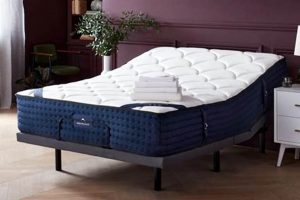
An apparatus designed to reposition the user through powered articulation of the support surface, typically paired with a specifically chosen sleep surface, forms a complete system intended to enhance rest. For example, individuals might select a split king configuration with gel-infused memory foam surfaces to accommodate differing comfort preferences.
The utility of this combined system resides in its capacity to offer personalized comfort and therapeutic benefits. Historically, these systems emerged to address medical needs, providing relief for individuals with respiratory issues, back pain, or circulatory problems. Currently, the wellness sector acknowledges the system’s potential to improve sleep quality, alleviate pressure points, and facilitate easier transitions in and out of bed.
The subsequent sections will delve into the various features, considerations, and advantages associated with selecting the appropriate articulated base and coordinating sleep surface to meet individual requirements.
Guidance on Selecting an Adjustable Bed and Mattress System
The purchase of a powered, repositionable base with a compatible sleep surface represents a significant investment in personal well-being. Careful consideration of several factors is essential to ensure optimal satisfaction and long-term value.
Tip 1: Assess Individual Needs: Prioritize specific health concerns or lifestyle preferences that necessitate adjustable positioning. Individuals with acid reflux may benefit from incline, while those with lower back pain might find relief with customized lumbar support.
Tip 2: Evaluate Mattress Compatibility: Not all sleep surfaces are suitable for use with articulated bases. Latex and memory foam compositions generally offer the necessary flexibility, while traditional innerspring models may lack the capacity to conform effectively to the bases contours.
Tip 3: Research Motor and Frame Quality: The durability and reliability of the motor and frame are crucial. Opt for systems with robust construction, ample weight capacity, and quiet operation to minimize disturbances.
Tip 4: Consider Range of Motion: Evaluate the degree of incline and articulation offered by the base. The ability to achieve a near-flat position, as well as significant elevation, is essential for versatility and comfort.
Tip 5: Explore Available Features: Integrated massage functions, USB charging ports, under-bed lighting, and pre-set positions can enhance the user experience. However, weigh these options against their cost and necessity.
Tip 6: Review Warranty and Return Policies: Understand the manufacturer’s warranty coverage for both the base and the sleep surface. Additionally, confirm the retailer’s return policy in case the system does not meet expectations.
Tip 7: Seek Professional Consultation: Consult with a healthcare professional or sleep specialist to determine if an adjustable system is appropriate for specific medical conditions. Their insights can guide the selection process.
Selecting a powered, repositionable base and coordinating sleep surface requires careful assessment of individual needs, compatibility considerations, and system features. Prioritizing quality, durability, and a comprehensive understanding of warranty and return policies will contribute to a more satisfying and beneficial purchase.
The concluding section will explore the long-term implications and emerging trends within the adjustable sleep system market.
1. Motorized Articulation

Motorized articulation forms the core functionality of an adjustable bed, enabling the repositioning of the sleep surface. This capability directly influences the system’s capacity to provide customized comfort and therapeutic benefits.
- Range of Motion and Positioning
The extent of achievable articulation, including head and foot elevation, dictates the variety of positions available. Greater range accommodates diverse needs, from alleviating acid reflux with incline to promoting circulation with leg elevation. Limited articulation restricts positioning options and potential therapeutic benefits. Systems offering independent head and foot adjustability provide more granular control.
- Motor Quality and Durability
The motor’s quality directly impacts the system’s longevity and reliability. Robust motors with sufficient weight capacity ensure smooth, consistent articulation, minimizing noise and preventing premature failure. Underpowered or poorly constructed motors can exhibit inconsistent performance, generate excessive noise, and compromise the system’s overall lifespan.
- Control Mechanisms and User Interface
Control mechanisms, whether wired remotes, wireless devices, or integrated smartphone applications, facilitate user interaction. Intuitive interfaces and responsive controls enhance the ease of adjusting the bed’s position. Cumbersome controls or unreliable interfaces can detract from the user experience and limit accessibility, particularly for individuals with mobility limitations.
- Pre-set Positions and Customization
Pre-set positions, such as zero-gravity or anti-snore, offer convenient one-touch adjustments. Customization options allow users to program and save personalized positions tailored to their individual needs. The absence of pre-set positions or limited customization restricts the user’s ability to quickly and easily access desired configurations.
The integration of these facets of motorized articulation directly impacts the overall effectiveness of an adjustable bed and mattress system. Systems with superior motor quality, wide range of motion, intuitive controls, and customizable pre-sets provide enhanced comfort and therapeutic benefits, ultimately contributing to improved sleep quality and well-being.
2. Surface Conformability

Surface conformability represents a critical element in the effective integration of a sleep surface with an adjustable bed base. The capacity of the sleep surface to adapt seamlessly to the articulating contours of the base directly influences pressure distribution and overall comfort. Inadequate conformability can result in uneven support, localized pressure points, and diminished therapeutic benefits. For instance, a rigid innerspring mattress, when paired with an adjustable base, may exhibit restricted articulation, leading to discomfort and reduced effectiveness in achieving desired positions for relief from conditions such as back pain or acid reflux.
The selection of materials with inherent flexibility is paramount to achieving optimal surface conformability. Memory foam and latex, known for their contouring properties, are frequently chosen to complement adjustable bases. These materials ef
fectively distribute weight across the surface, minimizing pressure concentration and enhancing spinal alignment in various articulated positions. Conversely, traditional innerspring mattresses, with their interconnected coil systems, often lack the necessary flexibility to conform precisely to the base’s contours, potentially negating the intended benefits of adjustability. A split-king configuration, utilizing independent adjustable bases and conformable sleep surfaces, exemplifies a practical application, enabling personalized comfort and support for individuals with differing sleep preferences or medical needs.
In summary, surface conformability is not merely a desirable characteristic but an essential requirement for maximizing the benefits of an adjustable bed system. The choice of a compatible sleep surface, characterized by inherent flexibility and pressure-relieving properties, directly impacts comfort, therapeutic effectiveness, and overall user satisfaction. Understanding the practical implications of surface conformability allows consumers to make informed decisions, ensuring that the adjustable bed and mattress combination delivers the intended benefits of personalized support and enhanced sleep quality.
3. Pressure Relief

The capacity to alleviate concentrated force on the body is a primary function of an adjustable bed and mattress system. This is achieved through the combination of an articulating base and a conforming sleep surface, distributing weight more evenly than a traditional flat bed. Areas such as the hips, shoulders, and heels, which typically bear significant weight, experience reduced stress. This redistribution mitigates the potential for discomfort and compromised circulation often associated with prolonged static positions.
Consider individuals with limited mobility or those who spend extended periods in bed. The ability to adjust the bed’s inclination can shift pressure points, preventing the formation of pressure ulcers. Furthermore, adjustments can promote improved blood flow, supporting tissue health and reducing the risk of ischemia. The selection of a mattress with high conformability, such as memory foam or latex, further enhances this pressure-relieving effect by molding to the body’s contours and minimizing localized stress.
Effective pressure relief, facilitated by an adjustable bed and appropriate sleep surface, is integral to enhancing comfort, promoting circulation, and preventing pressure-related complications. The understanding of this connection allows for informed selection, maximizing the potential therapeutic benefits of such systems. Failure to prioritize pressure relief may negate the advantages of adjustability, potentially leading to discomfort and adverse health outcomes.
4. Therapeutic Positioning

Therapeutic positioning, the strategic adjustment of body alignment to alleviate symptoms and promote healing, represents a core benefit afforded by an adjustable bed and mattress system. The ability to modify the angle and contour of the sleep surface allows individuals to adopt positions that can mitigate the effects of various medical conditions. This functionality distinguishes an adjustable system from traditional flat beds, which offer limited positioning options and may exacerbate certain ailments. The articulation capabilities of the base, coupled with the conforming properties of the mattress, enable users to achieve targeted positioning that addresses specific therapeutic needs.
Examples of therapeutic positioning include elevating the head to reduce acid reflux, raising the legs to improve circulation and reduce edema, and adjusting the bed to a zero-gravity position to alleviate back pain and spinal compression. Individuals recovering from surgery may find it easier to enter and exit the bed with the assistance of adjustable incline. Similarly, patients with respiratory conditions such as sleep apnea can benefit from head elevation, facilitating easier breathing. The selection of a compatible mattress is crucial; a surface that lacks sufficient conformability may negate the benefits of the adjustable base, creating pressure points and hindering optimal therapeutic positioning. A system that fails to provide adequate support and contouring undermines the intended therapeutic goals.
The integration of therapeutic positioning into a sleep system requires careful consideration of individual needs and medical conditions. Consulting with a healthcare professional can provide guidance on appropriate positioning strategies. The adjustable bed and mattress system, when implemented correctly, offers a non-invasive approach to managing symptoms and enhancing overall well-being. Neglecting the therapeutic potential of adjustable positioning diminishes the value of the system, limiting its impact on health and comfort. Prioritizing this aspect during the selection process ensures a system that effectively addresses specific medical needs and contributes to improved quality of life.
5. Sleep Quality

Optimal rest is intrinsically linked to an adjustable bed and mattress system. The system’s capacity to facilitate customized positioning directly influences the physiological conditions conducive to restorative sleep. For instance, individuals experiencing obstructive sleep apnea may benefit from elevating the head of the bed, reducing airway obstruction and promoting uninterrupted breathing. Similarly, alleviating pressure points through strategic articulation of the base and the conforming properties of the mattress can minimize discomfort, thereby reducing nocturnal awakenings.
The ability to fine-tune the sleep environment afforded by an adjustable system addresses various factors impacting sleep quality. Acid reflux sufferers can experience symptom mitigation through inclined positioning, preventing gastric acid from entering the esophagus. Individuals with chronic pain conditions, such as arthritis or fibromyalgia, may find relief by distributing weight more evenly and reducing stress on affected joints. Moreover, adjustable systems can promote improved circulation, potentially reducing restless leg syndrome symptoms and fostering a more tranquil sleep state. An ill-fitting mattress, even when paired with an adjustable base, can negate these potential benefits, resulting in persistent discomfort and compromised sleep.
In summary, the adjustable bed and mattress system provides a mechanism for enhancing sleep quality through personalized support and targeted therapeutic positioning. The degree to which this system positively impacts sleep depends on factors such as the quality of the mattress, the range of articulation, and the alignment with individual physiological needs. While not a panacea for all sleep disorders, an appropriately selected and configured adjustable system represents a proactive approach to improving sleep quality and overall well-being.
6. Long-Term Durability
The sustained functionality of an adjustable bed and mattress system is a crucial consideration, directly impacting its ov
erall value proposition. Premature failure of either the articulating base or the sleep surface negates the therapeutic and comfort benefits, transforming an intended investment in well-being into a financial burden. Component quality, construction methods, and material selection are primary determinants of the system’s ability to withstand repeated use and maintain its intended performance over an extended period. The consequences of inadequate durability extend beyond mere inconvenience; compromised support and malfunctioning articulation can exacerbate existing medical conditions and disrupt sleep patterns.
For instance, an adjustable base with a weak motor or poorly constructed frame may exhibit reduced range of motion or complete failure after a relatively short period. Similarly, a mattress constructed with low-density foam or substandard materials may develop sagging or lose its conforming properties, undermining pressure relief and spinal support. These failures not only diminish comfort but also necessitate costly repairs or replacements, eroding the long-term financial benefits of the system. Regular maintenance, such as cleaning and inspection, can mitigate some risks, but ultimately, the inherent quality of the materials and construction dictates the system’s lifespan.
In conclusion, prioritizing long-term durability when selecting an adjustable bed and mattress system is essential for ensuring sustained performance, maximizing therapeutic benefits, and safeguarding financial investment. A focus on robust construction, high-quality components, and appropriate material selection mitigates the risk of premature failure and contributes to a more satisfying and cost-effective ownership experience. Neglecting this aspect may result in compromised comfort, diminished therapeutic value, and unexpected expenses, ultimately undermining the intended benefits of the system.
Frequently Asked Questions
The subsequent queries address prevalent concerns and misconceptions regarding adjustable bed and mattress systems, providing concise, factual responses.
Question 1: What constitutes compatibility between an adjustable bed base and a mattress?
Compatibility is defined by the mattress’s ability to conform to the articulating contours of the adjustable base without compromising support or structural integrity. Mattresses composed of latex, memory foam, or flexible hybrids generally exhibit superior compatibility compared to traditional innerspring models.
Question 2: Are specialized sheets required for adjustable bed and mattress systems?
While standard fitted sheets can often be used, deep-pocket sheets are recommended to accommodate the increased mattress depth associated with adjustable bases and to prevent the sheet from detaching during articulation.
Question 3: What is the typical lifespan of an adjustable bed and mattress system?
The lifespan is contingent upon the quality of materials and construction. High-quality systems, with robust motors and durable mattresses, can last between 10 to 15 years with proper care and maintenance. Substandard components may significantly reduce the system’s longevity.
Question 4: Does an adjustable bed and mattress system require professional installation?
Most systems are designed for relatively straightforward assembly, often involving attaching legs and connecting power cords. However, individuals with physical limitations may benefit from professional installation services, if offered.
Question 5: Can an adjustable bed and mattress system alleviate chronic back pain?
The adjustable nature of the system allows for customizable positioning that can alleviate pressure on the spine and surrounding muscles, potentially reducing back pain. However, its effectiveness varies depending on the underlying cause and severity of the condition.
Question 6: What is the power consumption of an adjustable bed base?
Adjustable bed bases typically consume minimal power in standby mode. Power consumption increases during articulation, but the overall energy usage remains relatively low. Specific power consumption figures are usually available in the product specifications.
In conclusion, understanding the nuances of adjustable bed and mattress systemscompatibility, maintenance, therapeutic potential, and durabilityis crucial for making an informed purchase decision.
The subsequent section will explore emerging trends and technological advancements in the adjustable sleep system market.
Adjustable Bed and Mattress Combo
The preceding analysis has elucidated various facets of the adjustable bed and mattress combo, underscoring its potential for enhancing comfort, promoting therapeutic positioning, and improving sleep quality. This exploration has emphasized the importance of considering factors such as mattress compatibility, motor quality, and pressure relief capabilities when selecting such a system. Furthermore, the discussion addressed common inquiries and misconceptions, providing a foundation for informed decision-making.
The continued evolution of sleep technology suggests ongoing innovation in the realm of adjustable systems. Prospective purchasers are encouraged to critically evaluate their individual needs and prioritize systems demonstrating robust construction, verifiable therapeutic benefits, and comprehensive warranty coverage. The ultimate objective remains the selection of a sleep solution that effectively contributes to long-term well-being and restorative rest.