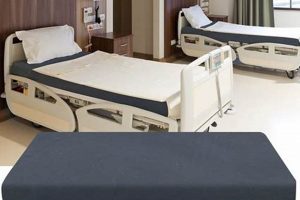
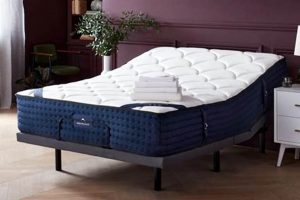
A pressure redistribution surface designed for use on medical beds, this specialized bedding aims to reduce the risk of pressure injuries, commonly known as bedsores or pressure ulcers. This equipment provides support and comfort for patients who are bedridden or have limited mobility within a healthcare setting. An example would be its use in a recovery room post-surgery to aid in patient comfort and healing.
The significance of this therapeutic bedding lies in its ability to alleviate pressure on bony prominences, thereby promoting blood circulation and preventing tissue breakdown. Historically, static mattresses offered minimal pressure relief. The advent of these dynamic support systems represented a significant advancement in patient care, contributing to improved patient outcomes and reduced healthcare costs associated with treating pressure ulcers.
Subsequent sections will delve into specific types, their operational principles, maintenance protocols, and factors to consider when selecting the appropriate option for a given patient profile. The discussion will also address safety considerations and advancements in related technology.
Important Considerations
The effective utilization of specialized bedding requires adherence to specific guidelines to maximize patient benefit and minimize potential risks.
Tip 1: Assess Patient Risk: Conduct a thorough patient assessment to determine the level of risk for pressure injury development. Factors include mobility, nutritional status, continence, and pre-existing medical conditions. This assessment informs the appropriate type and settings.
Tip 2: Select Appropriate Type: Different variations exist, including alternating pressure, low air loss, and static air models. Choose the most suitable option based on the patients specific needs and risk factors. A heavier, less mobile patient may require a higher capacity and more robust system.
Tip 3: Proper Inflation: Ensure proper inflation to achieve optimal pressure redistribution. Under-inflation may result in bottoming out, negating the therapeutic benefits. Over-inflation can increase the risk of skin breakdown. Refer to the manufacturer’s guidelines for appropriate settings.
Tip 4: Skin Inspection: Regularly inspect the patient’s skin, particularly over bony prominences, for signs of pressure injury development. Early detection allows for prompt intervention.
Tip 5: Maintain Cleanliness: Adhere to strict infection control protocols. Clean and disinfect regularly according to manufacturer instructions to prevent the spread of infection.
Tip 6: Monitor Performance: Regularly monitor the functionality, ensuring the pump is operating correctly and that there are no leaks or malfunctions.
Tip 7: Educate Caregivers: Educate caregivers on the proper use, maintenance, and troubleshooting of the mattress system. This ensures consistent and effective utilization.
Adherence to these considerations will optimize the therapeutic benefits, improve patient comfort, and minimize the risk of pressure injury development.
The subsequent section will explore potential challenges associated with utilizing this equipment and strategies for effective problem-solving.
1. Pressure Redistribution

Pressure redistribution forms a foundational principle in the design and utilization of specialized bedding within healthcare settings. Its primary function is to mitigate the risk of pressure injury formation in patients with limited mobility. The following elucidates key facets of this crucial function.
- Alternating Pressure Dynamics
Alternating pressure technology cyclically inflates and deflates air cells within the mattress. This continuous shifting of support reduces prolonged pressure on specific bony prominences, enhancing blood flow and minimizing tissue ischemia. An example is the use of a 10-minute cycle alternating pressure feature on a sacral pressure point.
- Immersion and Envelopment
Specialized bedding allows the patient to sink slightly into the surface, increasing the contact area between the body and the mattress. This “immersion” distributes the patient’s weight more evenly, while “envelopment” describes the mattress conforming to the patient’s body contours. The result is a reduction in peak pressure points. For example, a heavier patient would benefit from a mattress capable of greater immersion and envelopment, especially if bony prominences are prominent.
- Microclimate Management
Some options incorporate low air loss technology, which circulates air through the mattress surface. This helps to regulate temperature and humidity, reducing skin maceration and creating an environment less conducive to pressure injury development. Microclimate control contributes to skin integrity. This function is critical for patients who are incontinent or prone to excessive sweating.
- Static Air Redistribution
Certain designs feature interconnected air cells that redistribute pressure passively. While not as dynamic as alternating pressure systems, they still offer superior pressure redistribution compared to standard hospital mattresses. This type is suitable for patients with lower risk scores for pressure ulcer development.
The principles of pressure redistribution, whether achieved through dynamic or static means, are paramount in the selection and utilization of specialized bedding. Careful consideration of patient-specific risk factors, mattress characteristics, and overall care goals ensures optimal therapeutic outcomes and minimizes the incidence of pressure-related complications.
2. Adjustable Firmness
Adjustable firmness, as a feature of specialized hospital bedding, directly influences patient comfort and therapeutic efficacy. The incorporation of adjustable firmness controls allows healthcare providers to customize the support surface to meet individual patient needs. A firmer setting may be indicated for patients requiring more support during repositioning or those with specific orthopedic conditions, while a softer setting can enhance comfort for patients with sensitive skin or existing pressure injuries.
The availability of adjustable firmness settings directly impacts the effectiveness of pressure redistribution. Overly firm surfaces may negate the pressure-relieving benefits of specialized air mattresses, while excessively soft surfaces may compromise stability and support. Calibration of the firmness setting based on patient weight, body composition, and clinical condition is essential. For example, a bariatric patient requires a higher firmness setting to prevent bottoming out and ensure adequate pressure redistribution.
The ability to tailor the support surface is c
ritical in optimizing patient comfort and promoting healing. Effective integration of adjustable firmness controls, in conjunction with comprehensive patient assessment and adherence to manufacturer guidelines, is paramount. Failure to properly adjust firmness can lead to adverse outcomes. These include increased risk of pressure ulcer development, compromised mobility, and decreased patient satisfaction.
3. Low Air Loss
The integration of low air loss (LAL) technology into specialized bedding directly addresses microclimate management, a crucial aspect of pressure injury prevention. LAL systems incorporate small perforations on the mattress surface, allowing a continuous flow of air to circulate around the patient. This airflow reduces moisture and heat buildup at the skin-support interface, minimizing the risk of maceration. Consider a patient with excessive perspiration; the LAL function facilitates evaporation, helping maintain skin integrity. This is particularly vital in scenarios involving incontinence or fever, where skin is more susceptible to breakdown. Without LAL, trapped moisture can soften the skin, making it more vulnerable to friction and shear forces.
Furthermore, the airflow from LAL systems contributes to temperature regulation, enhancing patient comfort. By dissipating heat, these systems reduce the likelihood of skin irritation and contribute to a more favorable healing environment. In cases of prolonged immobility, such as post-operative recovery or paralysis, the continuous airflow helps minimize the adverse effects of prolonged contact with the support surface. The inclusion of LAL in the design is not merely a comfort feature; it is a functional component that directly influences the physiological factors contributing to pressure ulcer development.
In summary, the connection between low air loss and specialized bedding lies in its contribution to microclimate control. By reducing moisture and heat, LAL systems promote skin integrity and enhance patient comfort, playing a pivotal role in pressure injury prevention strategies within hospital settings. The understanding of this function helps in appropriate selection, proper maintenance, and effective utilization of these mattresses for improved patient outcomes.
4. Weight Capacity

Weight capacity constitutes a critical parameter in the selection and utilization of specialized bedding. It directly influences the efficacy and safety of the equipment. Exceeding the designated weight limit compromises the mattress’s ability to provide adequate pressure redistribution. This can result in bottoming out, where the patient’s body makes contact with the underlying bed frame, negating the therapeutic benefits and increasing the risk of pressure injury development. In instances involving bariatric patients, exceeding the weight limit of a standard mattress could lead to equipment failure, posing a risk of injury to both the patient and caregivers. Weight is therefore a function that needs to be considered for a proper support.
The specification of the weight capacity is usually provided by the manufacturer, and healthcare facilities must adhere to these guidelines to ensure safe and effective operation. Selection of the appropriate model should be based on a thorough assessment of the patient’s weight, ensuring that the chosen option has a weight limit that accommodates the patient with a comfortable margin. Regular monitoring of the mattress is essential to detect any signs of wear, tear, or malfunction that could compromise its weight-bearing capability.
In summary, weight capacity stands as a crucial determinant in specialized bedding selection. Failure to adhere to specified weight limits can compromise patient safety, reduce therapeutic efficacy, and potentially damage the equipment. The careful consideration of this factor aligns with best practices in pressure injury prevention and promotes positive patient outcomes. Further discussions will explore additional selection criteria and guidelines for optimal patient care.
5. Infection Control

Infection control practices are intrinsically linked to the use of specialized bedding within healthcare settings. The very nature of these devices, designed for prolonged patient contact, necessitates stringent protocols to minimize the risk of cross-contamination and healthcare-associated infections (HAIs). These mattresses, due to their complex construction, can harbor microorganisms if not properly cleaned and disinfected, leading to potential transmission pathways between patients. For instance, porous materials or seams may retain bodily fluids, fostering bacterial growth that can lead to the spread of infections such as methicillin-resistant Staphylococcus aureus (MRSA) or Clostridium difficile. This directly impacts patient safety and increases the burden on healthcare systems.
The design and material composition of modern specialized bedding often incorporates antimicrobial properties to mitigate microbial proliferation. However, these features are supplementary and do not replace the need for rigorous cleaning and disinfection procedures. Recommended practices include utilizing hospital-grade disinfectants effective against a broad spectrum of pathogens, adhering to established contact times, and ensuring thorough cleaning of all surfaces, including zippers, seams, and pump units. Furthermore, the use of impermeable mattress covers can provide an additional barrier against fluid penetration and facilitate easier cleaning. An example scenario involves a patient with an open wound or draining lesion; implementing barrier precautions and meticulous disinfection procedures becomes paramount in preventing the spread of infection to subsequent users of the mattress.
In summary, infection control is not merely an adjunct but an integral component of specialized bedding management. Adherence to stringent cleaning and disinfection protocols, coupled with the utilization of appropriate materials and design features, is essential to minimize the risk of HAIs and safeguard patient well-being. Healthcare facilities must prioritize education and training for staff on proper handling, cleaning, and maintenance procedures to ensure the ongoing effectiveness of infection control measures. The success of these measures is directly tied to patient outcomes and the overall quality of care delivered within the healthcare environment.
6. Patient Comfort
Patient comfort represents a critical element in the design and function of specialized hospital mattresses. Prolonged immobility necessitates a support surface that minimizes discomfort and promotes rest, directly impacting healing and overall well-being. The design characteristics of such mattresses, including pressure redistribution capabilities, adjustable firmness, and low air loss technology, directly contribute to enhancing the patient experience. The presence of a decubitus ulcer may amplify the patient’s level of discomfort. Air fluidized mattresses can alleviate the pain involved.
Furthermore, adjustable firmness allows
customization of the support surface to accommodate individual patient needs and preferences. A softer setting may be preferred for patients with sensitive skin or existing pressure injuries, while a firmer setting may provide better support for those with musculoskeletal conditions. Low air loss technology helps regulate temperature and humidity, minimizing skin maceration and enhancing comfort. In scenarios involving long-term care or post-surgical recovery, where patients spend extended periods in bed, optimizing comfort becomes particularly crucial. A reduction in pain or discomfort may facilitate the ability for patients to achieve recovery goals.
Therefore, the pursuit of patient comfort should not be viewed as a secondary consideration, but rather as an integral component of the therapeutic intervention provided by specialized bedding. Balancing comfort with clinical efficacy requires careful assessment of individual patient needs and preferences, along with adherence to evidence-based practices. Patient feedback should be incorporated into the selection and adjustment of mattress settings. The challenge lies in integrating comfort-enhancing features without compromising the pressure redistribution and support functions that are essential for preventing pressure injuries and promoting healing. Ultimately, the goal is to provide a supportive and comfortable environment that facilitates optimal patient outcomes.
7. Durability
Durability, in the context of specialized air mattresses for medical facilities, is a critical factor influencing long-term cost-effectiveness and patient safety. The ability of these systems to withstand continuous use, rigorous cleaning protocols, and the weight of diverse patient populations directly impacts their lifespan and the quality of care provided. Inadequate durability leads to premature failure, increased maintenance costs, and potential compromise of therapeutic efficacy.
- Material Composition
The materials used in the construction of these mattresses, including the outer cover, air cells, and connecting components, determine their resistance to wear and tear. High-quality materials, such as reinforced nylon or polyurethane, offer superior abrasion resistance and prevent punctures or leaks. Cheaper materials may degrade rapidly under the stress of hospital environments, requiring frequent repairs or replacements. For example, a cover constructed of thin vinyl may quickly develop tears, exposing the inner components to contamination and rendering the mattress unusable.
- Seam Strength and Construction
The seams that join the various components of the mattress are vulnerable points of failure. Weak or poorly constructed seams can split under pressure, leading to air leaks and compromising the pressure redistribution function. Reinforced seams, employing techniques such as welding or multiple stitching, enhance durability and prevent premature failure. A seam failure would not only create an ineffectual sleep support, but also a potential source for hospital acquired infection.
- Pump Reliability and Longevity
The pump that regulates air pressure within the mattress is a vital component. A robust and reliable pump is essential for maintaining consistent pressure redistribution over extended periods. Pump failures can disrupt the therapeutic function of the mattress, leading to pressure injuries. Durability of the pump is gauged by its ability to withstand continuous operation. Regular inspection is required for air leakage.
- Resistance to Cleaning Agents
Hospital mattresses are subjected to frequent cleaning and disinfection using harsh chemicals. The materials used in their construction must be resistant to degradation from these agents. Otherwise, repeated exposure can lead to cracking, discoloration, and reduced flexibility, ultimately shortening the lifespan of the mattress. This also can result in more exposure from infection.
In conclusion, the durability of specialized air mattresses is a multifaceted consideration encompassing material quality, construction techniques, and resistance to environmental factors. Investing in durable, high-quality systems translates into long-term cost savings, improved patient safety, and enhanced efficiency within healthcare facilities. Furthermore, a focus on durability aligns with sustainability goals by reducing the need for frequent replacements and minimizing waste.
Frequently Asked Questions
This section addresses common inquiries regarding specialized support surfaces for medical beds. The information provided aims to clarify key aspects of their use and functionality within healthcare settings.
Question 1: What distinguishes an air mattress designed for hospital beds from a standard consumer air mattress?
Hospital bed air mattresses are engineered with specific therapeutic functionalities. These systems typically incorporate features like alternating pressure, low air loss, and adjustable firmness to prevent pressure injuries and promote skin integrity. Standard consumer air mattresses lack these medical-grade features and are primarily intended for temporary sleep surfaces.
Question 2: How frequently should an air mattress used on a hospital bed be cleaned?
Cleaning frequency depends on the patient’s condition and the facility’s infection control protocols. However, generally, the mattress surface should be cleaned and disinfected after each patient use and whenever visibly soiled. Regular cleaning with an approved disinfectant is essential to prevent the spread of healthcare-associated infections.
Question 3: What factors should be considered when selecting an air mattress for a patient at risk of pressure ulcers?
Key considerations include the patient’s weight, mobility, skin condition, and risk factors for pressure injury development. Mattress features such as alternating pressure, low air loss, and adjustable firmness should be aligned with the patient’s specific needs. Consultation with a healthcare professional is recommended.
Question 4: Is specialized training required to operate and maintain these types of mattresses?
Yes, healthcare personnel should receive comprehensive training on the proper operation, maintenance, and troubleshooting of specialized air mattress systems. This training should cover topics such as inflation settings, cleaning procedures, and pump maintenance to ensure optimal performance and patient safety.
Question 5: What are the potential risks associated with using an improperly inflated air mattress on a hospital bed?
Using an improperly inflated mattress can compromise its pressure redistribution capabilities. Under-inflation may cause bottoming out, negating the therapeutic benefits, while over-inflation can increase the risk of skin breakdown. Adherence to manufacturer’s guidelines for inflation settings is crucial.
Question 6: How does the weight capacity of an air mattress affect its suitability for different patients?
Exceeding the weight capacity of an air mattress compromises its ability to provide adequate support and pressure redistribution. Selection of a mattress with an appropriate weight limit, based on the patient’s weight, is essential to ensure patient safety and therapeutic efficacy. Regular inspection is also required.
Proper understanding and application of these factors ensures optimal utilization and minimizes the risk of complications.
The subsequent
section will discuss the cost implications and long-term value of these specialized support systems.
Conclusion
This article has presented a comprehensive overview of the specialized bedding used in medical facilities. The discussion encompassed critical features, including pressure redistribution, adjustable firmness, low air loss, weight capacity considerations, infection control protocols, and durability factors. The objective has been to highlight key aspects that contribute to improved patient outcomes and optimized resource allocation within healthcare settings.
The appropriate selection and meticulous management of air mattresses represent a significant investment in patient well-being and the reduction of preventable complications. Ongoing research and technological advancements promise to further refine these support systems. Therefore, continuous education and adherence to best practices are essential for maximizing their benefits and fostering a culture of proactive patient care.