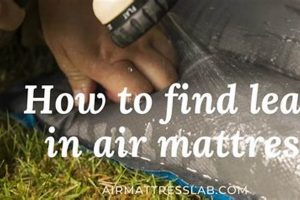
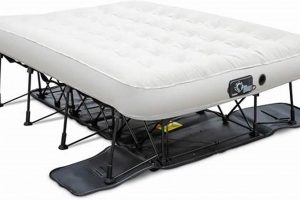
These repair provisions are collections of materials designed to mend punctures and tears in inflatable sleeping surfaces. They typically include adhesive substances, patching material (often vinyl or rubber), and sometimes tools to prepare the damaged area. These sets facilitate the restoration of an inflatable bed’s airtight seal, extending its usability. As an illustration, a kit might contain several pre-cut patches, a tube of specialized glue, and an abrasive pad for cleaning the area around a hole.
The utility of these ensembles lies in their ability to salvage otherwise unusable inflatable beds, offering a cost-effective alternative to replacement. Their significance is amplified in situations where a replacement is not readily available, such as during camping trips or when accommodating overnight guests. Historically, makeshift repairs were common, but these standardized collections provide a more reliable and durable solution, reducing air leakage and improving sleep quality.
Understanding the composition, application techniques, and storage recommendations of these items is paramount to maximizing their effectiveness. The subsequent sections will delve into specific types, application procedures, and preventative measures to prolong the life of inflatable beds and the efficacy of these crucial repair solutions.
Essential Application and Maintenance Guidance
Effective utilization of inflatable bed repair provisions requires adherence to specific guidelines to ensure optimal and lasting results. The following advice offers practical methods for prolonging the life of inflatable beds and the effectiveness of the corresponding repair implements.
Tip 1: Ensure Surface Cleanliness: Prior to any application, thoroughly clean the area surrounding the puncture with a suitable cleaning agent, such as isopropyl alcohol. This removes dirt and oils that can impede adhesion.
Tip 2: Use Appropriately Sized Patches: Select a patch that extends at least one inch beyond the damaged area in all directions. This provides adequate surface area for a secure bond.
Tip 3: Apply Adhesive Sparingly: Apply a thin, even coat of adhesive to both the patch and the cleaned area on the inflatable bed. Excessive adhesive can weaken the bond and create a messy application.
Tip 4: Allow Adequate Drying Time: Allow the adhesive to become tacky before applying the patch. Consult the adhesive manufacturer’s instructions for recommended drying times, typically ranging from 2 to 5 minutes.
Tip 5: Apply Firm, Even Pressure: Once the adhesive is tacky, carefully apply the patch to the damaged area, ensuring there are no air bubbles trapped underneath. Apply firm, even pressure for several minutes to ensure a strong bond.
Tip 6: Cure Time is Crucial: Allow the repair to fully cure before inflating the bed. The adhesive manufacturer’s instructions will specify the appropriate cure time, often ranging from 24 to 48 hours.
Tip 7: Store Kits Properly: Store unused components in a cool, dry place away from direct sunlight and extreme temperatures. This preserves the adhesive’s efficacy and the integrity of the patching material.
Adhering to these guidelines maximizes the likelihood of a successful and durable repair, preventing future air leaks and extending the lifespan of the inflatable bed. Proper application and storage practices are essential for maintaining the utility of these repair components.
The subsequent sections will address preventative measures that can minimize the need for repairs, as well as advanced techniques for addressing more complex damages.
1. Material Compatibility

Material compatibility is a paramount consideration when selecting an inflatable bed repair provision. The interaction between the patch material and the inflatable bed’s surface dictates the repair’s long-term integrity and ability to maintain an airtight seal. A mismatch in materials can lead to adhesive failure, patch detachment, and recurring leaks, rendering the repair ineffective.
- Vinyl-to-Vinyl Adhesion
Many inflatable beds are constructed from PVC (polyvinyl chloride). Therefore, repair components that also utilize vinyl patches and adhesives designed for vinyl are generally the most compatible. This pairing promotes a strong chemical bond, as the adhesive can effectively soften and fuse the vinyl surfaces together. Using a non-vinyl patch on a vinyl bed often results in a weaker, less durable repair that is prone to peeling or cracking over time. For example, using a rubber patch with cyanoacrylate glue on a vinyl air mattress can result in a repair that fails within a short period.
- TPU/PU Considerations
Some higher-end inflatable beds utilize TPU (thermoplastic polyurethane) or PU (polyurethane) for enhanced durability and comfort. These materials require specialized adhesives and patch materials that are specifically formulated to bond with TPU or PU surfaces. Standard vinyl adhesives may not create a sufficient bond with these materials, leading to repair failure. A repair ensemble designed for TPU often includes a flexible TPU patch and a urethane-based adhesive to ensure compatibility.
- Fabric-Reinforced Composites
Certain inflatable beds incorporate a fabric-reinforced composite structure for increased tear resistance. Repairing these beds requires a patch material that can conform to the fabric texture and an adhesive capable of penetrating and bonding to both the vinyl/TPU coating and the underlying fabric. These types of kits typically contain a thicker, more robust patch and a solvent-based adhesive to ensure adequate adhesion and structural integrity.
- Adhesive Formulation
The chemical composition of the adhesive is as critical as the patch material itself. Adhesives must be compatible with both the patch and the inflatable bed material, offering sufficient flexibility and resistance to temperature changes and air pressure fluctuations. An adhesive that becomes brittle or degrades over time will compromise the repair, leading to leaks. Therefore, selecting a repair provision with a specialized adhesive recommended for inflatable bed repair is essential for achieving a lasting seal.
In summation, careful consideration of material compatibility is essential when addressing inflatable bed repairs. Matching the patch and adhesive to the specific material of the inflatable bed ensures a robust, airtight, and long-lasting repair. Failure to do so can result in wasted effort and a continued need for replacement or repeated repairs.
2. Adhesive Strength

Adhesive strength is a critical determinant of the efficacy of any inflatable bed repair provision. It directly influences the durability and longevity of the mend. If the adhesive lacks suf
ficient strength to withstand internal air pressure and external stresses, the patch will likely detach, resulting in air leakage and requiring repeated repairs. A weak adhesive can also degrade prematurely due to environmental factors, such as temperature fluctuations or humidity, further compromising the seal. As an illustration, consider a scenario where a user attempts to repair a puncture using a provision with a low-grade adhesive; the patch might initially adhere, but upon inflation, the pressure exerted against the weak bond causes it to peel away, rendering the repair futile. This highlights adhesive strength as an indispensable component.
The adhesive’s formulation must be specifically designed to bond effectively with the materials of both the patch and the inflatable bed. Variables such as surface preparation and application technique significantly impact the ultimate adhesive strength achieved. Inadequate cleaning of the surface or improper application of the adhesive can substantially reduce its bonding capabilities. A correct application of a high-strength adhesive, coupled with proper surface preparation, creates a robust, airtight seal. In cases involving thicker, more durable materials or larger tears, heavy-duty adhesives formulated for high-stress environments are essential for ensuring a lasting mend.
In conclusion, the significance of adhesive strength in the context of inflatable bed repair items cannot be overstated. It functions as the linchpin of a successful repair, safeguarding against air leakage and extending the usability of the inflatable bed. Addressing this imperative ensures a stable and resilient seal, crucial for continued utility. Furthermore, it links directly to the practicality of repair and influences purchasing choices of consumers.
3. Patch Size Appropriateness

The selection of an appropriately sized patch within an air mattress repair provision directly impacts the repair’s effectiveness and longevity. Inadequate patch dimensions can compromise the seal, while excessive size can create unnecessary bulk and potential points of failure.
- Tear Extent Coverage
A patch must extend beyond the perimeter of the tear or puncture to adequately distribute stress and ensure a secure bond to the surrounding intact material. Insufficient coverage concentrates stress at the tear’s edges, increasing the likelihood of future propagation or patch detachment. As a general guideline, a patch should extend at least one inch beyond the damage in all directions to effectively distribute pressure. For instance, a small puncture might necessitate a two-inch square patch, whereas a larger tear could require a patch spanning four inches or more.
- Material Flexibility
The patch size should be proportional to the material’s flexibility. A larger patch on a highly flexible surface may create a rigid point that strains the surrounding material, leading to additional tears. Conversely, a small patch on a less flexible material might not adequately conform to the contours of the damaged area, resulting in an imperfect seal. For inflatable beds with varying levels of flexibility, it may be necessary to trim patches to achieve an optimal balance between coverage and pliability.
- Adhesive Surface Area
The patch size directly correlates with the available adhesive surface area. Insufficient area may result in a weak bond that fails under pressure, while an excessively large area can increase the risk of adhesive bleed-out and a messy application. The adhesive’s instructions should be consulted to determine the optimal adhesive-to-patch surface ratio for maximum bond strength. Some repair sets include pre-cut patches designed with a specific adhesive application area to simplify the repair process and ensure proper adhesion.
- Repair Location Considerations
The location of the damage on the inflatable bed can influence the optimal patch size. Repairs near edges or seams may require larger patches to reinforce the weakened area and prevent further tearing. Similarly, repairs in high-stress zones, such as the bed’s center, might benefit from larger, reinforced patches to withstand greater pressure. Conversely, repairs in less critical areas may require smaller patches to minimize interference with the bed’s overall structure and flexibility.
Proper patch size selection within an inflatable bed repair provision necessitates careful assessment of the damage extent, material flexibility, adhesive requirements, and repair location. Adhering to these considerations maximizes the repair’s likelihood of success, prolonging the inflatable bed’s lifespan and ensuring continued functionality. The overall goal of this procedure is to guarantee the air mattress’ utility.
4. Surface Preparation

Surface preparation is a critical, often underestimated, step in utilizing inflatable bed repair provisions. It directly impacts the bond strength between the patch and the inflatable bed material, influencing the longevity and reliability of the repair. Without proper surface preparation, even the highest-quality repair provisions are likely to fail prematurely.
- Cleaning and Degreasing
The inflatable bed’s surface, particularly around the damaged area, accumulates dirt, oils, and other contaminants that hinder adhesive bonding. Effective cleaning and degreasing remove these substances, creating a clean, receptive surface for the adhesive to adhere to. Isopropyl alcohol is frequently recommended as a cleaning agent due to its ability to dissolve oils and evaporate without leaving a residue. Failure to adequately clean the surface results in a weaker bond and potential air leakage.
- Abrasive Treatment
Many inflatable bed materials possess a smooth, non-porous surface that can limit adhesive adhesion. Gentle abrasion of the surface with fine-grit sandpaper or an abrasive pad creates microscopic grooves that increase the surface area available for bonding. This roughening process enhances mechanical interlocking between the adhesive and the material, resulting in a stronger and more durable bond. However, excessive abrasion can damage the material, so caution must be exercised to avoid over-sanding.
- Drying and Ventilation
Moisture on the surface of the inflatable bed can interfere with adhesive bonding, leading to a compromised seal. After cleaning, it is essential to allow the surface to thoroughly dry before applying the adhesive. Providing adequate ventilation during the drying process accelerates evaporation and prevents moisture from becoming trapped beneath the patch. Forced air, such as from a hairdryer on a low setting, can be used to expedite drying, but care must be taken to avoid overheating the material.
- Appropriate Environmental Conditions
Humidity and temperature can affect both the surface preparation process and the adhesive’s curing properties. High humidity can slow the evaporation of cleaning agents and adhesives, while extreme temperatures can alter adhesive viscosity and bonding characteristics. Ideally, surface preparation and repair should be conducted in a dry, well-ventilated environment with moderate temperatures to ensure optimal adhesion and curing.
In conclusion, surface preparation is an indispensable prerequisite for succes
sful inflatable bed repair. By diligently cleaning, abrading, drying, and controlling environmental conditions, the likelihood of achieving a strong, durable, and airtight seal is significantly increased. This meticulous approach maximizes the effectiveness of air mattress patch kits, prolonging the lifespan of the inflatable bed and preventing inconvenient air leaks.
5. Application Technique

The efficacy of inflatable bed repair provisions is intrinsically linked to the application technique employed. The quality of materials in a repair ensemble is rendered irrelevant if the patch is incorrectly applied. The adherence to proper procedures directly influences the repair’s durability, airtightness, and overall success. For example, the failure to adequately press out air bubbles during patch application can create weak points vulnerable to future leaks. Consequently, understanding and executing the correct application steps is paramount to maximizing the value of the repair components.
Specific application techniques dictate the success of inflatable bed repairs. The uniform distribution of adhesive, for instance, is crucial for creating a consistent bond across the entire patch surface. Uneven adhesive application results in areas of weak adhesion, increasing the risk of air leakage. Similarly, the amount of pressure applied during patch placement affects the strength of the bond. Insufficient pressure fails to fully embed the patch into the adhesive, while excessive pressure can squeeze out too much adhesive, creating a dry joint. The cure time specified by the adhesive manufacturer must also be strictly adhered to; premature use of the repaired inflatable bed before the adhesive is fully cured compromises the bond strength.
In conclusion, the application technique is an indispensable component of inflatable bed repair provisions. A meticulous approach to each step, from surface preparation to patch placement and curing, ensures a robust and durable repair. The challenges in execution underscore the need for clear, concise instructions accompanying repair, and adherence to them is an essential component to maintain the utility of these beds.
6. Cure Time Adherence

Cure time adherence represents a critical factor in the successful application of inflatable bed repair provisions. It refers to the period required for the adhesive component of the patch kit to fully set and achieve its maximum bonding strength. Neglecting this timeframe can compromise the integrity of the repair and lead to premature failure.
- Adhesive Polymerization
The chemical process of adhesive polymerization necessitates a specific duration to complete. During this period, the adhesive molecules cross-link and form a robust network, resulting in a durable bond between the patch and the inflatable bed material. Premature inflation or stress on the repaired area can disrupt this process, weakening the bond and increasing the likelihood of air leakage. The manufacturer’s specified cure time accounts for the time required for full polymerization to occur.
- Solvent Evaporation
Many adhesives utilized in inflatable bed repair provisions contain solvents that must evaporate for the adhesive to properly cure. Trapped solvents can interfere with the bonding process, creating a weaker, less airtight seal. The cure time allows for complete solvent evaporation, ensuring that the adhesive achieves its optimal bonding properties. Factors such as temperature and humidity can influence the rate of solvent evaporation, potentially extending or shortening the required cure time.
- Bond Strength Development
The adhesive bond strength increases gradually over the cure time. Initial adhesion may be sufficient to hold the patch in place, but the bond’s ultimate strength develops as the adhesive fully cures. Applying stress to the repaired area before the bond has reached its maximum strength can compromise its long-term durability. Adhering to the recommended cure time allows the bond to fully mature, ensuring it can withstand the internal pressure and external forces exerted on the inflatable bed. For instance, premature inflation can undo the effectiveness of this element from air mattress patch kits.
- Environmental Factors
Environmental conditions, such as temperature and humidity, can significantly influence the cure time of adhesives. High humidity can slow down the evaporation of solvents, while low temperatures can inhibit the polymerization process. It is essential to consider these factors and adjust the cure time accordingly. In humid environments, extending the cure time may be necessary to ensure complete solvent evaporation. Similarly, in cold environments, warming the repaired area can accelerate the curing process and improve bond strength. Therefore, the efficacy of air mattress patch kits depends on the effect of weather.
In summary, cure time adherence is a vital aspect of inflatable bed repair. Ignoring the specified cure time can undermine the repair’s integrity and reduce the inflatable bed’s lifespan. By understanding the underlying chemical processes and considering environmental factors, users can ensure that the adhesive achieves its maximum bonding strength, resulting in a durable and airtight repair.
7. Storage Conditions

The conditions under which inflatable bed repair provisions are stored significantly impact their functionality and longevity. Optimal storage practices preserve the chemical properties of the adhesive and the physical integrity of the patch material, ensuring readiness for immediate and effective use when needed. Improper storage can degrade the components, rendering the set useless when a repair is required.
- Temperature Extremes
Extreme temperatures, both high and low, can adversely affect the adhesive’s viscosity and bonding strength. High temperatures may cause the adhesive to thin, leading to premature drying or separation of components within the set. Low temperatures can thicken the adhesive, making it difficult to apply evenly. Furthermore, repeated exposure to temperature fluctuations can degrade the adhesive’s chemical structure, reducing its bonding effectiveness over time. Storing these provisions in a climate-controlled environment, away from direct sunlight and sources of heat or cold, helps maintain their integrity. For instance, avoiding storage in a hot car trunk or an uninsulated garage is crucial.
- Humidity Levels
High humidity can introduce moisture into the repair provision packaging, leading to corrosion of metallic components or degradation of the adhesive. Moisture can also promote the growth of mold or mildew, further compromising the set’s integrity. Conversely, extremely low humidity can cause the adhesive to dry out prematurely. Storing these provisions in a dry, sealed container, ideally with a desiccant pack, minimizes the risk of moisture-related damage. Storage in a cool, dry environment is essential.
- Exposure to Sunlight
Prolonged exposure to direct sunlight can degrade both the adhesive and the patch material. Ultraviolet
(UV) radiation can break down the chemical bonds in the adhesive, reducing its bonding strength and causing it to become brittle or discolored. Sunlight can also fade or weaken the patch material, making it more susceptible to tearing or damage. Storing these repair items in a dark, opaque container or cabinet protects them from harmful UV radiation, prolonging their lifespan. - Physical Protection
Physical protection from crushing, punctures, or other forms of damage is essential to maintain the integrity of inflatable bed repair provisions. Rough handling or improper storage can damage the packaging, exposing the components to environmental factors or causing them to become lost or contaminated. Storing the items in a sturdy container or designated compartment prevents physical damage and ensures that all components remain organized and readily accessible when needed.
Proper attention to storage conditions preserves the effectiveness of inflatable bed repair provisions. These items are essential for maintaining inflatable beds, and suitable conditions can dramatically impact their utility in emergency repair scenarios. Appropriate storage prevents degradation of vital components, ensuring that the repair provision functions as intended when needed.
Frequently Asked Questions
The following questions address common inquiries regarding the application, effectiveness, and limitations of inflatable bed repair solutions. The responses aim to provide clarity and guidance to optimize repair outcomes.
Question 1: Are all air mattress patch kits universally compatible with every inflatable bed material?
No, compatibility varies. Kits are formulated for specific materials, such as vinyl, TPU, or flocked surfaces. Employing an incompatible repair set will likely result in a failed or short-lived patch.
Question 2: What is the ideal method for preparing the surface before applying a patch?
The surface must be thoroughly cleaned with isopropyl alcohol to remove oils and debris. Light abrasion with fine-grit sandpaper may improve adhesion, but avoid excessive sanding that could damage the inflatable bed.
Question 3: How long must the adhesive cure before the inflatable bed is re-inflated?
Cure times vary, typically ranging from 24 to 48 hours. The adhesive manufacturer’s instructions must be strictly followed to ensure the patch achieves maximum bond strength.
Question 4: Can inflatable bed repair solutions effectively mend large tears or punctures?
While these provisions are suitable for smaller damages, extensive tears may necessitate professional repair or replacement of the inflatable bed. Attempting to patch a large tear often yields an unreliable result.
Question 5: How should unused components of an inflatable bed repair set be stored to maintain their efficacy?
Unused adhesive and patches should be stored in a cool, dry, and dark location, away from extreme temperatures and direct sunlight. Proper storage prolongs the adhesive’s shelf life and prevents the patch material from degrading.
Question 6: What indicates a failed repair despite proper application?
Recurring air leakage after a repair, despite adherence to instructions, suggests a compromised seal. Factors such as incompatible materials, insufficient surface preparation, or excessive stress on the patch contribute to repair failure.
Understanding these essential aspects of inflatable bed repair solutions is paramount for achieving lasting and reliable mends. In cases of uncertainty, consulting professional advice or seeking replacement is advisable.
The subsequent section will explore advanced repair techniques for addressing more complex types of damages and preventative maintenance measures to prolong the life of inflatable beds.
Conclusion
The preceding examination has delineated the vital attributes of air mattress patch kits, encompassing material compatibility, adhesive strength, patch size appropriateness, surface preparation, application technique, cure time adherence, and storage conditions. Each element exerts a definitive influence on the repair’s outcome, with deficiencies in any area potentially negating the entire effort.
Proficient utilization of these kits extends the service life of inflatable beds, providing an economically sound alternative to replacement. The informed selection and meticulous application of repair materials safeguard against air loss, ensuring continued utility. Understanding and adhering to best practices minimizes waste, promotes resource conservation, and upholds the functional integrity of essential equipment.
![Best Double Air Mattress [Guide] Sleep Comfortably! | Organic & Natural Mattress Buyer’s Guide: Non-Toxic Sleep Solutions](https://mattressworldpa.com/wp-content/uploads/2025/07/th-6752-300x200.jpg "Best Double Air Mattress [Guide] Sleep Comfortably! Organic & Natural Mattress Buyer’s Guide: Non-Toxic Sleep Solutions")