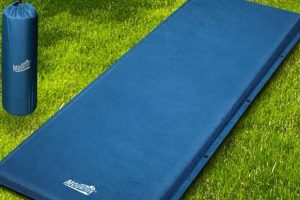
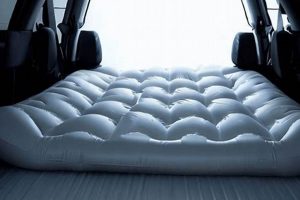
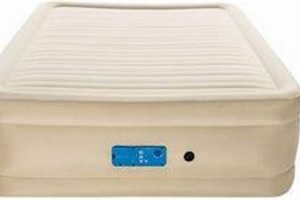
This is a collection of materials designed for the repair of inflatable sleeping surfaces. Typically, such a kit includes adhesive, patches made of vinyl or similar flexible material, and sometimes a small tool to aid in application. The purpose of this grouping of items is to address punctures or tears in the air mattress, preventing air leakage and prolonging its usability. For example, a user might employ this set to mend a small hole caused by a sharp object encountered during camping.
Its significance lies in offering a cost-effective and environmentally conscious alternative to replacing an entire air mattress when damage occurs. By enabling repairs, it extends the lifespan of the product, reducing waste and saving resources. Historically, temporary fixes like duct tape were common, but specialized kits provide a more durable and reliable solution, tailored specifically for the materials and stresses involved with inflatable mattresses. This saves money, while also reducing the environmental effect.
The subsequent sections will delve into the common components, effective application techniques, factors influencing the success of repairs, and preventative measures to minimize the need for such repairs in the first place. Careful consideration will also be given to different types of damages to the mattresses.
Air Mattress Patching Kit
Effective utilization of a patching kit is crucial for ensuring a long-lasting repair. Adherence to specific techniques and preventative measures significantly increases the success rate and extends the lifespan of the repaired air mattress.
Tip 1: Thoroughly Clean the Affected Area: Debris and oils impede adhesion. Use isopropyl alcohol to clean the area surrounding the puncture, ensuring it is completely dry before proceeding.
Tip 2: Precisely Locate the Leak: Submerge the inflated mattress in water or apply a soapy solution to identify the exact source of the air leak. Circle the area with a marker for accurate patch placement.
Tip 3: Select an Appropriately Sized Patch: The patch should extend at least one inch beyond the perimeter of the puncture. Larger punctures necessitate larger patches for structural integrity.
Tip 4: Apply Adhesive Sparingly and Evenly: Excessive adhesive can weaken the patch bond. A thin, uniform layer is sufficient to create a secure seal.
Tip 5: Clamp or Weigh Down the Patch: Applying consistent pressure during the curing process promotes optimal adhesion. Utilize a heavy object or clamp for several hours, following the adhesive manufacturer’s instructions.
Tip 6: Allow Adequate Curing Time: Premature use can compromise the bond. Adhere strictly to the adhesive’s recommended curing time before reinflating the mattress.
Tip 7: Consider Double-Patching for Larger Tears: For significant damage, applying a second patch over the first can reinforce the repair and improve its longevity.
By diligently implementing these techniques, the effectiveness of an air mattress patching kit is significantly enhanced, resulting in a durable and reliable repair.
The following section will discuss preventative actions to minimize the likelihood of punctures, thus reducing the reliance on repair kits.
1. Adhesive Strength

Adhesive strength constitutes a critical determinant of the efficacy of any air mattress patching kit. It dictates the capacity of the patch to securely adhere to the mattress material, thereby preventing air leakage and maintaining the mattress’s structural integrity. A weak adhesive bond inevitably leads to patch failure, rendering the repair ineffective and necessitating repeated interventions or eventual mattress replacement.
The adhesive’s formulation must be specifically engineered to bond with the vinyl or rubber commonly used in air mattress construction. Factors such as temperature resistance, flexibility, and long-term durability are paramount. For example, an adhesive that becomes brittle or degrades under moderate heat will fail prematurely, especially in outdoor or warmer environments. Similarly, an adhesive lacking sufficient flexibility may crack or peel away as the mattress flexes during use. Cases abound of air mattress repairs failing not due to patch material deficiency, but solely owing to inadequate adhesive strength, underlining the importance of this characteristic.
In summary, the adhesive represents a foundational element of the patching kit’s functionality. Selection of a kit containing an adhesive with demonstrable strength, compatibility, and durability is vital for ensuring a successful and long-lasting air mattress repair. Compromising on adhesive quality invariably undermines the entire repair effort, leading to inconvenience, increased costs, and potential environmental impact due to premature mattress disposal.
2. Patch Material

The composition of patch material within an air mattress patching kit significantly impacts the durability and effectiveness of repairs. Its properties must complement the air mattress material to ensure a lasting bond and prevent air leakage. Understanding the nuances of patch materials is essential for successful air mattress maintenance.
- Material Compatibility
Patch material must be chemically and physically compatible with the air mattress material, typically PVC or TPU. Using an incompatible material can result in poor adhesion, premature peeling, and ultimately, repair failure. For instance, a patch designed for rubber may not properly bond with a vinyl air mattress, leading to air leaks. Proper material compatibility ensures a durable and airtight seal.
- Flexibility and Elasticity
Air mattresses undergo flexing and stretching during use, and the patch material must possess sufficient flexibility and elasticity to accommodate these movements without cracking or detaching. A rigid patch applied to a flexible mattress will likely fail due to stress concentration at the patch edges. Therefore, the patch should be able to stretch and recover its shape in tandem with the mattress material.
- Thickness and Durability
The thickness of the patch material influences its resistance to punctures and abrasions. A thicker patch provides greater protection against further damage to the repaired area, whereas a thinner patch may be more susceptible to re-puncturing. However, excessive thickness can compromise flexibility. The optimal thickness balances durability with the necessary flexibility for conforming to the mattress surface.
- Adhesive Receptivity
The patch material’s surface properties determine its ability to bond with the adhesive included in the patching kit. Some materials may require surface preparation, such as abrasion or chemical treatment, to enhance adhesion. A smooth, non-porous surface may not prov
ide adequate purchase for the adhesive, leading to a weak bond. The patch material should be chosen to readily accept and form a strong bond with the recommended adhesive.
In essence, the patch material is a critical component influencing the long-term success of air mattress repairs. Its compatibility, flexibility, thickness, and adhesive receptivity dictate the durability and reliability of the patch. A thoughtful selection ensures a secure and effective repair, extending the lifespan of the air mattress and minimizing waste.
3. Surface preparation
Surface preparation represents a critical prerequisite for the effective application of any air mattress patching kit. The success of the repair hinges directly on the cleanliness and condition of the area surrounding the puncture. Contaminants such as dirt, oil, and moisture inhibit the adhesive’s ability to form a strong, lasting bond with the mattress material. Consequently, neglecting this step invariably leads to premature patch failure and air leakage.
A common scenario illustrates this point: an individual attempts to patch an air mattress in a dusty outdoor environment without first cleaning the area. Despite careful application of the patch and adhesive, the presence of dust particles trapped between the patch and mattress compromises the bond. Within a short period, the patch begins to peel away, rendering the repair ineffective. Conversely, meticulous cleaning of the area with isopropyl alcohol or a similar degreasing agent removes contaminants, allowing the adhesive to establish a secure connection with the mattress surface. This results in a durable, airtight seal capable of withstanding the stresses of inflation and use.
In conclusion, surface preparation is not merely a supplementary step but rather an integral component of a successful air mattress repair. Proper cleaning and degreasing of the affected area are essential for ensuring optimal adhesive bonding and maximizing the longevity of the patch. The failure to prioritize this initial stage often results in ineffective repairs, leading to frustration, wasted resources, and the premature discarding of the air mattress.
4. Application technique

The effectiveness of an air mattress patching kit is inextricably linked to the application technique employed. Improper technique, regardless of the kit’s quality, invariably results in a compromised repair and potential failure. The application process dictates the strength of the bond between the patch and the mattress, its resistance to stress, and ultimately, the lifespan of the repair. For instance, applying a patch to a deflated mattress without adequately roughening the surface and applying even pressure will create an imperfect seal, leading to eventual air leakage. This cause-and-effect relationship underscores the vital role of proper technique.
Application technique encompasses several critical steps, each contributing to the overall success. These include precise leak identification, thorough surface preparation (cleaning and roughening), accurate patch placement, consistent and even pressure application during adhesive curing, and sufficient curing time before re-inflation. Neglecting any of these steps can introduce vulnerabilities into the repair. A real-world example might involve hastily applying a patch without properly cleaning the affected area. Residual dirt or oils impede adhesion, causing the patch to detach prematurely. Conversely, a meticulous approach, where each step is executed with precision, yields a durable and long-lasting repair. This understanding holds immense practical significance for users seeking to extend the life of their air mattresses and minimize replacement costs.
In summary, the application technique is not merely a procedural formality but a fundamental component influencing the air mattress patching kit’s efficacy. Skillful execution of each step, from surface preparation to pressure application, directly translates to a more robust and durable repair. Recognizing the interconnectedness between the kit and the technique empowers users to achieve optimal results, mitigating the risk of failure and maximizing the value of their repair efforts. Overlooking proper technique undermines the potential benefits of even the highest-quality patching kits.
5. Durability enhancement
Durability enhancement, as it pertains to an air mattress patching kit, represents a proactive approach to extending the lifespan of a repaired inflatable. The standard application of a patch addresses an existing point of failure; however, durability enhancement techniques aim to fortify the repair, making it more resistant to future stresses and potential damage. For instance, simple patching may resolve a puncture, but reinforcement strategies, such as applying a second, larger patch over the initial repair or using specialized adhesives designed for high-stress environments, actively enhance the long-term viability of the repair. This consideration directly affects the frequency with which repairs are required and, consequently, the overall utility of the air mattress.
The inclusion of specific materials or instructions within a patching kit that facilitate durability enhancement elevates its value proposition. Examples include patches constructed from reinforced materials, such as woven nylon embedded within a vinyl matrix, or adhesives formulated with enhanced flexibility and tear resistance. Instructions detailing techniques like edge rounding of patches to minimize stress concentrations or the application of sealant around the patch perimeter to prevent moisture ingress further contribute to durability enhancement. The absence of such components or guidance relegates the patching kit to a reactive, rather than proactive, solution, limiting its effectiveness over time. The ultimate aim is a repair that not only addresses the immediate damage but also preempts future failures in the same area.
In summary, durability enhancement is an essential, though often overlooked, aspect of air mattress repair. By incorporating specialized materials, adhesives, and application techniques designed to increase the repair’s resilience, users can significantly extend the functional lifespan of their air mattresses. This proactive approach minimizes the need for repeated repairs, reduces waste, and maximizes the value derived from both the air mattress and the patching kit itself. The challenge lies in educating consumers about the importance of durability enhancement and equipping them with the tools and knowledge necessary to implement these strategies effectively.
Frequently Asked Questions
This section addresses common inquiries regarding the use, effectiveness, and limitations of air mattress patching kits. The following questions aim to provide clarity and informed guidance on their application.
Question 1: What types of damage can be effectively repaired using an air mattress patching kit?
Air mattress patching kits are primarily designed to repair small punctures and tears in the mattress material. They are generally suitable for damage caused by sharp objects such as small rocks, thorns, or pet claws. Larger tears, seam separations, or valve damag
e may necessitate professional repair or mattress replacement.
Question 2: How long can a properly applied patch be expected to last?
The longevity of a patch depends on various factors, including the size and location of the damage, the quality of the patching kit, and the adherence to proper application techniques. Under optimal conditions, a well-applied patch can last for several months or even years. However, repairs subjected to frequent stress or improper application may fail sooner.
Question 3: Can patching kits be used on all types of air mattresses?
Most air mattress patching kits are designed for use on mattresses constructed from PVC or similar flexible materials. However, it is essential to verify the kit’s compatibility with the specific material of the air mattress before application. Using an incompatible kit may result in poor adhesion and repair failure.
Question 4: Is it necessary to deflate the air mattress completely before applying a patch?
Yes, complete deflation is generally required for effective patch application. Deflating the mattress allows for proper cleaning and preparation of the damaged area and ensures optimal contact between the patch and the mattress surface. Partial inflation may be necessary to identify the precise location of the leak, but the mattress should be fully deflated before applying the patch.
Question 5: What are the potential risks associated with using an air mattress patching kit?
The primary risks associated with air mattress patching kits involve improper application, which can lead to incomplete repairs and continued air leakage. Additionally, some adhesives may contain volatile organic compounds (VOCs) that can pose respiratory hazards if used in poorly ventilated areas. It is essential to follow the manufacturer’s instructions carefully and use the kit in a well-ventilated space.
Question 6: Are there any preventative measures that can reduce the need for air mattress repairs?
Preventative measures include using the air mattress on a smooth, debris-free surface, avoiding over-inflation, protecting the mattress from sharp objects and pets, and storing the mattress properly when not in use. Taking these precautions can significantly reduce the likelihood of punctures and tears, thereby minimizing the need for repairs.
In conclusion, air mattress patching kits provide a viable solution for repairing minor damage. Successful application requires careful attention to detail and adherence to recommended procedures. Understanding the limitations and potential risks associated with these kits is crucial for ensuring both effective repairs and safe usage.
The following section will offer tips for selecting the most appropriate air mattress patching kit based on specific needs and circumstances.
Conclusion
This exploration has elucidated the function, application, and limitations of the air mattress patching kit. Its value extends beyond a simple repair, offering a means of prolonging the life of an inflatable product, reducing waste, and conserving resources. Effective use requires understanding adhesive properties, patch materials, surface preparation techniques, and application protocols. Further, anticipating potential points of failure and implementing preventative measures can minimize reliance on repairs.
The judicious employment of an air mattress patching kit presents an economically sound and environmentally responsible alternative to premature replacement. The ultimate benefit lies in the user’s understanding of its capabilities, coupled with diligent application and preventative care. A commitment to responsible maintenance practices ensures both extended product lifespan and a reduction in environmental impact.