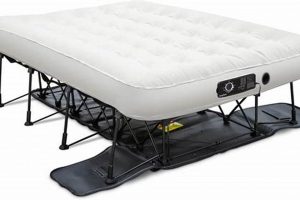
An inflatable sleeping surface elevated by a supporting structure offers a portable and adaptable bedding solution. The combination provides enhanced comfort and stability compared to a standalone inflatable bed. Examples include a self-inflating bed resting on a foldable metal stand, or an integrated system with a built-in pump and platform.
The elevated design offers several advantages. Ease of getting in and out of bed is increased, particularly beneficial for individuals with mobility limitations. The raised height also provides better insulation from cold floors and offers additional storage space underneath. Historically, these systems have evolved from basic camping equipment to comfortable and convenient options for guest rooms, temporary housing, and travel.
The subsequent sections will delve into specific features, including frame materials, inflation mechanisms, size variations, and factors to consider when selecting a suitable model. Durability, comfort levels, and maintenance requirements will also be addressed to provide a comprehensive understanding of this type of bedding.
Considerations for Selecting an Elevated Inflatable Bed
The selection of an appropriate elevated inflatable bed requires careful assessment of several factors to ensure optimal comfort, durability, and suitability for its intended use.
Tip 1: Evaluate Frame Material: The structural integrity of the frame is paramount. Steel frames generally offer superior durability and weight capacity compared to aluminum, but may be heavier and more susceptible to rust in humid environments. Consider powder-coated finishes for increased rust resistance.
Tip 2: Assess Inflation Mechanism: Integrated electric pumps provide convenient inflation and deflation. Examine the pump’s noise level and inflation time. External pumps offer greater flexibility but require separate storage and may be less efficient.
Tip 3: Determine Size and Weight Capacity: Select a size that adequately accommodates the intended user(s) and available space. Adhere strictly to the manufacturer’s weight capacity limits to prevent structural failure and ensure longevity.
Tip 4: Inspect Mattress Construction: The inflatable component should be constructed from durable, puncture-resistant materials such as reinforced PVC or TPU. Examine seam quality to prevent air leaks. Consider models with flocked surfaces for increased comfort and reduced slippage.
Tip 5: Review Storage and Portability: If portability is a requirement, opt for a model with a compact folding frame and a dedicated storage bag. Assess the overall weight and dimensions when folded to ensure ease of transportation and storage.
Tip 6: Consider Height Preferences: The height of the elevated bed affects ease of access. Standard bed heights are typically more comfortable for most adults. Lower profiles may be suitable for children or those with limited mobility.
Tip 7: Check for Stability Features: Look for frames with locking mechanisms, non-slip feet, or crossbars for enhanced stability and to minimize movement during use. Unstable structures can pose a safety hazard.
Careful consideration of these elements will facilitate an informed decision, ensuring the selected elevated inflatable bed provides satisfactory comfort, durability, and suitability for the intended application.
The following section will discuss maintenance and care procedures to prolong the lifespan of the selected elevated inflatable bed.
1. Frame Material

The selection of an appropriate frame material directly influences the structural integrity, weight capacity, and overall lifespan of an air mattress with frame. The material properties dictate the system’s ability to withstand repeated use and varying load conditions. Consider several key aspects when evaluating frame materials.
- Steel Construction: Durability and Weight Capacity
Steel frames offer superior strength and resistance to deformation under load. This translates to a higher weight capacity, accommodating multiple users or individuals with larger body types. Steel’s inherent rigidity also provides increased stability, minimizing swaying or rocking during movement on the mattress. However, steel is generally heavier and more prone to corrosion if not properly treated with a protective coating such as powder coating.
- Aluminum Alloy: Lightweight and Corrosion Resistance
Aluminum alloys provide a lighter alternative to steel, facilitating easier transport and setup. The inherent corrosion resistance of aluminum makes it suitable for use in damp environments or outdoor applications. However, aluminum frames typically exhibit lower weight capacities compared to steel, and may be more susceptible to bending or damage under excessive loads. The choice of alloy and wall thickness significantly impacts structural performance.
- Plastic Composites: Cost-Effective and Moisture Resistant
Plastic composites, while less common, offer a cost-effective alternative and exceptional resistance to moisture. These materials are lightweight and can be molded into complex shapes, potentially allowing for innovative frame designs. However, plastic frames generally possess the lowest weight capacity and may exhibit reduced long-term durability compared to metal alternatives. The specific type of plastic and reinforcement methods employed drastically affect performance.
- Joint Design and Fasteners: Structural Integrity
Regardless of the frame material, the design and construction of joints and fasteners are crucial for overall structural integrity. Welded joints in steel or aluminum frames offer greater strength and durability compared to bolted connections. High-quality fasteners, such as locking nuts and bolts, prevent loosening over time and maintain the frame’s rigidity. Weak or poorly designed joints can compromise the frame’s ability to support weight and withstand stress, leading to premature failure.
The optimal frame material for an air mattress with frame depends on the intended use, desired weight capacity, portability requirements, and environmental conditions. Steel frames provide robust support for home use, while aluminum frames offer a lighter, more portable solution for travel. Careful consideration of these factors ensures the selection of a frame that provides adequate support, durability, and longevity.
2. Inflation Method

The inflation method is a critical determinant of convenience, speed, and effort required to prepare an air mattress with frame for use. Selecting an appropriate method directly impacts the user experience and suitability for different applications.
- Integrated Electric Pump
Integrated electric pumps offer automated inflation and deflation with minimal user intervention. These pumps are typically housed within the frame or mattress and operate via a power cord. Inflation times are generally rapid, often taking only a few minutes. This method is well-suited for home use or locations with readily available power sources. A primary advantage is the consistency of inflation achieved, ensuring optimal firmness. However, reliance on electricity and potential pump malfunction represent limitations.
- External Electric Pump
External electric pumps provide a portable inflation solution. These pumps are separate from the mattress and connect via a nozzle. While requiring manual connection, external pumps offer greater versatility and can be used with multiple inflatable items. Inflation speed is comparable to integrated pumps. Dependence on a power source remains a constraint, but some models offer compatibility with car cigarette lighters or battery packs, enhancing portability. Storage and carrying of the separate pump constitute an added consideration.
- Manual Pump (Foot or Hand)
Manual pumps offer a completely independent inflation method, requiring no external power source. These pumps utilize foot-operated bellows or hand-operated pistons to inflate the mattress. While eliminating reliance on electricity, manual inflation requires significant physical effort and takes considerably longer than electric methods. This approach is best suited for situations where power is unavailable or portability is paramount, accepting the trade-off in convenience and inflation speed.
- Self-Inflating Mechanisms
Self-inflating mechanisms are less common for air mattresses with frames, but they warrant consideration. These systems incorporate open-cell foam that expands upon valve opening, drawing air into the mattress. While not fully self-inflating (topping off with breath or a small pump is usually needed), they offer a compromise between manual and electric inflation. The primary advantage is reduced reliance on external power, though inflation speed and firmness are often less consistent compared to electric pumps. Durability of the foam core is a potential concern.
The choice of inflation method for an air mattress with frame hinges on balancing convenience, portability, and power availability. Integrated electric pumps offer the most effortless inflation, while manual pumps provide independence from external power sources. Understanding the trade-offs associated with each method enables users to select the option that best aligns with their specific needs and intended use scenarios. The selected inflation method will have direct impacts on the overall user experience and practicality of the sleep solution.
3. Size Dimensions

The size dimensions of an air mattress with frame are a fundamental characteristic, directly influencing its suitability for specific users and environments. These dimensions, encompassing length, width, and height, dictate the available sleeping surface and spatial requirements. Incorrect size selection can lead to user discomfort, inefficient space utilization, or even incompatibility with the intended location. For instance, selecting a queen-sized unit for a small guest room may render the space impractical, while a twin-sized mattress may prove inadequate for accommodating two adults. Therefore, a thorough understanding of size dimensions is crucial for informed decision-making.
The height dimension, influenced by both the air mattress thickness and the frame elevation, impacts ease of ingress and egress. A higher profile facilitates easier access for individuals with mobility limitations, while a lower profile may be preferable in situations where space is constrained. Furthermore, the footprint defined by the length and width dimensions directly affects room layout and furniture placement. For example, a compact, foldable frame with a twin-sized mattress offers a space-saving solution for occasional use, while a larger, more substantial unit provides enhanced comfort and stability for longer-term accommodations. Manufacturers typically provide detailed size specifications, enabling consumers to accurately assess compatibility with their needs and available space. Precise measurements are critical to avoid unpleasant surprises upon delivery and setup.
In summary, size dimensions represent a critical consideration in the selection of an air mattress with frame. The interplay between length, width, and height dictates user comfort, spatial efficiency, and overall practicality. A careful evaluation of these dimensions, informed by intended use and environmental constraints, is essential for ensuring satisfaction and maximizing the value of the purchase. Neglecting this aspect can lead to discomfort, inconvenience, and ultimately, a suboptimal sleeping solution.
4. Weight Capacity

Weight capacity is a critical specification for an air mattress with frame, directly impacting its safety, structural integrity, and longevity. Exceeding the designated weight limit can induce stress on the frame and mattress materials, leading to deformation, seam failure, or even catastrophic collapse. The frame, typically constructed from steel, aluminum, or reinforced polymers, provides the primary structural support, while the inflatable mattress distributes the load. A mismatch between the applied weight and the system’s capacity creates a scenario where these components are subjected to forces beyond their design parameters.
Manufacturers establish weight capacities based on rigorous testing and engineering calculations. These limits account for static loads (resting weight) and dynamic loads (movement). Failure to adhere to these guidelines not only voids warranties but also presents a significant safety hazard, potentially resulting in injury. For example, a twin-sized air mattress with frame might have a weight capacity of 300 lbs, suitable for a single adult. Attempting to accommodate two adults, even if their combined weight only marginally exceeds the limit, can compromise the system’s stability and durability over time. Larger sizes, such as queen or king, will feature proportionally higher weight capacities, reflecting their increased surface area and structural reinforcement.
The weight capacity specification serves as a crucial safeguard for both the user and the product. It provides a clear indication of the system’s limitations, enabling informed decision-making during purchase and preventing misuse. Ignoring this specification can result in premature failure, safety risks, and ultimately, a poor return on investment. Careful consideration of the intended use and user weight is therefore paramount in selecting an appropriate air mattress with frame that meets the specific demands of the situation.
5. Portability

Portability represents a significant consideration in the context of air mattresses with frames, influencing their suitability for diverse applications, ranging from temporary guest accommodations to mobile living arrangements. The ease with which these systems can be transported and stored directly impacts their practicality and versatility.
- Foldable Frame Design
The design of the frame significantly dictates portability. Foldable frames, typically constructed from lightweight materials such as aluminum, collapse into a compact form factor, facilitating storage and transport. The hinge mechanisms and locking systems must be robust to withstand repeated folding and unfolding without compromising structural integrity. For example, a frame that folds in half or into multiple segments significantly reduces its packed size, making it easier to fit into a vehicle or storage closet.
- Mattress Deflation and Storage
Efficient deflation and compact storage of the air mattress are essential for portability. Integrated electric pumps often include a reverse function for rapid deflation. The deflated mattress should be constructed of a durable material that can be tightly rolled or folded without incurring damage. A dedicated storage bag with handles further enhances portability, protecting the mattress from punctures and facilitating carrying. Consider a model with straps to secure the deflated mattress during transport.
- Weight and Dimensions
Overall weight and packed dimensions are primary determinants of portability. Lightweight materials and compact designs minimize the burden during transport. The packed dimensions should be considered in relation to available storage space in vehicles or homes. A heavier system may require two individuals for lifting and carrying, limiting its practicality for solo travelers. Prioritizing lightweight designs is essential for individuals who frequently relocate or have limited storage capacity.
- Transport Accessories
The availability of transport accessories further enhances portability. Wheeled storage bags or carrying cases simplify movement over varying terrains. Integrated handles on the frame or mattress provide convenient grip points. Some manufacturers offer dedicated transport carts for heavier systems. Investing in appropriate accessories can significantly improve the ease and efficiency of transporting an air mattress with frame.
The factors outlined above collectively define the portability of an air mattress with frame. Systems designed with foldable frames, efficient deflation mechanisms, lightweight materials, and convenient transport accessories offer the greatest versatility and practicality for mobile applications. Considering these aspects allows users to select a system that aligns with their specific portability requirements, whether for camping trips, guest accommodations, or temporary living arrangements.
6. Bed Height

Bed height, in the context of an air mattress with frame, is the vertical distance from the floor to the top surface of the inflated mattress. This dimension is influenced by two primary factors: the thickness of the inflated mattress itself and the height of the supporting frame. The combined effect of these elements dictates the overall accessibility and comfort provided by the sleeping surface. A low bed height may present challenges for individuals with mobility limitations, while an excessively high bed may be unstable or inconvenient. Therefore, bed height is a critical design consideration with significant practical implications.
The selection of an appropriate bed height for an air mattress with frame should consider the user’s physical capabilities and the intended environment. For example, in a guest room setting, a standard bed height of approximately 18-24 inches may be desirable, as it facilitates easier ingress and egress for a wider range of users. Conversely, in a camping or travel scenario, a lower profile frame and mattress combination may be preferred to minimize packed dimensions and weight, accepting a slight reduction in accessibility for enhanced portability. The presence of storage space beneath the frame is another factor influenced by bed height, offering opportunities for organizing personal belongings or bedding materials. However, increased height may compromise stability, particularly if the frame design is not adequately reinforced.
In conclusion, bed height represents a fundamental design parameter for air mattresses with frames, influencing accessibility, comfort, and stability. The optimal height is dependent on the intended use case and the physical characteristics of the user. Careful consideration of these factors is essential for maximizing the benefits of this type of bedding solution and ensuring a positive user experience. Ignoring bed height can lead to discomfort, inconvenience, and potential safety hazards, underscoring the importance of informed selection.
7. Stability

Stability is a paramount attribute of an air mattress with frame, directly influencing user safety, comfort, and the overall sleeping experience. An unstable system can lead to discomfort, interrupted sleep, and, in extreme cases, potential injuries due to falls or tipping. The connection between stability and the air mattress with frame is causal: design elements that enhance structural rigidity directly improve stability, while design flaws or material deficiencies undermine it. Stability, therefore, is not merely a desirable feature but a fundamental requirement for the safe and effective use of such a sleeping arrangement. A stable air mattress with frame ensures a level and predictable sleeping surface, mimicking the feel of a traditional bed.
Several factors contribute to the stability of an air mattress with frame. Frame material plays a crucial role, with steel typically providing greater stability compared to aluminum due to its higher strength and rigidity. The design of the frame, including the number and placement of support legs, crossbars, and locking mechanisms, significantly impacts its ability to resist movement. Wide-set legs and robust locking systems minimize swaying and prevent the frame from collapsing under load. Furthermore, the air mattress itself contributes to stability. Overinflated mattresses can become overly bouncy and unstable, while underinflated mattresses lack the necessary support and can lead to sagging. Maintaining the correct air pressure, as specified by the manufacturer, is essential for optimal stability. Examples of systems that prioritize stability often include features like non-slip feet, reinforced corners, and integrated headboards to prevent the mattress from shifting.
In summary, stability is an indispensable component of an air mattress with frame, ensuring a safe, comfortable, and reliable sleeping experience. The interplay between frame material, design, and air pressure determines the overall stability of the system. Consumers should prioritize stability when selecting an air mattress with frame, carefully evaluating the frame’s construction, support features, and weight capacity. A stable system not only enhances comfort but also minimizes the risk of accidents and extends the lifespan of the product. Prioritizing stability ensures that the air mattress with frame provides a secure and restful sleeping environment, serving as a reliable alternative to traditional bedding solutions.
Frequently Asked Questions
The following addresses common inquiries regarding air mattresses with frames. This section aims to provide factual and objective information to assist in informed decision-making.
Question 1: What is the typical lifespan of an air mattress with frame?
The lifespan varies significantly based on usage frequency, quality of materials, and adherence to maintenance guidelines. High-quality models, used sparingly and properly maintained, can last for several years. Frequent use and improper care can significantly shorten the lifespan.
Question 2: Can an air mattress with frame be used as a permanent bed?
While designed primarily for temporary use, certain high-end models with robust construction and advanced comfort features may be suitable for short-term permanent use. However, traditional mattresses generally provide superior long-term support and durability. Continuous use can accelerate wear and tear.
Question 3: How does an air mattress with frame compare to a traditional mattress in terms of comfort?
Comfort is subjective and depends on individual preferences. Traditional mattresses offer a wider range of firmness options and contouring capabilities. An air mattress with frame can provide adjustable firmness but may not match the long-term support and pressure relief of a high-quality traditional mattress.
Question 4: What are the primary risks associated with using an air mattress with frame?
Potential risks include air leaks, frame instability, and exceeding weight capacity. Adhering to manufacturer’s guidelines, regularly inspecting the mattress and frame, and avoiding overloading are crucial for mitigating these risks.
Question 5: How should an air mattress with frame be properly stored when not in use?
The mattress should be fully deflated, cleaned, and stored in a cool, dry place away from direct sunlight and sharp objects. The frame should be folded and stored separately. A dedicated storage bag is recommended to protect the components from dust and damage.
Question 6: What are the common causes of air leaks in an air mattress?
Air leaks can result from punctures, seam failures, or valve malfunctions. Punctures can be caused by sharp objects or excessive pressure. Seam failures often occur due to material fatigue or stress. Valve malfunctions can prevent a proper seal. Regular inspection and prompt repair of any leaks are essential.
These frequently asked questions offer insight into the practical aspects of owning and using an air mattress with frame. Understanding these points contributes to a more positive and informed user experience.
The subsequent section will summarize the key considerations when selecting an air mattress with frame.
Conclusion
This exploration has illuminated the critical factors influencing the selection and utilization of an air mattress with frame. Frame materials, inflation methods, size dimensions, weight capacity, portability, bed height, and stability each play a pivotal role in determining the suitability of this type of bedding for specific needs and applications. Careful consideration of these elements is paramount for ensuring optimal comfort, durability, and safety.
The air mattress with frame represents a versatile and adaptable solution for temporary or occasional sleeping arrangements. Understanding its limitations and advantages, coupled with a discerning approach to product selection, allows for maximizing its potential. Continued innovation in materials and design will likely further enhance the functionality and appeal of this type of bedding in the future, solidifying its place as a practical alternative to traditional mattresses in certain contexts.
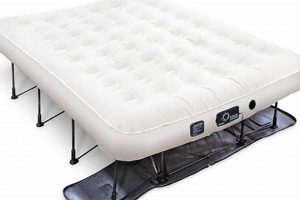
![Stop Mattress Slide! How to Keep it on Metal Bed Frame [Easy Fixes] | Organic & Natural Mattress Buyer’s Guide: Non-Toxic Sleep Solutions](https://mattressworldpa.com/wp-content/uploads/2025/07/th-3198-300x200.jpg "Stop Mattress Slide! How to Keep it on Metal Bed Frame [Easy Fixes] Organic & Natural Mattress Buyer’s Guide: Non-Toxic Sleep Solutions")
![Best Folding Air Mattress Frame: [Brand] Options & Guide | Organic & Natural Mattress Buyer’s Guide: Non-Toxic Sleep Solutions](https://mattressworldpa.com/wp-content/uploads/2025/07/th-3197-300x200.jpg "Best Folding Air Mattress Frame: [Brand] Options & Guide Organic & Natural Mattress Buyer’s Guide: Non-Toxic Sleep Solutions")
![Best Memory Foam Mattress Bed Frame [Guide & Deals] | Organic & Natural Mattress Buyer’s Guide: Non-Toxic Sleep Solutions](https://mattressworldpa.com/wp-content/uploads/2025/07/th-3196-300x200.jpg "Best Memory Foam Mattress Bed Frame [Guide & Deals] Organic & Natural Mattress Buyer’s Guide: Non-Toxic Sleep Solutions")