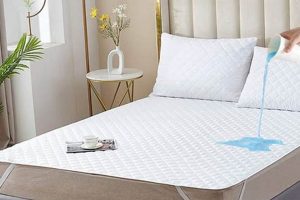
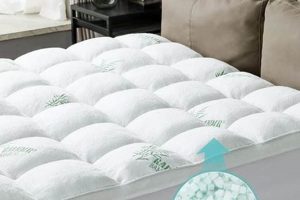
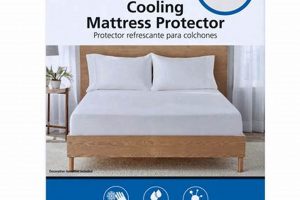
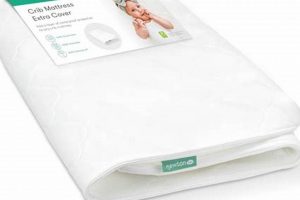
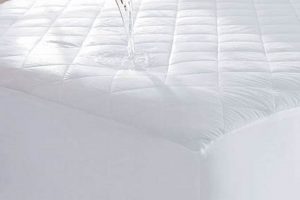
These specialized bedding encasements are designed to create a barrier against common allergens like dust mites, pet dander, and mold spores. Constructed from tightly woven fabrics or featuring a membrane, they prevent these allergens from penetrating the mattress and becoming embedded within its fibers. For example, a person with a dust mite allergy might use one of these products to reduce nighttime symptoms such as sneezing and congestion.
Their significance lies in their ability to mitigate allergic reactions, promoting better sleep quality and overall health. Historically, strategies for managing allergies focused on symptomatic relief. However, preventative measures, such as utilizing protective bedding, address the source of the problem, leading to a more proactive and effective approach. These protectors offer a non-pharmaceutical solution for allergy management.
The following sections will delve into the specific materials used in their construction, the various types available on the market, guidelines for selecting the most suitable option, and proper care instructions to ensure their longevity and continued effectiveness.
Guidance on Selecting and Maintaining Bedding Protection
This section provides critical advice for choosing and maintaining a bedding encasement designed to mitigate allergen exposure and promote a healthier sleep environment.
Tip 1: Prioritize Pore Size: When selecting a protective encasement, examine its pore size. Opt for products with pore sizes small enough to block dust mites and their allergenic waste. Generally, a pore size of 10 microns or less is recommended.
Tip 2: Consider Material Composition: Evaluate the material composition of the encasement. Tightly woven fabrics, such as microfiber, or those incorporating a membrane, provide a more effective barrier. Review product certifications for allergen reduction claims.
Tip 3: Ensure Proper Fit: Select a protector that fits the mattress snugly. An ill-fitting protector can compromise its effectiveness by allowing allergens to bypass the barrier. Measure the mattress depth accurately before purchasing.
Tip 4: Regularly Launder the Protector: Follow the manufacturer’s instructions for laundering the protector. Regular washing, typically every six to eight weeks, removes accumulated allergens and maintains its protective properties. Use hot water (at least 130F or 54C) to kill dust mites.
Tip 5: Inspect for Damage: Periodically inspect the encasement for any tears, punctures, or compromised seams. Repair or replace damaged protectors promptly to ensure continued effectiveness.
Tip 6: Be Aware of Certifications: Look for certifications from reputable organizations that test and verify the allergen-blocking capabilities of bedding protectors. Certifications can provide assurance of product performance.
Tip 7: Select Hypoallergenic Materials: Choose encasements made from hypoallergenic materials to minimize the risk of allergic reactions to the protector itself.
Proper selection and maintenance of bedding protection are crucial for minimizing allergen exposure and promoting a healthier sleep environment. By following these guidelines, individuals can optimize the benefits of these products and experience improved sleep quality.
The subsequent section will address specific product recommendations and emerging technologies in allergen-reducing bedding.
1. Barrier effectiveness

The effectiveness of an allergen-reducing mattress encasement hinges on its barrier properties. This refers to the protector’s capacity to prevent allergens, such as dust mites, pet dander, and mold spores, from penetrating the mattress. A compromised barrier allows these allergens to accumulate within the mattress fibers, negating the protector’s intended purpose. The interaction is direct: higher barrier effectiveness correlates with reduced allergen exposure, while a weak or damaged barrier renders the protector largely ineffective. For instance, if an encasement has a tear or a large pore size, dust mites can easily pass through, colonizing the mattress and triggering allergic reactions in sensitive individuals.
The practical significance of understanding barrier effectiveness lies in informed product selection. Consumers must prioritize encasements constructed from tightly woven materials or those incorporating a membrane, ensuring that the pore size is small enough to exclude common allergens. Certifications from reputable organizations that independently test and verify barrier performance provide valuable assurance. Furthermore, proper maintenance, including regular washing and prompt repair of any damage, is essential for preserving the barrier’s integrity. A real-world example illustrates this point: a family meticulously using a certified encasement and adhering to recommended washing protocols reports a significant reduction in their child’s nocturnal allergy symptoms.
In summary, barrier effectiveness is a crucial determinant of an encasement’s ability to mitigate allergen exposure and enhance sleep quality. Neglecting this aspect can lead to a false sense of security and continued allergic reactions. The challenge remains in educating consumers about the importance of barrier effectiveness and empowering them to make informed purchasing decisions based on verifiable product performance data. The discussion underscores the broader theme of proactive allergen management through effective environmental control measures.
2. Pore size matters

The efficacy of an allergen-protective mattress encasement is critically determined by the pore size of its constituent material. This parameter dictates the encasement’s ability to prevent allergens from penetrating and accumulating within the mattress core. An insufficient pore size compromises the protective function, rendering the product ineffective.
- Dust Mite Exclusion
Dust mites, a primary trigger for many allergies, range in size from approximately 200 to 300 microns in length and 75 to 100 microns in width. An effective mattress encasement must possess pores significantly smaller than these dimensions to physically block their passage. For instance, encasements with pore sizes exceeding 10 microns may allow dust mites and their allergenic fecal matter to permeate, negating the intended protective effect. The practical implication is that selecting encasements based solely on marketing claims, without verifiable pore size data, can result in continued allergen exposure.
- Allergen Particle Retention
Allergen particles, such as pet dander and mold spores, vary in size, but many are significantly smaller than dust mites. Effective allergen retention requires pore sizes capable of capturing these smaller particles. The relevance of this facet lies in the complex composition of allergens. An encasement that blocks dust mites but fails to retain smaller allergenic particles offers incomplete protection. For example, cat dander particles, known for their allergenic potency, can range from 2 to 10 microns. An encasement with a pore size of 15 microns would be inadequate for individuals with feline allergies.
- Material Weave Density
Pore size is directly influenced by the weave density of the fabric used in the mattress encasement. Tightly woven materials, such as microfiber, generally exhibit smaller pore sizes compared to loosely woven fabrics. The connection to real-world application involves understanding that materials advertised as “hypoallergenic” may still possess insufficient weave density to effectively block allergens. For instance, a cotton encasement, even if treated with hypoallergenic chemicals, may have a larger pore size than a tightly woven polyester microfiber encasement, resulting in lower allergen protection.
- Membrane Technology Integration
Beyond fabric weave, some encasements incorporate a membrane, such as polyurethane or polyethylene, to enhance barrier effectiveness. These membranes create a continuous, impermeable layer, regardless of fabric weave. A key implication is that an encasement with a membrane may offer superior protection, even with a slightly larger fabric pore size, compared to a non-membrane encasement. For example, a membrane-based encasement with a fabric pore size of 15 microns might still provide better allergen exclusion than a non-membrane encasement with a fabric pore size of 10 microns due to the membrane’s continuous barrier.
The preceding points underscore the critical link between pore size and the allergen-protective capability of mattress encasements. Optimal protection requires careful consideration of pore size relative to common allergen particle sizes, material weave density, and the integration of membrane technologies. Selecting products based on verifiable specifications, rather than solely on marketing claims, is essential for effective allergen mitigation. It is the combination of these factors that determines the practical efficacy of an “allergy mattress protector”.
3. Material selection

Material selection is a paramount consideration in the efficacy of an allergen-reducing mattress protector. The specific materials employed directly influence the protector’s ability to create a barrier against allergens, manage moisture, and provide a comfortable sleep surface. An informed selection process is therefore crucial for achieving optimal allergy mitigation.
- Microfiber Weaves
Microfiber fabrics, characterized by their tightly woven construction, are frequently utilized in allergy mattress protectors. These materials exhibit a small pore size, typically less than 10 microns, effectively blocking dust mites and their associated allergens. For example, a protector made from tightly woven polyester microfiber prevents dust mites from penetrating the mattress, reducing allergen exposure for sensitive individuals. The effectiveness of microfiber is dependent on the tightness of the weave; looser weaves may compromise its barrier properties.
- Membrane-Based Protectors
Some protectors incorporate a membrane, such as polyurethane, laminated to the fabric. This membrane creates an impermeable layer, further enhancing the barrier against liquids, dust mites, and other allergens. A real-world example is a protector with a polyurethane membrane providing a waterproof barrier, simultaneously preventing allergen penetration and protecting the mattress from spills. While highly effective, membranes can sometimes reduce breathability, potentially leading to increased perspiration during sleep.
- Natural Fiber Options
Although less common due to potential allergen concerns, some protectors utilize natural fibers like cotton. Cotton protectors require a very tight weave to provide adequate allergen protection. An example would be a tightly woven organic cotton protector, which aims to balance allergen protection with breathability and comfort. However, these options may not be as effective as microfiber or membrane-based protectors in preventing allergen penetration.
- Chemical Treatments
Some mattress protectors undergo chemical treatments to enhance their allergen-reducing properties. These treatments may involve the application of antimicrobial or acaricidal agents. For instance, a protector treated with an acaricide aims to kill dust mites on contact, further reducing allergen levels. However, the use of chemical treatments raises concerns about potential skin sensitivity and the long-term safety of exposure to these chemicals. The effectiveness of such treatments also diminishes over time with repeated washing.
The choice of material for an allergy mattress protector represents a trade-off between allergen barrier effectiveness, breathability, comfort, and potential chemical sensitivities. Microfiber and membrane-based protectors offer superior allergen protection, while natural fiber options may prioritize comfort and breathability. An informed decision requires careful consideration of individual needs and sensitivities, alongside a thorough evaluation of product specifications and certifications.
4. Proper fit

The effectiveness of an allergy mattress protector is inextricably linked to its fit. A protector that is too loose or too small compromises its intended function of creating a barrier against allergens. An improper fit permits allergens to bypass the protective layer, negating the benefits of the material and construction. The cause-and-effect relationship is direct: inadequate fit leads to allergen exposure, while correct fit minimizes it. For instance, a protector that does not fully encase the mattress leaves vulnerable areas where dust mites can colonize.
The correct fit ensures complete encasement of the mattress, preventing allergens from settling within its fibers. A snug fit also maintains the integrity of the protective barrier during movement on the bed. A real-life example demonstrates this: a protector that rides up on the sides exposes the mattress, allowing allergens to accumulate. Measuring the mattress depth accurately is crucial; protectors are typically available in various depths to accommodate different mattress sizes. The practical significance is that choosing a protector based solely on mattress size (e.g., queen, king) without considering depth can result in an inadequate fit and diminished allergen protection.
In summary, proper fit is an indispensable element of effective allergy mitigation through mattress protectors. Failing to ensure a snug and complete encasement undermines the protector’s ability to function as an allergen barrier. Addressing this requires precise measurement and careful selection, emphasizing that the “allergy mattress protector” is only as effective as its coverage. The challenge lies in raising awareness about the importance of fit alongside material and construction, reinforcing the concept of a comprehensive approach to allergen management in the sleep environment.
5. Regular cleaning
The effectiveness of an “allergy mattress protector” is significantly dependent on consistent and proper cleaning practices. While the protector acts as a barrier against allergens, it inevitably accumulates dust mites, pet dander, and other environmental contaminants on its surface over time. If these accumulated allergens are not removed regularly, the protector itself can become a source of allergens, undermining its intended purpose. The relationship is causal: infrequent cleaning leads to increased allergen load on the protector, directly increasing exposure for the sleeper. Consider a scenario where an individual uses a high-quality protector but neglects to wash it for several months; the accumulated dust mites on the surface can trigger allergic reactions, despite the barrier the protector initially provided. The practical significance lies in understanding that an “allergy mattress protector” is not a permanent solution but a component of a broader allergen management strategy that includes regular cleaning.
Frequency and method are critical aspects of regular cleaning. Most manufacturers recommend washing the protector every 6-8 weeks, although individuals with severe allergies may benefit from more frequent cleaning. Hot water (at least 130F or 54C) is necessary to kill dust mites and remove allergens effectively. Mild, hypoallergenic detergents are preferable to avoid introducing additional irritants. Thorough drying is essential to prevent mold growth. In real-world applications, adhering to these cleaning protocols results in a demonstrably lower allergen load compared to neglecting regular washing. The correct implementation of these cleaning practices enhances the long-term efficacy of the “allergy mattress protector,” contributing to improved sleep quality and reduced allergy symptoms.
In summary, regular cleaning is not merely an ancillary task but an integral component of maintaining the effectiveness of an “allergy mattress protector.” Neglecting this aspect undermines the protector’s ability to mitigate allergen exposure and can paradoxically transform it into a source of allergens. Emphasizing the importance of consistent cleaning protocols, alongside appropriate washing techniques, reinforces the concept that effective allergy management requires a comprehensive and sustained approach. The challenge remains in consistently educating consumers about the need for regular maintenance to maximize the benefits of their bedding protection. The discussion highlights that an “allergy mattress protector” serves its purpose best with consistent adherence to the recommended cleaning protocols.
6. Allergen reduction

The relationship between allergen reduction and an “allergy mattress protector” is fundamental and defines the latter’s purpose. An “allergy mattress protector” is specifically designed to achieve allergen reduction within the sleep environment. The protector acts as a physical barrier, preventing allergens, such as dust mites, pet dander, and mold spores, from penetrating the mattress. The intended effect is a decrease in the concentration of these allergens, leading to reduced allergic reactions in susceptible individuals. The practical impact of this is significant: a properly functioning “allergy mattress protector” can measurably improve sleep quality and alleviate symptoms associated with allergies and asthma. A real-world example involves an individual with dust mite allergy experiencing significantly reduced nighttime congestion and sneezing after using a certified “allergy mattress protector.” The success of the “allergy mattress protector” is predicated on its capacity to deliver tangible allergen reduction.
The degree of allergen reduction achieved is influenced by several factors, including the material of the “allergy mattress protector,” its pore size, and the regularity of cleaning. Tightly woven fabrics with small pore sizes offer superior barrier properties, preventing even microscopic allergens from passing through. Regularly laundering the “allergy mattress protector” removes accumulated allergens from its surface, maintaining its effectiveness. The integration of scientific testing and certification processes further validates the “allergen reduction” claims of these products. Products bearing certifications from reputable organizations provide consumers with assurance that the “allergy mattress protector” has undergone rigorous testing and meets specific allergen reduction standards. For instance, some protectors undergo testing to demonstrate their ability to block a specific percentage of dust mites or other allergens.
In summary, “allergen reduction” is not merely a desirable feature of an “allergy mattress protector”; it is its defining function. The protector’s success hinges on its ability to create a barrier against allergens, thereby decreasing their concentration in the sleep environment. While material, construction, and cleaning practices contribute to the overall effectiveness, the ultimate goal remains consistent: to achieve measurable “allergen reduction.” The challenge lies in educating consumers about the importance of selecting certified products and adhering to recommended maintenance protocols to maximize the benefits of “allergy mattress protector” and achieve optimal “allergen reduction.” The broader theme emphasizes that effective allergy management requires a multi-faceted approach, where an “allergy mattress protector” plays a crucial role in minimizing allergen exposure in the bedroom.
Frequently Asked Questions
The following questions address common inquiries regarding the functionality, selection, and maintenance of bedding specifically designed to mitigate allergen exposure.
Question 1: What constitutes an effective “allergy mattress protector”?
An effective “allergy mattress protector” is characterized by its ability to create an impermeable barrier against common allergens such as dust mites, pet dander, and mold spores. This barrier is achieved through tightly woven fabrics or the incorporation of a membrane that prevents allergens from penetrating the mattress.
Question 2: How often should an “allergy mattress protector” be cleaned?
An “allergy mattress protector” should be laundered every six to eight weeks under normal circumstances. Individuals with severe allergies may benefit from more frequent cleaning intervals. Hot water (at least 130F or 54C) is recommended to eliminate dust mites and allergens effectively.
Question 3: What materials are most suitable for an “allergy mattress protector”?
Tightly woven microfiber fabrics or materials incorporating a membrane (e.g., polyurethane) are generally considered most suitable for an “allergy mattress protector.” These materials offer a balance of allergen barrier effectiveness and breathability. Natural fibers, such as cotton, require a very tight weave to provide comparable protection.
Question 4: How does pore size impact the effectiveness of an “allergy mattress protector”?
Pore size is a critical determinant of an “allergy mattress protector’s” effectiveness. To block dust mites and their allergenic waste, a pore size of 10 microns or less is generally recommended. Smaller pore sizes offer more comprehensive protection against various allergens.
Question 5: Are chemical treatments necessary for an “allergy mattress protector” to be effective?
Chemical treatments are not necessarily required for an “allergy mattress protector” to be effective. The primary mechanism of action is the physical barrier created by the tightly woven fabric or membrane. While some protectors may incorporate antimicrobial or acaricidal treatments, the benefits must be weighed against potential skin sensitivities and environmental concerns.
Question 6: How can a consumer verify the allergen-reducing claims of an “allergy mattress protector”?
Consumers should seek certifications from reputable organizations that independently test and verify the allergen-blocking capabilities of bedding protectors. These certifications provide assurance that the product meets specific performance standards for allergen reduction.
Understanding the principles of allergen mitigation and selecting a protector with appropriate specifications are crucial for maximizing its benefits. Proper maintenance is also essential to ensure its long-term efficacy.
The following section addresses advanced considerations for selecting and utilizing an “allergy mattress protector.”
In Conclusion
This exploration has underscored the vital role an “allergy mattress protector” plays in mitigating allergen exposure within the sleep environment. Key points have included the importance of material selection, pore size, proper fit, and consistent maintenance in ensuring optimal performance. The primary function of these protectorsallergen reductiondirectly impacts sleep quality and overall health, particularly for individuals with sensitivities. Understanding the specific characteristics and care requirements of these products is paramount for informed consumer choices.
Given the prevalence of allergies and their potential to disrupt sleep and well-being, the implementation of effective allergen control measures is essential. An “allergy mattress protector,” when selected and maintained with diligence, represents a proactive step towards creating a healthier and more restful sleep environment. Continued research and development in materials and technologies promise further advancements in allergen mitigation, solidifying the “allergy mattress protector” as a significant component of comprehensive allergy management strategies.