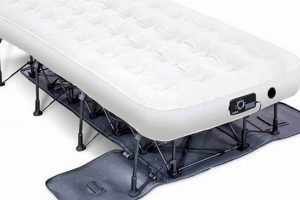
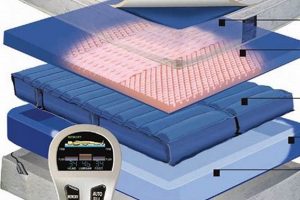
A support surface designed to cyclically inflate and deflate air cells is commonly employed to redistribute pressure. This type of mattress system utilizes a pump to automatically adjust pressure points, aiming to minimize constant pressure on any single area of the body. A typical usage scenario involves patients who are bedridden or have limited mobility, making them susceptible to pressure ulcers.
The principal advantage of employing such a system lies in its potential to prevent or manage pressure sores. By dynamically changing the support points, it aids in maintaining adequate blood circulation in tissues. Historically, these systems have been crucial in long-term care facilities and hospitals, significantly contributing to improved patient outcomes and reducing the incidence of pressure-related complications. This technology represents a significant advancement in patient care and comfort.
The subsequent sections will elaborate on the specific features, functionalities, and maintenance requirements of these pressure redistribution devices, alongside a comparison with alternative support surfaces and an examination of relevant clinical considerations.
Tips for Optimal Utilization
The following recommendations are provided to ensure the effective and prolonged use of pressure-redistributing support surfaces. Adherence to these guidelines can contribute to improved patient comfort and therapeutic outcomes.
Tip 1: Pressure Setting Calibration: Regularly assess and adjust the pressure settings according to the patient’s weight and body composition. Improper pressure settings can negate the intended benefits or cause discomfort.
Tip 2: Visual Inspection and Maintenance: Conduct routine visual inspections for any signs of damage, such as punctures or leaks. Promptly address any identified issues to maintain the system’s integrity and functionality.
Tip 3: Proper Sheet Application: Utilize breathable, moisture-wicking sheets. Avoid using thick or multiple layers of bedding, as these can impede airflow and reduce the effectiveness of the pressure redistribution.
Tip 4: Pump Placement and Functionality: Ensure the pump is placed on a stable, level surface, allowing for adequate ventilation. Verify that the pump’s operational settings are correctly configured and that it is functioning without unusual noises or interruptions.
Tip 5: Cleaning and Disinfection Protocols: Follow the manufacturer’s guidelines for cleaning and disinfecting the support surface. Employ approved cleaning agents that will not damage the material or compromise its performance.
Tip 6: Monitoring Patient Skin Integrity: Regularly assess the patient’s skin for any signs of pressure ulcers or irritation. Adjust the pressure settings or implement additional preventative measures as needed.
Tip 7: Training and Education: Provide adequate training and education to caregivers on the proper operation, maintenance, and troubleshooting of the support surface system. This ensures consistent and effective use.
Proper implementation of these tips can significantly enhance the therapeutic benefits and extend the lifespan of pressure-redistributing support surfaces, ultimately contributing to improved patient care.
The following sections will further explore advanced features and alternative technologies related to pressure management in patient care.
1. Pressure Redistribution Dynamics

Pressure redistribution dynamics are fundamental to the efficacy of an alternating air mattress. The system operates on the principle of cyclically changing the contact points between the patient and the support surface. This fluctuation in pressure is not arbitrary; it is a carefully engineered process designed to alleviate prolonged pressure on vulnerable tissues. The alternating inflation and deflation sequence prevents constant compression of capillaries, which, if sustained, leads to ischemia and subsequent tissue breakdown, commonly manifesting as pressure ulcers. For example, consider a patient immobilized after surgery. Without dynamic pressure redistribution, bony prominences such as the sacrum and heels bear the brunt of the patient’s weight, significantly increasing the risk of ulcer development. The dynamic pressure redistribution of these mattresses counteracts this by periodically relieving pressure from these high-risk areas.
The importance of pressure redistribution dynamics as a core component lies in its preventative capability. By simulating movement and promoting blood flow, it mitigates the negative consequences of prolonged immobility. The specific timing and pressure levels within the system are critical parameters, often adjustable to cater to individual patient characteristics such as weight, skin condition, and underlying health status. Furthermore, advanced systems incorporate sensors and algorithms to dynamically adapt the pressure distribution in real-time, responding to the patient’s position and movement patterns. A concrete example is found in intensive care units, where critically ill patients are particularly susceptible to pressure ulcers. These advanced systems provide a critical layer of protection, helping to minimize the incidence of these complications and reduce the burden on healthcare resources.
In summary, pressure redistribution dynamics are not merely a feature of alternating air mattresses; they are the defining principle upon which their therapeutic effectiveness is based. Understanding this connection is crucial for healthcare providers, enabling them to select and utilize these systems optimally, thereby maximizing patient benefit and minimizing the risk of pressure-related complications. The ongoing development and refinement of these dynamics, coupled with advancements in sensor technology and algorithmic control, represent a continuous effort to enhance the quality of care for vulnerable patients.
2. Circulation Enhancement Capabilities
The ability to improve blood flow within tissues is a primary consideration when employing an alternating air mattress. Effective circulation is essential for tissue health and the prevention of pressure ulcers in individuals with limited mobility. The operational design of these mattresses directly contributes to these capabilities.
- Cyclic Pressure Modulation
Alternating air mattresses utilize a programmed sequence of inflation and deflation across different sections of the mattress. This cyclic modulation of pressure reduces prolonged compression of capillaries. Adequate capillary blood flow is essential for delivering oxygen and nutrients to tissues, thereby preventing ischemia and subsequent tissue breakdown. The dynamic pressure changes mimic natural body movements, promoting improved circulation.
- Reduced Tiss
ue CompressionBy periodically reducing pressure on specific areas, these mattresses minimize sustained tissue compression. Prolonged compression impairs blood flow, leading to hypoxia and eventual necrosis. The alternating support points provided by the mattress ensure that no single area bears excessive weight for extended periods. This is particularly important for bony prominences, which are more susceptible to pressure ulcer formation.
- Lymphatic Drainage Facilitation
Beyond arterial and venous circulation, alternating air mattresses also aid in lymphatic drainage. Lymphatic vessels remove waste products and excess fluid from tissues. The cyclical pressure changes can facilitate the movement of lymphatic fluid, reducing edema and promoting overall tissue health. This is particularly relevant in patients with impaired lymphatic function or those prone to fluid accumulation.
- Enhanced Oxygen Delivery
Improved circulation, facilitated by the cyclic pressure modulation, leads to enhanced oxygen delivery to tissues. Oxygen is crucial for cellular metabolism and wound healing. Adequate oxygenation is essential for preventing tissue damage and promoting the resolution of existing pressure ulcers. The consistent, albeit subtle, pressure variations generated by the mattress contribute to maintaining optimal tissue oxygen levels.
These capabilities are intrinsically linked to the overall effectiveness of alternating air mattresses in preventing and managing pressure ulcers. The integration of these features into the mattress design reflects a comprehensive approach to patient care, prioritizing tissue perfusion and minimizing the risk of pressure-related complications. Regular monitoring of skin integrity and adjustment of mattress settings are essential to optimize these benefits.
3. Ulcer Prevention Efficacy

The use of alternating air mattresses is intrinsically linked to their documented effectiveness in preventing pressure ulcers. This efficacy is not a singular attribute but rather a culmination of several interconnected facets that contribute to the overall reduction in ulcer incidence and severity.
- Dynamic Pressure Relief
The cyclical inflation and deflation of air cells within the mattress provides dynamic pressure relief, the core mechanism behind its preventative action. By consistently changing the weight-bearing surfaces, prolonged compression on any single area is minimized. For instance, during extended periods of immobility, such as post-operative recovery, this dynamic relief prevents the sustained ischemia that leads to tissue breakdown and ulcer formation. The continuous pressure redistribution promotes consistent blood flow, maintaining tissue viability and reducing the likelihood of ulcer development.
- Microclimate Management
The design of many alternating air mattresses incorporates features that aid in microclimate management, specifically controlling moisture and temperature at the skin surface. Excessive moisture, often due to perspiration or incontinence, can weaken the skin and increase friction, predisposing it to ulceration. Mattress materials and integrated ventilation systems promote airflow, reducing moisture buildup and maintaining a more stable, healthy skin environment. This aspect is particularly important in patients with limited mobility who may struggle to regulate their body temperature or manage incontinence effectively.
- Shear Force Reduction
Alternating air mattresses contribute to the reduction of shear forces, which occur when the skin remains stationary while underlying tissues shift, often during repositioning or transfers. These forces can damage blood vessels and exacerbate pressure ulcer formation. The compliant surface of the mattress conforms to the body’s contours, minimizing friction and shear. Additionally, some systems incorporate features that facilitate easier repositioning, further reducing the risk of shear-related injury.
- Early Intervention and Support
The implementation of an alternating air mattress can serve as an early intervention strategy for patients identified as high-risk for pressure ulcer development. This proactive approach provides immediate support and protection, preventing the progression of minor skin damage into more severe ulcers. By providing a supportive and pressure-redistributing surface from the outset, the mattress contributes to maintaining skin integrity and preventing the need for more intensive and costly ulcer treatment interventions.
In conclusion, the ulcer prevention efficacy of alternating air mattresses stems from a multifaceted approach that addresses key risk factors for pressure ulcer development. By combining dynamic pressure relief, microclimate management, shear force reduction, and early intervention support, these systems offer a comprehensive strategy for minimizing the incidence and severity of pressure ulcers in vulnerable patient populations. Their appropriate use, in conjunction with other preventative measures, represents a crucial component of effective pressure ulcer prevention protocols.
4. Adjustable Comfort Settings

Adjustable comfort settings on an alternating air mattress are not merely a convenience feature; they represent a critical component directly impacting therapeutic efficacy and patient compliance. The primary function of an alternating air mattress is to redistribute pressure and prevent pressure ulcers. However, individual patients possess varying sensitivities, weights, and pre-existing conditions that necessitate a tailored approach. Adjustable settings allow healthcare providers to customize the pressure level and cycle duration to meet the specific needs of each patient. For instance, an elderly patient with thin skin may require lower pressure and a longer cycle duration compared to an obese patient to achieve adequate pressure relief without causing discomfort. Without this adjustability, the mattress’s effectiveness is compromised, potentially leading to patient discomfort, non-compliance with prescribed therapy, and ultimately, the development or exacerbation of pressure ulcers.
The implementation of adjustable comfort settings extends beyond basic pressure regulation. Advanced systems offer features such as static mode for transfers or meal times, allowing for a stable surface when dynamic pressure redistribution is not desired. Furthermore, some models incorporate microclimate control, regulating temperature and humidity to minimize skin maceration, a significant risk factor for pressure ulcer formation. A practical example lies in post-operative care. A patient recovering from hip replacement surgery may require different pressure settings depending on their position and activity level. During periods of rest, a lower pressure setting promotes comfort and sleep, while during physical therapy sessions, a higher setting may be necessary to provide adequate support and pressure relief while bearing weight. These adjustments, guided by clinical assessment, optimize the therapeutic benefit of the mattress and facilitate patient recovery.
In summary, adjustable comfort settings are integral to the successful application of alternating air mattresses. Their absence diminishes the system’s ability to provide personalized care and maximize therapeutic out
comes. While the core function of pressure redistribution remains constant, the ability to fine-tune the mattress’s performance based on individual patient needs significantly enhances its value in preventing and managing pressure ulcers. The challenge lies in educating healthcare providers on the appropriate use of these settings and developing user-friendly interfaces that facilitate accurate and efficient adjustments. This ensures that the potential benefits of alternating air mattresses are fully realized, contributing to improved patient comfort and reduced healthcare costs associated with pressure ulcer management.
5. Therapeutic Support Modulation
Therapeutic support modulation, within the context of alternating air mattresses, refers to the ability of the system to adapt its support characteristics to meet varying patient needs and clinical objectives. This modulation encompasses adjustments to pressure, cycle time, and surface characteristics, influencing the overall therapeutic outcome.
- Pressure Adjustment Granularity
Pressure adjustment granularity dictates the precision with which the system can alter the inflation pressure within individual air cells. A higher level of granularity allows for finer control, enabling the system to cater to specific anatomical pressure points or areas of compromised tissue integrity. For example, a patient with a developing sacral ulcer may benefit from reduced pressure over the affected area, while other regions require standard support. The ability to finely tune pressure minimizes tissue stress and promotes healing.
- Cycle Time Variability
Cycle time variability refers to the adjustable duration of the inflation and deflation cycles. Shorter cycle times may be employed to promote increased blood flow and reduce the risk of ischemia in patients with compromised circulation. Conversely, longer cycle times may be preferable for patients who experience discomfort or agitation from frequent pressure changes. The selection of an appropriate cycle time is crucial for optimizing patient comfort and therapeutic efficacy. An example is a patient with severe neuropathy who may find rapid pressure changes uncomfortable, requiring a longer, more gradual cycle.
- Surface Compliance Adaptation
Surface compliance adaptation involves the ability to modify the stiffness or softness of the mattress surface. This can be achieved through adjustments to the air pressure within the cells or through the use of variable density foam layers. Softer surfaces may be indicated for patients with sensitive skin or pre-existing skin damage, while firmer surfaces may be necessary to provide adequate support for heavier patients or those requiring postural stability. This adaptation allows for a more customized and comfortable patient experience, enhancing compliance and therapeutic outcomes.
- Integrated Sensor Feedback
Integrated sensor feedback systems monitor patient position, weight distribution, and skin temperature, providing real-time data to optimize therapeutic support modulation. These systems can automatically adjust pressure levels and cycle times based on the sensed parameters, ensuring that the patient receives the appropriate level of support at all times. For example, a system might detect increased pressure on the ischial tuberosities when a patient is sitting upright and automatically redistribute pressure to other areas to prevent ulcer development. The integration of sensor feedback enhances the responsiveness and efficacy of the alternating air mattress.
The multifaceted nature of therapeutic support modulation underscores its significance in maximizing the clinical benefits of alternating air mattresses. By offering a range of adjustable parameters and incorporating advanced sensor technology, these systems can be tailored to meet the unique needs of individual patients, promoting comfort, preventing pressure ulcers, and improving overall patient outcomes.
Frequently Asked Questions About Alternating Air Mattresses
The following section addresses common inquiries regarding the use, functionality, and maintenance of alternating air mattresses. It aims to provide clarity and guidance on these specialized support surfaces.
Question 1: What is the primary function of an alternating air mattress?
The primary function is to redistribute pressure across the body, mitigating the risk of pressure ulcer formation in individuals with limited mobility. The cyclical inflation and deflation of air cells prevent prolonged compression of tissues, promoting blood circulation.
Question 2: How often should the pressure settings be adjusted?
Pressure settings should be assessed and adjusted regularly, ideally at least once per shift, or more frequently based on the patient’s weight, body composition, skin condition, and comfort level. Consult the manufacturer’s guidelines for specific recommendations.
Question 3: What cleaning agents are appropriate for disinfecting an alternating air mattress?
Only use cleaning agents recommended by the mattress manufacturer. Harsh chemicals or abrasive cleaners can damage the mattress material and compromise its integrity. Follow the recommended cleaning protocols meticulously.
Question 4: What are the signs of a malfunctioning pump?
Signs of a malfunctioning pump include unusual noises, inconsistent pressure levels, failure to inflate or deflate sections of the mattress, and error messages on the control panel. If any of these signs are observed, the pump should be inspected and repaired or replaced.
Question 5: Can standard bed sheets be used on an alternating air mattress?
Breathable, moisture-wicking sheets are recommended. Avoid using thick or multiple layers of bedding, as these can impede airflow and reduce the effectiveness of the pressure redistribution. Fitted sheets designed for hospital beds are generally the most suitable.
Question 6: What is the expected lifespan of an alternating air mattress?
The lifespan varies depending on the quality of the mattress, frequency of use, and adherence to maintenance protocols. However, with proper care and maintenance, a good-quality alternating air mattress can last for several years. Regular inspections and prompt repairs can extend its lifespan.
Understanding these frequently asked questions can aid in the effective utilization and maintenance of alternating air mattresses, ultimately contributing to improved patient care and outcomes.
The subsequent section will explore potential complications and troubleshooting strategies associated with the use of these specialized support surfaces.
Conclusion
This exploration has detailed the operational mechanics, benefits, and proper utilization of alternating air mattress systems. Emphasis has been placed on pressure redistribution dynamics, circulation enhancement, ulcer prevention efficacy, adjustable comfort settings, and therapeutic support modulation. These elements collectively contribute to the system’s effectiveness in mitigating pressure ulcer risk and promoting patient comfort.
The ongoing refinement of support surface technology remains crucial for advancing patient care. Continued research and adherence to established clinical guidelines are essential to optimize the benefits of pressure redistribution systems and improve outcomes for individuals at ris
k of pressure-related complications. Diligent monitoring, proactive maintenance, and informed application of these systems are paramount to their continued success.