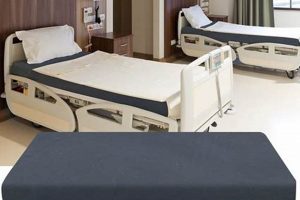
Specialized support surfaces designed for use on hospital beds cycle inflation and deflation within internal air cells. This dynamic pressure redistribution aims to alleviate sustained pressure on bony prominences, mitigating the risk of pressure injury development in patients with limited mobility. The system typically consists of a control unit, which regulates airflow, and the mattress itself, constructed from durable, medical-grade materials.
These support systems are crucial in pressure injury prevention protocols within healthcare facilities. By periodically altering the points of contact between the patient and the bed, they promote improved blood circulation and tissue oxygenation. Historically, static mattresses were the standard, but the introduction of dynamic surfaces represented a significant advancement in patient care, demonstrably reducing the incidence of pressure ulcers and improving patient comfort during extended periods of bed rest.
The remainder of this article will delve into the specific features of these support surfaces, including their various modes of operation, appropriate patient selection criteria, and essential maintenance procedures. Attention will also be given to the considerations for selecting an appropriate model based on patient weight, risk factors, and clinical environment, along with troubleshooting common operational issues.
Guidance on Utilizing Dynamic Support Surfaces
The following recommendations offer practical guidance for the effective implementation and utilization of pressure-redistributing mattress systems within a healthcare setting.
Tip 1: Patient Assessment is Paramount: A thorough risk assessment, including factors such as mobility, nutritional status, and skin integrity, must precede the selection of a support surface. This assessment informs the choice of appropriate pressure redistribution technology.
Tip 2: Weight Capacity Adherence: Ensure the patient’s weight remains within the specified weight limit of the system. Exceeding the weight limit compromises the mattress’s effectiveness and potentially damages the unit.
Tip 3: Proper Inflation Settings: Adjust the inflation settings according to the manufacturer’s recommendations and the patient’s individual needs. Regular monitoring of the settings is necessary to maintain optimal pressure relief.
Tip 4: Regular Skin Inspections: Despite using dynamic support surfaces, frequent skin assessments are crucial. Monitor for signs of pressure injury development, particularly over bony prominences.
Tip 5: Linen Management: Use only breathable, moisture-wicking linens. Avoid thick or multiple layers of bedding, as these can impede airflow and diminish the mattress’s pressure redistribution capabilities.
Tip 6: Routine Maintenance Procedures: Adhere to the manufacturer’s recommended cleaning and maintenance protocols. Regular inspection for leaks or damage is essential for optimal performance and longevity.
Tip 7: Education and Training: Healthcare staff should receive comprehensive training on the proper use, maintenance, and troubleshooting of these specialized support surfaces.
These guidelines emphasize proactive pressure injury prevention through appropriate patient assessment, correct system operation, and meticulous skin monitoring. Adherence to these practices maximizes the benefits of pressure redistribution and promotes improved patient outcomes.
The concluding section will provide insights into future advancements in pressure redistribution technology and the ongoing research efforts aimed at optimizing patient comfort and minimizing the incidence of pressure injuries.
1. Pressure Redistribution

Pressure redistribution is the fundamental mechanism by which specialized mattresses mitigate the risk of pressure injuries. In the context of alternating pressure mattresses intended for hospital bed use, this principle is executed through dynamic cycling of air cells, continuously shifting weight-bearing areas to promote tissue perfusion.
- Cyclical Inflation and Deflation
Alternating pressure mattresses employ a timed cycle of inflation and deflation within discrete air cells. This periodic change in pressure distribution relieves sustained pressure on bony prominences like the sacrum, heels, and hips. For example, a cell may be inflated for 10 minutes and then deflated for 10 minutes while adjacent cells inflate, ensuring no single area is continuously compressed for an extended period.
- Localized Pressure Reduction
These mattresses are designed to target areas of high pressure. By redistributing weight, they reduce the intensity of pressure exerted on vulnerable tissues. Consider a patient lying supine; an alternating pressure mattress would actively relieve pressure on the sacrum by deflating cells in that region, while simultaneously inflating cells supporting other areas, such as the thighs and upper back.
- Enhanced Blood Circulation
Sustained pressure impedes blood flow, leading to tissue ischemia and potential necrosis. The cyclical pressure changes induced by these mattresses facilitate improved blood circulation to compromised areas. For instance, during the deflation phase of a cell cycle, blood vessels in that region are allowed to reperfuse, delivering oxygen and nutrients to the tissue.
- Microclimate Management
Some advanced alternating pressure mattresses incorporate features to manage the microclimate surrounding the patient’s skin. Excessive moisture can contribute to skin maceration, increasing the risk of pressure injury. These mattresses may include low air loss technology, which gently circulates air to wick away moisture and maintain a drier skin surface.
In summation, the efficacy of alternating pressure mattresses for hospital beds hinges upon their ability to dynamically redistribute pressure. Through cyclical inflation and deflation, localized pressure reduction, enhanced blood circulation, and microclimate management, these systems provide a comprehensive approach to pressure injury prevention, making them an invaluable asset in acute and long-term care settings. The specific configuration and capabilities of each mattress model must be carefully considered based on the patient’s individual risk factors and clinical needs.
2. Patient Mobility

Patient mobility is a key determinant in the selection and utilization of alternating pressure mattresses within hospital settings. A patient’s ability to independently reposition directly influences the risk of pressure injury development, making the interplay between mobility and mattress function a critical consideration in preventative care strategies.
- In
dependent Repositioning and Pressure ReliefPatients capable of frequent, independent repositioning benefit less from the dynamic pressure redistribution offered by an alternating pressure mattress. Self-initiated movement naturally alleviates sustained pressure on vulnerable areas. In contrast, individuals with severely limited mobility are wholly reliant on external interventions, such as an alternating pressure mattress, to achieve pressure relief.
- Impact on Mattress Settings and Mode Selection
The degree of patient mobility dictates appropriate mattress settings. For instance, a patient with some residual movement may benefit from a static mode, providing a consistent, supportive surface that encourages self-repositioning. Conversely, a completely immobile patient necessitates a fully dynamic alternating pressure mode to cyclically redistribute pressure.
- Considerations for Transfers and Activities
Patient mobility impacts logistical considerations related to transfers and other activities. The inflated air cells of an alternating pressure mattress can create an unstable surface, potentially hindering safe transfers. Healthcare providers must employ appropriate techniques and assistive devices to ensure patient safety during these procedures. For patients with very limited mobility, specialized transfer aids may be required to minimize shear and friction forces that can contribute to skin breakdown.
- Mobility as a Pressure Injury Risk Factor
Reduced mobility is a recognized independent risk factor for pressure injury development. Patients who are unable to shift their weight or adjust their position are at heightened risk for sustained pressure on bony prominences. Therefore, a comprehensive pressure injury prevention plan must incorporate strategies to address impaired mobility, including the appropriate selection and utilization of alternating pressure mattresses, along with other interventions like repositioning schedules and skin care protocols.
In conclusion, patient mobility and alternating pressure mattress function are inextricably linked. Assessment of a patient’s mobility status is essential for determining the need for, and appropriate settings of, an alternating pressure mattress. The interplay between these factors directly influences the efficacy of pressure injury prevention efforts within the hospital environment. The goal is to provide the optimal level of support and pressure redistribution based on the patient’s individual capabilities and needs.
3. Weight Capacity

Weight capacity is a critical parameter for alternating pressure mattresses used on hospital beds. Exceeding the specified weight limit compromises the mattress’s therapeutic effectiveness and may lead to equipment failure, posing a risk to both patient safety and the longevity of the device.
- Structural Integrity and Mattress Performance
The structural integrity of an alternating pressure mattress is engineered to support a defined weight range. Exceeding this limit can result in deformation of the air cells, uneven pressure distribution, and ultimately, a reduction in the mattress’s ability to effectively redistribute pressure. For example, if a mattress designed for a maximum weight of 300 pounds is used for a 400-pound patient, the air cells may become overstressed, leading to inconsistent inflation and deflation patterns, negating the intended pressure relief.
- Air Cell Pressure and Distribution Dynamics
The internal air pressure within an alternating pressure mattress is calibrated to provide optimal support and pressure redistribution within the specified weight range. When the weight capacity is exceeded, the air pressure may not adequately support the patient, leading to bottoming out or localized pressure points. Consider a scenario where a patient’s weight exceeds the mattress’s capacity; the air cells beneath the patient’s bony prominences may compress completely, negating the pressure redistribution benefits and potentially increasing the risk of pressure injury.
- Durability and Longevity of the System
Consistent overloading of an alternating pressure mattress places undue stress on its internal components, including the air pump, connecting hoses, and the mattress material itself. This accelerated wear and tear can significantly reduce the lifespan of the system and increase the likelihood of malfunction. For instance, a pump laboring to maintain pressure beyond its design limits may overheat and fail prematurely, requiring costly repairs or replacement of the entire system.
- Patient Safety Considerations
Using an alternating pressure mattress beyond its weight capacity creates a hazardous situation for the patient. Insufficient support, uneven pressure distribution, and potential mattress failure increase the risk of pressure injury development. Furthermore, compromised mattress integrity can contribute to instability during transfers, potentially leading to falls or other injuries. Healthcare facilities must strictly adhere to weight capacity guidelines to ensure patient safety and prevent adverse events.
Therefore, diligent adherence to weight capacity guidelines is non-negotiable for alternating pressure mattresses used on hospital beds. Failure to do so not only compromises the therapeutic benefits of the mattress but also poses significant risks to patient safety and the long-term functionality of the equipment. Regular verification of patient weight and appropriate mattress selection are essential components of a comprehensive pressure injury prevention strategy.
4. Cycle Time

Cycle time, in the context of an alternating pressure mattress for hospital beds, refers to the duration required for a complete inflation and deflation sequence of the mattress’s individual air cells. This parameter is critical because it directly impacts the frequency with which pressure is relieved from specific areas of the patient’s body. A shorter cycle time results in more frequent pressure changes, while a longer cycle time provides less frequent relief. The selection of an appropriate cycle time is dependent on the patient’s individual risk factors for pressure injury development, including their mobility, skin condition, and overall health status. For example, a patient with severely limited mobility and fragile skin may require a shorter cycle time to ensure adequate pressure relief and promote tissue perfusion.
The practical significance of understanding cycle time lies in optimizing pressure injury prevention strategies. Clinical studies have demonstrated a correlation between cycle time and the incidence of pressure ulcers. Setting an excessively long cycle time may fail to provide adequate pressure relief, while an excessively short cycle time could potentially disrupt sleep patterns or cause discomfort for the patient. Proper adjustment of the cycle time necessitates a thorough assessment of the patient’s needs and careful adherence to the manufacturer’s guidelines. Additionally, healthcare professionals must be trained to recognize the signs of inadequate or inappropriate cycle time settings, such as persistent redness or discomfort over bony prominences.
In summary, cycle time is a crucial component of alternating pressure mattress therapy. Selecting the correct cycle time requires a nuanced understan
ding of the patient’s individual risk factors and the operational characteristics of the mattress. Challenges remain in establishing standardized cycle time recommendations due to the wide variability in patient populations and mattress designs. However, a commitment to patient-centered assessment and careful monitoring of treatment outcomes is essential for maximizing the benefits of alternating pressure mattresses and minimizing the risk of pressure injuries.
5. Alarm System
An integrated alarm system is a crucial component of an alternating pressure mattress intended for hospital bed use. This system provides real-time monitoring of the mattress’s operational status, alerting healthcare providers to potential malfunctions that could compromise patient safety and pressure injury prevention efforts.
- Low Pressure Detection
A primary function of the alarm system is to detect instances of low pressure within the mattress’s air cells. This can occur due to leaks, pump failure, or improper connection of air hoses. For example, if a patient accidentally punctures an air cell, the alarm will sound, alerting staff to the breach in pressure integrity. This immediate notification allows for prompt intervention, preventing prolonged exposure to uneven pressure distribution that could lead to skin breakdown. The alarm activation enables a swift assessment of the mattress and, if necessary, a transfer of the patient to an alternative support surface.
- Power Failure Notification
The alarm system typically includes a power failure notification feature. In the event of a power outage, the alarm will sound, indicating that the alternating pressure function has ceased. Consider a scenario where a hospital experiences a power surge. The alarm will alert staff that the mattress is no longer actively redistributing pressure. This allows for immediate implementation of alternative pressure relief strategies, such as manual repositioning, until power is restored and the mattress resumes normal operation.
- System Malfunction Alerts
The alarm system is designed to detect a range of system malfunctions, including pump failure, control unit errors, and blocked air filters. For instance, if the pump responsible for inflating and deflating the air cells malfunctions, the alarm will activate, signaling a need for immediate maintenance or replacement of the unit. This proactive detection of system failures minimizes the risk of prolonged patient exposure to a non-functioning pressure redistribution device.
- Silence and Reset Functionality
While alarms are critical for alerting caregivers, the system must also incorporate a mechanism for silencing and resetting the alarm once the issue has been addressed. This prevents unnecessary noise pollution and allows staff to focus on providing patient care. The reset function typically requires acknowledgement of the alarm and confirmation that the underlying issue has been resolved. This ensures that the alarm system remains active and ready to detect any subsequent malfunctions.
In conclusion, the alarm system serves as a critical safety net for alternating pressure mattresses used in hospital beds. By providing timely alerts for low pressure, power failures, and system malfunctions, it enables healthcare providers to promptly address potential issues and maintain optimal pressure injury prevention measures. Regular testing and maintenance of the alarm system are essential to ensure its continued reliability and effectiveness in safeguarding patient well-being.
6. Material Composition

The selection of materials significantly influences the performance, durability, and hygienic properties of an alternating pressure mattress for hospital beds. The composition directly affects the mattress’s ability to withstand repeated inflation and deflation cycles, maintain air pressure, and resist the ingress of fluids and contaminants. For instance, a mattress constructed from low-grade PVC may be prone to cracking and leaking, compromising its pressure redistribution capabilities and potentially exposing patients to harmful chemicals. Conversely, medical-grade polyurethane-coated nylon offers superior durability, fluid resistance, and biocompatibility, contributing to enhanced patient safety and longevity of the device. Material choices also impact cleanability and disinfection protocols, vital for preventing the spread of healthcare-associated infections.
The impact of material composition extends to patient comfort and skin integrity. Breathable materials, such as certain open-cell foams or fabrics with moisture-wicking properties, can mitigate the risk of skin maceration by promoting air circulation and reducing moisture buildup on the patient’s skin. In contrast, non-breathable materials can trap heat and moisture, creating an environment conducive to bacterial growth and skin breakdown. Consider the practical application of a mattress cover made from a waterproof but non-breathable material; while effectively preventing fluid penetration, it may increase the risk of pressure injuries due to increased skin temperature and humidity. The inclusion of antimicrobial additives in the mattress material can further enhance infection control by inhibiting the growth of bacteria and fungi.
In conclusion, the material composition of an alternating pressure mattress is an indispensable element impacting its overall functionality and contribution to patient care. Challenges remain in balancing the need for durability, fluid resistance, breathability, and cost-effectiveness in material selection. Ongoing research focuses on developing innovative materials with enhanced antimicrobial properties and improved patient comfort. A thorough understanding of material characteristics is essential for healthcare professionals in selecting the most appropriate alternating pressure mattress based on the patient’s individual needs and the specific requirements of the clinical environment.
Frequently Asked Questions
The following frequently asked questions address common concerns and provide essential information regarding the use and functionality of alternating pressure mattresses in a hospital setting. These responses aim to clarify their role in pressure injury prevention and optimize their implementation in patient care.
Question 1: What is the primary mechanism by which alternating pressure mattresses prevent pressure injuries?
Alternating pressure mattresses employ cyclical inflation and deflation of individual air cells. This dynamic redistribution of pressure periodically relieves sustained pressure on bony prominences, thereby promoting tissue perfusion and preventing ischemic damage.
Question 2: How does patient weight impact the effectiveness of an alternating pressure mattress?
Exceeding the specified weight capacity of an alternating pressure mattress compromises its ability to effectively redistribute pressure. This can result in uneven support, bottoming out of air cells, and an increased risk of pressure injury development. Adherence to the manufacturer’s weight limit is essential.
Question 3: What is the significance of cycle time in the operation of an alternating pressure mattress?
Cycle time refers to the duration required for a complete inflation and deflation sequence. An ap
propriate cycle time ensures adequate pressure relief without disrupting patient comfort or sleep patterns. The optimal cycle time varies depending on the patient’s individual risk factors and the mattress’s design specifications.
Question 4: What features should be included in the alarm system of an alternating pressure mattress?
A comprehensive alarm system should include alerts for low pressure, power failure, and system malfunctions. These alarms provide timely notification of potential issues, enabling prompt intervention to prevent compromised pressure redistribution.
Question 5: What material properties are essential for an alternating pressure mattress designed for hospital use?
Essential material properties include durability, fluid resistance, breathability, and biocompatibility. Medical-grade materials that are easy to clean and disinfect are critical for infection control and long-term performance.
Question 6: How does patient mobility influence the selection and settings of an alternating pressure mattress?
Patients with limited mobility benefit most from dynamic alternating pressure modes, while those with some ability to reposition may benefit from static or combination modes. A thorough assessment of patient mobility is necessary to determine the most appropriate mattress settings and maximize pressure injury prevention efforts.
These answers emphasize the importance of understanding the operational parameters and appropriate utilization of alternating pressure mattresses. A proactive approach to patient assessment and equipment maintenance is paramount in maximizing their therapeutic benefits.
The subsequent section will delve into troubleshooting common issues encountered with alternating pressure mattresses.
Conclusion
This article has provided a comprehensive overview of the alternating pressure mattress for hospital beds, underscoring its critical role in pressure injury prevention. Key considerations include appropriate patient selection based on risk factors such as mobility and weight, diligent adherence to weight capacity guidelines, and proper adjustment of cycle time and pressure settings. The importance of a functional alarm system and durable, medical-grade materials has also been emphasized.
The effective implementation of alternating pressure mattresses for hospital beds demands ongoing education and training for healthcare professionals. Continuous monitoring of patient outcomes and adherence to established protocols are essential for maximizing the benefits of this technology and minimizing the incidence of pressure injuries. Further research and development efforts should focus on enhancing material properties, optimizing pressure redistribution strategies, and developing more user-friendly interfaces to improve patient care and reduce healthcare costs associated with pressure injury management.