



The advantages associated with using viscoelastic polyurethane foam bedding relate to its unique material properties. This type of mattress conforms to the sleeper’s body, providing customized support and pressure relief. The conforming action is temperature-sensitive, softening in response to body heat, which enhances the individual’s experience.
The significance of this bedding lies in its potential to improve sleep quality and alleviate certain physical discomforts. Its ability to distribute weight evenly reduces pressure points, potentially easing joint pain and promoting better spinal alignment. Historically, this foam was developed for NASA to improve the safety of aircraft cushions, and its subsequent application to mattresses reflects an evolution towards improved comfort and support in sleep products.
The following sections will explore specific advantages, including pressure relief, spinal alignment promotion, motion isolation, and potential allergy considerations. Each aspect will be examined in detail to provide a comprehensive understanding of how this bedding type impacts sleep experience and overall well-being.
Maximizing Advantages of Viscoelastic Foam Bedding
To fully realize the potential advantages of viscoelastic foam bedding, specific considerations are paramount.
Tip 1: Prioritize Density. A higher density foam generally translates to increased durability and support. Examine density specifications before purchase, aligning the choice with individual weight and sleeping style.
Tip 2: Consider Layer Construction. The arrangement of foam layers influences overall comfort and support. Understand the specific construction, including the presence of cooling gels or specialized support zones, to address individual needs.
Tip 3: Evaluate Motion Isolation. Viscoelastic foam excels at minimizing motion transfer. For couples, this feature is particularly beneficial, reducing sleep disturbance from a partner’s movements. Test this feature by applying pressure to one area of the mattress and observing the movement, or lack thereof, in another area.
Tip 4: Account for Temperature Sensitivity. The foam’s responsiveness to temperature can be advantageous for conforming to the body, but may also lead to heat retention for some individuals. Look for models incorporating cooling technologies, such as gel infusions or open-cell structures, to mitigate potential heat buildup.
Tip 5: Assess Firmness Level. Viscoelastic foam is available in varying firmness levels. Select a firmness that aligns with preferred sleeping position and individual comfort requirements. Side sleepers may benefit from a softer surface, while back and stomach sleepers often prefer firmer support.
Tip 6: Address Off-Gassing Concerns. New viscoelastic foam mattresses may emit a noticeable odor, often referred to as off-gassing. Ensure adequate ventilation upon initial use to dissipate any potential odors. Seek CertiPUR-US certified products, indicating adherence to standards for low VOC emissions.
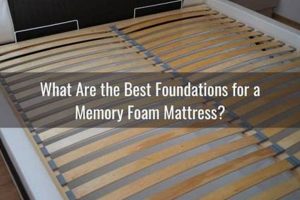
Tip 7: Use Proper Support. The foundation on which the mattress rests significantly impacts its performance and longevity. Employ a supportive base designed for use with viscoelastic foam, ensuring even weight distribution and preventing premature sagging.
Proper selection and maintenance of this bedding is key to realizing the promised improvements in sleep quality. These considerations provide a foundation for informed decision-making.
The subsequent section will explore potential limitations or disadvantages, completing the understanding.
1. Pressure point reduction

Pressure point reduction is a significant element directly contributing to the advantages associated with viscoelastic foam bedding. The mattress’s ability to conform to the body’s contours distributes weight more evenly across the surface. This action reduces concentrated stress on specific areas, such as the hips, shoulders, and spine. Without pressure point reduction, individuals may experience discomfort, leading to tossing and turning during sleep, disrupting rest cycles.
For example, a side sleeper often experiences increased pressure on the shoulder and hip that are in contact with the mattress. A viscoelastic foam mattress molds to the body’s shape, distributing the pressure across a larger surface area, mitigating the concentrated force on those points. Similarly, individuals with conditions such as arthritis or fibromyalgia, who are prone to pain at specific joints, may find significant relief through the pressure-redistributing properties of this bedding.
In summary, the relationship is causal: the conforming nature of viscoelastic foam leads to effective weight distribution, which, in turn, reduces pressure points. This reduction contributes directly to improved sleep quality, decreased discomfort, and enhanced rest. Understanding this connection underscores the importance of this specific advantage within the broader range of viscoelastic foam bedding characteristics.
2. Spinal alignment improvement
Spinal alignment improvement represents a key biomechanical benefit realized through the conforming properties of viscoelastic foam bedding. Maintaining proper spinal alignment during sleep is crucial for minimizing strain on supporting muscles and ligaments, and for promoting overall musculoskeletal health. This aspect is central to the value proposition of these mattresses.
- Contouring and Support
Viscoelastic foam contours to the unique curves of the individual’s body, filling gaps between the body and the mattress surface. This distributes weight more evenly and supports the natural curvature of the spine. For instance, a side sleeper needs support that prevents the spine from curving excessively. The conforming nature helps maintain a neutral spinal position, alleviating pressure and strain on vertebral discs and surrounding tissues. The implications include reduced back pain and improved sleep quality.
- Pressure Redistribution
By redistributing weight, viscoelastic foam reduces pressure points that can lead to discomfort and spinal misalignment. When pressure is concentrated in specific areas, the body may shift positions during sleep to alleviate that pressure, potentially leading to twisting or unnatural spinal postures. The redistributive properties minimize the need for these compensatory movements, maintaining a more stable and aligned spinal position throughout the night. Consequences include decreased muscle stiffness and reduced incidence of nocturnal pain.
- Customized Support
The capacity of the foam to adapt to individual body shapes offers customized support that traditional innerspring mattresses often lack. This is esp
ecially significant for individuals with pre-existing spinal conditions or unique body contours. The adaptive nature of the material ensures that the spine receives appropriate support in all sleeping positions, counteracting tendencies toward misalignment. The resultant impact may be a greater sense of comfort and improved long-term spinal health. - Improved Sleep Posture
The enhanced support and pressure relief provided by viscoelastic foam encourage better sleep posture. By maintaining spinal alignment, the body is less likely to assume awkward or strained positions during sleep. Improved posture leads to reduced stress on joints and muscles, allowing for more complete relaxation and restorative sleep. Long-term effects can include improved daytime posture and decreased risk of chronic back problems.
The discussed facets directly correlate to the appeal of this type of bedding. The ability to promote and sustain appropriate spinal alignment is not merely a matter of comfort, but a tangible element affecting long-term musculoskeletal wellness and sleep quality. The cumulative impact of these elements emphasizes the importance of this aspect when evaluating the potential of this foam bedding.
3. Motion transfer isolation

Motion transfer isolation is a pivotal advantage directly attributable to the viscoelastic nature of these foam mattresses. This characteristic refers to the mattress’s capacity to absorb movement at the point of impact, rather than transmitting it across the entire surface. Consequently, disruptions caused by one sleeper’s movements, such as getting in or out of bed, tossing, or turning, are significantly reduced for the other sleeper. The result enhances sleep quality.
The mechanism of motion transfer isolation stems from the cellular structure and density of the foam. Viscoelastic foam, unlike traditional innerspring mattresses with interconnected coils, absorbs energy locally. When pressure is applied to one area, the surrounding foam compresses and dissipates the force, preventing it from propagating outwards. A practical illustration would be a couple where one partner is a restless sleeper. A traditional innerspring mattress would transmit each movement, potentially waking the other partner. Viscoelastic foam minimizes this effect, promoting uninterrupted sleep. The significance of this is particularly relevant for shift workers, individuals with sleep disorders, or those sharing a bed with someone who has restless leg syndrome or other movement-related conditions.
In summary, the ability to isolate motion is a direct consequence of the foam’s composition and construction, a component which is considered to provide benefits. The resulting reduction in sleep disturbances translates to improved rest, enhanced cognitive function, and better overall well-being for both partners. The absence of motion transfer constitutes a valuable element to improve comfort, reinforcing the broader benefits of this foam mattress.
4. Conforming body support
Conforming body support represents a primary mechanism through which the advantages of viscoelastic foam bedding are realized. This attribute refers to the mattress’s ability to mold to the unique contours of an individual’s body, distributing weight evenly and providing targeted support where needed. Its relevance is central to understanding the ergonomic benefits associated with this type of sleep surface.
- Customized Spinal Alignment
Viscoelastic foam conforms to the natural curves of the spine, supporting proper alignment in various sleep positions. For side sleepers, the foam fills the gap between the shoulder and hip, preventing spinal curvature. In back sleepers, it supports the lumbar region, maintaining the spine’s natural arch. The implication is reduced back pain and improved sleep posture.
- Pressure Point Redistribution
By distributing weight evenly, viscoelastic foam reduces pressure on sensitive areas like the shoulders, hips, and knees. This redistribution alleviates discomfort and promotes better circulation. For individuals with arthritis or fibromyalgia, this pressure relief can be particularly beneficial, reducing pain and improving sleep quality. The direct outcome is minimization of tossing and turning during the night.
- Localized Support and Immobility
The conforming nature of viscoelastic foam provides localized support, preventing excessive sinking or rolling. This is especially important for couples, as it minimizes motion transfer and allows each individual to maintain their preferred sleep position without affecting their partner. The implication is enhanced sleep quality.
- Adaptability to Body Temperature
Many viscoelastic foam mattresses respond to body temperature, becoming softer and more conforming in areas that generate heat. This enhances the feeling of personalized support. This temperature sensitivity further enhances the conforming process, creating a sleep surface that adapts to the individual’s needs.
The facets above highlight that conforming body support is integral to achieving improved sleep quality. It offers a personalized sleep surface that is directly linked to reduced discomfort, enhanced spinal alignment, and minimized sleep disturbances. The cumulative impact of these elements validates its position in the sleep systems.
5. Potential allergy reduction

The relationship between viscoelastic foam bedding and potential allergy reduction warrants careful examination. While not a primary feature, certain characteristics of these mattresses may contribute to a less allergenic sleep environment. The following facets detail the nuances of this potential advantage.
- Reduced Dust Mite Habitat
The dense structure of viscoelastic foam, compared to traditional innerspring mattresses, presents a less hospitable environment for dust mites. Dust mites thrive in fibrous materials containing dead skin cells, which serve as their food source. The compact composition of the foam restricts mite penetration and proliferation. For individuals with dust mite allergies, this reduction in allergen exposure may translate to decreased nighttime symptoms, such as nasal congestion and sneezing. This feature is a significant, and the reduced dust mite presence may indirectly contribute to improved sleep quality.
- Hypoallergenic Materials
Many viscoelastic foam mattresses are manufactured using hypoallergenic materials. Manufacturers often incorporate materials designed to resist the growth of mold, mildew, and bacteria, which can trigger allergic reactions in susceptible individuals. These materials may include antimicrobial treatments or naturally resistant substances like latex. Although individual sensitivities vary, the use of hypoallergenic materials can minimize the risk of allergic responses, enhancing the comfort and safety of the sleep environment. Certifications from organizations like CertiPUR-US further validate the use of materials that meet specific standards for low emissions and reduce
d allergen potential. - Encapsulation and Barrier Fabrics
Some viscoelastic foam mattresses feature tightly woven outer covers or encasements designed to act as a barrier against allergens. These fabrics prevent dust mites, pet dander, and other allergens from penetrating the mattress core. The encasements often incorporate tightly sealed seams to further minimize allergen passage. For individuals with severe allergies, this additional layer of protection can significantly reduce exposure to triggers, promoting a healthier sleep environment and diminishing the reliance on allergy medications. These barriers add a layer of security against allergens.
- Ease of Cleaning
The smooth, non-porous surface of many viscoelastic foam mattresses facilitates easier cleaning and allergen removal. Spills and stains can be readily wiped away, preventing the buildup of mold and mildew. Regular vacuuming of the mattress surface can further reduce allergen accumulation. In contrast, traditional mattresses with intricate quilting and internal components are more difficult to clean thoroughly, potentially harboring allergens. The ease of maintenance contributes to a more hygienic sleep environment. Regular cleaning helps to maintain air quality.
In conclusion, while not a guaranteed solution for allergy sufferers, specific attributes of viscoelastic foam mattresses may contribute to a reduction in allergen exposure. The combined effect of reduced dust mite habitat, hypoallergenic materials, barrier fabrics, and ease of cleaning can create a sleep environment that is less conducive to allergic reactions, indirectly enhancing sleep quality and overall well-being. However, individual experiences may vary, and consulting with a healthcare professional or allergist is recommended for personalized advice. The potential for allergy reduction provides incremental benefits in these products.
Frequently Asked Questions Regarding Viscoelastic Foam Bedding
This section addresses common inquiries concerning the attributes and functionalities of viscoelastic foam mattresses. These questions aim to clarify prevailing notions and provide accurate insights.
Question 1: What distinguishes viscoelastic foam from conventional innerspring mattresses?
Viscoelastic foam, or memory foam, differs significantly from innerspring mattresses in its material composition and response to pressure. Innerspring mattresses utilize a system of interconnected metal coils to provide support. Viscoelastic foam employs a dense, temperature-sensitive polyurethane foam that conforms to the body’s contours, offering pressure relief and motion isolation, whereas innerspring mattresses offer minimal motion isolation. The conforming characteristics of the foam also contribute to spinal alignment promotion.
Question 2: Does viscoelastic foam bedding retain heat?
Early generations of viscoelastic foam exhibited a tendency to retain heat due to their closed-cell structure, however, advancements in manufacturing have mitigated this issue. Modern viscoelastic foam mattresses often incorporate open-cell structures, gel infusions, or phase-change materials to improve airflow and dissipate heat. Selection of models with these features can minimize potential heat retention. Consideration should be given to ambient temperature.
Question 3: What is the expected lifespan of a viscoelastic foam mattress?
The lifespan of a viscoelastic foam mattress is contingent on factors such as foam density, usage patterns, and care. Higher-density foams generally exhibit greater durability. With proper support and maintenance, a viscoelastic foam mattress can typically last between 7 to 10 years. Sagging or persistent indentations are indicators that it may be time for replacement.
Question 4: Are there weight limitations for viscoelastic foam mattresses?
While viscoelastic foam mattresses are designed to support a broad range of body weights, exceeding the manufacturer’s specified weight limit can compromise performance and longevity. Individuals should consult product specifications to ensure the mattress is appropriate for their body weight. Selecting a higher-density foam construction may be advisable for heavier individuals.
Question 5: Is there a period of adjustment associated with transitioning to a viscoelastic foam mattress?
Some individuals may experience an adjustment period when transitioning from a traditional mattress to viscoelastic foam. This is due to the distinct feel and conforming characteristics of the foam. It may take several weeks for the body to adapt to the new sleep surface. Selecting an appropriate firmness level can help minimize this adjustment period.
Question 6: What certifications should one seek when purchasing a viscoelastic foam mattress?
Certifications such as CertiPUR-US indicate that the foam has been tested to meet specific standards for low VOC emissions, absence of harmful chemicals, and durability. These certifications provide assurance regarding the safety and quality of the materials used in the mattress construction. Consideration of these certifications mitigates risks regarding product performance and safety.
These FAQs provide a foundation for comprehending critical aspects related to mattresses. Potential consumers can enhance their comprehension of these products through the answers provided.
The following section will cover potential limitations.
Benefits of Memory Foam Mattress
The preceding analysis elucidates the multifaceted advantages of viscoelastic foam bedding. Key attributes, including pressure point reduction, spinal alignment enhancement, motion transfer isolation, conforming body support, and potential allergy reduction, contribute to a sleep surface engineered for improved rest and well-being. Each facet examined reflects a measurable impact on the quality of sleep and, consequently, the overall health of the user.
Prospective purchasers are encouraged to carefully evaluate individual needs and preferences in relation to the documented benefits. The selection of an appropriate bedding system constitutes a significant investment in long-term health. Further research and consultation with qualified professionals are recommended to ensure informed decision-making and optimal realization of these advantages. Prioritizing these details is vital to improving one’s sleep quality.
![Best Futon Mattress Memory Foam [Guide] - Sleep Better! | Organic & Natural Mattress Buyer’s Guide: Non-Toxic Sleep Solutions](https://mattressworldpa.com/wp-content/uploads/2025/07/th-4100-300x200.jpg "Best Futon Mattress Memory Foam [Guide] - Sleep Better! Organic & Natural Mattress Buyer’s Guide: Non-Toxic Sleep Solutions")
![Best Memory Foam King Size Mattress [Guide + Tips] | Organic & Natural Mattress Buyer’s Guide: Non-Toxic Sleep Solutions](https://mattressworldpa.com/wp-content/uploads/2025/07/th-4098-300x200.jpg "Best Memory Foam King Size Mattress [Guide + Tips] Organic & Natural Mattress Buyer’s Guide: Non-Toxic Sleep Solutions")