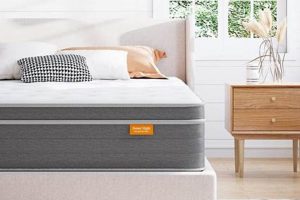
The selection of a superior sleeping surface for infants is a critical decision for caregivers. This item is designed to provide optimal support, comfort, and safety for a developing child during crucial periods of rest. Such surfaces often feature materials and construction methods specifically intended to minimize potential hazards and promote healthy sleep patterns.
A quality sleeping platform for an infant can contribute significantly to their physical development and overall well-being. Adequate support during sleep aids in proper spinal alignment, and breathable materials can reduce the risk of overheating. Historically, advancements in materials and manufacturing have led to safer and more comfortable options for infant sleep environments.
The following sections will delve into the key factors to consider when evaluating available options, including material composition, safety certifications, construction, and maintenance. Understanding these aspects allows for informed purchasing decisions that prioritize infant safety and promote healthy sleep.
Selecting a Quality Infant Sleep Surface
The process of identifying an appropriate infant sleep surface necessitates careful evaluation of various factors to ensure optimal safety and comfort.
Tip 1: Prioritize Safety Certifications: Verify that the product meets or exceeds established safety standards from reputable organizations. Certifications indicate rigorous testing for harmful chemicals, flammability, and structural integrity.
Tip 2: Evaluate Material Composition: Opt for surfaces constructed from breathable, non-toxic materials such as organic cotton or natural latex. Avoid products containing potentially harmful chemicals like phthalates, formaldehyde, and heavy metals.
Tip 3: Assess Firmness Levels: A firm surface is crucial for reducing the risk of sudden infant death syndrome (SIDS). The surface should not conform excessively to the infant’s body, ensuring adequate support and preventing suffocation hazards.
Tip 4: Consider Edge Support: Robust edge support minimizes the risk of an infant becoming trapped between the surface and the crib rails. Examine the perimeter for firmness and stability.
Tip 5: Evaluate Breathability: Breathable surfaces allow for increased airflow, reducing the risk of overheating and promoting a more comfortable sleep environment. Look for features like ventilated cores or covers.
Tip 6: Check for Proper Fit: Ensure the chosen product fits snugly within the crib frame, leaving no gaps that could pose a safety hazard. Adherence to recommended crib dimensions is essential.
Tip 7: Investigate Waterproofing and Cleanability: Opt for waterproof or water-resistant surfaces that can be easily cleaned to maintain a hygienic sleep environment. Removable, washable covers are highly recommended.
Selecting an infant sleeping surface based on these key considerations promotes a safer and healthier sleep environment for the child, contributing to their overall well-being.
The following sections will provide a detailed comparison of different types of sleep surfaces available on the market, highlighting their individual advantages and disadvantages.
1. Firmness

Firmness is a critical characteristic of infant sleeping surfaces, influencing the safety and well-being of the child. A surface deemed appropriate for infant use necessitates specific firmness levels to mitigate potential hazards associated with softer, more pliable materials.
- SIDS Risk Mitigation
Insufficient firmness elevates the risk of Sudden Infant Death Syndrome (SIDS). A surface that conforms excessively to the infant’s body can obstruct airways, leading to suffocation. Firmer surfaces maintain a consistent plane, preventing positional asphyxia.
- Spinal Development Support
Appropriate firmness supports proper spinal alignment during sleep. Infant spines are still developing, and inadequate support can contribute to musculoskeletal issues. A firm surface provides a stable foundation for healthy development.
- Industry Standards and Testing
Established industry standards mandate specific firmness levels for infant sleep products. Manufacturers subject their products to rigorous testing to ensure compliance with these standards, ensuring a degree of safety. These tests often involve measuring the indentation load deflection (ILD) of the surface.
- Material Composition and Construction
The firmness of an infant sleeping surface is directly related to its material composition and construction. High-density materials and layered construction techniques contribute to increased firmness. The use of softer materials or inadequate support structures compromises the necessary firmness level.
The emphasis on firmness in infant sleeping surfaces reflects a commitment to minimizing SIDS risk and promoting healthy development. Careful consideration of this attribute, as verified through certifications and material analysis, is paramount when selecting a sleeping surface to ensure infant safety and well-being.
2. Breathability

Breathability is a crucial attribute of infant sleeping surfaces, directly impacting infant thermal regulation and reducing the risk of overheating. Infant bodies are less efficient at regulating temperature compared to adults, making them particularly vulnerable to environmental conditions. A lack of breathability in a sleeping surface can trap heat, increasing the infant’s core temperature and potentially leading to discomfort, restlessness, and, in severe cases, heatstroke. Therefore, the selection of a surface that promotes airflow is essential for maintaining a safe sleep environment.
Materials used in the construction of the infant sleeping surface significantly influence its breathability. Natural fibers, such as organic cotton and wool, exhibit superior breathability compared to synthetic materials like vinyl or polyurethane. Certain construction techniques, such as ventilated cores or open-cell foam structures, further enhance airflow. For instance, mattresses featuring a 3D spacer fabric layer are designed to facilitate continuous air circulation, dissipating heat and moisture away from the infant’s body. The presence of certifications indicating testing for breathability, like those related to air permeability standards, provides assurance of the surface’s ability to promote airflow. Examples of real-world scenarios where breathability becomes critical include infants sleeping in warmer climates or during periods of illness when body temperature may be elevated.
Understanding the connection between breathability and the selection of a suitable infant sleeping surface is paramount for prioritizing infant safety and well-being. Choosing surfaces constructed from breathable materi
als, employing airflow-enhancing construction methods, and verifying breathability certifications represent crucial steps in creating a sleep environment that minimizes the risk of overheating and promotes comfortable rest. The practical significance of this understanding lies in the ability of caregivers to make informed decisions that contribute to the overall health and safety of their infants. The ongoing challenge is to refine testing methodologies and material science to further optimize breathability in infant sleep products.
3. Safety Certifications

Safety certifications are integral to evaluating infant sleeping surfaces. They provide a standardized, verifiable measure of product compliance with established safety standards, directly influencing the selection of an optimal infant sleeping surface.
- Compliance with Federal Regulations
Certifications such as those from the Consumer Product Safety Commission (CPSC) indicate adherence to federal safety regulations, including mandatory standards for flammability, lead content, and phthalates. A sleeping surface bearing such certification demonstrates it meets the minimum legal requirements for safety in the United States.
- Independent Testing and Verification
Organizations like GREENGUARD Environmental Institute conduct independent testing to verify that sleeping surfaces meet stringent chemical emission limits. GREENGUARD Gold certification, for instance, signifies that the product has been tested for over 10,000 chemicals and volatile organic compounds (VOCs), ensuring minimal impact on indoor air quality and reduced exposure to harmful substances for the infant.
- Voluntary Standards and Best Practices
Certifications from entities like CertiPUR-US demonstrate compliance with voluntary standards regarding the content, emissions, and durability of flexible polyurethane foam. This certification confirms that the foam used in the sleeping surface has been analyzed by independent laboratories and meets specific criteria for low VOC emissions and the absence of prohibited substances like ozone depleters and heavy metals.
- Transparency and Consumer Confidence
The presence of recognizable safety certifications on an infant sleeping surface enhances transparency and builds consumer confidence. These certifications provide accessible information about the product’s safety attributes, enabling informed purchasing decisions based on objective, verified data rather than subjective marketing claims.
Safety certifications serve as critical benchmarks for assessing the suitability of infant sleeping surfaces. They represent a commitment to safety and provide a degree of assurance regarding product quality, material composition, and adherence to established standards. Prioritizing certified products is a vital step in creating a safe and healthy sleep environment for infants.
4. Material Toxicity

The presence of toxic substances in infant sleeping surfaces presents a significant concern for infant health and development. The selection of the safest possible product necessitates a thorough understanding of potential material hazards and their impact on infant well-being.
- Volatile Organic Compounds (VOCs)
VOCs are emitted from various materials, including polyurethane foam, adhesives, and flame retardants commonly found in infant sleeping surfaces. Exposure to VOCs can lead to respiratory irritation, allergies, and potential long-term health effects. Opting for products with low-VOC certifications, such as GREENGUARD Gold, mitigates this risk.
- Flame Retardants
Certain flame retardant chemicals, like halogenated compounds and organophosphates, have been linked to developmental and neurological problems. While flame retardancy is a safety requirement, selecting sleeping surfaces that utilize inherently flame-resistant materials or alternative, less toxic flame retardants is advisable.
- Phthalates
Phthalates, often used as plasticizers in vinyl and other materials, are endocrine disruptors that can interfere with hormonal development. Exposure to phthalates has been associated with adverse reproductive and developmental outcomes. Choosing sleeping surfaces constructed from phthalate-free materials is essential for minimizing infant exposure.
- Heavy Metals
Heavy metals, such as lead and mercury, can be present in dyes, fabrics, and other components of infant sleeping surfaces. Even low-level exposure to heavy metals can have detrimental effects on neurological development. Selecting products certified to be free of heavy metals helps ensure a safer sleep environment.
Prioritizing infant sleeping surfaces constructed from non-toxic materials, verified through independent testing and certifications, minimizes the risk of exposure to harmful chemicals and promotes a healthier sleep environment. A diligent approach to assessing material toxicity is crucial in safeguarding infant health and development, ultimately contributing to a more informed selection process.
5. Size compatibility

Size compatibility constitutes a fundamental safety and functionality requirement for an infant sleeping surface. The dimensions of the chosen surface must precisely correspond to the interior dimensions of the crib or bassinet in which it will be used. Discrepancies in size, even seemingly minor ones, can create hazardous gaps between the edge of the sleeping surface and the surrounding frame. Such gaps present a significant entrapment risk for infants, potentially leading to suffocation or other injuries. For instance, if the chosen sleeping surface is even slightly smaller than the crib’s interior, an infant could roll into the resulting space and become wedged, unable to breathe or free themselves.
Standardized crib dimensions are established to mitigate these risks. However, variations in manufacturing tolerances and differing crib models necessitate careful measurement and verification. A common practice involves measuring the interior length and width of the crib and comparing these dimensions to the specifications provided by the sleeping surface manufacturer. Some manufacturers offer sleeping surfaces specifically designed to fit particular crib models, reducing the likelihood of incompatibility. Failure to ensure proper size compatibility can negate other beneficial features, such as material composition or firmness, rendering the sleeping surface inherently unsafe, regardless of its other attributes.
Ultimately, size compatibility is not merely a convenience; it is a critical safety prerequisite. Neglecting to verify that the chosen sleeping surface fits precisely within the crib undermines the overall safety of the infant’s sleep environment. Therefore, diligent measurement and a meticulous approach to ensuring size compatibility are non-negotiable steps in selecting a safe and functional infant sleeping surface. This aspect demands unwavering attention from caregivers and serves as a cornerstone of safe sleep practices.
6. Water Resistance

Water resistance is a crucial characteristic of an infant sleeping surface, directly impacting hygiene and product longevity. The inherent nature of infant care often involves instances of diaper leakage, regurgitation, and spills. A sleeping surface lacking water resistance readily absorbs these fluids, creating a breeding ground for bacteria and mold. This contamination poses health risks to the infant and compromises the integrity of the product. The presence of water resistance, therefore, is a key determinant of its overall suitability.
The implementation of water-resistant features typically involves incorporating a waterproof or water-repellent layer into the sleeping surface construction. This layer prevents liquids from penetrating the core materials, maintaining a dry and hygienic environment. Materials such as polyurethane film or tightly woven fabrics with a water-repellent coating are commonly utilized. Moreover, designs incorporating removable, washable covers enhance the practicality of water resistance, allowing for easy cleaning and maintenance. A sleeping surface with demonstrable water resistance extends its usable lifespan and reduces the need for frequent replacement, offering economic benefits in addition to hygiene advantages. Instances where caregivers successfully prevent staining, odors, and bacterial growth by using water-resistant surfaces underscore the practical significance of this attribute.
Ultimately, water resistance is not merely a desirable feature, but a necessary component of an infant sleeping surface. Its contribution to hygiene, product longevity, and overall infant well-being cannot be overstated. Selecting a product with verified water resistance, demonstrable through material composition and design features, is a key element of responsible infant care and prudent purchasing decisions. The ongoing challenge is to develop water-resistant materials that also maintain breathability and safety, ensuring a comprehensive approach to infant sleep environment design.
7. Edge Support

Edge support in infant sleeping surfaces is a crucial design element directly impacting safety and structural integrity. Adequate edge support minimizes risks associated with infant movement and ensures long-term product durability.
- Entrapment Prevention
Robust edge support reduces the likelihood of an infant becoming trapped between the sleeping surface and the crib railing. Inadequate edge support allows the sleeping surface to compress excessively near the perimeter, creating a gap where an infant could become lodged. Consistent, firm edges mitigate this potential hazard.
- Structural Integrity and Sagging
Edge support contributes to the overall structural integrity of the sleeping surface, preventing premature sagging and maintaining a consistent level of support across the entire surface. Without sufficient edge support, the perimeter of the sleeping surface may degrade more rapidly, leading to uneven support and potential safety concerns.
- Transitioning to Standing
As infants develop, they may use the edge of the sleeping surface to assist in pulling themselves to a standing position. Strong edge support provides a stable and reliable point of leverage, reducing the risk of falls or injuries. Weak or collapsing edges can undermine this developmental stage and pose a safety risk.
- Durability and Longevity
Reinforced edge support extends the lifespan of the infant sleeping surface by preventing premature wear and tear. Edges are typically subjected to higher levels of stress and compression compared to the center of the surface. Robust edge support distributes this stress more evenly, enhancing the overall durability and longevity of the product.
The presence of adequate edge support in an infant sleeping surface is not merely a comfort feature, but a fundamental safety requirement. It directly contributes to entrapment prevention, structural integrity, and long-term durability, thereby enhancing the overall safety and suitability of the product for infant use. Selection of a sleeping surface with demonstrable edge support features is crucial for promoting a safe and supportive sleep environment.
Frequently Asked Questions
The following questions and answers address common concerns regarding the selection and use of infant sleeping surfaces.
Question 1: What level of firmness is considered appropriate for an infant sleeping surface?
Infant sleeping surfaces must exhibit sufficient firmness to mitigate the risk of Sudden Infant Death Syndrome (SIDS). The surface should not conform excessively to the infant’s body, ensuring that airways remain unobstructed. A firm, flat surface is recommended.
Question 2: Are there specific materials to avoid when selecting an infant sleeping surface?
Infant sleeping surfaces should be free of potentially harmful chemicals, including phthalates, formaldehyde, and heavy metals. Materials with low volatile organic compound (VOC) emissions are preferable to minimize respiratory irritation and potential long-term health effects.
Question 3: How frequently should an infant sleeping surface be cleaned?
Infant sleeping surfaces should be cleaned regularly to maintain a hygienic sleep environment. The frequency of cleaning depends on usage and potential soiling. Removable, washable covers are advantageous for ease of cleaning and maintenance.
Question 4: What is the significance of safety certifications on an infant sleeping surface?
Safety certifications, such as those from the Consumer Product Safety Commission (CPSC) or GREENGUARD, indicate that the product has been tested and meets established safety standards for flammability, chemical emissions, and structural integrity. These certifications provide assurance of product safety and compliance.
Question 5: How does breathability contribute to infant safety?
Breathable materials promote airflow and reduce the risk of overheating, a factor associated with Sudden Infant Death Syndrome (SIDS). Infant sleeping surfaces constructed from breathable materials, such as organic cotton or natural latex, are recommended to maintain a comfortable and safe sleep environment.
Question 6: Is it necessary to purchase a new infant sleeping surface for each child?
It is generally recommended to purchase a new infant sleeping surface for each child to ensure optimal hygiene and safety. Used surfaces may harbor bacteria, allergens, or structural damage that could compromise infant health and safety.
Selecting a safe and appropriate infant sleeping surface requires careful consideration of firmness, material composition, safety certifications, and hygiene. A well-informed decision contributes to a healthier and safer sleep environment for the infant.
The following section will provide a summary of key considerations for selecting an infant sleeping surface.
Concluding Remarks
The preceding discussion has explored the salient attributes of a sleeping surface optimized for infant use. The paramount considerations of firmness, breathability, safety certifications, material toxicity, size compatibility, water resistance, and edge support collectively define the parameters of what constitu
tes a suitable product. Compromising on any of these factors introduces potential risks to infant health and safety.
Therefore, the selection of an infant sleeping surface demands diligence and a commitment to evidence-based decision-making. Caregivers must prioritize verifiable safety standards and independently validated product claims. The long-term well-being of the infant depends on a deliberate and informed approach to creating a safe sleep environment. Continued vigilance and adherence to evolving safety guidelines are essential.