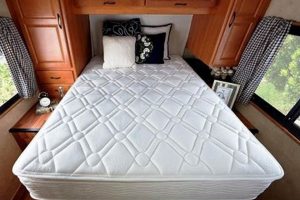
Sleep surfaces designed to mitigate heat retention and enhance airflow represent a growing segment within the bedding industry. These products aim to address the common issue of overheating during sleep, a factor known to disrupt sleep cycles and reduce overall rest quality. For instance, mattresses incorporating gel-infused memory foam, breathable fabrics, and advanced ventilation systems fall into this category, seeking to provide a more temperature-neutral sleep environment.
The significance of temperature regulation during sleep is increasingly recognized for its impact on restorative rest. Maintaining a stable body temperature can prevent nighttime awakenings, promote deeper sleep stages, and contribute to improved cognitive function and daytime energy levels. Historically, advancements in material science and manufacturing techniques have driven the evolution of sleep surfaces from traditional innerspring models to more sophisticated designs focused on thermal comfort.
The subsequent sections will explore the technologies employed in these temperature-regulating sleep surfaces, comparing the advantages and disadvantages of various materials and construction methods. Furthermore, factors influencing the selection of an appropriate model based on individual needs and preferences will be examined, alongside considerations for long-term performance and maintenance.
Selecting Temperature-Regulating Sleep Surfaces
This section provides guidance on choosing sleep surfaces designed to minimize heat retention and maximize airflow. Careful consideration of individual needs and product specifications is essential for optimal sleep comfort.
Tip 1: Material Composition Assessment: Evaluate the materials used in the mattress construction. Open-cell foam structures, gel infusions, and phase change materials (PCMs) are common features that contribute to enhanced breathability and heat dissipation. Review product specifications for detailed information on the specific materials employed and their respective properties.
Tip 2: Airflow and Ventilation Design: Examine the mattress’s design for ventilation features. Perforated foam layers, channeled support cores, and breathable fabric covers promote airflow, preventing heat build-up within the mattress. Look for products that explicitly highlight their ventilation capabilities.
Tip 3: Cover Fabric Considerations: The cover fabric plays a crucial role in regulating surface temperature. Natural fibers, such as cotton and Tencel, offer better breathability compared to synthetic materials. Consider covers incorporating moisture-wicking properties for enhanced comfort.
Tip 4: Firmness Level and Sleep Position Alignment: Select a firmness level that aligns with individual sleep position preferences. Proper spinal alignment is crucial for comfort and support, which indirectly influences sleep quality and temperature regulation. A mattress that is too soft or too firm can impede airflow and increase heat retention.
Tip 5: Independent Research and Verification: Consult independent product reviews and testing reports to gain insights into real-world performance and temperature regulation effectiveness. Seek out verified data and user experiences to inform the decision-making process.
Tip 6: Compatibility with Bedding and Environment: Account for the influence of bedding materials and room temperature. Breathable sheets and appropriate climate control can significantly enhance the effectiveness of temperature-regulating sleep surfaces. Avoid synthetic bedding materials that can impede airflow.
Tip 7: Warranty and Trial Period Evaluation: Prioritize mattresses with extended trial periods and comprehensive warranties. These provisions allow for thorough assessment of comfort and temperature regulation performance in a home setting, minimizing the risk of dissatisfaction.
In summary, selecting a suitable sleep surface necessitates a comprehensive evaluation of materials, design features, and individual preferences. By considering the outlined factors, individuals can optimize their sleep environment for enhanced comfort and temperature regulation.
The subsequent article sections will delve into specific product categories and emerging technologies within the temperature-regulating sleep surface market.
1. Material Breathability
Material breathability is a fundamental characteristic directly influencing the effectiveness of temperature regulation in sleep surfaces. In the context of a cooling sleep surface, materials must facilitate the passage of air and moisture vapor, preventing heat accumulation and promoting a more stable sleep environment. The cause-and-effect relationship is straightforward: materials with low breathability trap heat, while materials with high breathability allow heat to dissipate. Without adequate breathability, even advanced cooling technologies can be rendered ineffective. For example, a memory foam mattress with a dense, closed-cell structure will inherently retain more heat than one utilizing open-cell technology or incorporating breathable fabrics.
The importance of material breathability extends beyond simple heat dissipation. Effective moisture management is also critical for maintaining comfort and preventing the growth of mold and bacteria. Materials that wick away moisture from the body contribute to a drier sleep surface, further enhancing the perceived cooling effect. Consider natural fibers like cotton or Tencel, or specialized synthetic materials engineered with moisture-wicking properties. In contrast, synthetic fabrics with limited breathability can create a humid microclimate, negating the benefits of other cooling features. The practical significance lies in understanding that breathability is not a singular metric but a comprehensive assessment of how well a material manages both heat and moisture.
In summary, material breathability is a cornerstone of any successful cooling sleep surface. It underpins the core function of heat dissipation and moisture management, contributing significantly to overall sleep comfort and hygiene. Challenges remain in accurately quantifying and comparing breathability across different materials and product designs. However, a thorough understanding of this property is essential for consumers seeking to mitigate heat-related sleep disturbances. The efficacy of other cooling technologies is contingent upon a foundation of breathable materials.
2. Airflow Design
Airflow design within a sleep surface directly influences its cooling properties, thereby significantly impacting its categorization as a temperature-regulating mattress. Effective airflow allows for the convective removal of heat generated by the sleeper’s body, preventing heat accumulation within the mattress core. This is a crucial distinction between a standard mattress and one designed to maintain a comfortable sl
eep temperature. A mattress lacking proper airflow design will trap heat, creating an environment conducive to overheating and disrupted sleep. For example, a solid block of memory foam, without engineered ventilation, will typically retain heat, negating any inherent cooling properties of the foam itself. In contrast, a mattress incorporating perforated foam layers, strategically placed air channels, or a breathable cover fabric promotes continuous air circulation, facilitating heat dissipation.
The importance of airflow design extends to the materials employed. Even breathable materials require an appropriate structural configuration to maximize airflow potential. Consider two mattresses constructed with open-cell foam. One might have a dense, uniform structure, while the other incorporates vertical air channels or a convoluted surface. The latter design will invariably exhibit superior airflow characteristics, enhancing its cooling capabilities. Furthermore, the mattress cover material plays a critical role. A breathable cover, such as cotton or Tencel, allows air to permeate the surface, facilitating heat exchange between the sleeper and the surrounding environment. Conversely, a non-breathable cover material, like vinyl, will impede airflow, diminishing the effectiveness of even the most advanced internal ventilation systems. Therefore, successful airflow design is a synergistic combination of material selection and structural engineering.
In conclusion, airflow design is a critical determinant of a sleep surface’s ability to regulate temperature and qualify as a cooling mattress. Its effectiveness is contingent upon both material selection and structural configuration, working in concert to promote heat dissipation and maintain a comfortable sleep environment. Challenges remain in accurately quantifying airflow performance across different mattress designs. However, awareness of this fundamental principle enables consumers to make informed decisions when selecting a sleep surface that meets their specific temperature regulation needs. The absence of adequate airflow design will inevitably compromise the mattress’s cooling capabilities, regardless of other advanced technologies employed.
3. Heat Dissipation

Heat dissipation is a critical function that defines a sleep surface’s ability to regulate temperature and, consequently, its suitability as a “best cooling mattress.” Effective heat dissipation involves the removal of body heat from the sleep surface, preventing its accumulation and maintaining a comfortable sleeping environment. Mattresses lacking efficient heat dissipation mechanisms are prone to retaining heat, leading to discomfort and disrupted sleep cycles.
- Material Conductivity
The thermal conductivity of mattress materials significantly influences heat dissipation. Materials with high thermal conductivity, such as copper-infused foam or graphite, facilitate the rapid transfer of heat away from the body. In contrast, materials with low thermal conductivity, like traditional memory foam, tend to insulate and retain heat. The use of thermally conductive materials directly contributes to the cooling performance of a sleep surface. For example, a mattress with a copper-infused latex layer demonstrates enhanced heat dissipation compared to an all-foam mattress.
- Phase Change Materials (PCMs)
Phase change materials (PCMs) are substances that absorb or release heat as they transition between solid and liquid states. In the context of mattresses, PCMs can be integrated into the fabric cover or foam layers. As the sleeper’s body temperature rises, the PCM absorbs heat, delaying temperature increases. This process prolongs the sensation of coolness and contributes to more consistent temperature regulation throughout the night. An example of a PCM-enhanced mattress would be one incorporating microcapsules filled with a material that melts at approximately 88 degrees Fahrenheit, absorbing body heat and creating a cooling effect.
- Airflow Mechanisms
Heat dissipation is inherently linked to airflow. Mattresses with effective airflow mechanisms allow warm air to escape and cooler air to circulate. Design features like perforated foam layers, channeled cores, and breathable cover fabrics facilitate this process. These features prevent the formation of a heat pocket around the sleeper. For instance, a mattress with a convoluted foam layer creates air channels that promote ventilation and enhance heat dissipation compared to a solid foam core.
- Moisture Management
Moisture accumulation can impede heat dissipation. Sweat can create a humid microclimate between the sleeper and the mattress, hindering the body’s natural cooling process. Mattress materials with moisture-wicking properties help to evaporate sweat, promoting heat dissipation and enhancing overall comfort. An example of this is a mattress cover made with a Tencel fabric, which efficiently wicks away moisture, contributing to a cooler and drier sleep environment.
The interplay of material conductivity, phase change materials, airflow mechanisms, and moisture management defines a sleep surface’s capacity for heat dissipation, which is the core of best cooling mattress. A comprehensive approach incorporating these elements results in mattresses that effectively regulate temperature and enhance sleep quality. The selection of an appropriate sleep surface requires consideration of these factors to optimize heat dissipation based on individual needs and preferences.
4. Moisture Wicking
Moisture wicking is a critical component in the design and performance of sleep surfaces categorized as “best cooling mattress.” Its effectiveness directly influences the sleeper’s comfort and the overall thermal regulation capacity of the mattress. Excess moisture between the sleeper and the mattress impedes the body’s natural cooling process, creating a warm and potentially uncomfortable microclimate.
- Fiber Structure and Composition
The structure and composition of fibers used in mattress covers and internal layers determine their moisture-wicking capabilities. Hydrophobic fibers, such as certain synthetic materials, repel water, encouraging it to move away from the body. Capillary action within the fiber structure then draws moisture along the fiber surface, promoting evaporation. Natural fibers like merino wool also exhibit excellent moisture-wicking properties due to their complex structure and ability to absorb and release moisture vapor. The fiber structure is a fundamental determinant of moisture management. For instance, polyester fabrics engineered with specific cross-sectional shapes enhance moisture wicking compared to standard polyester fibers.
- Fabric Weave and Construction
The weave and construction of the fabric further influence its moisture-wicking performance. Open weaves and knit structures create air channels that facilitate moisture evaporation. Tightly woven fabrics, on the other hand, can restrict airflow and hinder moisture removal. Specialized knit patterns, such as those incorporating alternating hydrophilic and hydrophobic yarns, optimize moisture transport. An example of this is a pique knit fabric, which features raised ribs that increase surface area for evaporation, enhancing moisture wicking compared to a plain weave fabric.
- Surface Treatment and Finishes
Surface treatments and finishes can be applied to fabrics to enhance their moisture-wicking properties. Durable Water Repellent (DWR) finishes, while primarily designed for water resistance, can also facilitate moisture wicking by causing water droplets to bead up and roll off the fabric surface. Antimicrobial treatments can also indirectly improve moisture management by inhibiting the growth of odor-causing bacteria, which thrive in damp environments. An example of a surface treatment is a hydrophilic coating applied to synthetic fibers, increasing their ability to absorb and spread moisture for faster evaporation.
- Impact on Thermal Regulation
Effective moisture wicking contributes significantly to thermal regulation in mattresses. By removing excess moisture, it prevents the creation of a humid microclimate, allowing the body to dissipate heat more efficiently. This, in turn, promotes a more stable and comfortable sleep temperature. Mattresses with poor moisture-wicking capabilities can lead to overheating and disrupted sleep. An example is a mattress with a non-breathable cover that traps moisture, resulting in a significant increase in skin temperature compared to a mattress with a moisture-wicking cover.
The integration of effective moisture-wicking technologies is essential for sleep surfaces aiming to be classified as “best cooling mattress.” These technologies work in conjunction with other cooling features, such as breathable materials and airflow designs, to create a sleep environment that minimizes heat retention and maximizes comfort. Without effective moisture management, even the most advanced cooling technologies may be compromised. The selection of a mattress with appropriate moisture-wicking properties is crucial for individuals seeking to mitigate heat-related sleep disturbances.
5. Temperature Stability

Temperature stability is paramount in defining the efficacy of a sleep surface classified as the “best cooling mattress.” A stable sleep temperature, achieved through consistent thermal regulation, prevents temperature fluctuations that can disrupt sleep architecture. The cause-and-effect relationship is direct: consistent temperature regulation minimizes nighttime awakenings and promotes deeper, more restorative sleep stages. Temperature instability, conversely, can trigger thermoregulatory responses, leading to restlessness and fragmented sleep. The absence of temperature stability negates the purported benefits of other cooling features. For example, a mattress might incorporate breathable materials and advanced airflow design, yet if it fails to maintain a consistent temperature throughout the night, its overall cooling performance is compromised.
The importance of temperature stability manifests in several practical aspects of sleep quality. A stable sleep temperature reduces the likelihood of sweating or shivering during the night, thereby enhancing comfort. Moreover, maintaining a consistent temperature mitigates the risk of sudden temperature spikes that can trigger arousal responses and disrupt sleep cycles. Consider a mattress incorporating phase change materials (PCMs). These materials absorb or release heat, depending on the surrounding temperature, thereby moderating temperature fluctuations and promoting stability. The practical significance of this lies in the ability to maintain a comfortable temperature range, regardless of external factors like room temperature or the sleeper’s metabolic rate. Individuals experiencing temperature fluctuations during the night benefit significantly from a sleep surface with enhanced temperature stability.
In summary, temperature stability is a fundamental characteristic of a mattress seeking designation as the “best cooling mattress.” It ensures a consistent thermal environment, minimizing temperature-related sleep disruptions and promoting deeper, more restorative sleep. Challenges remain in accurately quantifying and maintaining temperature stability across varying sleep conditions. However, prioritizing this aspect during mattress selection is crucial for optimizing sleep quality and mitigating the negative effects of temperature fluctuations. The absence of temperature stability renders other cooling features less effective, underscoring its central role in achieving a comfortable and restful sleep experience.
6. Firmness Level

The firmness level of a mattress significantly influences its cooling capabilities and, therefore, its potential designation as a “best cooling mattress.” A mattress that is too soft or too firm can impede airflow and increase body contact, leading to heat retention. The cause-and-effect relationship is evident: excessive sinking into a soft mattress restricts air circulation around the body, while a very firm mattress limits surface area contact, disrupting the body’s natural cooling mechanisms. In both scenarios, the result is an elevated sleep temperature, which detracts from the overall comfort and restorative qualities of sleep. Without proper firmness alignment with individual needs, even mattresses incorporating advanced cooling technologies may underperform. For instance, a memory foam mattress with cooling gel infusions may still trap heat if its firmness does not allow for adequate body contouring and airflow.
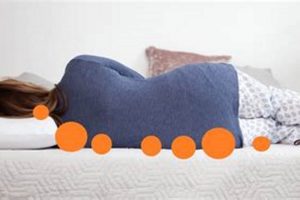
The importance of firmness level as a component of a “best cooling mattress” stems from its direct impact on pressure distribution and spinal alignment. A mattress that properly supports the sleeper’s weight and maintains spinal alignment minimizes pressure points and promotes better circulation. This, in turn, contributes to more efficient heat dissipation. Consider a side sleeper on a too-firm mattress. The pressure points at the shoulders and hips restrict blood flow, increasing localized heat retention. Conversely, a back sleeper on a too-soft mattress may experience excessive sinking, leading to spinal misalignment and restricted airflow around the torso. The practical significance lies in understanding that firmness is not merely a matter of comfort preference but a critical factor in thermal regulation. Selecting the appropriate firmness level, based on individual sleep position and body weight, is crucial for maximizing the effectiveness of cooling technologies.
In conclusion, firmness level is an integral aspect of a mattress’s cooling performance and its suitability as a “best cooling mattress.” It affects airflow, pressure distribution, and spinal alignment, all of which influence heat retention and overall sleep temperature. Challenges remain in accurately assessing individual firmness preferences due to subjective perception and varying body types. However, prioritizing the selection of a firmness level that aligns with individual needs and sleep patterns is essential for optimizing thermal comfort and maximizing the benefits of cooling technologies. The absence of appropriate firmness negates the potential of other cooling features, underscoring its critical role in achieving a cool and restful sleep experience.
7. Spinal Alignment

Proper spinal alignment is a foundational element in achieving restorative sleep, and it significantly interacts with the thermal characteristics of a sleep surface. Therefore, its consideration is essential when
evaluating a mattress for the designation of “best cooling mattress.” Misalignment can lead to increased pressure points and reduced airflow, which, in turn, elevate body temperature and disrupt sleep patterns.
- Pressure Point Reduction
Maintaining proper spinal alignment minimizes pressure points on the body during sleep. Pressure points restrict blood flow, leading to localized heat retention. A mattress that conforms to the natural curvature of the spine distributes weight evenly, reducing pressure and promoting better circulation, which aids in heat dissipation. For instance, a side sleeper on a mattress that does not adequately support the shoulder and hip will experience increased pressure and subsequent heat buildup in those areas.
- Muscle Relaxation and Blood Circulation
Correct spinal alignment facilitates muscle relaxation, which in turn improves blood circulation. Relaxed muscles require less energy and generate less heat. Improved blood flow allows for efficient heat transfer away from the body’s core, contributing to a cooler sleep environment. Conversely, a misaligned spine forces muscles to work harder to maintain posture, leading to increased heat production and potential discomfort. This is especially important for individuals with chronic back pain, where proper support is crucial for both pain management and thermal regulation.
- Airflow and Surface Contact
Spinal alignment affects the surface area of contact between the body and the mattress. A well-aligned spine promotes even distribution of body weight, minimizing excessive sinking into the mattress. This allows for better airflow around the body, facilitating heat dissipation. Mattresses that do not provide adequate support can cause excessive sinking, restricting airflow and trapping heat. For example, a stomach sleeper on a soft mattress may experience significant heat buildup due to the increased surface contact and restricted airflow.
- Impact on Sleep Stages
Proper spinal alignment contributes to more restful sleep stages. Discomfort caused by misalignment can lead to frequent awakenings and lighter sleep, disrupting the body’s natural temperature regulation processes. Deeper sleep stages are associated with lower body temperatures, and maintaining proper spinal alignment is crucial for achieving and sustaining these restorative sleep periods. A mattress that promotes spinal alignment can, therefore, indirectly contribute to a cooler sleep environment by facilitating deeper, more temperature-stable sleep.
In conclusion, spinal alignment is not merely a matter of comfort but a critical factor in thermal regulation during sleep. Its influence on pressure points, muscle relaxation, airflow, and sleep stages directly impacts the effectiveness of a mattress as a “best cooling mattress.” Therefore, selecting a mattress that promotes proper spinal alignment is essential for optimizing sleep quality and mitigating heat-related sleep disturbances.
Frequently Asked Questions About Best Cooling Mattresses
The following section addresses common inquiries regarding sleep surfaces designed for temperature regulation and their designation as “best cooling mattresses.” These answers provide information grounded in established sleep science and material properties.
Question 1: Are all mattresses marketed as “cooling” truly effective?
The term “cooling” is subject to marketing interpretation. Effectiveness varies significantly based on materials, construction, and individual needs. A mattress labeled “cooling” may not necessarily provide sufficient temperature regulation for all users. Independent verification through reviews and specifications is recommended.
Question 2: How do material properties influence the cooling performance of a mattress?
Material thermal conductivity and breathability are primary determinants. Materials with high thermal conductivity, such as copper or graphite, facilitate heat transfer. Breathable materials, like open-cell foam or natural fibers, allow for air circulation. These properties dictate a mattress’s capacity for heat dissipation and temperature regulation.
Question 3: Can a mattress alone solve overheating issues during sleep?
A mattress is one factor in thermal regulation. Environmental conditions, bedding materials, and individual physiology also contribute. A cooling mattress should be considered as part of a comprehensive approach to managing sleep temperature, which may include adjusting room temperature and selecting appropriate bedding.
Question 4: What is the role of airflow design in a cooling mattress?
Airflow design is crucial for removing heat and moisture from the sleep surface. Features such as perforated foam layers, channeled cores, and breathable fabrics promote air circulation, preventing heat buildup and maintaining a comfortable temperature. Inadequate airflow diminishes the effectiveness of other cooling technologies.
Question 5: How does mattress firmness impact cooling performance?
Firmness affects body contact and pressure distribution. A mattress that is too soft can restrict airflow, while one that is too firm may create pressure points. The ideal firmness level promotes spinal alignment and minimizes pressure, facilitating efficient heat dissipation.
Question 6: Are there specific certifications to look for when purchasing a cooling mattress?
Certifications such as CertiPUR-US indicate that foam materials meet specific standards for emissions, content, and durability. While not directly related to cooling performance, these certifications provide assurance of material quality and safety. Certifications pertaining to temperature regulation are less standardized and require careful evaluation.
In summary, achieving optimal temperature regulation during sleep involves a multifaceted approach, with the selection of an appropriate “best cooling mattress” being a significant component. Careful evaluation of materials, design, and individual needs is paramount.
The subsequent sections will explore specific product recommendations and emerging technologies in the “best cooling mattress” market.
Conclusion
The preceding analysis has illuminated the complexities inherent in defining and selecting a sleep surface that effectively mitigates heat retention. Designating a “best cooling mattress” is not merely a matter of marketing claims but requires a comprehensive understanding of material science, airflow dynamics, and individual physiological needs. Furthermore, it has been demonstrated that spinal alignment and the optimal firmness are just as important. The investigation has revealed that various factors, from fiber composition to PCM integration, contribute to the efficacy of a given sleep surface in promoting thermal comfort.
The pursuit of temperature-regulated sleep continues to drive innovation in the bedding industry. The ongoing challenge lies in translating scientific understanding into products that consistently deliver quantifiable improvements in sleep quality for a diverse range of consumers. Future research should focus on developing standardized metrics for evaluating cooling performance and ensuring transparency in product labeling. Selecting a mattress to achieve optimal sleep temperature is an important decision and should be treated as such.
![Top-Rated: Best Firm King Mattress [Guide & Reviews] | Organic & Natural Mattress Buyer’s Guide: Non-Toxic Sleep Solutions](https://mattressworldpa.com/wp-content/uploads/2025/07/th-7741-300x200.jpg "Top-Rated: Best Firm King Mattress [Guide & Reviews] Organic & Natural Mattress Buyer’s Guide: Non-Toxic Sleep Solutions")