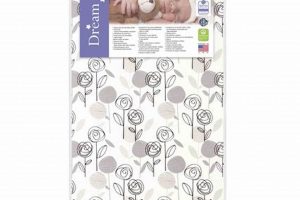
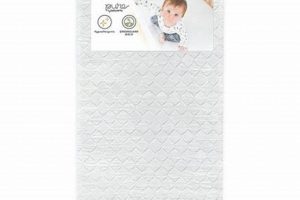
A sleeping surface specifically engineered for infants within the confines of a crib, offering support and safety features is paramount. These mattresses are designed to adhere to strict safety regulations regarding firmness and materials, ensuring a secure environment for the developing child. For example, a model boasting Greenguard Gold certification signifies it has undergone rigorous testing for chemical emissions, promoting healthier air quality for the infant.
The selection of an appropriate sleep surface for an infant is intrinsically linked to promoting healthy development and mitigating potential safety hazards. A firm, well-fitting option can contribute to reducing the risk of Sudden Infant Death Syndrome (SIDS). Historically, advancements in materials and construction techniques have led to significant improvements in infant sleep products, focusing on breathability, hypoallergenic properties, and ease of cleaning, all factors contributing to a safer and more comfortable rest environment.
The subsequent sections will delve into the key criteria to consider when evaluating products, exploring various material options, certifications, and safety standards. This information aims to empower informed decision-making for parents and caregivers seeking a sleep surface that prioritizes the well-being of the infant.
Essential Considerations for Infant Crib Mattresses
Selecting an appropriate crib mattress is a critical decision influencing infant safety and development. Prioritize informed choices based on established safety standards and material properties.
Tip 1: Verify Firmness Compliance: Ensure the mattress meets established firmness standards. A sufficiently firm surface reduces the risk of infant suffocation and promotes safer sleep positioning. Evaluate product descriptions and certifications to confirm adherence to these critical safety parameters.
Tip 2: Assess Material Composition: Scrutinize the mattress materials for potential allergens or harmful chemicals. Opt for options with certifications such as Greenguard Gold, indicating low volatile organic compound (VOC) emissions. Consider organic cotton or natural latex as alternatives to conventional polyurethane foam, minimizing exposure to potentially harmful substances.
Tip 3: Confirm Proper Fit: The mattress must fit snugly within the crib frame. Gaps between the mattress and crib sides pose a significant safety hazard. Measure the interior dimensions of the crib and compare them to the mattress dimensions to ensure a precise fit, eliminating potential entrapment risks.
Tip 4: Evaluate Breathability: Select a mattress that promotes air circulation. Breathable materials or designs can help regulate infant body temperature and reduce the risk of overheating. Look for features such as ventilated cores or covers constructed from breathable fabrics.
Tip 5: Prioritize Waterproofing and Cleanability: Infant mattresses are prone to spills and accidents. A waterproof or water-resistant cover is essential for maintaining hygiene and preventing moisture buildup, which can harbor bacteria. Choose a mattress with a cover that is easily removable and machine washable.
Tip 6: Review Certifications and Safety Standards: Independently verified certifications provide assurance of product safety and quality. Look for certifications from organizations such as CertiPUR-US, Greenguard Gold, and Oeko-Tex Standard 100. These certifications indicate that the mattress has been tested for harmful chemicals and meets specific safety criteria.
Tip 7: Consider Dual-Sided Designs: Some mattresses feature a firmer side for infants and a slightly softer side for toddlers. This design offers extended usability as the child grows. However, always prioritize safety by ensuring the infant side meets strict firmness standards.
Making informed decisions regarding the mattress selection can help reduce risks for infants. Always consult pediatrician for health advise.
The subsequent section will explore specific product recommendations, considering factors such as material, construction, and overall value.
1. Firmness

Firmness constitutes a critical safety parameter in the selection of an infant crib mattress. Insufficient firmness elevates the risk of Sudden Infant Death Syndrome (SIDS) and positional asphyxia. Infant physiology differs significantly from that of older children and adults, rendering them unable to reposition themselves if their face becomes pressed against a yielding surface. A firm mattress provides the necessary resistance to mitigate this risk.
The Consumer Product Safety Commission (CPSC) establishes standards for crib mattress firmness. Mattresses lacking adequate firmness may create an indentation when an infant is placed upon it, potentially obstructing airways. For instance, memory foam mattresses, unless specifically engineered with high density and firmness for infant use, are generally unsuitable due to their tendency to conform to the infant’s shape, creating a pocket that can impede breathing. In contrast, mattresses constructed from high-density foam or innerspring coils, meeting the defined firmness criteria, offer a stable and safe sleep surface.
Therefore, adherence to firmness standards is a non-negotiable aspect of a crib mattress. Parents and caregivers must prioritize mattresses explicitly designed and certified for infant use, ensuring they meet or exceed established safety regulations. This precaution is paramount in creating a secure sleep environment and minimizing the risks associated with insufficient mattress firmness.
2. Safety

Safety is paramount when selecting an infant crib mattress. The chosen sleeping surface directly influences an infant’s well-being, necessitating a rigorous evaluation of potential hazards and adherence to established safety standards.
- Firmness Standards
Crib mattress firmness is a critical safety parameter. Mattresses that are too soft pose a suffocation risk. Regulatory bodies, such as the Consumer Product Safety Commission (CPSC), define minimum firmness standards that manufacturers must meet. Compliance with these standards ensures the mattress provides adequate support and prevents the infant from sinking into the surface, which could obstruct airways. Failure to meet these standards renders a mattress unsafe for infant use.
- Material Composition and Chemical Emissions
The materials used in a crib mattress can impact infant health. Certain chemicals, such as volatile organic compounds (VOCs), may be emitted from the mattress and inhaled by the infant. These emissions can contribute to respiratory problems and other health concerns. Look for mattresses with certifications like Greenguard Gold, which indicates that the product has been tested for low chemical emissions and meets strict indoor air quality standards. Avoiding mattresses made with potentially harmful chemicals minimizes the infant’s exposure to toxins.
- Proper Fit Within the Crib Frame
A mattress must fit snugly within the crib frame. Gaps between the mattress and the crib sides create a potential entrapment hazard. Infants can become wedged in these gaps, leading to suffocation or injury. Manufacturers provide dimensions for both the crib and mattress to ensure compatibility. Prior to purchase, measure the interior dimensions of the crib and compare them to the mattress dimensions to ensure a tight, secure fit.
- Waterproofing and Hygiene
Infant mattresses are susceptible to spills and bodily fluids. A waterproof cover is essential for maintaining hygiene and preventing the growth of bacteria and mold. Mattresses without a waterproof barrier can absorb moisture, creating a breeding ground for harmful microorganisms. Choose a mattress with a durable, waterproof cover that is easily cleaned. Regular cleaning helps minimize the risk of infection and maintains a healthy sleep environment for the infant.
The aforementioned safety aspects represent critical considerations in the selection process. Prioritizing these elements ensures that the selected crib mattress provides a secure and healthy sleep environment, mitigating potential risks and promoting infant well-being. A thorough evaluation of firmness, materials, fit, and hygiene factors is imperative for making an informed and responsible decision.
3. Materials
The composition of an infant crib mattress is a critical determinant of safety, health, and durability. Material selection directly impacts factors such as breathability, allergenicity, chemical exposure, and the overall structural integrity of the mattress. Careful consideration of materials is therefore paramount in identifying a sleeping surface suitable for infant use.
- Foam Density and Composition
Foam density within a crib mattress significantly affects its firmness and support. High-density foam provides the necessary firmness to prevent suffocation risks, whereas low-density foam may lack sufficient support. The type of foam, such as polyurethane or memory foam, also influences its properties. Polyurethane foam, while commonly used, may contain volatile organic compounds (VOCs). Memory foam, known for its conforming properties, may not be suitable for infants unless specifically designed with high density and firmness. Organic or natural latex foam presents an alternative, offering breathability and reduced chemical exposure.
- Fabric Cover Composition
The fabric used for the mattress cover plays a crucial role in breathability and hygiene. Natural fibers, such as organic cotton or bamboo, promote airflow and reduce the risk of overheating. Synthetic fabrics, such as polyester, may be less breathable but offer increased water resistance. The cover should be hypoallergenic and free from harmful dyes or finishes. Certifications like Oeko-Tex Standard 100 ensure that the fabric has been tested for harmful substances.
- Waterproof Barrier Materials
A waterproof barrier is essential for protecting the mattress core from spills and bodily fluids. Polyurethane laminate (PUL) is a common material used for waterproof barriers, providing effective protection while remaining relatively breathable. Polyethylene film is another option, offering excellent waterproofing but potentially reducing breathability. The waterproof barrier should be durable and resistant to tearing or cracking, ensuring long-term protection and preventing moisture buildup.
- Innerspring Coil Construction (if applicable)
Some crib mattresses utilize an innerspring coil system to provide support. The gauge and density of the coils influence the mattress’s overall firmness and durability. Higher-gauge coils offer greater support and resistance to sagging. The coils should be tempered to prevent deformation over time. Innerspring mattresses typically feature layers of padding between the coils and the sleeping surface to provide cushioning and prevent the infant from feeling the coils directly.
The selection of appropriate materials for an infant crib mattress requires a thorough understanding of their properties and potential impact on infant health and safety. Prioritizing natural, breathable, and non-toxic materials minimizes the risk of allergies, chemical exposure, and overheating. Manufacturers often provide detailed information on the materials used in their mattresses, allowing consumers to make informed decisions based on their individual needs and preferences.
4. Size
The dimensional compatibility between a crib and its mattress constitutes a non-negotiable safety parameter. An ill-fitting mattress, regardless of its material composition or construction quality, introduces significant hazards to infant well-being. A mattress too small for the crib creates gaps along the perimeter, posing a risk of entrapment and potential suffocation. Conversely, a mattress too large may bow or buckle, compromising its structural integrity and creating an uneven sleep surface, potentially affecting spinal development.
Standard crib dimensions, established by regulatory bodies, aim to promote uniformity and facilitate the selection of appropriately sized mattresses. However, variations in manufacturing tolerances and crib designs necessitate precise measurements before purchase. A standard-size crib typically accommodates a mattress measuring approximately 28 inches wide and 52 inches long. Verifying these dimensions against the interior measurements of the crib is crucial to ensure a snug, gap-free fit. Real-world incidents involving injuries and fatalities due to ill-fitting mattresses underscore the practical significance of this dimensional verification.
In conclusion, the “size” of the mattress, specifically its conformity to standardized crib dimensions and the resulting fit within the crib frame, is an indispensable component of the “best infant crib mattress.” This aspect transcends mere convenience, directly influencing infant safety and mitigating potential hazards associated with entrapment and compromised sleep surfaces. Strict adherence to dimensional compatibility requirements is thus paramount in the selection process.
5. Cleanliness
Cleanliness is intrinsically linked to the concept of a “best infant crib mattress” due to its direct impact on infant health and hygiene. A clean sleep environment minimizes the risk of bacterial or fungal growth, allergen accumulation, and exposure to harmful substances. Failure to maintain cleanliness can lead to skin irritation, respiratory problems, and potential infections in vulnerable infants. The porous nature of mattress materials makes them susceptible to absorbing spills, bodily fluids, and dust mites, creating a breeding ground for pathogens if not properly addressed. For example, an improperly cleaned mattress can harbor mold spores, triggering allergic reactions or asthma symptoms in susceptible infants.
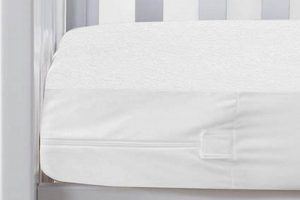
The practical significance of cleanliness in a crib mattress extends beyond mere aesthetics. It directly affects the longevity and structural integrity of the mattress itself. Regular cleaning, involving spot treatments of spills and periodic deep cleaning, prevents the breakdown of materials caused by moisture and accumulated debris. Mattresses with waterproof or water-resistant covers facilitate easier cleaning and minimize the absorption of liquids. Removable and machine-washable covers further enhance the ability to maintain a hygienic sleep surface. The design and materials of a high-quality crib mattress should therefore prioritize ease of cleaning and resistance to staining or degradation from cleaning agents.
In summary, prioritizing cleanliness is not merely an ancillary consideration but an integral component of selecting a “best infant crib mattress.” Maintaining a clean sleep environment is essential for protecting infant health, preventing allergen exposure, and prolonging the life of the mattress. The selection of mattresses with easily cleanable surfaces, coupled with consistent cleaning practices, represents a proactive approach to ensuring a safe and healthy sleep environment for the infant. This understanding directly influences the perceived value and suitability of a crib mattress, reinforcing the connection between cleanliness and product quality.
6. Durability

Durability is an essential attribute of a “best infant crib mattress” due to its direct correlation with long-term safety, performance, and value. A durable mattress maintains its structural integrity and support characteristics over an extended period, ensuring the infant consistently receives the necessary level of firmness and postural support. In contrast, a mattress lacking durability may degrade over time, leading to sagging, uneven surfaces, and a potential increase in suffocation risk. For example, a mattress with low-quality foam may compress prematurely, reducing its firmness and compromising the infant’s safety.
The selection of materials and construction techniques significantly influences mattress durability. High-density foam, tempered steel coils, and reinforced seams contribute to a mattress’s ability to withstand the rigors of daily use and maintain its shape. Mattresses with higher-quality components are less likely to develop indentations or deformities, ensuring a consistent and safe sleep surface throughout the infant’s crib-sleeping years. Consider a scenario where a mattress is used for multiple children; a more durable option will withstand this extended use, providing a safe sleeping environment for each child. Furthermore, the lifespan of a durable mattress reduces the frequency of replacements, resulting in a more cost-effective solution over the long term.
In summary, durability is not merely a desirable feature but a fundamental requirement for a “best infant crib mattress.” It ensures long-term safety, maintains optimal support, and contributes to the overall value proposition. When evaluating crib mattresses, prioritizing models constructed from durable materials and employing robust construction techniques is crucial. This proactive approach contributes to a safer and more cost-effective sleep environment for the infant, aligning directly with the goals of informed and responsible parenting.
Frequently Asked Questions
This section addresses common inquiries regarding infant crib mattresses, offering objective information to guide informed decision-making.
Question 1: What constitutes a firm crib mattress, and why is firmness crucial?
Crib mattress firmness refers to the resistance of the mattress surface to compression. A firm mattress minimizes the risk of suffocation by preventing the infant from sinking into the surface and obstructing airways. Regulatory standards define minimum firmness requirements that manufacturers must adhere to.
Question 2: How often should an infant crib mattress be replaced?
The lifespan of a crib mattress depends on its construction and materials. However, it is generally recommended to replace a crib mattress after five to seven years, or if it shows signs of wear, such as sagging, indentations, or tears. Mattresses used for multiple children may require more frequent replacement.
Question 3: Are innerspring or foam mattresses preferable for infants?
Both innerspring and foam mattresses can be suitable for infants, provided they meet firmness and safety standards. Innerspring mattresses often offer greater support and durability, while foam mattresses may be lighter and more affordable. The optimal choice depends on individual preferences and budget considerations, but safety remains the overriding factor.
Question 4: What certifications should be sought when purchasing an infant crib mattress?
Certifications such as Greenguard Gold and CertiPUR-US indicate that a mattress has been tested for chemical emissions and meets specific safety criteria. These certifications provide assurance that the mattress is free from harmful substances and contributes to a healthier sleep environment.
Question 5: How should an infant crib mattress be cleaned and maintained?
Regular cleaning involves spot-treating spills and wiping down the mattress surface with a mild detergent and water solution. Mattresses with removable, machine-washable covers simplify the cleaning process. Avoid using harsh chemicals or abrasive cleaners, as these can damage the mattress materials. Air drying the mattress thoroughly after cleaning prevents mold growth.
Question 6: Is it safe to use a second-hand crib mattress?
Using a second-hand crib mattress is generally discouraged due to potential hygiene and safety concerns. A used mattress may harbor bacteria, mold, or dust mites, and its firmness and structural integrity may be compromised. If a second-hand mattress is used, it should be thoroughly inspected for signs of wear and cleaned before use. Ensure that it meets current safety standards.
Selecting an infant crib mattress requires careful consideration of various factors, including firmness, safety, and material composition. Prioritizing these elements ensures a safe and healthy sleep environment for the infant.
The next section will delve into specific product recommendations based on the criteria discussed thus far.
Concluding Remarks on Infant Crib Mattresses
The preceding discourse has thoroughly examined the critical attributes of the best infant crib mattress. Firmness, safety certifications, material composition, appropriate sizing, ease of cleaning, and long-term durability emerge as paramount considerations. Selection necessitates a comprehensive evaluation of these factors to mitigate potential risks and promote optimal infant well-being. Prioritizing adherence to safety standards and informed material choices are non-negotiable elements of the decision-making process.
The provision of a safe and supportive sleep environment for infants is an investment in their long-term health and development. Ongoing research and innovation in materials and design continue to refine crib mattress technology, offering improved safety and comfort. Caregivers are encouraged to remain vigilant, continuously updating their knowledge and practices to ensure the highest standards of care for their infants.
![Best Organic Crib Mattress Protector [Safe Sleep] | Organic & Natural Mattress Buyer’s Guide: Non-Toxic Sleep Solutions](https://mattressworldpa.com/wp-content/uploads/2025/07/th-1363-300x200.jpg "Best Organic Crib Mattress Protector [Safe Sleep] Organic & Natural Mattress Buyer’s Guide: Non-Toxic Sleep Solutions")