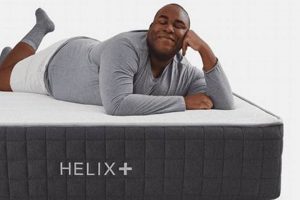
The most suitable sleep surface for a powered bed frame is a mattress engineered to conform easily to the various positions the bed can assume. These mattresses are crafted to provide consistent support and comfort, even when the bed is inclined or declined. The ability to bend and flex without compromising structural integrity or comfort is a defining characteristic.
Selecting an appropriate mattress is crucial for maximizing the benefits of an adjustable bed. It ensures proper spinal alignment, reduces pressure points, and enhances overall sleep quality. Historically, innerspring mattresses presented challenges for adjustable beds due to their rigidity. However, advancements in materials and construction have led to options specifically designed for compatibility and enhanced performance.
The following sections will explore the various mattress types that are well-suited for powered bed frames, focusing on their materials, construction, and performance characteristics. Key considerations such as flexibility, support, durability, and motion isolation will be addressed to provide a comprehensive guide for informed decision-making.
Selecting the Ideal Mattress
Choosing a mattress for a powered bed frame requires careful consideration. The aim is to optimize both comfort and the functionality of the adjustable base.
Tip 1: Prioritize Flexibility: A mattress must readily conform to the bed’s articulation. Latex, memory foam, and hybrid models designed for adjustable beds generally exhibit sufficient flexibility.
Tip 2: Evaluate Mattress Height: Excessively thick mattresses may hinder the bed’s articulation or create discomfort. Conversely, overly thin mattresses may compromise support. A moderate thickness is typically optimal.
Tip 3: Consider Material Durability: The constant flexing of an adjustable bed places stress on the mattress. Selecting materials known for their resilience, such as high-density foam or reinforced coils, is essential for longevity.
Tip 4: Examine Edge Support: Adequate edge support prevents sagging and facilitates easier transitions in and out of bed, particularly when the bed is in a raised position.
Tip 5: Assess Motion Isolation: If sharing the bed, motion isolation becomes a crucial factor. Memory foam and individually wrapped coils excel at minimizing motion transfer.
Tip 6: Review Warranty and Return Policies: Before purchase, thoroughly review the manufacturer’s warranty and return policies. These policies provide recourse in the event of unexpected performance issues or dissatisfaction.
Tip 7: Check for Adjustable Bed Compatibility: Some manufacturers specifically label mattresses as compatible with adjustable bed frames. These models have undergone testing to ensure optimal performance and durability.
Selecting the appropriate mattress for a powered bed enhances comfort, extends mattress lifespan, and ensures seamless integration with the adjustable base’s functionality. Careful evaluation of flexibility, durability, and compatibility is crucial for achieving optimal results.
The following sections will provide a conclusion and some common mistakes of this article.
1. Flexibility

Flexibility is a paramount characteristic when determining an appropriate mattress for an adjustable bed frame. The capacity of the mattress to conform seamlessly to the various positions assumed by the adjustable base directly impacts comfort, support, and the longevity of the mattress itself.
- Conformity to Articulation
A mattress must readily bend and flex in response to the adjustments of the bed frame. Insufficient flexibility can result in the mattress resisting the articulation, leading to discomfort for the sleeper and potentially causing undue stress on the frame’s motor mechanisms. Mattresses with minimal give may create pressure points as they fail to distribute weight evenly across the adjusted surface.
- Material Composition
The inherent flexibility of a mattress is significantly influenced by its constituent materials. Latex and memory foam, particularly those formulated for enhanced flexibility, are frequently employed in mattresses intended for adjustable beds. In contrast, traditional innerspring mattresses, especially those with a high coil count or rigid border wires, generally exhibit limited flexibility and are less suitable for this application.
- Structural Integrity
While flexibility is essential, it must not compromise the structural integrity of the mattress. A mattress that deforms excessively or permanently under the stress of repeated adjustments will exhibit reduced support and a diminished lifespan. Manufacturers often employ specialized construction techniques, such as segmented foam layers or reinforced edges, to balance flexibility with overall durability.
- Impact on Pressure Relief
The flexibility of a mattress directly affects its ability to provide adequate pressure relief in various bed positions. A conforming mattress distributes weight more evenly, reducing pressure on sensitive areas such as the shoulders and hips. This is particularly important for individuals with conditions such as arthritis or back pain, where pressure relief is crucial for maintaining comfort and promoting restful sleep.
In summation, the selection of a mattress with suitable flexibility is not merely a matter of convenience, but a fundamental requirement for maximizing the benefits of an adjustable bed. The material composition, structural design, and ability to conform without compromising support are all critical factors to consider. Choosing a mattress that effectively balances these characteristics ensures a comfortable, supportive, and durable sleep surface that integrates seamlessly with the adjustable frame.
2. Support

Adequate support is a foundational requirement in any mattress, and its significance is amplified when paired with an adjustable bed frame. The primary function of a mattress is to maintain proper spinal alignment, regardless of the sleeping position. When an adjustable bed is inclined or declined, the distribution of weight shifts, altering pressure points. A lack of sufficient support in this dynamic environment can lead to discomfort, pain, and, over time, musculoskeletal issues. For instance, individuals with pre-existing back problems may find that an inadequately supportive mattress exacerbates their condition when the bed is in a raised position, due to increased pressure on the lumbar region. Conversely, a mattress engineered with zoned support can provide targeted reinforcement to areas requiring it most, such as the lower back, thereby mitigating these adverse effects. The choice of materials, such as high-density foam or a strategically arranged coil system, directly
influences the level and type of support offered.
The support structure of a mattress also affects its longevity when used with an adjustable bed. The constant flexing and repositioning place stress on the mattress’s internal components. A poorly constructed mattress, lacking robust edge support or a durable core, is more likely to sag or deform over time, particularly in areas that experience high compression. Consider a scenario where the head of the bed is frequently elevated for reading or watching television. The portion of the mattress supporting the torso is subjected to increased pressure. If the mattress lacks sufficient support in this region, it will gradually compress, leading to a less comfortable and less supportive sleeping surface. Furthermore, this uneven wear can compromise the mattress’s ability to properly conform to the adjustable base, potentially hindering the bed’s functionality.
In conclusion, support is not merely a desirable attribute but a critical element in a mattress designed for use with an adjustable bed. The ability to maintain spinal alignment, distribute weight effectively, and withstand the stresses imposed by frequent adjustments directly impacts the user’s comfort, health, and the mattress’s lifespan. While factors such as material composition and construction techniques contribute to the overall support, the ultimate goal remains consistent: to provide a stable and ergonomically sound sleep surface that adapts to the dynamic positioning of the adjustable bed frame. Ignoring this fundamental requirement compromises the benefits offered by adjustable bed technology.
3. Durability

The longevity of a mattress used in conjunction with an adjustable bed frame is intrinsically linked to its construction and materials. The repeated articulation of the bed places stress on the mattress that a standard mattress might not encounter. This constant flexing and bending can accelerate wear and tear, potentially shortening the mattress’s lifespan if it is not built to withstand these forces. A mattress lacking durability may exhibit sagging, deformation, or separation of layers, negatively impacting both comfort and support. For instance, a memory foam mattress with a low-density base layer might compress prematurely, leading to uneven support and reduced pressure relief. Choosing a mattress engineered for adjustable bed compatibility is therefore crucial for long-term performance.
The materials used in the mattress significantly contribute to its ability to endure the demands of an adjustable bed. High-density foams, reinforced coil systems, and durable upholstery fabrics are all indicators of a robust and resilient product. Consider a hybrid mattress with individually wrapped coils and a high-density foam encasement; this construction provides both targeted support and enhanced durability, minimizing motion transfer and preventing edge sagging. Furthermore, mattresses designed with reinforced seams and durable binding are less likely to exhibit separation or tearing along stress points. The investment in a mattress with these attributes translates to a prolonged lifespan and sustained comfort.
In summation, the durability of a mattress for an adjustable bed is not merely a desirable feature, but a practical necessity. The constant movement and articulation of the adjustable base exert unique forces that can compromise the integrity of a poorly constructed mattress. By prioritizing mattresses with robust materials, reinforced construction, and designs specifically tailored for adjustable bed compatibility, consumers can ensure a lasting investment that delivers sustained comfort and support over time. A well-chosen, durable mattress maximizes the benefits of an adjustable bed, providing years of comfortable and restful sleep.
4. Thickness

Mattress thickness directly influences performance on an adjustable bed frame. Height affects ease of use, support, and articulation. A mattress that is too thick may impede the adjustable base’s range of motion or create a sense of instability, hindering proper positioning. Conversely, an excessively thin mattress might compromise support, leading to discomfort and potentially reducing the lifespan of both the mattress and the adjustable frame. For instance, a very thick pillow-top mattress could prevent the bed from achieving steeper angles, while a thin mattress might not provide adequate cushioning for pressure points when the bed is inclined. Proper thickness is, therefore, a mediating factor in realizing the intended ergonomic benefits.
Selecting appropriate thickness also addresses practical considerations such as bed height. The combination of the adjustable base and mattress height determines the ease with which an individual can enter and exit the bed. This is particularly relevant for individuals with mobility issues. A bed that is too high or too low can create difficulties and increase the risk of falls. Most adjustable bed frames add several inches to the overall height. If the mattress is also excessively thick, the resulting bed height may be unsuitable. Conversely, a thinner mattress can provide a lower profile, making it easier to access the bed. Examples in practice involve individuals recuperating from surgery, who might require a lower bed for ease of access, or older adults who may find a standard bed height difficult to manage.
In summary, mattress thickness is not an independent variable but rather an integral component of an effective sleep system involving an adjustable bed. Choosing the correct height ensures optimal articulation, ease of access, and appropriate support, contributing to a comfortable and functional experience. Ignoring thickness leads to diminished performance, creating both discomfort and potential hazards. It demands deliberate consideration to achieve harmony between the adjustable frame and the sleeping surface.
5. Material

The material composition of a mattress is paramount in determining its suitability for an adjustable bed frame. The ability of the mattress to conform to the various positions assumed by the bed without compromising comfort or structural integrity is directly influenced by the materials employed. Inadequate material selection can result in diminished functionality, reduced lifespan, and compromised sleep quality. For instance, a traditional innerspring mattress with a rigid border wire may resist articulation, creating pressure points and hindering the adjustable bed’s intended ergonomic benefits. Conversely, materials like latex and memory foam offer the flexibility necessary for seamless adaptation to the bed’s contours.
Specific material characteristics dictate the overall performance. Latex, known for its natural elasticity and durability, readily conforms to the adjustable base while maintaining its shape and support over time. Memory foam, particularly formulations designed for increased flexibility, offers pressure relief and motion isolation, critical for couples using adjustable beds. Hybrid mattresses, combining the benefits of both innerspring coils and foam layers, can also be suitable, provided the coil system is designed to flex independently and the foam layers are sufficiently pliable. Examples of material-related issues include: early sagging in low-density memory foam, the formation of creases in improperly cons
tructed hybrids, and the development of pressure points in rigid innerspring models. Awareness of material properties and their interaction with adjustable bases is therefore crucial for optimal mattress selection.
In conclusion, the choice of materials directly governs the performance and longevity of a mattress on an adjustable bed. Prioritizing flexible, durable, and supportive materials such as latex, memory foam (specifically designed for articulation), or carefully constructed hybrids is essential for maximizing the benefits of adjustable bed technology. Neglecting the material factor leads to compromised comfort, reduced functionality, and a shorter lifespan for the mattress. Selecting a material compatible with adjustable beds is a prerequisite for a worthwhile investment.
6. Motion Isolation

Motion isolation, a critical attribute in mattress design, assumes heightened significance when considering the optimal sleep surface for an adjustable bed. The capacity of a mattress to minimize the transfer of movement is essential for undisturbed rest, particularly when the bed is shared or when using the adjustable features causes shifts in weight and pressure.
- Minimizing Partner Disturbance
An adjustable bed, while offering individual comfort customization, can inadvertently amplify motion transfer if the mattress lacks adequate motion isolation. When one partner adjusts their side of the bed, or simply moves during sleep, the resulting vibrations can easily transmit across the mattress, disturbing the other partner. Mattresses with superior motion isolation properties, such as memory foam or individually wrapped coils, mitigate this effect, ensuring both sleepers remain undisturbed.
- Adjustable Bed Articulation and Motion Transfer
The very act of adjusting an adjustable bed can create motion, especially if one partner remains stationary while the other alters their position. A mattress with poor motion isolation will readily transmit the shifting weight and movements, potentially causing discomfort or awakening the stationary partner. Mattresses designed with motion-isolating materials absorb these movements, providing a more stable and comfortable sleeping surface.
- Material Composition and Motion Absorption
The materials used in mattress construction significantly impact motion isolation capabilities. Memory foam, with its dense, viscous properties, excels at absorbing and dissipating motion. Similarly, individually wrapped coils, each functioning independently, minimize the transfer of movement compared to interconnected coil systems. In contrast, traditional innerspring mattresses often exhibit higher levels of motion transfer, making them less suitable for adjustable beds shared by two people.
- Enhanced Sleep Quality and Restfulness
Effective motion isolation contributes directly to improved sleep quality. By minimizing disturbances caused by a partner’s movements or adjustments to the bed, individuals are less likely to experience interruptions in their sleep cycles. This results in deeper, more restful sleep, leading to improved overall health and well-being. For those seeking to maximize the benefits of an adjustable bed, prioritizing motion isolation is essential for creating a truly optimized sleep environment.
In conclusion, motion isolation is an indispensable consideration when selecting the ideal mattress for an adjustable bed. Its ability to minimize partner disturbance, absorb movement during articulation, and contribute to enhanced sleep quality significantly elevates the overall sleep experience. A mattress with superior motion isolation transforms an adjustable bed from a mere convenience into a haven of undisturbed, personalized comfort.
7. Compatibility

The term compatibility, when applied to mattresses intended for use with adjustable bed frames, encompasses the degree to which the mattress integrates functionally and structurally with the base. Ensuring a high degree of compatibility is paramount to realizing the intended benefits of an adjustable bed system.
- Dimensional Harmony
Accurate dimensional matching between the mattress and the adjustable base is fundamental. A mattress that is excessively wide or long may overhang the base, impeding articulation and causing discomfort. Conversely, a mattress that is too small may shift excessively during adjustments, leading to instability and uneven support. Precise adherence to the manufacturer’s recommended dimensions ensures proper alignment and unimpeded functionality.
- Flexural Adaptation
Adjustable beds rely on the mattress’s ability to conform to various angles and contours without experiencing structural stress or impedance of movement. A mattress lacking sufficient flexibility may resist articulation, placing undue strain on the adjustable base’s motors and potentially compromising the range of motion. Materials such as latex and memory foam are often favored due to their inherent pliability, which facilitates seamless adaptation to the bed’s positions.
- Weight Distribution Synchronization
Adjustable bed frames are engineered to distribute weight evenly across the mattress surface, regardless of the angle of inclination. Incompatible mattresses may exhibit uneven weight distribution, resulting in localized pressure points and reduced support. This is particularly critical in areas such as the lumbar region and shoulders, where proper alignment is essential for minimizing discomfort. Compatibility, therefore, necessitates a mattress design that maintains consistent support across its entire surface during all phases of articulation.
- Operational Clearance
The space between the mattress edge and the bed frame’s moving parts is a crucial factor in assessing compatibility. Insufficient clearance can lead to friction, noise, and potential damage to both the mattress and the adjustable base. Manufacturers often specify minimum clearance requirements to ensure unimpeded operation and prevent premature wear. Ignoring these specifications can result in compromised functionality and a reduced lifespan for the entire system.
Optimal performance of an adjustable bed hinges on careful consideration of mattress compatibility. Dimensional precision, flexural adaptation, weight distribution synchronization, and operational clearance collectively contribute to a seamless and ergonomically sound sleep environment. Selecting a mattress specifically designed and tested for compatibility with adjustable bases ensures long-term comfort, support, and operational reliability.
Frequently Asked Questions
The subsequent questions address common concerns and misconceptions regarding mattress selection for adjustable bed frames, providing clear and concise information to aid in making informed decisions.
Question 1: What type of mattress is generally most suitable for an adjustable bed?
Memory foam and latex mattresses are frequently recommended due to their inherent flexibility and ability to conform to the adjustable base’s contours. Hybrid mattresses with individually wrapped coils can also be suitable, provided they are designed for articulation.
Question 2: Does the mattress thickness impact the performance of an adjustable bed?
Yes, mattress thickness can affect the adjustable bed’s functionality. Excessively thick mattresses may impede the range of motion, while overly thin mattresses may compromise support. A moderate thickness is typically optimal.
Question 3: Is a standard innerspring mattress compatible with an adjustable bed?
Traditional innerspring mattresses, particularly those with rigid border wires, generally exhibit limited flexibility and are less suitable for adjustable beds. The lack of conformity can lead to discomfort and potential damage to the mattress or bed frame.
Question 4: How important is motion isolation in a mattress for an adjustable bed?
Motion isolation is crucial, especially for couples sharing an adjustable bed. The adjustable features can amplify motion transfer, so a mattress with good motion isolation properties, such as memory foam, is essential for undisturbed sleep.
Question 5: What should be considered regarding the warranty when buying a mattress for an adjustable bed?
The warranty should be carefully reviewed to ensure it covers use with an adjustable base. Some warranties may be voided if the mattress is used with an incompatible adjustable frame. Verify the terms and conditions related to adjustable bed compatibility.
Question 6: Are there specific mattresses marketed as “adjustable bed compatible?”
Yes, many manufacturers specifically label mattresses as compatible with adjustable bed frames. These models have undergone testing to ensure optimal performance and durability when used with adjustable bases. Seeking out these models provides added assurance of compatibility.
Selecting an optimal mattress necessitates careful evaluation of mattress type, thickness, motion isolation, and warranty, and adjustable bed frame.
The following sections will provide a conclusion and common pitfalls to avoid when selecting mattresses for adjustable beds.
Determining the Optimal Mattress for an Adjustable Bed
The preceding analysis underscores the importance of careful consideration when selecting a mattress for an adjustable bed frame. Compatibility, flexibility, support, durability, thickness, material composition, and motion isolation are all critical factors influencing the long-term performance and user satisfaction of the combined system. Neglecting any of these aspects risks compromising the ergonomic benefits and potential lifespan of both the mattress and the adjustable base. The most appropriate sleep surface represents a harmonious balance of these characteristics.
Ultimately, the selection of a mattress demands a comprehensive understanding of individual sleep preferences, physical requirements, and the technical specifications of the adjustable bed frame. Future innovations in material science and mattress design may further enhance the compatibility and performance of these systems, leading to increasingly personalized and optimized sleep experiences. Continued research and informed consumer choices are essential for realizing the full potential of adjustable bed technology.
![Top Best Affordable Mattress Companies of [Year] Reviewed | Organic & Natural Mattress Buyer’s Guide: Non-Toxic Sleep Solutions](https://mattressworldpa.com/wp-content/uploads/2025/07/th-7840-300x200.jpg "Top Best Affordable Mattress Companies of [Year] Reviewed Organic & Natural Mattress Buyer’s Guide: Non-Toxic Sleep Solutions")

![Top-Rated: Best Firm Innerspring Mattress [Guide & Reviews] | Organic & Natural Mattress Buyer’s Guide: Non-Toxic Sleep Solutions](https://mattressworldpa.com/wp-content/uploads/2025/07/th-7838-300x200.jpg "Top-Rated: Best Firm Innerspring Mattress [Guide & Reviews] Organic & Natural Mattress Buyer’s Guide: Non-Toxic Sleep Solutions")

![Top Spots: Best Place to Buy Twin Mattress [Guide] | Organic & Natural Mattress Buyer’s Guide: Non-Toxic Sleep Solutions](https://mattressworldpa.com/wp-content/uploads/2025/07/th-7836-300x200.jpg "Top Spots: Best Place to Buy Twin Mattress [Guide] Organic & Natural Mattress Buyer’s Guide: Non-Toxic Sleep Solutions")