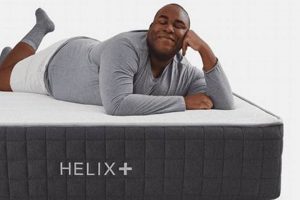
A sleeping surface specifically designed to support the spinal alignment of individuals who primarily rest on their backs can significantly impact sleep quality and overall well-being. These mattresses often incorporate features such as medium-firm support and targeted lumbar support to minimize pressure points and maintain the natural curvature of the spine during sleep. For example, a mattress with zoned support and a layer of memory foam can contour to the body while preventing excessive sinking.
The suitability of a sleep surface for individuals who favor supine positioning is vital for preventing back pain and promoting healthy posture. Historically, inadequate sleeping surfaces have been linked to discomfort and chronic pain issues. The selection of an appropriate mattress can contribute to improved sleep duration, reduced muscle stiffness, and enhanced recovery from physical activities. Moreover, optimized spinal alignment during sleep can positively influence daytime energy levels and overall physical health.
The following sections will explore various mattress types, materials, and features that are generally considered advantageous for back sleepers, including detailed analysis of firmness levels, support structures, and pressure relief capabilities. The information presented aims to guide informed decision-making in the selection of a suitable sleeping surface.
Essential Considerations for Supine Sleepers
Selecting a mattress that accommodates the specific needs of supine sleepers is crucial for ensuring proper spinal alignment and minimizing discomfort. The following tips provide guidance on key features to consider during the mattress selection process.
Tip 1: Evaluate Firmness Levels. A medium-firm to firm mattress is generally recommended to provide adequate support and prevent excessive sinking of the hips, maintaining a neutral spinal alignment. Individuals should assess their weight and body type when determining the ideal firmness level.
Tip 2: Prioritize Lumbar Support. Mattresses with enhanced lumbar support features can help maintain the natural curvature of the lower back, reducing strain and preventing pain. Look for models with zoned support or adjustable firmness in the lumbar region.
Tip 3: Consider Material Composition. Memory foam, latex, and hybrid mattresses can all be suitable options. Memory foam conforms to the body’s contours, while latex offers a more responsive and buoyant feel. Hybrid mattresses combine the benefits of both coil support and comfort layers.
Tip 4: Assess Pressure Relief Capabilities. Adequate pressure relief is essential to minimize discomfort at pressure points such as the shoulders and hips. Materials like memory foam and gel-infused foams can help distribute weight and reduce pressure build-up.
Tip 5: Check Edge Support. Strong edge support can prevent sagging around the perimeter of the mattress, providing a more consistent sleeping surface and facilitating easier getting in and out of bed. Reinforced edges are particularly important for couples sharing a bed.
Tip 6: Review Sleep Trial Policies. A trial period allows individuals to test a mattress at home and determine if it meets their specific needs. Reputable manufacturers typically offer sleep trials with a full refund if the mattress is not satisfactory.
These considerations emphasize the importance of careful evaluation and research when selecting a mattress. Prioritizing spinal alignment, pressure relief, and individual preferences will significantly enhance sleep quality and overall well-being.
The subsequent section will delve into specific mattress recommendations based on various factors, providing further guidance for making an informed purchase decision.
1. Firmness and Support

Firmness and support are paramount considerations in the selection of a mattress suited for individuals who sleep on their backs. The primary objective is to maintain the natural curvature of the spine, preventing both excessive sinking and inadequate support. A mattress that is too soft allows the hips to sag, leading to spinal misalignment and potential lower back pain. Conversely, a mattress that is excessively firm may create pressure points along the spine, resulting in discomfort and restlessness. Therefore, the balance between firmness and support is crucial for optimal spinal alignment.
The ideal firmness level for a back sleeper often falls within the medium-firm range. This level provides sufficient support to prevent spinal curvature while offering enough cushioning to alleviate pressure points. For instance, a memory foam mattress with a medium-firm density can conform to the body’s contours, distributing weight evenly and reducing pressure on the hips and shoulders. Alternatively, a hybrid mattress combining innerspring coils with a comfort layer of latex or foam can offer both support and responsiveness, adapting to the individual’s body weight and sleeping position. Real-world examples demonstrate that individuals transitioning from a softer mattress to a medium-firm model often report reduced back pain and improved sleep quality.
In conclusion, firmness and support are integral components in determining the suitability of a mattress for back sleepers. Selecting a mattress that strikes the right balance between these factors is essential for maintaining proper spinal alignment, minimizing discomfort, and promoting restorative sleep. The practical significance of understanding this connection lies in empowering consumers to make informed decisions that prioritize their spinal health and overall well-being. While individual preferences and body types may influence the ideal firmness level, prioritizing support and spinal alignment remains a central consideration.
2. Spinal Alignment

The connection between spinal alignment and mattress selection for supine sleepers is fundamental to musculoskeletal health. When an individual rests on their back, the mattress must adequately support the natural curves of the spine to prevent undue stress on the vertebrae, muscles, and ligaments. A misaligned spine during sleep can lead to chronic back pain, stiffness, and potentially exacerbate pre-existing spinal conditions. The purpose of a suitable mattress is to uniformly distribute body weight, minimizing pressure points and preserving the spines natural S shape. For example, a mattress that allows the hips to sink excessively can cause the lower back to arch unnaturally, leading to discomfort. Conversely, a mattress that is too firm may not conform to the body’s contours, placing undue pressure on prominent bony areas.
Achieving optimal spinal alignment requires a mattress that provides the appropriate level of support and cushioning. A medium-firm mattress is often recommended, as it offers a balance between support and pressure relief. However, individual needs may vary
based on body weight, sleeping habits, and any existing spinal issues. For instance, individuals with scoliosis or herniated discs may require specialized mattresses designed to provide targeted support. The effectiveness of a mattress in maintaining spinal alignment can be assessed by observing the individuals posture while lying supine. If the spine appears straight and the natural curves are supported, the mattress is likely contributing positively to spinal health. In instances where misalignment is evident, alternative mattress options should be explored.
In summary, the correlation between spinal alignment and mattress choice for back sleepers is direct and impactful. Selection of a mattress designed to maintain the spine’s natural curvature is essential for promoting musculoskeletal health and preventing back pain. Understanding this relationship enables consumers to make informed decisions, prioritizing spinal alignment as a primary factor in mattress selection. The challenge lies in identifying the specific mattress characteristics that best address individual needs, underscoring the importance of thorough research, professional recommendations, and trial periods when selecting a sleeping surface.
3. Pressure Relief

Pressure relief is a critical consideration in mattress design, particularly for individuals who primarily sleep on their backs. Mattresses that adequately alleviate pressure prevent the formation of pressure points, which can disrupt sleep and cause discomfort. When a supine sleeper’s weight is not evenly distributed across the mattress surface, concentrated pressure can build up at areas like the shoulders, hips, and heels. This localized pressure restricts blood flow, leading to tossing and turning as the body attempts to relieve the discomfort. A mattress designed with pressure-relieving materials and construction helps to evenly distribute weight, preventing these pressure points from developing and promoting uninterrupted sleep.
Materials such as memory foam and latex are frequently incorporated into mattresses to enhance pressure relief. Memory foam conforms to the sleeper’s body, cushioning and distributing weight. Latex, while also conforming, offers a more responsive feel and can provide additional support. Hybrid mattresses, which combine innerspring coils with foam layers, aim to balance support and pressure relief. A mattress with strategically placed zones of varying firmness can further optimize pressure relief by providing targeted support to different areas of the body. For example, a zoned mattress might feature a softer zone for the shoulders and a firmer zone for the hips, ensuring optimal spinal alignment and pressure distribution.
In summation, pressure relief is an integral aspect of mattress selection for back sleepers. A mattress that effectively minimizes pressure points contributes to improved sleep quality, reduced pain, and enhanced overall well-being. Understanding the role of different materials and mattress construction techniques in achieving pressure relief empowers consumers to make informed decisions that prioritize their comfort and spinal health. The continuing development of new mattress technologies underscores the ongoing importance of pressure relief in mattress design and its impact on sleep satisfaction.
4. Material Quality

The selection of materials used in mattress construction directly impacts its performance and suitability for individuals who sleep on their backs. The long-term durability, support, and comfort characteristics of a mattress are intrinsically linked to the quality of its constituent components.
- Foam Density and Durability
High-density foams, such as memory foam or latex, offer enhanced support and resistance to compression over time. Low-density foams may initially feel comfortable but are prone to sagging and losing their shape, compromising spinal alignment and increasing the risk of back pain. For example, a high-density memory foam mattress retains its contouring properties for a longer period compared to a low-density counterpart, providing consistent support for supine sleepers.
- Coil Construction and Gauge
In hybrid mattresses, the type and gauge of coils play a crucial role in providing support and preventing sagging. Individually wrapped coils or pocketed coils conform to the body’s contours independently, minimizing motion transfer and offering targeted support. Lower gauge coils (thicker coils) generally provide firmer support and are more durable compared to higher gauge coils. A mattress with a robust coil system maintains its structural integrity, ensuring consistent spinal support for back sleepers over its lifespan.
- Cover Fabric and Breathability
The fabric used for the mattress cover influences breathability and moisture-wicking properties. Natural fibers such as cotton or wool promote airflow and help regulate temperature, preventing overheating and maintaining a comfortable sleeping environment. Synthetic fabrics may trap heat and moisture, potentially leading to discomfort and skin irritation. A breathable mattress cover enhances sleep quality by promoting a cool and dry sleeping surface, which is particularly beneficial for back sleepers who tend to sleep closer to the mattress surface.
- Adhesives and Certifications
The types of adhesives used in mattress construction can impact both its durability and potential off-gassing. Water-based adhesives are generally considered safer than solvent-based adhesives, as they emit fewer volatile organic compounds (VOCs). Certifications such as CertiPUR-US ensure that the foam used in the mattress has been tested for harmful chemicals and meets specific standards for emissions, durability, and content. Choosing a mattress with relevant certifications can minimize exposure to potentially harmful substances and ensure a healthier sleeping environment.
These material considerations are integral to assessing the overall quality of a mattress intended for back sleepers. A well-constructed mattress using high-quality materials offers enhanced support, durability, and comfort, contributing to improved spinal alignment and reduced risk of back pain. The longevity and performance of a mattress are directly related to the quality of its components, making material selection a critical aspect of the purchasing decision.
5. Long-Term Durability
The sustained performance of a mattress is a critical factor for individuals who prioritize back support during sleep. A durable mattress maintains its structural integrity and support characteristics over an extended period, directly influencing spinal alignment and pressure relief. The gradual degradation of materials can lead to sagging, uneven support, and the development of pressure points, undermining the benefits of a mattress initially deemed suitable. Therefore, the correlation between longevity and ongoing support is a primary consideration in the selection of a mattress designed for back sleepers. For example, a mattress exhibiting premature sagging in the lumbar region fails to provide the necessary support for maintaining the natural curvature of the spine, potentially exacerbating
back pain.
Material composition and construction techniques are key determinants of mattress durability. High-density foams, robust coil systems, and reinforced edges contribute to the overall lifespan of a mattress. Mattresses utilizing low-quality materials are more susceptible to compression, deformation, and breakdown, resulting in a diminished capacity to provide consistent support. Practical implications of this connection are evident in the warranty periods offered by manufacturers; extended warranties often reflect a higher level of confidence in the product’s long-term performance. Furthermore, regular rotation of the mattress, as recommended by manufacturers, can help distribute wear and tear more evenly, prolonging its lifespan and maintaining its support characteristics.
In conclusion, the long-term durability of a mattress is inextricably linked to its ability to provide sustained support and comfort for back sleepers. The selection of a mattress constructed from high-quality materials and designed to resist degradation is essential for maintaining spinal alignment and minimizing the risk of back pain over time. Recognizing the importance of longevity empowers consumers to make informed purchasing decisions, prioritizing lasting performance and value over initial cost savings. The ongoing advancements in mattress technology should continue to focus on enhancing durability, ensuring that mattresses provide reliable support throughout their intended lifespan.
Frequently Asked Questions About Mattresses for Supine Sleepers
The following section addresses common inquiries regarding mattresses specifically designed for individuals who sleep on their backs. The information provided aims to clarify key aspects and assist in making informed purchasing decisions.
Question 1: What firmness level is generally recommended for back sleepers?
A medium-firm mattress is often advised to maintain spinal alignment. This firmness level provides adequate support to prevent excessive sinking of the hips while offering sufficient cushioning to alleviate pressure points.
Question 2: How does mattress material impact spinal support for supine sleepers?
Material selection influences spinal support and pressure relief. Memory foam conforms to the body’s contours, distributing weight evenly. Latex offers a more responsive and buoyant feel, while hybrid mattresses combine the benefits of coil support and comfort layers.
Question 3: What is the significance of lumbar support in a mattress for back sleepers?
Enhanced lumbar support helps maintain the natural curvature of the lower back, reducing strain and preventing pain. Mattresses with zoned support or adjustable firmness in the lumbar region can be beneficial.
Question 4: How can pressure relief capabilities be assessed when selecting a mattress?
Adequate pressure relief minimizes discomfort at pressure points such as the shoulders and hips. Materials like memory foam and gel-infused foams help distribute weight and reduce pressure build-up.
Question 5: Why is edge support important, and how does it affect sleep quality?
Strong edge support prevents sagging around the perimeter of the mattress, providing a more consistent sleeping surface. Reinforced edges are particularly important for couples sharing a bed.
Question 6: How can a sleep trial policy assist in determining if a mattress is suitable?
A sleep trial allows individuals to test a mattress at home and determine if it meets their specific needs. Reputable manufacturers typically offer sleep trials with a full refund if the mattress is not satisfactory.
Understanding these key considerations facilitates a more informed mattress selection process, ultimately contributing to improved sleep quality and spinal health.
The subsequent section will provide a summary of the key takeaways from this discussion, reinforcing the essential factors to consider when choosing a mattress for supine sleeping.
Conclusion
This exploration of the characteristics defining the best mattress for back sleepers emphasizes the critical role of firmness, support, material composition, and long-term durability in promoting spinal health and sleep quality. The selection process necessitates a thorough evaluation of these factors to ensure the chosen mattress aligns with individual needs and preferences. Failure to prioritize these aspects can lead to discomfort, pain, and compromised sleep quality.
Ultimately, the selection of a sleeping surface tailored to supine sleeping is an investment in long-term well-being. Individuals are encouraged to leverage the information provided to make informed decisions that prioritize both comfort and spinal alignment. Ongoing research and advancements in mattress technology offer the potential for further refinements in design and materials, continually improving the sleep experience for back sleepers. Continued diligence in understanding these advancements remains paramount for optimal sleep health.
![Top Best Affordable Mattress Companies of [Year] Reviewed | Organic & Natural Mattress Buyer’s Guide: Non-Toxic Sleep Solutions](https://mattressworldpa.com/wp-content/uploads/2025/07/th-7840-300x200.jpg "Top Best Affordable Mattress Companies of [Year] Reviewed Organic & Natural Mattress Buyer’s Guide: Non-Toxic Sleep Solutions")

![Top-Rated: Best Firm Innerspring Mattress [Guide & Reviews] | Organic & Natural Mattress Buyer’s Guide: Non-Toxic Sleep Solutions](https://mattressworldpa.com/wp-content/uploads/2025/07/th-7838-300x200.jpg "Top-Rated: Best Firm Innerspring Mattress [Guide & Reviews] Organic & Natural Mattress Buyer’s Guide: Non-Toxic Sleep Solutions")

![Top Spots: Best Place to Buy Twin Mattress [Guide] | Organic & Natural Mattress Buyer’s Guide: Non-Toxic Sleep Solutions](https://mattressworldpa.com/wp-content/uploads/2025/07/th-7836-300x200.jpg "Top Spots: Best Place to Buy Twin Mattress [Guide] Organic & Natural Mattress Buyer’s Guide: Non-Toxic Sleep Solutions")