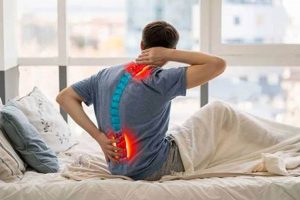
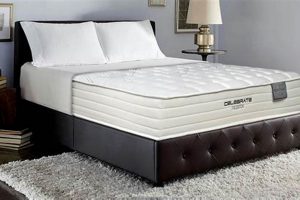
The phrase identifies a sleep surface designed to minimize pressure points and maintain proper spinal alignment. Selection depends on individual factors like sleeping position, body weight, and any pre-existing back conditions. A mattress optimized for postural health aims to distribute body weight evenly, preventing excessive sinking or uncomfortable pressure.
Selecting a mattress that promotes correct spinal alignment offers numerous benefits, including reduced back pain, improved sleep quality, and decreased tossing and turning during the night. Historically, options were limited, but contemporary advancements in materials and construction techniques have led to a wider variety of choices tailored to different needs and preferences. Prioritizing this aspect of sleep setup contributes to overall well-being.
The following discussion explores the key factors in choosing a suitable sleep surface. The assessment of firmness levels, material types, and specific design features will provide a detailed understanding of what to consider when selecting a mattress that supports a healthy spine.
Tips for Selecting a Mattress for Optimal Postural Support
Choosing a mattress requires careful consideration of several factors to ensure adequate support and comfort. These tips offer guidance for making an informed decision based on individual needs and preferences.
Tip 1: Evaluate Firmness Level. The appropriate firmness depends on sleeping position and body weight. Back sleepers typically benefit from medium-firm support, while side sleepers often prefer a softer surface to alleviate pressure on the shoulders and hips. Stomach sleepers generally require a firmer option to prevent excessive sinking.
Tip 2: Consider Material Type. Memory foam, latex, innerspring, and hybrid mattresses each offer unique benefits. Memory foam contours to the body, providing pressure relief. Latex is naturally resilient and hypoallergenic. Innerspring mattresses offer traditional support with enhanced airflow. Hybrid mattresses combine the benefits of multiple materials.
Tip 3: Assess Spinal Alignment. Lie on the mattress in a natural sleeping position and have a partner check the alignment of the spine. The spine should maintain its natural curvature without excessive arching or sinking.
Tip 4: Review Edge Support. Strong edge support prevents sagging and provides a stable surface for sitting on the edge of the bed. This is particularly important for individuals with mobility issues or those who share a bed.
Tip 5: Investigate Layer Construction. The layers within a mattress contribute to overall comfort and support. Look for mattresses with a combination of support layers and comfort layers to achieve a balance of firmness and pressure relief.
Tip 6: Research Trial Periods and Warranties. A generous trial period allows ample time to assess the mattress’s suitability. A comprehensive warranty protects against manufacturing defects and premature wear.
Tip 7: Read Reviews and Ratings. Consult independent reviews and ratings from reputable sources to gain insights into the mattress’s performance and durability.
Following these tips enables a more informed purchasing decision, increasing the likelihood of selecting a mattress that promotes healthy spinal alignment and restful sleep. This contributes to reduced back pain and improved overall well-being.
The subsequent sections of this article will delve deeper into specific mattress types and features, providing further guidance for selecting the ideal option.
1. Firmness and support

Firmness and support are crucial determinants in identifying a mattress that effectively promotes spinal health. They directly influence postural alignment and pressure distribution, impacting sleep quality and back pain management.
- Firmness Levels and Sleeping Positions
Mattress firmness is typically categorized as soft, medium, firm, and extra firm. The ideal level is contingent on an individual’s preferred sleeping position. Side sleepers often benefit from a softer surface that allows the shoulders and hips to sink in slightly, maintaining spinal alignment. Back sleepers generally require a medium-firm mattress to provide adequate support while preventing excessive sinking. Stomach sleepers usually need a firmer mattress to minimize spinal curvature and prevent lower back strain. The impact on “best mattress for back support” is significant, given an improper mattress firmness can exacerbate back pain and lead to poor sleep quality.
- Core Support Systems
The core support system of a mattress, typically composed of innersprings, foam, or a hybrid of both, provides the foundational support that prevents sagging and ensures consistent spinal alignment. Innerspring systems offer a responsive feel and promote airflow, while foam cores, particularly high-density foams, provide enhanced contouring and pressure relief. Hybrid systems combine the benefits of both. For instance, a mattress for an individual weighing over 250 lbs may need a core with reinforced coils to avoid bottoming out and maintain support. “Best mattress for back support” depends heavily on a durable and appropriate core to maintain body weight and shape.
- Zoned Support
Zoned support systems feature varying levels of firmness across different areas of the mattress to provide targeted support to specific regions of the body. Firmer support in the lumbar region, for example, can help maintain proper spinal alignment for back sleepers, while softer support in the shoulder and hip regions can alleviate pressure points for side sleepers. These designs directly enhance the ability of a mattress to deliver a higher quality of “best mattress for back support”.
- Material Density and Durability
The density of materials used in the mattress construction significantly impacts its long-term durability and supportiveness. Higher-density foams and heavier-gauge innersprings are more resistant to compression and sagging, ensuring consistent support over time. Choosing materials with proven durability is vital. The density directly affects the longevity and sustained effectiveness in offering the “best mattress for back support”.
The interplay between firmness level, core support, zoned systems, and material density determines the effectiveness of a mattress in promoting spinal health. When selecting a sleep surface, careful consideration of these factors is essential for achieving optimal support and alleviating back pain, thus aligning with the concept of “best mattress for back support”.
2. Material composition

Material composition is a critical determinant in assessing the efficacy of a mattress designed for postural support. The
types of materials used directly impact the degree of support, pressure relief, and overall comfort provided. Mattresses constructed with high-density memory foam, for example, conform closely to the body, distributing weight evenly and reducing pressure points. Conversely, innerspring mattresses offer a firmer, more responsive feel, with varying coil counts and gauges influencing the level of support. Latex, either natural or synthetic, provides a balance of contouring and resilience. The appropriate material depends on individual needs and preferences; however, its selection is paramount in establishing the foundation for effective spinal alignment and therefore a “best mattress for back support”.
Consider a scenario involving two individuals with similar back pain symptoms. One individual chooses a mattress with a low-density foam core and a thin comfort layer. This mattress may initially feel comfortable, but the inadequate support leads to sagging and improper spinal alignment over time, exacerbating the back pain. The second individual selects a mattress with a high-density latex core and a zoned support system. The latex core provides consistent support, while the zoned system offers targeted pressure relief to different areas of the body. This mattress effectively promotes spinal alignment, reducing back pain and improving sleep quality. This example demonstrates the practical consequences of material selection. Hybrid mattresses combine various materials (e.g., innersprings with memory foam layers) attempting to provide a balance of support and comfort. The arrangement and quality of those layers determine the efficacy in promoting proper spinal alignment.
In summary, material composition is fundamental to realizing the goal of selecting a “best mattress for back support”. The appropriate materials, combined with thoughtful construction, contribute significantly to spinal alignment, pressure relief, and long-term comfort. However, challenges remain, as individual needs vary considerably, and accurate material information is often lacking. Continued research into material science and mattress design is essential for addressing these challenges and improving the selection process to offer genuinely effective options.
3. Spinal alignment

Spinal alignment is a fundamental biomechanical factor directly related to perceived comfort and mitigation of back pain during sleep. A mattress that facilitates natural spinal curvature while accommodating individual body contours is crucial for achieving restful and restorative sleep, the ultimate benchmark of a “best mattress for back support”.
- Neutral Spinal Posture
Maintaining neutral spinal posture involves minimizing excessive curvature or compression of the vertebral column. The spine has natural curves cervical, thoracic, and lumbar and a mattress should allow these to be supported without forcing the body into unnatural positions. For example, a mattress too soft might cause the hips to sink too low, creating excessive lumbar curvature and leading to morning back stiffness. A mattress failing to maintain neutral posture defeats the purpose of a “best mattress for back support”.
- Pressure Distribution and Support Zones
Effective spinal alignment relies on even pressure distribution across the sleep surface. High-pressure zones, particularly at the shoulders and hips for side sleepers, can misalign the spine and cause discomfort. Mattresses with zoned support, which provide varying levels of firmness across different areas, aim to address this issue by offering targeted support to specific body regions. Without proper zonal design, a mattress cannot realistically be called the “best mattress for back support”.
- Relationship to Sleeping Position
The optimal spinal alignment varies depending on sleeping position. Back sleepers typically require a mattress that supports the natural lumbar curve, while side sleepers need a mattress that allows the shoulders and hips to sink in sufficiently to maintain a straight spinal line. Stomach sleeping is generally discouraged due to the difficulty in maintaining proper alignment. Regardless, a mattress aiming to be the “best mattress for back support” must accommodate the individual’s preferred position by minimizing torsional stress on the spine.
- Impact on Musculoskeletal Health
Sustained spinal misalignment during sleep can contribute to chronic musculoskeletal issues, including muscle strain, nerve compression, and disc degeneration. A mattress that supports proper spinal alignment reduces stress on these structures, promoting long-term musculoskeletal health. Therefore, to have any legitimate claim, the “best mattress for back support” must promote musculoskeletal health by optimizing spinal alignment.
In essence, spinal alignment is a cornerstone of mattress performance in relation to back health. The degree to which a mattress supports neutral spinal posture, distributes pressure evenly, accommodates different sleeping positions, and promotes musculoskeletal health directly determines its suitability as the “best mattress for back support”. Accurate assessment of these factors is essential when choosing a mattress to alleviate back pain and enhance sleep quality.
4. Pressure relief

The alleviation of concentrated force on specific areas of the body during sleep is crucial for realizing optimal spinal health. Excessive pressure, particularly at the shoulders, hips, and knees, can disrupt circulation, leading to discomfort, tossing, and turning, ultimately hindering restful sleep. Pressure relief, therefore, becomes a defining characteristic of a sleep surface designed to provide adequate postural support. A mattress failing to address pressure accumulation cannot legitimately be considered conducive to spinal health or contribute to the concept of a “best mattress for back support”. The ability of a sleep surface to minimize pressure points allows for a more relaxed musculoskeletal system, reducing strain on the spine and surrounding tissues.
The efficacy of pressure relief directly influences the long-term health of the spine. Constant compression can exacerbate existing back pain and contribute to the development of new issues. For example, individuals with arthritis or fibromyalgia often experience heightened sensitivity to pressure. A mattress that effectively distributes weight and minimizes pressure points can significantly improve their comfort and reduce pain-related sleep disturbances. Conversely, a mattress with inadequate pressure relief can negate other supportive features, rendering it unsuitable even with otherwise beneficial attributes. The type of material, such as memory foam or latex, plays a critical role in a mattress’s ability to offer relief, as each responds differently to body weight and contours. Zoned construction, where different areas of the mattress offer varying levels of firmness, represents an additional strategy for targeting pressure relief to specific areas of concern.
Effective pressure relief is indispensable for a sleep surface aiming to promote spinal health. It directly alleviates discomfort, reduces sleep disturbances, and contributes to long-term musculoskeletal well-being. While the ideal degree of pressure relief is subjective and contingent on individual needs and preferences, its presence is essential for any mattress purporting to be a strong contender for the “best mattress for
back support” designation. The subsequent discussion will focus on practical considerations and selection criteria for mattresses offering the necessary balance of support and pressure alleviation.
5. Edge stability

Edge stability refers to the degree to which the perimeter of a mattress maintains its structural integrity under compression. Its role is significant for two primary reasons: usability of the entire sleep surface and ease of ingress and egress from the bed. Insufficient edge support compromises both, diminishing the overall effectiveness of the sleep surface for individuals seeking relief from or prevention of back pain. Therefore, edge support is essential when considering a “best mattress for back support”.
- Maximized Sleep Surface
Compromised edges result in a diminished usable sleep surface. Individuals sharing a bed are particularly affected, as they may be forced to migrate toward the center of the mattress to avoid the sensation of rolling off. This crowding can disrupt sleep and increase pressure on the spine, counteracting the benefits of a supportive sleep surface. A mattress touted as the “best mattress for back support” should provide stable edges, ensuring the entire surface is usable for both solo and co-sleepers.
- Facilitated Ingress and Egress
The ability to sit comfortably and stably on the edge of the bed is particularly important for individuals with mobility limitations or those recovering from injuries. Weak edges can make getting in and out of bed difficult and potentially hazardous. A mattress claiming to be a “best mattress for back support” must offer sufficient edge reinforcement for safe and easy transitions.
- Enhanced Structural Integrity
Strong edges contribute to the overall structural integrity of the mattress. Mattresses with reinforced edges are less likely to sag or deform over time, maintaining consistent support across the entire surface. This ensures that the mattress continues to provide the intended level of postural support, a crucial feature for a “best mattress for back support”.
- Reduced Motion Transfer
While primarily associated with internal construction, edge support indirectly influences motion transfer. A stable edge minimizes the ripple effect of movement across the mattress, reducing disturbances for co-sleepers. This can lead to improved sleep quality and a less disrupted spinal alignment for both individuals. Minimizing disturbance is yet another dimension of selecting the “best mattress for back support”.
In conclusion, edge stability is not merely a cosmetic feature; it is an integral component of a well-designed sleep surface aimed at promoting spinal health. Its impact on usability, safety, structural integrity, and motion transfer underscores its relevance in the context of the “best mattress for back support”. These features improve and preserve overall mattress firmness over time, making it crucial to consider when choosing a sleep surface that provides postural support.
Frequently Asked Questions
This section addresses common queries regarding mattress selection for optimal spinal health. The information aims to clarify misconceptions and provide guidance based on current understanding.
Question 1: Does a firmer mattress invariably provide superior postural support?
A common misconception is that a firmer mattress is always better for the back. Optimal firmness depends on individual factors, including sleeping position and body weight. A surface too firm may create pressure points, while one too soft may lack adequate support. Therefore, firmness alone is not the defining characteristic of a suitable mattress.
Question 2: How often should a mattress be replaced to maintain adequate support?
Mattress lifespan varies depending on material quality and usage. However, a general recommendation is to replace a mattress every 7-10 years. Signs of needing replacement include visible sagging, increased discomfort, and a noticeable decline in sleep quality.
Question 3: Can a mattress effectively address pre-existing spinal conditions?
A mattress can contribute to managing back pain, it is not a substitute for medical treatment. Individuals with spinal conditions should consult with a healthcare provider to determine the most appropriate therapeutic interventions, including the selection of a supportive sleep surface.
Question 4: What role do mattress materials play in supporting spinal alignment?
Mattress materials significantly influence support and comfort. Memory foam conforms to the body, distributing weight and reducing pressure points. Latex provides a resilient surface with both support and contouring. Innerspring mattresses offer a firmer, more responsive feel. Hybrid mattresses combine these materials. The optimal material depends on individual needs and preferences.
Question 5: Is there a universally “best” mattress for everyone seeking postural support?
There is no single mattress universally suitable for all individuals. The ideal mattress depends on a complex interplay of factors, including sleeping position, body weight, pre-existing conditions, and personal preferences. Trial periods are advisable to assess the suitability of a particular mattress.
Question 6: What features should be considered in addition to firmness and material?
Additional features to consider include edge support, zoned support, and temperature regulation. Strong edge support prevents sagging and facilitates getting in and out of bed. Zoned support provides targeted support to different areas of the body. Temperature regulation helps maintain a comfortable sleep environment. These factors contribute to the overall comfort and effectiveness of the mattress.
In conclusion, selecting a mattress for postural support requires careful consideration of individual needs and preferences. Consulting with healthcare professionals and utilizing trial periods can aid in making an informed decision.
The following section presents a checklist for evaluating mattresses based on the criteria discussed.
Concluding Remarks
The preceding analysis has explored essential factors in identifying a mattress that facilitates appropriate spinal alignment and minimizes back discomfort. Firmness, material composition, spinal alignment during sleep, pressure relief, and edge stability have been established as critical determinants of a suitable sleep surface. Understanding the interplay of these factors enables informed decision-making.
The pursuit of the “best mattress for back support” is a subjective endeavor contingent on individual needs and physical characteristics. Continued research and technological advancements in sleep surface design hold the promise of even more personalized and effective solutions. Prioritizing spinal health contributes to improved sleep quality and overall well-being; therefore, a comprehensive evaluation is essential when selecting a mattress.