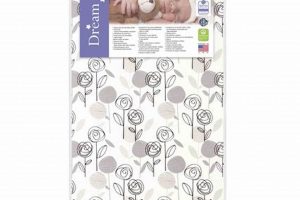
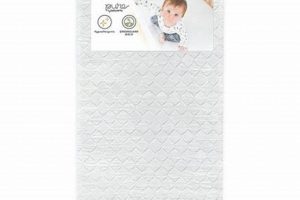
The optimal sleep surface for an infant within a crib setting is a crucial element in early childhood development. Selection should prioritize safety, support, and material composition to foster a healthy sleep environment. The objective is to find a product that minimizes risks while maximizing comfort for the developing child.
A supportive and appropriately firm sleep surface is essential for infant safety, mitigating the risk of suffocation and Sudden Infant Death Syndrome (SIDS). Furthermore, material choices can impact the infant’s exposure to allergens and toxins. Historically, advancements in materials and manufacturing have led to safer and more comfortable options, reflecting an increased understanding of infant health and well-being.
The following will explore essential factors in evaluating sleep surfaces designed for infants, including material considerations, safety certifications, size and fit guidelines, and long-term durability.
Guidance on Infant Sleep Surface Selection
The selection of an appropriate infant sleep surface necessitates careful consideration of several critical factors to ensure the child’s safety and well-being.
Tip 1: Prioritize Firmness. A firm sleep surface reduces the risk of suffocation and SIDS. The surface should not conform to the infant’s face or body.
Tip 2: Verify Certifications. Seek products certified by reputable organizations such as Greenguard Gold or CertiPUR-US. These certifications indicate rigorous testing for chemical emissions and material safety.
Tip 3: Confirm Proper Fit. Ensure the sleep surface fits snugly within the crib frame, leaving no gaps where an infant could become entrapped. Standard crib dimensions are typically 28 inches wide by 52 inches long.
Tip 4: Evaluate Material Composition. Consider the materials used in construction. Options include innerspring, foam, and organic materials. Evaluate potential allergens and chemical content associated with each type.
Tip 5: Assess Weight and Durability. A lightweight design facilitates easier sheet changes and cleaning. However, prioritize durability to ensure the surface maintains its firmness and integrity over time.
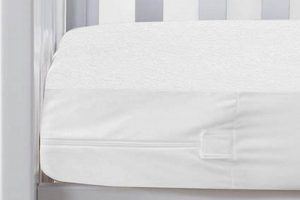
Tip 6: Consider Waterproofing. A waterproof or water-resistant cover protects the internal components from spills and accidents, promoting hygiene and extending the lifespan of the product.
Tip 7: Research Breathability. Enhanced breathability can improve airflow and regulate the infant’s body temperature, contributing to a more comfortable sleep environment.
Adhering to these guidelines helps ensure the selection of an infant sleep surface that promotes safety, health, and restful sleep.
The subsequent sections will delve into specific product types and additional considerations for optimizing the infant sleep environment.
1. Firmness

Firmness is a primary safety consideration in selecting a sleep surface for infants. It directly impacts the risk of suffocation and is a critical factor in determining suitability for infant use. The firmness level must meet specific standards to minimize potential hazards.
- Suffocation Risk Mitigation
An overly soft sleep surface can conform to the infant’s face, obstructing airways and increasing the risk of suffocation. A firm surface maintains its shape, preventing this hazard. Regulatory bodies recommend specific firmness levels to reduce this risk.
- Sudden Infant Death Syndrome (SIDS)
While the precise link between firmness and SIDS is not fully understood, research suggests a correlation between softer sleep surfaces and increased SIDS risk. A firmer surface is generally recommended as a preventative measure, aligning with safe sleep guidelines.
- Developmental Support
A firm sleep surface provides essential support for the infant’s developing skeletal system. It prevents excessive sinking and ensures proper spinal alignment during sleep, contributing to healthy musculoskeletal development.
- Measurement and Testing Standards
Firmness is not a subjective assessment but is measured using standardized testing methods, such as indentation load deflection (ILD) testing. These tests quantify the resistance of the material to compression, ensuring compliance with established safety standards.
The emphasis on firmness in infant sleep surfaces is rooted in evidence-based practices and safety guidelines designed to reduce the risk of sleep-related incidents. Adherence to recommended firmness levels is a critical aspect of creating a safe sleep environment for infants.
2. Safety Certifications

The presence of safety certifications on infant sleep surfaces is a critical indicator of product compliance with established health and safety standards. These certifications serve as independent verification of materials, construction, and chemical emissions, directly influencing the suitability of a sleep surface for infant use.
- Greenguard Gold Certification
This certification signifies that a product has been rigorously tested and shown to have low chemical emissions, including volatile organic compounds (VOCs), phthalates, and formaldehyde. In the context of infant sleep surfaces, Greenguard Gold certification reduces the risk of respiratory irritation and other health concerns associated with exposure to harmful chemicals. Examples of chemicals restricted under this certification include those commonly found in polyurethane foam and adhesives.
- CertiPUR-US Certification
CertiPUR-US certification applies specifically to flexible polyurethane foam used in sleep surfaces. It verifies that the foam is made without ozone depleters, PBDEs, TDCPP or TCEP (“Tris”) flame retardants, mercury, lead, and other heavy metals. Additionally, the foam must have low VOC emissions. This certification assures parents that the foam components of the sleep surface meet stringent standards for chemical content and emissions.
- OEKO-TEX Standard 100 Certification
This certification tests textile products for harmful substances, including pesticides, heavy metals, and formaldehyde. While not exclusive to infant sleep surfaces, OEKO-TEX Standard 100 certification is relevant for covers and other fabric components, ensuring they are free from potentially harmful chemicals that could come into contact with the infant’s skin.
- JPMA Certification
The Juvenile Products Manufacturers Association (JPMA) certification indicates that a product meets or exceeds ASTM (American Society for Testing and Materials) safety standards. For infant sleep surfaces, JPMA certification confirms compliance with specific safety requirements related to firmness, size, and construction, reducing the risk of injury or suffocation. This comprehensive certification process involves independent testing and verification of product safety performance.
The presence of these certifications provides a degree of assurance regarding the safety and quality of infant sleep surfaces. However, it is essential to recognize that certifications are not a substitute for diligent research and adherence to safe sleep practices. Parents should still carefully evaluate product specifications, read reviews, and consult with healthcare professionals to make informed decisions regarding their child’s sleep environment.
3. Proper Fit

Proper fit is a non-negotiable element in selecting a sleep surface for an infant within a crib. It directly relates to safety and mitigates potential hazards associated with entrapment and suffocation. Ensuring correct dimensions is essential.
- Dimensional Accuracy and Crib Compatibility
The sleep surface must precisely match the interior dimensions of the crib, typically 28 inches wide by 52 inches long for standard models. Variations, even minor ones, can create gaps between the sleep surface and the crib frame, posing a significant risk of infant entrapment. Compliance with established dimensional standards is therefore crucial. Example: A sleep surface measuring 27.5 inches wide in a standard 28-inch crib creates a hazardous gap.
- Gap Reduction and Entrapment Prevention
The objective of a proper fit is to eliminate or minimize any gaps between the sleep surface and the crib sides. These gaps can become traps where an infant’s limbs or body can become lodged, leading to potential injury or suffocation. Regular inspection for gap formation is necessary as the sleep surface may shift over time. Implication: A gap exceeding two finger-widths necessitates immediate correction or replacement of the sleep surface.
- Impact on Sleep Surface Stability and Support
A secure fit enhances the stability of the sleep surface within the crib. When the dimensions are accurate, the sleep surface is less likely to shift or tilt, maintaining a level and supportive foundation for the infant. An unstable sleep surface can compromise the infant’s posture and increase the risk of falls or positional asphyxia. Relevance: A properly fitted sleep surface remains securely in place, even with infant movement.
- Long-Term Durability and Safety Maintenance
Over time, the materials of both the crib and the sleep surface can compress or warp, potentially affecting the original fit. Regular assessment of the fit is required to ensure continued safety. Replacement may be necessary if the fit becomes compromised, even if the sleep surface otherwise appears functional. Consideration: Periodic measurements of the sleep surface and crib interior are advised to verify proper fit throughout the product’s lifespan.
These facets highlight the critical nature of proper fit in the context of infant sleep safety. Dimensional accuracy, gap reduction, stability, and long-term maintenance all contribute to creating a safe sleep environment, minimizing risks associated with entrapment and ensuring consistent support for the developing infant. The pursuit of the optimal sleep surface for a crib must prioritize the elimination of potential hazards associated with incorrect sizing.
4. Material Composition

The material composition of an infant sleep surface is intrinsically linked to its safety, durability, and overall suitability. The materials used directly affect the risk of chemical exposure, the level of support provided, and the lifespan of the product. Informed selection requires a comprehensive understanding of the properties and potential implications of different materials.
For instance, polyurethane foam, a common component in many infant sleep surfaces, can release volatile organic compounds (VOCs). While certifications like CertiPUR-US mitigate this risk by ensuring low VOC emissions, parents should be aware of the potential for off-gassing, particularly in new products. Innerspring sleep surfaces, conversely, consist primarily of steel coils and natural fibers, often considered a more inert option. However, the comfort layers atop the coils may still contain polyurethane foam or other synthetic materials. Natural latex, derived from rubber trees, is another option known for its durability and resistance to dust mites. However, latex allergies are a consideration, and it’s important to ensure the latex is properly processed to minimize allergen potential. Organic cotton is increasingly used for covers, reducing exposure to pesticides and other chemicals associated with conventional cotton farming. This emphasis on organic materials aligns with a growing awareness of the potential impact of chemical exposure on infant health.
In summary, material composition is a fundamental determinant of the “best mattress for crib.” Careful consideration of material properties, certifications, and potential health implications is essential for making an informed decision that prioritizes infant safety and well-being. The challenges lie in balancing cost, comfort, and safety, requiring a nuanced understanding of the trade-offs associated with different material choices. This understanding directly impacts the selection of an infant sleep surface that promotes both healthy development and restful sleep.
5. Durability

The durability of a sleep surface is a paramount consideration when determining its suitability as the “best mattress for crib.” A durable product maintains its structural integrity and supportiveness over an extended period, directly impacting safety and comfort. Compromised durability can lead to sagging, unevenness, and reduced firmness, increasing the risk of suffocation or positional asphyxia. Real-life examples include sleep surfaces exhibiting significant indentation after minimal use, indicating substandard materials or construction. This degradation not only diminishes the sleep surface’s support but also necessitates premature replacement, adding to the overall cost. The practical significance of durability lies in its long-term effect on infant safety, parental peace of mind, and financial investment.
The selection of durable materials is crucial to long-term performance. Innerspring systems with high-gauge steel coils resist sagging and maintain their shape more effectively than lower-quality alternatives. High-density foam, often used in comfort layers, retains its firmness and support for a longer duration compared to low-density foam, which is more susceptible to compression and breakdown. Reinforced seams and edges enhance structural integrity, preventing unraveling and maintaining the sleep surface’s shape. For instance, a sleep surface with double-stitched seams and reinforced edges demonstrates greater resistance to wear and tear compared to one with single stitching and unreinforced edges. These construction details contribute significantly to the overall durability of the product.
Ultimately, durability is a key component of a “best mattress for crib.” The longevity of its safety and support are directly proportional to its construction and the quality of the materials used. Choosing a sleep surface designed for long-term use ensures the infant consistently benefits from a safe and comfortable sleep environment. Neglecting the critical aspect of durability could lead to compromised safety, reduced comfort, and increased long-term costs. Prioritizing durability is therefore a fundamental aspect of responsible sleep surface selection for infants.
6. Breathability

Breathability is a critical, yet often overlooked, aspect of infant sleep surfaces. Its role in regulating temperature and reducing the risk of overheating positions it as a pivotal factor in identifying the most suitable sleep surface for a crib environment.
- Temperature Regulation and Comfort
Infants are less efficient at regulating their body temperature than adults. A breathable sleep surface facilitates airflow, allowing heat to dissipate and preventing the infant from overheating. Overheating has been linked to an increased risk of Sudden Infant Death Syndrome (SIDS). A sleep surface with poor breathability, conversely, traps heat, creating an uncomfortable and potentially dangerous sleep environment. Example: Sleep surfaces constructed with dense, non-porous materials restrict airflow and increase the risk of overheating, especially in warmer climates or during summer months.
- Moisture Wicking and Hygiene
Breathable materials also promote moisture wicking, drawing sweat and other fluids away from the infant’s skin. This helps to maintain a dry and hygienic sleep environment, reducing the risk of skin irritation and bacterial growth. Non-breathable materials trap moisture, creating a breeding ground for bacteria and increasing the likelihood of skin rashes. Consequence: A sleep surface with good moisture wicking properties contributes to a healthier and more comfortable sleep experience for the infant.
- Material Composition and Airflow
The breathability of a sleep surface is directly influenced by its material composition. Natural fibers such as cotton and wool are inherently more breathable than synthetic materials like vinyl or polyurethane. Open-cell foam structures also enhance airflow compared to closed-cell foam. Example: A sleep surface with an organic cotton cover and an open-cell foam core provides superior breathability compared to a sleep surface with a vinyl cover and a dense polyurethane foam core.
- Construction Techniques and Ventilation
Beyond material selection, construction techniques can further enhance breathability. Ventilation channels or perforations within the sleep surface promote airflow and reduce heat buildup. Example: Sleep surfaces with strategically placed ventilation channels allow for greater air circulation, reducing the risk of overheating, particularly for infants who tend to sleep on their stomachs.
The interconnectedness of these facets underscores the significance of breathability in the context of selecting a “best mattress for crib.” A breathable sleep surface is not merely a comfort feature; it is a critical component of a safe and healthy sleep environment, contributing to temperature regulation, hygiene, and overall well-being. Prioritizing breathability alongside firmness, safety certifications, and proper fit is imperative in making an informed decision regarding infant sleep safety.
Frequently Asked Questions
The following addresses common inquiries regarding the selection of safe and supportive sleep surfaces for infants. These responses are intended to provide clarity and guidance based on established safety standards and best practices.
Question 1: What is the recommended firmness for an infant sleep surface?
The recommended firmness is such that the surface does not conform to the infant’s face or body, minimizing the risk of suffocation. The surface should be firm enough to maintain its shape and prevent indentation when the infant is placed upon it.
Question 2: How can one verify the safety of the materials used in an infant sleep surface?
Safety can be verified through certifications such as Greenguard Gold and CertiPUR-US. These certifications indicate that the product has been tested for chemical emissions and meets stringent safety standards. Look for these certifications on the product label or manufacturer’s website.
Question 3: What are the potential hazards of a poorly fitting sleep surface within a crib?
A poorly fitting sleep surface creates gaps between the edge of the sleep surface and the crib frame. These gaps can lead to infant entrapment, potentially resulting in injury or suffocation. The sleep surface must fit snugly within the crib.
Question 4: Is breathability a critical factor in infant sleep surface selection?
Yes, breathability is crucial. A breathable sleep surface promotes airflow, reducing the risk of overheating, which has been linked to SIDS. The materials used in construction should allow for adequate ventilation.
Question 5: How often should an infant sleep surface be inspected for wear and tear?
Regular inspection is essential. The sleep surface should be inspected frequently for signs of sagging, tears, or other damage that could compromise its safety and supportiveness. Replace the sleep surface if any damage is detected.
Question 6: Are organic sleep surfaces inherently safer than conventional options?
Organic sleep surfaces can reduce exposure to certain chemicals and pesticides. However, it is important to verify that the product still meets all relevant safety standards, including firmness and flammability requirements. Organic certification alone does not guarantee overall safety.
In conclusion, selecting an appropriate infant sleep surface requires diligent research and attention to detail. Prioritizing firmness, safety certifications, proper fit, breathability, and regular inspection is crucial for creating a safe sleep environment.
The subsequent discussion will explore the impact of sleep surfaces on infant development.
Concluding Considerations for Infant Sleep Surface Selection
The preceding exploration has delineated critical factors in the selection of the “best mattress for crib.” Emphasis has been placed on the paramount importance of firmness, safety certifications, proper fit, durable construction, and breathability. These elements collectively contribute to a secure and supportive sleep environment, directly influencing infant safety and well-being. Comprehension of these factors is essential for informed decision-making.
The informed selection of an infant sleep surface represents a crucial investment in the child’s early development and safety. Continued adherence to established safety guidelines, ongoing research, and rigorous product testing remain essential to optimizing infant sleep environments and minimizing potential risks. Stakeholders are encouraged to maintain vigilance and prioritize evidence-based practices in the pursuit of optimal sleep solutions for infants.
![Best Organic Crib Mattress Protector [Safe Sleep] | Organic & Natural Mattress Buyer’s Guide: Non-Toxic Sleep Solutions](https://mattressworldpa.com/wp-content/uploads/2025/07/th-1363-300x200.jpg "Best Organic Crib Mattress Protector [Safe Sleep] Organic & Natural Mattress Buyer’s Guide: Non-Toxic Sleep Solutions")