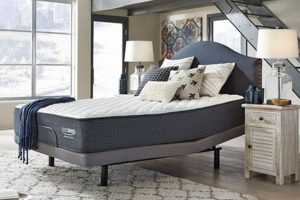
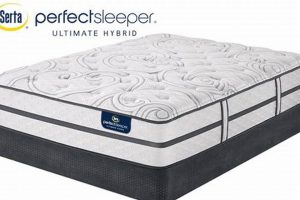
The selection of a mattress that adequately supports individuals who primarily sleep on their stomach is a crucial aspect of sleep health. Such a mattress must provide a balance of support and cushioning to maintain spinal alignment and prevent pressure point build-up, particularly in the hips and shoulders. A surface that is too soft can lead to excessive sinking, exacerbating spinal curvature and potentially causing discomfort. Conversely, a surface that is too firm may place undue stress on pressure points. The ideal mattress for this sleep position offers a resilient top layer combined with a robust support core.
Appropriate sleep surface selection contributes significantly to overall sleep quality, potentially mitigating musculoskeletal pain and promoting restorative rest. Historically, individuals adapted available materials to create makeshift beds, often lacking the sophisticated design and material science found in modern mattresses. The evolution of mattress technology reflects an increasing understanding of the biomechanics of sleep and the correlation between sleep posture and spinal health. Proper support in the prone position is often overlooked, leading to potential long-term health implications for regular stomach sleepers.
Therefore, further examination of mattress types, material compositions, and design features that are specifically beneficial for those who favor sleeping in a prone position is warranted. The following sections will explore key characteristics and considerations when evaluating different mattresses to ensure optimal comfort and spinal alignment for stomach sleepers.
Guidance on Mattress Selection for Prone Sleepers
The following guidelines offer a framework for evaluating mattresses suited to individuals who primarily sleep on their stomach. Adhering to these recommendations can promote spinal alignment and minimize potential discomfort.
Tip 1: Prioritize Firmness: A mattress with a firmer support core is generally recommended. This prevents excessive sinking in the midsection, which can lead to hyperextension of the spine. A medium-firm to firm mattress typically offers the necessary support.
Tip 2: Consider Material Composition: High-density foam or innerspring systems can provide adequate support. Latex mattresses also offer resilient support and pressure relief. Memory foam, while conforming, may trap heat and not provide sufficient uplift for stomach sleepers unless paired with a strong support layer.
Tip 3: Evaluate Edge Support: Strong edge support prevents the feeling of rolling off the mattress and can enhance the usable sleep surface. This is particularly important for stomach sleepers who tend to spread out during sleep.
Tip 4: Assess Pressure Relief: While support is paramount, a thin comfort layer that provides localized pressure relief is also beneficial. This can alleviate pressure on the ribs and stomach area.
Tip 5: Investigate Cooling Properties: Stomach sleeping can trap body heat. Mattresses with breathable covers, gel-infused foams, or open-coil designs can help regulate temperature and improve sleep comfort.
Tip 6: Research Mattress Construction: The internal construction of the mattress plays a significant role in its overall performance. Pay attention to the gauge of the coils in innerspring mattresses or the density of the foam in foam mattresses. Higher gauges and densities typically indicate greater durability and support.
Tip 7: Heed to Reviews Focused on Sleep Position: Online reviews often mention sleep position. Specifically search for feedback from individuals who primarily sleep on their stomachs to gain insights into a particular mattress’s suitability.
Selecting a mattress with appropriate firmness, support, and cooling features is crucial for ensuring optimal sleep quality and spinal alignment for those who prefer the prone sleeping position. Neglecting these factors can contribute to discomfort and potential long-term health issues.
The subsequent sections will address specific mattress types and their relevance to stomach sleepers, offering a more granular analysis of available options.
1. Firmness and Support

Firmness and support are paramount considerations when selecting a mattress optimized for stomach sleeping. The interaction between these characteristics directly influences spinal alignment and overall comfort, impacting the quality of rest experienced by individuals who favor this position.
- Spinal Alignment and Core Support
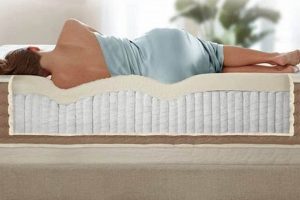
The primary function of firmness and support in a mattress for stomach sleepers is to maintain proper spinal alignment. Insufficient support can cause the spine to bow unnaturally, leading to lower back pain and discomfort. A mattress with adequate firmness prevents excessive sinking of the hips and abdomen, keeping the spine in a more neutral position. The mattress core must provide robust support to ensure the sleeper does not experience misalignment throughout the night.
- Surface Comfort and Pressure Distribution
While firmness is crucial, the surface of the mattress should also offer a degree of comfort to minimize pressure points. Stomach sleepers often experience pressure build-up in the ribcage and pelvic region. A thin comfort layer, such as a layer of high-density foam, can help distribute weight and reduce localized pressure without compromising the overall support of the mattress. The goal is to achieve a balance between firmness and comfort to prevent both spinal misalignment and pressure-related discomfort.
- Material Composition and Long-Term Performance
The materials used in a mattress significantly contribute to its firmness and support characteristics. Innerspring mattresses, particularly those with a high coil count and individually wrapped coils, offer targeted support and minimize motion transfer. Foam mattresses, especially those constructed with high-density memory foam or latex, provide consistent support and contouring. The long-term performance of the mattress hinges on the durability of these materials and their ability to maintain their original firmness and support characteristics over time.
- Edge Support and Usable Sleep Surface
Edge support is a key factor to consider, as stomach sleepers tend to utilize the entire surface of the mattress. A mattress with reinforced edges prevents sagging and provides a stable sleeping surface from edge to edge. This ensures consistent support and prevents the feeling of rolling off the bed, particularly for those who sleep near the edge of the mattress. Strong edge support enhances the usable sleep surface and contributes to overall comfort and stability.
Therefore, the selection of a mattress with appropriate firmness, robust support core, durable material composition, and reinforced edges is essential for stomach sleepers seeking to optimize spinal alignment, minimize pressure points, and achieve restful sleep. Neglecting these factors can lead to discomfort, pain, and compromised sleep quality.
2. Spinal Alignment

Spinal alignment is a critical factor in determining the suitability of a mattress for stomach sleepers. The prone sleeping position, characterized by its tendency to promote spinal extension and rotation, necessitates a sleep surface that actively counteracts these forces. An inappropriate mattress can exacerbate poor posture, leading to musculoskeletal discomfort and potentially chronic pain. A mattress designed to promote spinal alignment for stomach sleepers must maintain the natural curves of the spine, preventing excessive sinking of the midsection, which induces hyperextension.
The composition and construction of the mattress play a decisive role in achieving this alignment. A firm, responsive support core, often found in innerspring or high-density foam mattresses, is essential for preventing the spine from bowing unnaturally. The integration of a comfort layer, while necessary for pressure relief, must not compromise the underlying support structure. A real-world example is the experience of individuals with pre-existing lower back pain who report a significant reduction in discomfort after switching to a firmer mattress specifically designed for stomach sleeping. Conversely, a soft mattress can lead to increased pain and stiffness due to spinal misalignment.
Therefore, understanding the interplay between mattress characteristics and spinal alignment is paramount for stomach sleepers seeking optimal sleep health. Selection of a mattress that provides appropriate support and prevents spinal hyperextension is a proactive step towards mitigating musculoskeletal issues and promoting restorative sleep. Future research and product development should prioritize the optimization of mattress designs to further enhance spinal alignment and address the specific needs of individuals who favor the prone sleeping position.
3. Pressure Point Reduction

Pressure point reduction is a critical factor when assessing mattress suitability for stomach sleepers. The prone position concentrates body weight on specific areas, notably the ribcage, hips, and shoulders. Without adequate pressure relief, sustained compression in these regions can impede circulation, leading to discomfort, tossing and turning, and ultimately, fragmented sleep. The ideal mattress mitigates this by distributing weight evenly, preventing localized areas of excessive pressure.
The selection of appropriate mattress materials and construction directly influences pressure point reduction. Memory foam, for example, conforms to the body’s contours, theoretically distributing weight over a larger surface area. However, for stomach sleepers, excessively soft memory foam can result in the midsection sinking too deeply, exacerbating spinal misalignment despite localized pressure relief. Latex offers a more responsive surface, providing both pressure relief and support. Hybrid mattresses, combining innerspring systems with foam or latex layers, aim to balance support and contouring. A real-world example involves stomach sleepers reporting diminished ribcage pain after transitioning to a hybrid mattress with a firm innerspring base and a thin latex comfort layer. The key is a balance between adequate support to maintain spinal alignment and sufficient cushioning to prevent concentrated pressure.
Effective pressure point reduction in a mattress for stomach sleepers is not solely about conforming to the body; it’s about providing balanced support and cushioning. By strategically distributing weight and preventing excessive sinking, the mattress promotes better circulation, reduces discomfort, and ultimately facilitates more restful sleep. The optimization of pressure point reduction contributes directly to the overall effectiveness of a sleep system for individuals who prefer the prone sleeping position.
4. Material Breathability

Material breathability is a crucial attribute in mattresses, particularly for stomach sleepers. The prone sleeping position often leads to increased body contact with the mattress, potentially trapping heat and moisture. Consequently, mattresses with poor breathability can create an uncomfortable sleeping environment, disrupting sleep cycles and affecting overall sleep quality. A mattress promoting airflow helps regulate temperature, contributing to a more restful and restorative sleep experience.
- Airflow and Temperature Regulation
Materials with enhanced breathability facilitate airflow within the mattress, preventing heat accumulation. Open-cell foam structures, for example, allow air to circulate more freely compared to closed-cell foams. This property is particularly beneficial for stomach sleepers who experience increased body contact with the mattress surface. Poor airflow results in elevated skin temperature, potentially triggering wakefulness and disrupting sleep continuity. Real-world instances include individuals reporting night sweats and discomfort when using mattresses constructed with non-breathable materials.
- Moisture Wicking and Hygiene
Breathable materials assist in wicking away moisture, such as sweat, preventing its accumulation within the mattress. The presence of moisture creates a breeding ground for bacteria and allergens, compromising mattress hygiene and potentially triggering allergic reactions. Materials like natural latex and certain types of performance fabrics exhibit superior moisture-wicking properties. This contributes to a drier and more hygienic sleeping environment. Stomach sleepers, due to their increased contact with the mattress, benefit significantly from this aspect of material breathability.
- Material Selection and Construction Techniques
The choice of mattress materials directly impacts its breathability. Natural fibers like cotton and wool are inherently more breathable than synthetic materials like polyurethane foam. Mattress construction techniques also play a role. For instance, mattresses with coil systems often provide better airflow compared to solid foam cores. Hybrid mattresses, combining coils with breathable foam layers, represent an attempt to optimize both support and breathability. Selecting materials and construction methods that prioritize airflow is crucial for enhancing the sleeping experience of stomach sleepers.
- Impact on Sleep Quality
The cumulative effect of enhanced airflow and moisture wicking directly influences sleep quality. By maintaining a comfortable sleeping temperature and preventing moisture buildup, breathable mattresses minimize sleep disruptions. Stomach sleepers who are prone to overheating and sweating particularly benefit from this feature. Improvements in sleep quality translate to increased daytime alertness, enhanced cognitive function, and improved overall well-being. Therefore, material breathability is not merely a comfort factor but a significant determinant of sleep health for individuals favoring the prone position.
In conclusion, material breathability is an indispensable characteristic of a mattress designed for stomach sleepers. Its impact on temperature regulation, moisture management, and overall sleep comfort is significant. The selection of breathable materials and construction techniques is a critical consideration in optimizing sleep quality and promoting a healthy sleep environment for individuals who prefer sleeping on their stomachs. Ignoring material breathability can lead to discomfort, disrupted sleep, and potential health consequences.
5. Edge Support

Edge support, often an overlooked attribute, constitutes a critical component in determining the suitability of a mattress, especially for stomach sleepers. The influence of edge support manifests in several key areas, directly impacting spinal alignment, sleep surface utilization, and overall mattress longevity. Insufficient edge support compromises the structural integrity of the sleep surface, leading to sagging and instability along the perimeter. This effect is amplified for stomach sleepers who often occupy a larger area of the mattress, potentially placing them near the edges. As a result, the absence of robust edge support can cause the sleeper to roll towards the edge, disrupting spinal alignment and precipitating discomfort. This can be exacerbated by the prone position, as stomach sleepers often spread out, inadvertently pushing towards the mattress edges. A real-world example is the observation of individuals reporting a sensation of “falling off” the bed when sleeping near the edge of a mattress lacking adequate support. This compromises not only sleep quality but also a sense of security.
The practical implications of inadequate edge support extend beyond individual sleep comfort. It also reduces the usable surface area of the mattress. A mattress with weak edges effectively shrinks over time, diminishing the available space for comfortable sleep. This becomes particularly relevant for couples or individuals sharing a bed. Moreover, the structural integrity of the mattress itself is compromised. Sagging edges place undue stress on the internal components, accelerating wear and tear and potentially shortening the lifespan of the product. The correlation between edge support and mattress durability underscores the importance of this feature, especially for those who rely on consistent support throughout the night. Reinforcement often involves the incorporation of high-density foam encasements or specialized coil systems along the mattress perimeter. These features are designed to resist compression and maintain a level sleeping surface from edge to edge.
In summation, edge support represents a pivotal characteristic in the selection of a mattress optimized for stomach sleeping. Its impact on spinal alignment, sleep surface utilization, and mattress longevity warrants careful consideration. The absence of robust edge support negates the benefits of other supportive features, compromising both short-term comfort and long-term value. Addressing the challenge of providing consistent and reliable edge support is crucial for manufacturers seeking to cater effectively to the specific needs of stomach sleepers, ensuring a stable and secure sleep environment.
6. Durability

Durability constitutes a non-negotiable factor in the context of selecting an optimal mattress for stomach sleeping. The relationship between these two elements stems from the demanding support requirements imposed by the prone position. Stomach sleeping concentrates body weight across a smaller surface area compared to other sleep orientations, placing increased stress on the mattress core and surface layers. Consequently, a mattress lacking durability will degrade more rapidly under this sustained pressure, resulting in diminished support, spinal misalignment, and reduced comfort over time. The practical significance of this lies in the understanding that a seemingly affordable mattress may prove more costly in the long run due to premature wear and the need for frequent replacement. An illustrative example is a comparison between two mattresses, one constructed with low-density foam and the other with high-density latex. The former may initially offer a similar level of comfort but will invariably exhibit sagging and diminished support within a shorter timeframe, particularly under the concentrated pressure exerted by a stomach sleeper.
The link between durability and optimal stomach sleeping experience extends beyond simple wear and tear. A durable mattress maintains its structural integrity, preserving the intended firmness and support characteristics for a prolonged period. This consistency is crucial for maintaining spinal alignment, a key determinant of sleep quality and the prevention of musculoskeletal discomfort. Furthermore, durable mattresses often exhibit superior resistance to compression set, a phenomenon where the mattress material loses its ability to rebound after repeated compression. Compression set contributes directly to the formation of body impressions, further compromising support and comfort. Consider a scenario where an individual switches to a new mattress, initially experiencing improved sleep due to enhanced support. However, if the mattress lacks durability, compression set will gradually diminish this initial benefit, leading to a recurrence of previous sleep-related issues.
In summary, durability is inextricably linked to the concept of the best mattress for stomach sleeping. It directly influences the mattress’s ability to provide consistent support, maintain spinal alignment, and resist premature wear and compression. Prioritizing durability translates to a more cost-effective long-term investment, a more comfortable and supportive sleep surface, and a reduced risk of developing sleep-related musculoskeletal problems. Mattress selection, therefore, should place significant emphasis on material quality, construction techniques, and established durability ratings to ensure that the chosen product can effectively meet the specific needs of stomach sleepers over an extended period.
7. Motion Isolation

Motion isolation, referring to a mattress’s ability to minimize the transfer of movement across its surface, is an often overlooked yet significant factor in selecting a sleep surface suited for stomach sleepers, particularly those sharing a bed. The primary reason for its importance is that stomach sleepers, due to their prone position and tendency to shift weight during sleep, can be more susceptible to disruptions caused by a partner’s movements. When a mattress poorly isolates motion, each toss and turn from one individual translates into noticeable disturbances for the other. This is particularly problematic for stomach sleepers, as the prone position offers less postural stability compared to side or back sleeping, making them more vulnerable to being roused by external movements. The lack of motion isolation leads to fragmented sleep patterns, diminished restfulness, and, in the long term, potential sleep deprivation for both partners.
The efficacy of motion isolation in a mattress is dictated by its material composition and internal construction. Mattresses constructed with interconnected coil systems typically exhibit poor motion isolation, as movement generated in one area propagates throughout the entire structure. Conversely, mattresses incorporating individually wrapped coils, memory foam, or latex tend to excel in minimizing motion transfer. These materials possess inherent damping properties, absorbing and dissipating energy locally rather than transmitting it across the surface. For example, couples where one partner is a stomach sleeper often report improved sleep quality after transitioning to a memory foam or hybrid mattress featuring individually wrapped coils. The enhanced motion isolation prevents disruptions from the other partner’s movements, allowing the stomach sleeper to maintain a more consistent and restful sleep cycle.
In conclusion, motion isolation is an integral component of what constitutes the best mattress for stomach sleeping, especially in shared sleeping environments. The ability to minimize motion transfer is crucial for preventing sleep disturbances and promoting restful sleep, leading to improved overall well-being. While firmness, support, and pressure relief are also essential considerations, neglecting motion isolation can negate the benefits of these other features, resulting in a compromised sleep experience. Therefore, selecting a mattress with excellent motion isolation properties is a practical and beneficial step for stomach sleepers seeking to optimize their sleep quality and maintain harmonious sleep patterns with their partners.
Frequently Asked Questions
The following section addresses common inquiries and misconceptions surrounding mattress selection for individuals who primarily sleep on their stomachs. The information provided aims to clarify crucial aspects of mattress design, support, and suitability for this specific sleep position.
Question 1: What firmness level is generally recommended?
A medium-firm to firm mattress is typically advised. This firmness level prevents excessive sinking in the midsection, which can lead to spinal misalignment. However, individual preferences and body weight should be considered.
Question 2: Are memory foam mattresses suitable?
While memory foam offers pressure relief, it can sometimes lack sufficient support for stomach sleepers. If selecting a memory foam mattress, ensure it incorporates a firm support core to prevent excessive sinking. Combination mattresses, integrating memory foam layers with a firm innerspring or latex base, can be a viable option.
Question 3: Does mattress material impact spinal alignment?
Yes. The material composition significantly influences spinal alignment. High-density foam, latex, and innerspring systems provide varying degrees of support and responsiveness. The ideal material balances support with contouring to maintain the natural curvature of the spine.
Question 4: How important is edge support?
Edge support is crucial, particularly for individuals who utilize a large portion of the mattress surface. Strong edge support prevents sagging and ensures consistent support across the entire sleep area. This is especially important for stomach sleepers who may lie close to the edge of the bed.
Question 5: Can a specific pillow choice compensate for a less-than-ideal mattress?
Pillow selection plays a role, but it cannot entirely compensate for an unsuitable mattress. A thin, supportive pillow is recommended to minimize neck strain, but the mattress remains the primary determinant of spinal alignment.
Question 6: How does body weight affect mattress selection?
Body weight is a significant factor. Individuals with higher body weights may require a firmer mattress to prevent excessive sinking. Conversely, lighter individuals may find a medium-firm mattress adequate. It is essential to consider individual body metrics when assessing mattress firmness.
In summation, selecting an appropriate mattress for prone sleeping involves careful consideration of firmness, material composition, edge support, and individual body characteristics. These factors collectively contribute to optimal spinal alignment and overall sleep quality.
The subsequent section will provide recommendations and product reviews to guide mattress selection.
In Conclusion
The preceding analysis has explored the multifaceted considerations involved in selecting a sleep surface optimized for individuals who primarily sleep on their stomachs. Factors such as firmness, support, material composition, edge reinforcement, and motion isolation have been identified as critical determinants of spinal alignment, pressure relief, and overall sleep quality. A thorough understanding of these attributes enables informed decision-making when evaluating various mattress options.
Ultimately, the quest for the most suitable sleep surface warrants a comprehensive assessment of individual needs and preferences. Future advancements in mattress technology and design may further refine the options available. However, the core principles outlined herein provide a foundation for prioritizing spinal health and promoting restorative rest. Therefore, continued research and critical evaluation remain essential in the pursuit of achieving truly optimal sleep for all individuals.