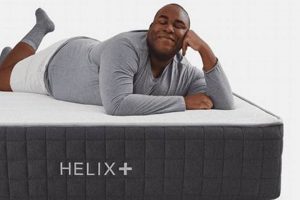
The designation reflects a consumer’s subjective assessment of a sleep surface’s quality and suitability based on individual needs and preferences within the United States market. For example, an individual prioritizing spinal alignment and pressure relief might deem a specific memory foam model as attaining this distinction, while another, valuing responsiveness and cooling, might favor a hybrid or innerspring design.
This concept’s significance resides in guiding consumers toward products that potentially offer enhanced sleep quality, improved physical well-being, and increased overall satisfaction. Historically, the perception of a superior sleep surface evolved alongside advancements in materials science, manufacturing techniques, and a growing awareness of the impact of sleep on health. Consumer reports and expert reviews contribute to shaping the understanding of what constitutes an optimal sleep experience.
The subsequent discussion will delve into the factors influencing consumer preferences, material science innovations impacting comfort and support, and key considerations when evaluating sleep surfaces available to consumers within the United States.
Selecting an appropriate sleep surface requires careful consideration of individual needs and preferences. The following tips offer guidance in making an informed decision.
Tip 1: Prioritize Spinal Alignment: The chosen sleep surface should maintain natural spinal curvature. Individuals should assess whether the surface adequately supports the back in various sleep positions. A demonstration of proper alignment can be observed by having someone photograph your spine while lying in your typical sleeping position.
Tip 2: Evaluate Pressure Relief: The surface should alleviate pressure points at the shoulders, hips, and knees. Excessive pressure can lead to discomfort and disrupted sleep. A pressure mapping test, if available, can visually demonstrate pressure distribution across the body.
Tip 3: Consider Material Properties: Different materials offer distinct benefits. Memory foam conforms to the body, innerspring provides bounce and support, and latex offers responsiveness and durability. Individuals should research the properties of each material to determine the most suitable option for their needs.
Tip 4: Assess Temperature Regulation: Overheating can disrupt sleep. Consider materials with breathable construction or cooling technologies to regulate body temperature. Phase change materials and open-cell foam can enhance airflow and dissipate heat.
Tip 5: Understand Motion Isolation: If sharing a sleep surface, motion isolation is crucial. Certain materials, such as memory foam, effectively minimize motion transfer, preventing disturbances from a partner’s movements. Independent coil systems within innerspring mattresses can also reduce motion transfer.
Tip 6: Research Brand Reputation and Warranty: Investigate brand reputation and warranty coverage before making a purchase. A reputable brand typically offers higher quality materials and construction. A comprehensive warranty protects against manufacturing defects and premature wear.
Tip 7: Take Advantage of Trial Periods: Many manufacturers offer trial periods, allowing consumers to test the sleep surface in their home environment. Utilizing a trial period is critical to ensuring long-term satisfaction.
These considerations provide a framework for evaluating sleep surfaces and maximizing the likelihood of selecting a product that enhances sleep quality and overall well-being.
The following sections will examine specific product categories and technologies within the sleep surface industry.
1. Individual Sleep Needs

The concept of an optimal sleep surface is intrinsically linked to individual physiological and lifestyle characteristics. Body weight, sleeping position, pre-existing conditions (such as back pain or allergies), and personal preferences concerning firmness and material feel exert a significant influence on the suitability of a particular sleep surface. For example, an individual with a higher body mass index (BMI) will generally require a firmer sleep surface to prevent excessive sinking and maintain spinal alignment, whereas a lighter individual may find a softer surface more comfortable. Side sleepers typically benefit from a sleep surface that offers enhanced pressure relief at the shoulders and hips, while back sleepers often require more uniform support across the entire body. The presence of allergies may necessitate hypoallergenic materials to minimize allergic reactions and promote restful sleep.
The failure to adequately address individual needs can lead to discomfort, disrupted sleep, and even exacerbate pre-existing medical conditions. A sleep surface that is too firm for a side sleeper, for instance, can create pressure points that result in tossing and turning throughout the night. Conversely, a sleep surface that is too soft for a back sleeper can lead to spinal misalignment and back pain. Therefore, a comprehensive assessment of personal needs is crucial in the sleep surface selection process. This may involve consulting with a healthcare professional or sleep specialist to determine the most appropriate sleep surface characteristics.
In conclusion, the subjective assessment of an ideal sleep surface is inextricably tied to the unique requirements of the individual. Ignoring these factors increases the likelihood of selecting an unsuitable product, thereby negating potential health and well-being benefits. Prioritizing individual needs through careful consideration and informed decision-making is paramount in achieving optimal sleep and maximizing the value of any sleep surface purchase.
2. Material Science Innovation

Material science advancements directly influence sleep surface comfort, durability, and performance, thereby contributing to perceptions of a “best mattress in america.” Innovation in this field focuses on enhancing existing materials and developing novel solutions to address common sleep-related issues.
- Advancements in Foam Technology
The evolution of foam materials, particularly memory foam, represents a significant advancement. Initial iterations of memory foam exhibited limitations regarding heat retention and responsiveness. Recent innovations, such as gel-infused memory foam and open-cell structures, mitigate these issues by improving airflow and heat dissipation. These enhanced foam technologies offer improved comfort and temperature regulation, contributing to a more restful sleep experience.
- Hybrid Construction and Material Integration
Hybrid sleep surfaces integrate various materials, such as innerspring coils, memory foam, and latex, to combine th
e benefits of each. This approach allows for customized support and comfort levels. For example, a hybrid design might incorporate individually wrapped coils for enhanced support and motion isolation, coupled with a layer of memory foam for pressure relief. Such integrations aim to address a wider range of individual sleep needs and preferences, thus broadening the appeal of a sleep surface. - Textile Innovation for Enhanced Breathability
The textiles used in sleep surface covers play a crucial role in temperature regulation and moisture management. Innovative fabrics, such as those incorporating phase-change materials or specialized weaves, can enhance breathability and wick away moisture, contributing to a cooler and drier sleep environment. These textile advancements directly impact sleep quality and contribute to the overall comfort and perceived value of the sleep surface.
- Sustainable and Eco-Friendly Materials
Increasingly, consumers are seeking sustainable and eco-friendly sleep surface options. Material science innovation is driving the development of materials such as plant-based foams, recycled fibers, and organically sourced latex. The incorporation of these materials not only reduces the environmental impact of sleep surface manufacturing but also appeals to environmentally conscious consumers, potentially influencing their perception of a “best mattress.”
The impact of material science innovation on sleep surface technology is substantial. These advancements directly address key consumer concerns, such as comfort, temperature regulation, support, and durability. By continually pushing the boundaries of material science, manufacturers strive to create sleep surfaces that meet the evolving needs and preferences of consumers, ultimately influencing the perception of what constitutes a “best mattress in america.”
3. Spinal Alignment Support

Proper spinal alignment during sleep is paramount for musculoskeletal health and overall well-being. A sleep surface that effectively supports the natural curvature of the spine minimizes stress on spinal discs, ligaments, and muscles. Conversely, a sleep surface lacking adequate support can lead to spinal misalignment, resulting in pain, stiffness, and potentially exacerbating pre-existing spinal conditions. The connection to a superior sleep surface stems directly from this cause-and-effect relationship. Individuals experiencing chronic back pain, for example, may find significant relief through a sleep surface engineered to promote optimal spinal alignment. In such cases, the improved comfort and pain reduction directly contribute to the subjective assessment of the products quality.
The importance of spinal alignment support extends beyond pain management. Sustained spinal misalignment can lead to long-term postural imbalances, nerve compression, and reduced mobility. A sleep surface designed to maintain proper alignment distributes body weight evenly, reducing pressure points and promoting healthy circulation. Sleep surfaces incorporating zoned support systems, which provide variable levels of firmness across different areas, demonstrate a practical application of this principle. For instance, a zoned surface may offer firmer support under the lumbar region and softer support at the shoulders and hips, accommodating the natural contours of the body. Numerous anecdotal accounts and clinical studies underscore the benefits of such designs in improving sleep quality and reducing musculoskeletal discomfort.
Understanding the connection between spinal alignment support and sleep surface quality is critical for both consumers and manufacturers. Consumers can make informed purchasing decisions by prioritizing products that demonstrably promote proper spinal alignment. Manufacturers can focus on engineering sleep surfaces that effectively address the biomechanical needs of the spine. Despite advancements in materials and design, challenges remain in accurately assessing individual spinal support needs and translating those needs into effective product features. Ultimately, the pursuit of an optimal sleep experience necessitates a continued emphasis on the crucial role of spinal alignment in contributing to a superior product and enhanced well-being.
4. Temperature Regulation

Temperature regulation during sleep significantly influences the perceived quality of a sleep surface. Elevated body temperature, resulting from inadequate heat dissipation, disrupts sleep cycles, leading to restlessness and reduced sleep duration. Therefore, a sleep surface’s ability to maintain a comfortable sleep environment directly contributes to its designation within the American market. The cause-and-effect relationship is evident: a surface promoting cooling leads to improved sleep, enhancing consumer satisfaction and aligning with the idea of a superior product. For example, individuals residing in warmer climates consistently prioritize cooling technologies within sleep surfaces to mitigate overheating during sleep.
Materials science innovations, such as gel-infused memory foam and open-cell foam structures, aim to address temperature regulation concerns. Gel infusions draw heat away from the body, while open-cell structures promote airflow and ventilation. Breathable fabrics, commonly used in sleep surface covers, further enhance heat dissipation and moisture wicking. The practical application of these technologies is demonstrably effective. Consider the case of individuals experiencing night sweats; a sleep surface incorporating these features can significantly reduce discomfort and improve sleep quality. Furthermore, active cooling systems, although more complex, offer precise temperature control for personalized comfort. In summary, the importance of temperature regulation is evident in product design and consumer preferences.
In conclusion, temperature regulation forms a crucial component of the attributes that are considered essential for an optimized product. Challenges remain in achieving consistent temperature regulation across diverse climates and individual thermal profiles. Future advancements will likely focus on personalized cooling solutions and integration with smart home technology. However, the existing connection between temperature regulation and perceived sleep surface quality is well-established, directly influencing consumer preferences and product development within the sleep surface industry.
5. Longevity and Durability

Longevity and durability are paramount considerations in the evaluation of sleep surfaces. The long-term performance and resilience of a mattress directly correlate with its overall value and contribute significantly to consumer perceptions of a superior product.
- Material Composition and Construction Quality
The inherent materials employed in a mattress’s construction, along with the quality of assembly, dictate its lifespan. High-density foams, robust coil systems, and reinforced edge supports contribute to a mattress’s ability to withstand prolonged use and resist sagging. For instance, a mattress utilizing low-density foam may exhibit premature degradation and loss of support compared t
o a mattress constructed with higher-density materials. The quality of stitching, seam reinforcement, and overall assembly further impacts the product’s structural integrity. - Resistance to Sagging and Impression Formation
A primary indicator of a mattress’s durability is its resistance to sagging and impression formation. Over time, consistent pressure on specific areas of the mattress can lead to permanent indentations, compromising support and comfort. Mattresses with reinforced support zones and durable core components exhibit greater resistance to these issues. A mattress that retains its shape and support characteristics over an extended period is indicative of superior durability and longevity.
- Warranty Coverage and Manufacturing Reputation
The warranty provided by the manufacturer reflects their confidence in the product’s durability and expected lifespan. A comprehensive warranty covering sagging, indentations, and other structural defects provides assurance to the consumer. Additionally, the manufacturer’s reputation for quality and adherence to industry standards serves as an indicator of the product’s potential longevity. Reputable manufacturers often employ rigorous testing procedures to ensure their mattresses meet or exceed durability standards.
- Maintenance and Care Considerations
Proper maintenance and care can significantly extend the lifespan of a mattress. Regular rotation or flipping (if applicable), the use of a mattress protector to prevent staining and moisture damage, and adherence to manufacturer recommendations can minimize wear and tear. Failure to properly maintain the mattress can accelerate degradation and reduce its overall lifespan, regardless of its initial construction quality.
The interplay between material quality, construction techniques, warranty provisions, and maintenance practices directly impacts a mattress’s longevity and durability. Products exhibiting superior performance in these areas are more likely to be perceived as superior, ultimately influencing their position in the American market.
Frequently Asked Questions
The following questions address common inquiries regarding the selection of a sleep surface aligned with the concept of a superior sleep experience within the United States.
Question 1: How can one determine if a sleep surface is truly a top-tier product?
Assessment necessitates consideration of individual needs, material quality, construction integrity, and independent reviews. Objective measures such as spinal support, pressure relief, and temperature regulation should align with subjective comfort preferences.
Question 2: What role do materials play in defining a high-quality sleep surface?
Material composition directly impacts durability, support, and comfort. High-density foams, responsive coil systems, and breathable textiles contribute to long-term performance and enhanced sleep quality. Certifications such as CertiPUR-US ensure foam materials meet specific standards for content, emissions, and durability.
Question 3: How important are trial periods and return policies when selecting a sleep surface?
Trial periods allow for in-home evaluation, crucial for determining suitability. Return policies provide recourse if the surface fails to meet expectations. These policies mitigate risk and facilitate informed decision-making.
Question 4: Does price correlate directly with sleep surface quality?
Price is not always indicative of quality. While premium materials and construction often command higher prices, value can be found across various price points. Comprehensive research and comparison shopping are essential for identifying a product that balances quality and affordability.
Question 5: How can consumers assess a sleep surface’s suitability for spinal alignment?
Evaluation should consider individual sleeping position and body weight. Side sleepers typically require enhanced pressure relief at the shoulders and hips, while back sleepers may benefit from firmer, more uniform support. Consulting with a healthcare professional or sleep specialist can provide personalized guidance.
Question 6: What factors influence a sleep surface’s temperature regulation capabilities?
Material breathability, construction techniques, and the integration of cooling technologies impact temperature regulation. Open-cell foams, gel infusions, and moisture-wicking textiles contribute to a cooler and more comfortable sleep environment.
These considerations represent a foundation for navigating the sleep surface market and making informed decisions based on individual needs and preferences.
The next section will explore specific sleep surface categories and their respective characteristics.
Conclusion
The preceding analysis explored various facets contributing to the designation of a superior sleep surface. Factors such as individual needs, material science innovations, spinal alignment support, temperature regulation, and longevity significantly influence consumer perception and product effectiveness. Understanding these elements empowers informed purchasing decisions, maximizing the potential for enhanced sleep quality and overall well-being.
Continued advancements in sleep surface technology and a growing awareness of the importance of sleep underscore the ongoing evolution of the market. Further research and diligent evaluation remain crucial for navigating the diverse range of products and ultimately selecting a sleep surface that meets individual needs, contributing to improved health outcomes and long-term satisfaction.
![Top Best Affordable Mattress Companies of [Year] Reviewed | Organic & Natural Mattress Buyer’s Guide: Non-Toxic Sleep Solutions](https://mattressworldpa.com/wp-content/uploads/2025/07/th-7840-300x200.jpg "Top Best Affordable Mattress Companies of [Year] Reviewed Organic & Natural Mattress Buyer’s Guide: Non-Toxic Sleep Solutions")

![Top-Rated: Best Firm Innerspring Mattress [Guide & Reviews] | Organic & Natural Mattress Buyer’s Guide: Non-Toxic Sleep Solutions](https://mattressworldpa.com/wp-content/uploads/2025/07/th-7838-300x200.jpg "Top-Rated: Best Firm Innerspring Mattress [Guide & Reviews] Organic & Natural Mattress Buyer’s Guide: Non-Toxic Sleep Solutions")

![Top Spots: Best Place to Buy Twin Mattress [Guide] | Organic & Natural Mattress Buyer’s Guide: Non-Toxic Sleep Solutions](https://mattressworldpa.com/wp-content/uploads/2025/07/th-7836-300x200.jpg "Top Spots: Best Place to Buy Twin Mattress [Guide] Organic & Natural Mattress Buyer’s Guide: Non-Toxic Sleep Solutions")