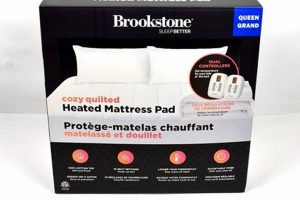
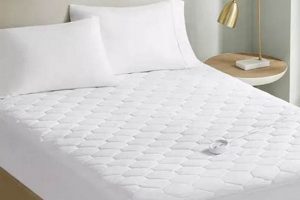
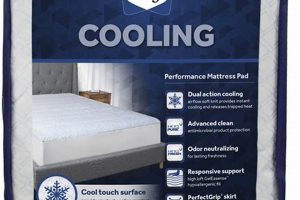
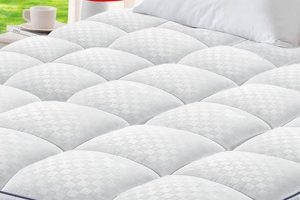
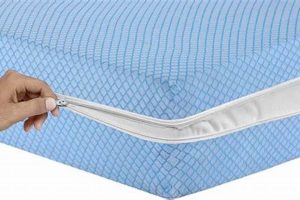
A quality mattress overlay enhances sleep surfaces by providing an additional layer of comfort and protection. These products typically feature materials like memory foam, down alternatives, or latex, designed to improve the overall feel of a bed. For instance, a cooling model can regulate temperature, while a thicker option offers enhanced cushioning.
The use of a suitable sleep surface addition extends the lifespan of mattresses by shielding them from wear and tear, stains, and allergens. Historically, these bedding accessories were simple quilts or padding; modern iterations provide significant improvements in hygiene, comfort, and support. Benefits include reduced pressure points, improved spinal alignment, and a more hygienic sleep environment.
The subsequent sections will delve into the criteria for evaluating effective options, focusing on materials, construction, features, and consumer considerations. Detailed examination of these facets aims to provide a comprehensive guide for informed decision-making regarding sleep surface enhancements.
Guidance on Selecting an Optimal Mattress Overlay
The following recommendations provide insights into factors to consider when acquiring a mattress overlay that delivers maximum comfort, support, and durability.
Tip 1: Prioritize Material Composition: The material directly impacts comfort and longevity. Memory foam conforms to the body, providing pressure relief, whereas latex offers a more responsive feel. Consider hypoallergenic options for allergy sufferers.
Tip 2: Evaluate Thickness and Density: Thickness affects the level of cushioning provided. A thicker overlay generally offers more significant support. Density is crucial for durability; higher density materials tend to resist compression over time.
Tip 3: Assess Temperature Regulation Features: Overlays with cooling technologies, such as gel-infused memory foam or breathable fabrics, can mitigate overheating and promote a more comfortable sleep environment.
Tip 4: Examine Construction Quality: Look for reinforced seams and durable stitching. Baffle box construction can prevent filling from shifting, maintaining uniform support across the sleep surface.
Tip 5: Consider Mattress Compatibility: Ensure the overlay is compatible with the existing mattress type and size. Ill-fitting overlays can compromise comfort and support.
Tip 6: Review Warranty and Return Policies: A comprehensive warranty indicates manufacturer confidence in product quality. Understanding return policies allows for risk-free evaluation of the overlay’s suitability.
Tip 7: Check for Certifications: Certifications such as OEKO-TEX indicate that the product has been tested for harmful substances and is safe for use.
By adhering to these guidelines, purchasers can increase the likelihood of selecting a mattress overlay that satisfies their specific needs and preferences, resulting in enhanced sleep quality and mattress longevity.
The subsequent section will explore common misconceptions and consumer concerns regarding mattress overlays, offering clarity and informed perspectives.
1. Material composition

Material composition stands as a foundational determinant of a mattress overlay’s performance and suitability. The inherent properties of constituent materials dictate crucial factors such as comfort, support, temperature regulation, and longevity. Therefore, understanding these properties is essential when selecting a high-quality mattress overlay.
- Memory Foam Characteristics
Memory foam, typically polyurethane-based, excels in conforming to the body’s contours, thereby distributing weight evenly and alleviating pressure points. However, traditional memory foam can retain heat, leading to discomfort. Variations like gel-infused memory foam or open-cell structures aim to mitigate heat retention and enhance breathability. The density of memory foam significantly impacts its durability and support; higher densities generally exhibit greater resistance to compression and offer more prolonged support.
- Latex Properties
Latex, derived from rubber trees (natural latex) or synthesized from petrochemicals (synthetic latex), offers a resilient and responsive alternative to memory foam. Natural latex boasts inherent hypoallergenic properties and breathability, rendering it a suitable choice for individuals with allergies or sensitivities. Dunlop and Talalay are two common processing methods for latex, each yielding distinct densities and feels. Dunlop latex tends to be denser and firmer, while Talalay latex is lighter and more aerated.
- Fiber Fill and Blends
Mattress overlays can incorporate various fiber fills, including polyester, down alternatives (e.g., microfiber), and natural fibers like cotton or wool. These materials primarily contribute to cushioning and surface comfort. Natural fibers exhibit moisture-wicking capabilities, promoting a cooler sleep environment. However, fiber fills may lack the robust support and pressure relief offered by memory foam or latex.
- Cooling Technologies and Fabrics
Advanced materials and fabrics are frequently integrated into mattress overlays to enhance temperature regulation. Gel infusions in memory foam, phase-change materials (PCMs), and breathable fabrics like Tencel or bamboo are employed to dissipate heat and maintain a comfortable sleep surface. The effectiveness of these technologies varies depending on the specific materials and construction techniques utilized.
The selection of appropriate materials is paramount in determining the ultimate effectiveness of a mattress overlay. A careful assessment of individual needs and preferences, coupled with a thorough understanding of material properties, facilitates the acquisition of an overlay that optimizes sleep comfort, support, and overall well-being. Failure to consider these factors may lead to the selection of an inadequate overlay that provides limited benefit.
2. Thickness and density

Thickness and density are crucial, interrelated factors in determining the effectiveness of a mattress overlay. Thickness directly influences the level of cushioning and support, while density impacts durability and long-term performance. A thinner overlay may offer minimal comfort enhancement, suitable only for subtly altering the feel of a mattress, whereas a thicker option provides more substantial pressure relief and can significantly improve the support characteristics of an aging or uncomfortable mattress. For example, a 2-inch memory foam overlay may suffice for individuals seeking modest contouring, while a 4-inch option is generally preferred for enhanced support and pressure point alleviation.
Density, typically measured in pounds per cubic foot (PCF), reflec
ts the amount of material packed into a given volume. Higher density materials exhibit greater resistance to compression and deformation over time, resulting in improved durability and consistent support. A low-density memory foam overlay, for instance, may initially feel comfortable but is prone to sagging and developing body impressions, reducing its lifespan and negating its intended benefits. Conversely, a high-density latex overlay will maintain its shape and support characteristics for a longer period, justifying its higher initial cost. Practical applications of this understanding include selecting overlays with a density of at least 3 PCF for memory foam and 4 PCF for latex to ensure acceptable durability for regular use.
In summary, the combined consideration of thickness and density is paramount when selecting a mattress overlay. Adequate thickness provides the desired level of comfort and support, while sufficient density ensures long-term performance and value. Neglecting either of these factors can lead to dissatisfaction and premature replacement. Choosing an overlay with both appropriate thickness and density contributes significantly to improved sleep quality and mattress longevity, aligning with the goals of informed consumer decision-making.
3. Temperature regulation

Temperature regulation is a critical attribute influencing sleep quality, making it a significant consideration when evaluating a mattress overlay. Overheating can disrupt sleep cycles, leading to restlessness and reduced overall restfulness. A well-designed mattress overlay can mitigate these issues by promoting airflow and dissipating heat, contributing to a more comfortable sleep environment.
- Material Breathability
The inherent breathability of materials directly impacts temperature regulation. Natural materials like cotton, wool, and latex allow for greater airflow compared to synthetic alternatives like traditional memory foam. Open-cell memory foam and gel-infused foams are designed to enhance breathability, mitigating the heat retention commonly associated with memory foam. The specific choice of material can significantly influence the overlay’s ability to regulate temperature.
- Construction Techniques
Construction methods play a vital role in promoting airflow within a mattress overlay. Baffle box designs, which create individual pockets for fill materials, prevent clumping and allow for better air circulation. Perforations or channels incorporated into foam layers can also enhance breathability. These construction features work in conjunction with material selection to optimize temperature regulation.
- Cooling Technologies
Mattress overlays often incorporate active cooling technologies to further enhance temperature regulation. These technologies may include phase change materials (PCMs), which absorb and release heat to maintain a consistent temperature, or moisture-wicking fabrics that draw sweat away from the body. The effectiveness of these technologies varies depending on the specific materials and designs employed.
- Impact on Sleep Quality
Effective temperature regulation is directly linked to improved sleep quality. By preventing overheating and promoting a stable sleep environment, a suitable mattress overlay can reduce tossing and turning, leading to more restful and restorative sleep. Conversely, an overlay that traps heat can exacerbate sleep disturbances and contribute to discomfort. The importance of temperature regulation cannot be overstated when selecting a mattress overlay intended to enhance sleep quality.
The aforementioned factors collectively underscore the importance of temperature regulation in the context of mattress overlays. Prioritizing materials, construction techniques, and cooling technologies that promote airflow and dissipate heat can significantly improve sleep comfort and overall restfulness, ultimately contributing to the selection of a sleep-enhancing mattress overlay.
4. Construction quality

Construction quality is a pivotal determinant of a mattress overlay’s overall value and longevity. Superior construction ensures consistent performance, prevents premature wear, and maximizes the product’s ability to deliver optimal comfort and support. Inadequate construction, conversely, can lead to uneven fill distribution, seam failures, and a reduced lifespan, negating any potential benefits.
- Seam Integrity and Stitching
Robust seams and durable stitching are essential for preventing fill migration and maintaining the overlay’s structural integrity. Reinforced seams, utilizing high-strength threads and tight stitch patterns, resist tearing and separation, particularly under the stresses of movement and weight distribution. The absence of such features can lead to bunching or shifting of internal materials, compromising comfort and support uniformity.
- Baffle Box Design
Baffle box construction is a method of compartmentalizing fill materials within the overlay using vertical fabric walls. This design prevents clumping and shifting, ensuring even distribution of fill across the entire surface. Overlays lacking baffle box construction often exhibit uneven support, with fill concentrating in certain areas and leaving others sparsely padded. This can lead to pressure points and discomfort during sleep.
- Fabric Durability and Weave
The outer fabric of a mattress overlay is subject to constant friction and abrasion. Durable fabrics, such as tightly woven cotton blends or microfiber, resist tearing, pilling, and stretching. The weave density also influences breathability; a tighter weave offers increased durability, while a looser weave promotes better airflow. Fabrics of substandard quality are prone to premature wear, compromising the overlay’s aesthetic appeal and functional performance.
- Attachment Mechanisms
Secure attachment mechanisms, such as elastic straps or fitted skirts, are crucial for preventing the overlay from shifting or bunching on the mattress. Well-designed attachment systems ensure a snug fit, maintaining the overlay’s position and maximizing its effectiveness. Poorly designed or absent attachment mechanisms can lead to constant readjustment, disrupting sleep and reducing the overlay’s overall convenience.
In summary, construction quality encompasses a range of factors that collectively determine a mattress overlay’s ability to deliver lasting comfort and support. Prioritizing overlays with robust seams, baffle box designs, durable fabrics, and secure attachment mechanisms increases the likelihood of selecting a product that provides sustained performance and value, ultimately enhancing sleep quality and prolonging mattress lifespan.
5. Mattress compatibility
Mattress compatibility is a foundational criterion in selecting an effective mattress overlay. An overlay designed without regard to the underlying mattress type and dimensions may fail to deliver the intended benefits, potentially exacerbating existing comfort issues or introducing new problems. For i
nstance, a thick memory foam overlay placed on a already soft mattress may result in excessive sinkage and inadequate support, leading to spinal misalignment and discomfort. Conversely, a firm latex overlay atop a very firm mattress could create an unyielding sleep surface, negating pressure relief. The concept of the ideal mattress overlay, thus, is intrinsically linked to the characteristics of the specific mattress upon which it will be used. Neglecting this interdependency directly impacts the overlay’s ability to enhance sleep quality.
Practical applications of mattress compatibility considerations extend to various scenarios. Individuals seeking to enhance the comfort of an aging innerspring mattress may find a moderately thick memory foam overlay with edge support to be a suitable choice, providing pressure relief and preventing roll-off. However, for a hybrid mattress already offering adequate support, a thinner, cooling gel-infused overlay might be more appropriate to regulate temperature without altering the existing support structure. Additionally, precise sizing is crucial; an ill-fitting overlay can bunch up, shift during sleep, and compromise both comfort and hygiene. Therefore, accurate measurement of the mattress dimensions, followed by the selection of an overlay designed for those specific measurements, is a vital step in ensuring optimal mattress compatibility.
In conclusion, the efficacy of a mattress overlay is fundamentally contingent upon its compatibility with the existing mattress. Factors such as mattress type, firmness level, and dimensions must be carefully considered to avoid counterproductive outcomes. Prioritizing mattress compatibility ensures that the selected overlay effectively addresses individual needs and preferences, contributing to improved sleep quality and overall satisfaction. The challenge lies in accurately assessing the mattress’s characteristics and matching them with the overlay that provides the most synergistic effect.
6. Certified safety
Certified safety serves as a crucial, objective indicator of a mattress overlay’s suitability for use, particularly in direct contact with individuals during sleep. The absence of harmful substances is paramount, given prolonged exposure during rest. Certifications, such as OEKO-TEX Standard 100, signify that the component materials have undergone rigorous testing for volatile organic compounds (VOCs), flame retardants, heavy metals, and allergenic dyes. This ensures minimal risk of skin irritation, respiratory issues, or other adverse health effects. Choosing an overlay without such certification introduces potential health risks, especially for vulnerable populations like infants, children, and individuals with pre-existing sensitivities. Real-life examples illustrate instances where non-certified bedding products have released harmful chemicals, leading to reported health complaints. The practical significance of this understanding lies in empowering consumers to make informed decisions that prioritize health and well-being.
The practical application of this understanding extends beyond simply identifying certified products. Consumers should also research the specific certification standards cited and understand the scope of testing involved. For example, a certification covering only the outer fabric may not adequately address the potential off-gassing of the foam core. Additionally, it is pertinent to differentiate between legitimate certifications and misleading marketing claims. Independent verification of certification claims is advisable, particularly when purchasing from unfamiliar brands or retailers. A proactive approach to verifying certified safety can mitigate the risk of unknowingly exposing oneself to harmful substances.
In conclusion, certified safety is an indispensable attribute of any mattress overlay intended to enhance sleep quality and protect health. The presence of reputable certifications provides objective assurance that the product has undergone thorough testing and meets established safety standards. While challenges may arise in navigating marketing claims and verifying certification legitimacy, the ultimate goal remains to prioritize consumer health and well-being through informed product selection. Linking this understanding to the broader theme of optimizing sleep environments emphasizes the interconnectedness of comfort, support, and safety in achieving restorative rest.
Frequently Asked Questions Regarding Mattress Overlays
The following questions and answers address common concerns and misconceptions surrounding the selection and utilization of mattress overlays, also known as mattress pads.
Question 1: What factors differentiate a premium mattress overlay from a standard one?
Premium overlays typically feature higher-density materials, advanced construction techniques (e.g., baffle box design), enhanced temperature regulation features, and rigorous safety certifications. Standard overlays may lack these attributes, potentially compromising comfort, durability, and safety.
Question 2: How does the thickness of a mattress overlay affect its performance?
Thickness significantly impacts cushioning and support. Thicker overlays generally offer greater pressure relief and can more effectively compensate for deficiencies in an existing mattress. However, excessive thickness can lead to instability and may not be suitable for all mattress types.
Question 3: Are mattress overlays suitable for individuals with allergies or sensitivities?
Certain overlays, particularly those constructed from natural latex or hypoallergenic materials like tightly woven microfiber, can benefit individuals with allergies. It is crucial to verify that the overlay is free from known allergens and has undergone appropriate testing.
Question 4: What is the expected lifespan of a quality mattress overlay?
The lifespan of a mattress overlay depends on factors such as material quality, construction, and usage patterns. High-density memory foam or latex overlays, properly maintained, can last for several years. However, less durable materials may exhibit premature wear and require more frequent replacement.
Question 5: How should a mattress overlay be cleaned and maintained?
Cleaning and maintenance procedures vary depending on the overlay’s construction and materials. Spot cleaning with a mild detergent is often recommended for minor stains. Some overlays may be machine washable, while others require professional cleaning to avoid damage. Regular airing can help prevent moisture buildup and odor retention.
Question 6: Can a mattress overlay correct significant support deficiencies in a severely worn mattress?
While a mattress overlay can enhance comfort and provide moderate support improvements, it is not a substitute for replacing a severely worn or structurally unsound mattress. In such cases, investing in a new mattress is generally the more prudent course of action.
In summary, selecting an appropriate mattress overlay involves careful consideration of material composition, construction quality, safety certifications, and compatibility with the existing mattress. Understanding these factors facilitates informed decision-making and maximizes the potential benefits of using a mattress overlay.
The subsequent section will provide concluding remarks, synthesizing the key insights presented throughout this guide.
Conclusion
The preceding analysis has dissected the multifaceted considerations surrounding the selection
of a suitable sleep surface enhancement, encompassing material attributes, construction standards, safety validations, and mattress compatibility. It has been demonstrated that achieving optimal sleep comfort and ensuring mattress longevity necessitates a comprehensive understanding of these factors, thereby fostering informed consumer decisions. The criteria articulated provide a framework for evaluating options and distinguishing superior choices from those that may offer limited or transient benefits.
The pursuit of effective sleep solutions remains an ongoing endeavor, necessitating vigilance in assessing product claims and prioritizing verified safety credentials. The ability to discern credible options from unsubstantiated assertions represents a critical skill in navigating the marketplace. Continued refinement of evaluation methodologies and adherence to rigorous standards are essential in promoting improved sleep hygiene and ensuring the long-term well-being of consumers.