The selection of appropriate sleep surfaces is paramount for individuals who primarily adopt a prone sleeping posture. This choice influences spinal alignment, pressure distribution, and overall sleep quality. Certain mattress characteristics are more conducive to the needs of those who sleep on their stomachs, addressing potential discomfort and promoting restful sleep. For instance, a mattress with excessive sinkage can lead to hyperextension of the back, while insufficient support can result in misalignment and strain.
Optimal support in the midsection is a key benefit of a well-suited mattress, preventing the abdomen from sinking too deeply into the sleep surface. This minimizes spinal curvature and associated lower back pain. Historically, stomach sleepers have often been advised to consider firmer options to counteract the tendency toward excessive spinal curvature. The implications of selecting the correct sleep surface extend beyond mere comfort, impacting long-term musculoskeletal health and promoting efficient restorative sleep processes.
The subsequent discussion will examine various mattress types, materials, and construction methods to evaluate their suitability for prone sleeping. Factors such as firmness levels, support features, and material properties will be analyzed to provide a comprehensive understanding of how these elements contribute to a more comfortable and supportive sleep experience for stomach sleepers. This analysis aims to equip individuals with the knowledge necessary to make informed decisions when selecting a mattress.
Guidance for Stomach Sleepers on Mattress Selection
Selecting a mattress to accommodate stomach sleeping requires careful consideration of several factors. Optimizing spinal alignment and mitigating potential discomfort are primary objectives.
Tip 1: Prioritize Firmness. A medium-firm to firm mattress is often recommended to prevent excessive sinkage in the midsection. This helps to maintain a more neutral spinal posture throughout the night. A too-soft surface can lead to hyperextension of the back, potentially exacerbating lower back pain.
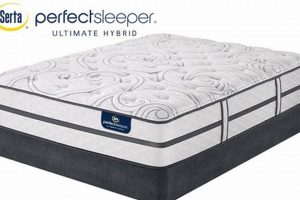
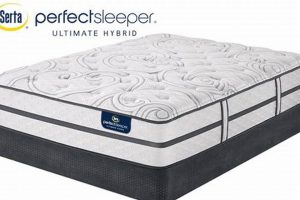
Tip 2: Consider Hybrid or Innerspring Options. Mattresses incorporating coil systems generally provide superior support and responsiveness. These types offer enhanced edge support, which is beneficial for those who tend to move close to the edge of the bed during sleep.
Tip 3: Evaluate the Support Core. The density and quality of the support core are crucial for long-term durability and consistent support. Higher-density foams or robust coil systems resist sagging and provide reliable support over time.
Tip 4: Assess Pressure Relief. While firm support is essential, moderate pressure relief is also necessary to prevent pressure points at the hips and shoulders. A thin comfort layer of memory foam or latex can provide cushioning without compromising overall support.
Tip 5: Investigate Zoned Support. Mattresses featuring zoned support offer targeted reinforcement in specific areas, such as the lumbar region. This can further enhance spinal alignment and reduce lower back strain.
Tip 6: Pay Attention to Mattress Height. A lower-profile mattress may be preferable for some stomach sleepers. The reduced height minimizes the degree of spinal extension, potentially improving overall comfort.
Tip 7: Consider a Thin Pillow or No Pillow at All. Using a thick pillow can exacerbate neck strain. A thin pillow, or none at all, allows the head and neck to remain in a more neutral position.
Adherence to these guidelines can improve the sleep experience for those who sleep on their stomachs by optimizing spinal alignment and minimizing pressure points. A well-chosen mattress contributes significantly to restorative sleep and long-term musculoskeletal health.
The subsequent sections will explore specific mattress models and brands that have demonstrated suitability for stomach sleepers based on these criteria.
1. Firmness Level

Firmness level constitutes a critical consideration when selecting a mattress for stomach sleeping. It directly impacts spinal alignment, pressure distribution, and overall sleep comfort. An inappropriate firmness level can exacerbate back pain and disrupt restorative sleep.
- Spinal Alignment Preservation
For stomach sleepers, a medium-firm to firm mattress is often indicated. This degree of firmness prevents excessive sinking of the midsection, maintaining a more neutral spinal alignment. Excessive sinkage can lead to hyperextension of the back, potentially causing lower back pain and discomfort. A firmer surface offers greater resistance, supporting the body’s natural curves and minimizing spinal strain.
- Pressure Point Mitigation
While spinal alignment is paramount, firmness must be balanced with adequate pressure relief. A surface that is too firm can create pressure points at the hips, ribs, and shoulders, leading to discomfort and restricted circulation. Mattresses with a thin comfort layer, such as a layer of memory foam or latex, can mitigate pressure points without compromising overall support. This layer provides cushioning while maintaining the necessary firmness for proper spinal alignment.
- Weight Distribution and Support
The firmness level should also correlate with an individual’s body weight. Heavier individuals may require a firmer mattress to provide adequate support and prevent excessive sinkage. Lighter individuals may find a medium-firm mattress sufficient to maintain spinal alignment and prevent pressure points. A mattress’s ability to distribute weight evenly contributes to long-term durability and consistent support.
- Long-Term Durability
Mattresses with appropriate firmness levels for stomach sleepers tend to exhibit greater durability. Excessive sinkage can lead to premature wear and tear, reducing the mattress’s lifespan. A firmer support core resists sagging and maintains its structural integrity over time, providing consistent support and alignment. Investing in a mattress with a durable support core is essential for ensuring long-term comfort and value.
The interplay between firmness level and spinal alignment, pressure distribution, weight distribution, and long-term durability underscores its importance in selecting a mattress optimized for stomach sleeping. Careful consideration of these factors contributes to a more comfortable and restorative sleep experience, mitigating potential health risks associated with improper spinal alignment.
2. Spinal Alignment

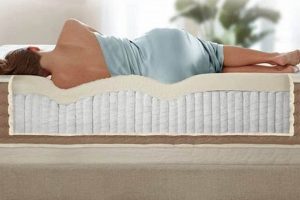
For stomach sleepers, the relationship between spinal alignment and mattress selection is critical. The prone position, unlike supine or lateral postures, inherently poses challenges to maintaining a neutral spinal curve. The center of mass typically shifts forward, leading to an accentuated lumbar curve, potential neck strain, and overall musculoskeletal stress. A mattress ill-suited to this position can exacerbate these issues. A too-soft mattress allows the abdomen to sink, further exaggerating the spinal curve, potentially leading to lower back pain and discomfort. Conversely, a properly selected mattress provides adequate support to prevent excessive sinkage, thereby minimizing spinal curvature and promoting a more neutral alignment. For example, individuals experiencing chronic morning back pain often find relief upon switching to a firmer mattress that better supports the lumbar region during stomach sleeping. This highlights the direct cause-and-effect relationship between mattress support, spinal alignment, and comfort level.
Spinal alignment is not merely about minimizing back pain; it is integral to overall musculoskeletal health and efficient sleep. When the spine is properly aligned, the muscles and ligaments surrounding it can relax, facilitating optimal blood flow and nerve function. This, in turn, promotes efficient recovery and reduces the risk of developing chronic pain conditions. The material composition and construction of the mattress contribute significantly to its ability to provide adequate spinal support. Mattresses with zoned support, for instance, offer targeted reinforcement in specific areas, such as the lumbar region, to further enhance spinal alignment. Furthermore, the use of a thin or no pillow is often recommended for stomach sleepers to minimize neck strain and maintain a more neutral cervical spine alignment. Practical application of this knowledge leads to informed purchasing decisions and improved sleep quality.
In summary, the understanding of how mattress selection impacts spinal alignment is paramount for stomach sleepers. Maintaining a neutral spinal posture reduces the risk of musculoskeletal issues, promotes efficient sleep, and contributes to overall well-being. Challenges remain in finding the ideal mattress, as individual preferences and body types vary. However, prioritizing firmness, support, and construction techniques designed to promote proper spinal alignment significantly increases the likelihood of selecting a mattress that enhances comfort and minimizes potential health risks for stomach sleepers. Further research and advancements in mattress technology may offer more refined solutions in the future.
3. Pressure Distribution

Pressure distribution is a key factor in determining the suitability of a mattress for stomach sleepers. This sleep position concentrates body weight along a narrower surface area compared to back or side sleeping, leading to increased pressure on specific points, such as the ribs, hips, and chest. Inadequate pressure distribution can impede circulation, resulting in discomfort, restless sleep, and potential long-term musculoskeletal issues. A mattress designed for stomach sleepers should effectively redistribute this pressure, minimizing concentrated stress on these areas. For instance, a mattress with a high degree of conformity, achieved through materials like memory foam or specialized coil systems, can contour to the body, dispersing weight more evenly. Improper pressure distribution can manifest as numbness, tingling, or pain during the night, prompting frequent changes in position and disrupting sleep cycles. Therefore, mattresses optimized for stomach sleepers emphasize pressure relief without sacrificing necessary support for spinal alignment.
The effectiveness of pressure distribution is further influenced by the mattress’s construction and material properties. Multi-layered mattresses, incorporating both supportive and cushioning elements, can provide a balanced approach. A firm core provides the necessary support to prevent excessive sinking of the midsection, while a comfort layer, often composed of gel-infused memory foam or responsive latex, helps to alleviate pressure points. Real-world examples include individuals with pre-existing joint pain or circulatory issues experiencing significant improvement in sleep quality upon switching to a mattress that prioritizes pressure distribution. Advanced mattress designs even incorporate zoned support, with firmer support in areas requiring it most, such as the lumbar region, and softer zones for pressure relief in areas like the shoulders and hips. This targeted approach optimizes pressure distribution and promotes spinal alignment, contributing to a more comfortable and restful sleep experience.
In conclusion, pressure distribution is an integral component of the ideal sleep surface for stomach sleepers. Its importance extends beyond mere comfort, impacting circulation, spinal health, and sleep quality. While challenges remain in achieving perfect pressure distribution due to individual variations in body type and sleep preferences, prioritizing mattresses with conforming materials, strategic layering, and zoned support can significantly mitigate pressure points and promote a more restorative sleep experience. This understanding reinforces the significance of considering pressure distribution as a primary factor in the selection of a mattress optimized for stomach sleepers, linking directly to the overall goal of promoting spinal health and restful sleep.
4. Material Composition

Material composition significantly influences the suitability of a mattress for stomach sleepers. The internal components of a mattress dictate its firmness, support, pressure relief, and temperature regulation properties, all of which are critical for ensuring spinal alignment and comfort in the prone sleeping position.
- Core Support Materials (Innersprings and Support Foams)
The core support system provides the foundational firmness and stability necessary for preventing excessive sinkage of the midsection, a common issue for stomach sleepers. Innerspring mattresses utilize steel coils to offer robust support, with variations in coil gauge and configuration affecting the overall firmness and responsiveness. Support foams, such as high-density polyurethane or polyfoam, serve as an alternative or complement to innersprings, providing a consistent and durable support base. For instance, a stomach sleeper weighing over 200 pounds might benefit from a mattress incorporating a high-gauge coil system or a high-density support foam core to maintain proper spinal alignment and prevent lower back pain.
- Comfort Layer Materials (Memory Foam and Latex)
The comfort layer’s material determines the initial feel of the mattress and its ability to relieve pressure points. Memory foam conforms closely to the body, providing targeted pressure relief but can sometimes retain heat. Latex, both natural and synthetic, offers a more responsive and breathable alternative, contouring to the body while promoting airflow. A stomach sleeper seeking pressure relief around the ribs and hips might prefer a mattress with a comfort layer of open-cell memory foam or natural latex, which balances cushioning with breathability to prevent overheating. Material density plays a crucial role for long-term durability and resisting body impressions.
- Transition Layers (Polyfoam)
Transition layers bridge the gap between the firm support core and the softer comfort layer, preventing a sudden transition in feel. These layers, often composed of polyfoam, provide gradual cushioning and contribute to the overall comfort and support balance. A well-designed transition layer ensures that the sleeper does not feel the underlying support core, providing a smooth and comfortable sleep surface. The density and thickness of these layers are paramount in achieving the desired feel.
- Cover Materials (Cotton and Synthetic Blends)
The mattress cover impacts breathability, moisture-wicking, and overall tactile comfort. Natural materials like cotton are breathable and hypoallergenic, while synthetic blends, such as polyester or rayon, can enhance durability and moisture management. A stomach sleeper prone to overheating might benefit from a mattress cover made of breathable cotton or a moisture-wicking synthetic blend to regulate body temperature and maintain a comfortable sleep environment. Some advanced covers incorporate cooling technologies to further enhance temperature regulation.
The interplay of these materials dictates the performance of a mattress for stomach sleepers. The optimal combination balances robust core support with pressure-relieving comfort layers and a breathable cover to promote spinal alignment, comfort, and temperature regulation. Careful consideration of these factors is essential for selecting a mattress that meets the specific needs and preferences of those who sleep on their stomachs, ultimately contributing to improved sleep quality and musculoskeletal health.
5. Edge Support

Edge support refers to the reinforcement along the perimeter of a mattress designed to prevent compression and maintain stability when weight is applied near the edges. For stomach sleepers, edge support plays a critical role in several aspects of sleep quality. The prone position often leads to individuals positioning themselves close to the edge of the mattress, increasing the risk of roll-off and disrupting sleep. Inadequate edge support can cause the mattress to sag, resulting in spinal misalignment and discomfort. A stomach sleeper who frequently utilizes the entire sleep surface, or shares the bed with a partner, will derive significant benefit from enhanced edge support. For instance, a mattress with reinforced edge coils or a high-density foam encasement will exhibit greater resistance to compression, providing a more stable and supportive surface for those who sleep near the edge. This is particularly relevant for individuals who tend to spread out during sleep or those who experience mobility limitations and rely on the edge of the mattress for support when getting in and out of bed.
Effective edge support is achieved through various construction methods, including the implementation of thicker gauge coils along the perimeter, the integration of high-density foam rails, or a combination of both. These features contribute to a more consistent sleep surface across the entire mattress, minimizing the sensation of rolling towards the edge. The lack of adequate edge support can lead to a feeling of instability and insecurity, prompting subconscious muscle tension and disrupting sleep cycles. Consider a stomach sleeper experiencing frequent awakenings due to feeling as though they are about to fall off the edge; this scenario directly illustrates the negative impact of insufficient edge support on sleep quality. The enhanced stability afforded by robust edge support promotes a greater sense of security and allows for more relaxed and restorative sleep.
In summary, edge support is an integral component of a mattress optimized for stomach sleepers. Its influence extends beyond mere stability, impacting spinal alignment, sleep quality, and overall comfort. While the specific edge support features will vary depending on the mattress type and construction, prioritizing this characteristic is essential for individuals who frequently sleep near the edge of the mattress or who require a stable and supportive surface for getting in and out of bed. The benefits of adequate edge support are particularly pronounced for stomach sleepers, highlighting its crucial role in promoting a more comfortable and restful sleep experience.
Frequently Asked Questions
The subsequent questions address common concerns regarding selecting a suitable mattress for individuals who sleep on their stomachs. The information provided aims to clarify key considerations and dispel misconceptions.
Question 1: Is a firm mattress always the best option for stomach sleepers?
While firmness is often recommended, a mattress that is excessively firm can create pressure points and lead to discomfort. A medium-firm to firm mattress is generally more appropriate, balancing support with pressure relief. Individual preferences and body weight should be considered.
Question 2: How does mattress type (e.g., memory foam, innerspring, latex) influence suitability for stomach sleepers?
Each mattress type possesses distinct characteristics that affect suitability. Innerspring mattresses offer strong support, while memory foam conforms to the body, providing pressure relief. Latex provides a balance of support and responsiveness. Hybrid mattresses combine these materials to offer a tailored sleep experience. The optimal choice depends on individual preferences and specific needs.
Question 3: Can a pillow impact spinal alignment for stomach sleepers?
Yes, pillow selection significantly influences spinal alignment. A thick pillow can elevate the head, causing neck strain and misalignment. A thin pillow or no pillow is often recommended to maintain a more neutral cervical spine position.
Question 4: How does body weight affect mattress selection for stomach sleepers?
Body weight influences the level of support required. Heavier individuals generally require a firmer mattress to prevent excessive sinkage, while lighter individuals may find a medium-firm mattress sufficient.
Question 5: What role does edge support play in mattress suitability for stomach sleepers?
Edge support prevents compression and maintains stability along the perimeter of the mattress. This is particularly important for stomach sleepers who tend to sleep near the edge or require assistance getting in and out of bed. Adequate edge support minimizes the risk of roll-off and promotes a more stable sleep surface.
Question 6: How can one assess a mattress’s suitability before purchasing?
Whenever possible, testing the mattress in-store is recommended. Lying in the preferred sleeping position for several minutes allows for evaluation of comfort and support. Reading online reviews and researching mattress specifications can also provide valuable insights.
In summary, selecting a mattress suitable for stomach sleeping involves careful consideration of firmness, mattress type, pillow selection, body weight, edge support, and personal preferences. Thorough research and testing are essential for making an informed decision.
The subsequent section will provide a summary of key takeaways and actionable steps for selecting a mattress optimized for stomach sleepers.
Conclusion
The preceding analysis has explored the critical factors involved in selecting a sleep surface optimized for individuals who primarily sleep on their stomachs. Consideration of firmness level, spinal alignment, pressure distribution, material composition, and edge support is paramount. Failure to address these factors adequately may result in compromised sleep quality and potential musculoskeletal issues. Understanding the interplay between these elements is essential for making informed purchasing decisions.
The pursuit of the “best mattress stomach sleeper” necessitates a proactive approach. Individuals are encouraged to prioritize their spinal health and sleep quality by carefully evaluating mattress specifications and seeking professional guidance when necessary. The long-term benefits of selecting a suitable sleep surface extend beyond mere comfort, contributing to overall well-being and preventing potential health complications. Therefore, due diligence in this process is a worthwhile investment.