The selection of a mattress directly impacts sleep quality and overall well-being. Options within the medium-firm range represent a balance between cushioning and support, offering a degree of conforming comfort while maintaining spinal alignment. For instance, individuals experiencing back discomfort might find relief with this type of mattress, compared to those that are either too soft or excessively rigid.
Mattresses with a medium-firm feel are often chosen for their versatility. The design caters to a broad spectrum of sleeping positions and body types. This balance promotes healthier spinal alignment, reduces pressure points, and improves blood circulation during sleep. The widespread acceptance of these mattresses across diverse demographics reflects their utility in fostering restful sleep and mitigating physical discomfort.
Understanding the characteristics and advantages of balanced support provides a foundation for evaluating specific product options. The subsequent discussion will delve into the components of mattress construction, material science, and consumer considerations relevant to informed decision-making in this product category.
Guidance for Optimal Selection
The following considerations are presented to assist in making an informed choice that aligns with individual needs and preferences.
Tip 1: Prioritize Spinal Alignment. Evaluate if the mattress effectively maintains the natural curvature of the spine while sleeping on the back or side. Discomfort or pressure points may indicate inadequate support.
Tip 2: Consider Body Weight and Sleeping Position. Heavier individuals may benefit from a slightly firmer model to prevent excessive sinking, while side sleepers may require more cushioning for pressure relief at the shoulders and hips.
Tip 3: Assess Motion Isolation Capabilities. If sharing the bed, investigate the mattress’s ability to minimize motion transfer. Memory foam or individually pocketed coils are known for their motion-isolating properties.
Tip 4: Investigate Materials and Construction. Research the materials used in the comfort layers and support core. High-density foams, durable coils, and natural latex contribute to longevity and performance.
Tip 5: Evaluate Temperature Regulation. Individuals prone to overheating during sleep should consider models with breathable materials, such as open-cell foams or coil systems that promote airflow.
Tip 6: Check for Certifications. Look for certifications such as CertiPUR-US, OEKO-TEX, or GOLS, which indicate that the materials have been tested for harmful substances and meet specific environmental standards.
Tip 7: Take Advantage of Trial Periods. Utilize the trial periods offered by many retailers to test the mattress at home. This allows for a more accurate assessment of its suitability.
These suggestions emphasize the importance of aligning mattress characteristics with individual physiological needs and preferences. A carefully considered selection process is crucial for achieving optimal sleep quality and comfort.
The subsequent sections will explore common misconceptions and address frequently asked questions related to mattress firmness and performance.
1. Spinal Alignment

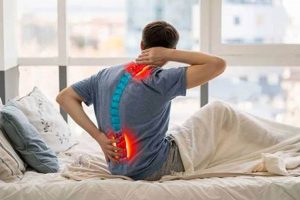
Optimal spinal alignment is a fundamental requirement for healthy sleep posture and musculoskeletal well-being. The relationship between spinal alignment and mattress firmness is a critical consideration in mattress selection. The mattress must provide adequate support to maintain the natural curvature of the spine, irrespective of sleeping position.
- Neutral Spine Position
A neutral spine position minimizes stress on intervertebral discs and surrounding soft tissues. The ideal medium-firm mattress facilitates this by preventing excessive sinking of the hips or shoulders, which can occur on softer mattresses, and by providing sufficient contouring to support the lumbar region. The goal is to replicate the natural spinal curves as if standing upright.
- Pressure Distribution
Even pressure distribution is directly linked to spinal alignment. When the spine is properly aligned, weight is distributed evenly across the body, minimizing pressure points that can cause discomfort and disrupt sleep. A mattress of inappropriate firmness can create concentrated pressure areas, leading to tossing and turning, and potentially chronic pain.
- Muscle Relaxation
Proper spinal alignment allows for complete muscle relaxation during sleep. When the spine is misaligned, muscles must work to compensate, leading to tension and fatigue. A mattress that supports the natural spinal curvature promotes muscle relaxation, improving sleep quality and reducing morning stiffness.
- Long-Term Spinal Health
Consistent use of a mattress that supports proper spinal alignment contributes to long-term spinal health. Over time, poor spinal alignment can lead to chronic back pain, disc degeneration, and nerve compression. Choosing a mattress with appropriate firmness is an investment in preventing these long-term health issues.
In summary, the selection of a medium-firm mattress should prioritize the maintenance of neutral spinal alignment. This contributes to immediate comfort and long-term spinal health. Considerations should include body weight, sleeping position, and individual comfort preferences. Rigorous assessment, potentially including trial periods, is crucial to determining the most suitable option.
2. Pressure Relief

Pressure relief is a primary function in mattress design, particularly relevant when considering the suitability of medium-firm models. The ability of a mattress to distribute weight evenly across the body minimizes concentrated pressure points, contributing directly to sleep comfort and overall musculoskeletal health.
- Conforming Support
Conforming support refers to the mattress’s capacity to adapt to the unique contours of the body. In the context of a medium-firm mattress, this entails providing sufficient give to cushion protruding areas like hips and shoulders, while maintaining overall support to prevent excessive sinking. For instance, a side sleeper often benefits from conforming support in these regions to avoid joint compression and subsequent discomfort.
- Weight Distribution
Optimal weight distribution is achieved when the mattress effectively disperses the body’s weight across its surface area. A medium-firm mattress ideally balances support and cushioning to prevent concentrated pressure on any single point. This even distribution reduces the risk of developing pressure sores, particularly relevant for individuals with limited mobility.
- Material Com
positionThe materials used in mattress construction play a critical role in pressure relief. Memory foam, latex, and advanced coil systems are frequently employed to enhance pressure-relieving properties. For example, a memory foam comfort layer conforms closely to the body, distributing weight and minimizing pressure points, while a supportive coil core ensures overall firmness and prevents sagging.
- Sleep Position Adaptability
The efficacy of pressure relief is contingent on accommodating various sleep positions. Back sleepers require support for the lumbar region to maintain spinal alignment, while side sleepers need cushioning for the shoulders and hips. Stomach sleepers, though less frequently recommended, necessitate sufficient firmness to prevent spinal hyperextension. A well-designed medium-firm mattress provides a balance of support and cushioning to cater to these diverse needs.
The interplay of conforming support, weight distribution, material composition, and sleep position adaptability dictates the pressure-relieving capabilities of a mattress. By mitigating concentrated pressure points and promoting even weight distribution, a carefully selected model in this firmness range enhances sleep quality and reduces the likelihood of musculoskeletal discomfort.
3. Motion Isolation
Motion isolation, a crucial feature in mattress design, significantly affects sleep quality, particularly for co-sleepers. The degree to which a mattress minimizes the transfer of movement from one area to another directly correlates with undisturbed rest. In the context of medium-firm mattresses, motion isolation is achieved through specific material properties and construction techniques, influencing the overall performance and suitability of the product. For instance, a couple sharing a bed may experience disrupted sleep if one partner frequently tosses and turns or gets in and out of bed. A mattress with poor motion isolation amplifies these movements, transmitting them across the surface and disturbing the other partner’s sleep. Conversely, effective motion isolation dampens these disturbances, allowing for more restful and uninterrupted sleep.
The integration of materials like memory foam and individually encased coils is instrumental in achieving optimal motion isolation within medium-firm mattresses. Memory foam’s viscoelastic properties absorb and dissipate movement, preventing its propagation across the mattress surface. Individually encased coils function independently, responding only to pressure applied directly above them, rather than transferring movement laterally. The effectiveness of these materials can be observed in scenarios where one partner can get out of bed without significantly disturbing the other partner’s sleep. This feature is especially valuable for individuals with different sleep schedules or those prone to restlessness during the night. It is vital to distinguish that the firmness level does not directly dictate motion isolation capabilities, rather, the material and design do.
In summary, motion isolation is an essential attribute of a mattress. Its significance is amplified in co-sleeping arrangements. Material selection and construction methods are critical determinants of motion isolation performance. A greater understanding of how specific materials and designs mitigate motion transfer allows consumers to make more informed decisions, leading to enhanced sleep quality. Further investigation into material science and mattress construction will serve to enhance the effectiveness of motion isolation technology.
4. Material Durability

Material durability is a cornerstone of any mattress’s value proposition, and this holds particularly true for those categorized as medium-firm. A mattress, regardless of its initial comfort level, is a long-term investment. Premature degradation of materials undermines the support, comfort, and overall sleep experience, rendering even the “best medium to firm mattress” unsatisfactory. The relationship between material quality and the longevity of a mattress is a direct one; inferior materials break down more quickly, leading to sagging, loss of support, and uneven surfaces. This, in turn, contributes to discomfort, disrupted sleep, and potential musculoskeletal issues. For example, a mattress utilizing low-density foam in its comfort layers may initially provide a pleasing surface feel, but this foam will compress and lose its resilience far more rapidly than a mattress constructed with higher-density, more durable materials. A further illustration involves coil systems; those manufactured from low-gauge steel are susceptible to bending and breaking under consistent pressure, leading to localized sagging and a compromised support structure.
The practical significance of understanding material durability extends to financial considerations. While a seemingly less expensive mattress may appear attractive initially, its shorter lifespan translates to more frequent replacements, ultimately costing more in the long run. Conversely, a higher-quality mattress, characterized by durable materials, will maintain its support and comfort characteristics for a longer period. This reduces the frequency of replacement and provides a superior return on investment. Consumer awareness of material specifications, such as foam density, coil gauge, and fabric strength, empowers informed decision-making. Certification programs, such as CertiPUR-US, provide a degree of assurance regarding the quality and longevity of foam materials. Similar certifications exist for latex and other mattress components.
In conclusion, material durability is an indispensable characteristic of a mattress deemed “best medium to firm.” It directly influences the mattress’s ability to provide consistent support and comfort over its lifespan. Investing in mattresses constructed with high-quality, durable materials is a sound financial decision and a crucial step in ensuring consistent sleep quality and long-term musculoskeletal health. The challenge lies in discerning genuine durability claims from marketing hype, necessitating a thorough understanding of material specifications and a critical evaluation of product certifications.
5. Temperature Neutrality
Temperature neutrality is a key attribute directly influencing sleep quality, and it is a critical consideration when evaluating a mattress’s suitability, especially within the medium-firm category. A mattress that retains excessive heat can disrupt sleep cycles, leading to restlessness and discomfort. Conversely, a temperature-neutral mattress facilitates a more stable sleep environment, promoting deeper and more restorative rest. The connection between mattress construction and temperature regulation is a direct one: materials and design elements either contribute to or mitigate heat retention. For instance, traditional memory foam, known for its conforming properties, can trap heat due to its dense, closed-cell structure. Individuals prone to overheating may find this type of mattress unsuitable, regardless of its firmness level. Conversely, mattresses incorporating open-cell foam, gel infusions, or breathable coil systems are designed to dissipate heat more effectively, promoting a co
oler and more comfortable sleep surface. The effectiveness of these design features can be quantified by measuring the mattress’s thermal conductivity and its ability to regulate temperature over a sustained period.
Consider a real-world scenario: an individual residing in a warm climate, or someone who naturally runs hot, chooses a medium-firm mattress constructed with traditional memory foam. Despite the mattress providing adequate support and pressure relief, the retained heat disrupts their sleep, leading to frequent awakenings and a general feeling of discomfort. Conversely, the same individual experiences significantly improved sleep quality when transitioning to a mattress of similar firmness that incorporates breathable materials and a design optimized for airflow. The practical significance of this lies in recognizing that mattress selection must extend beyond firmness and support to encompass thermal properties. Retailers are beginning to feature new material such as PCM (Phase Change Material) to mitigate temperature, though the long term life is still in question. This understanding allows consumers to prioritize mattresses that align with their individual thermal needs, ensuring a more comfortable and restorative sleep experience.
In summary, temperature neutrality is not merely a desirable feature in a mattress; it is a fundamental component of sleep comfort and overall well-being. The ability of a mattress to regulate temperature effectively is directly linked to its materials and construction. Consumers should prioritize mattresses with breathable designs and temperature-regulating materials, particularly if they are prone to overheating or reside in warmer climates. The challenge lies in accurately assessing a mattress’s thermal properties before purchase, which necessitates thorough research, examination of material specifications, and consideration of independent reviews. Selecting the right mattress from “best medium to firm mattress” options, with adequate temperature neutrality is a vital step toward achieving optimal sleep quality.
6. Edge Support
Edge support, defined as the structural reinforcement along the perimeter of a mattress, directly influences its usable surface area and overall stability. The effectiveness of edge support is particularly relevant when evaluating the features of a mattress marketed as the “best medium to firm mattress,” as it impacts both comfort and longevity. Insufficient edge support causes the mattress to compress excessively near the edges, leading to a “roll-off” sensation. This diminishes the available sleeping space, particularly for individuals who share a bed or those who tend to sleep close to the edge. For example, a couple sharing a queen-sized mattress may find that inadequate edge support restricts their individual sleeping areas, forcing them toward the center of the bed and disrupting their sleep. The practical significance of robust edge support extends beyond comfort. A well-supported edge improves the mattress’s structural integrity, preventing sagging and maintaining its intended shape over time. This prolongs the mattress’s lifespan and ensures consistent support across its entire surface.
Several factors contribute to the quality of edge support. Encased coil systems, where individual coils are wrapped in fabric pockets, often provide better edge support than traditional open coil systems. The encasement prevents the coils from leaning or shifting, maintaining their vertical alignment even under pressure. Foam encasement, where high-density foam surrounds the perimeter of the mattress, is another common method for enhancing edge support. The density and firmness of the foam directly impact its ability to resist compression and provide a stable edge. Hybrid mattresses, which combine both coil and foam technologies, often employ a combination of these techniques to maximize edge support. An illustrative case would be a mattress using high-density foam rails surrounding a pocketed coil system; the foam provides resistance to compression, while the pocketed coils ensure minimal motion transfer across the sleeping surface.
In summary, edge support is an indispensable characteristic of a “best medium to firm mattress.” It directly impacts usable sleep surface, overall stability, and long-term durability. Effective edge support is achieved through a combination of design elements and material selection. Consumers should prioritize mattresses with robust edge support, particularly if they share a bed or require maximum use of the mattress’s surface area. The challenge lies in accurately assessing edge support prior to purchase, which may necessitate in-store testing and a careful examination of product specifications. Therefore selecting among the best medium to firm mattress options needs careful consideration.
Frequently Asked Questions
The subsequent section addresses prevalent inquiries regarding medium-firm mattresses. Information provided is intended to clarify common misconceptions and provide comprehensive guidance for informed decision-making.
Question 1: Is a medium-firm mattress suitable for all sleeping positions?
While medium-firm mattresses offer a balance of support and cushioning, suitability varies based on individual preferences and physiological needs. Side sleepers may require a slightly softer surface for optimal pressure relief at the hips and shoulders, whereas stomach sleepers generally benefit from the increased support of a firmer mattress to prevent spinal hyperextension. Back sleepers typically find medium-firm options conducive to maintaining proper spinal alignment.
Question 2: How does body weight influence the selection of a medium-firm mattress?
Body weight is a critical factor. Individuals with higher body weights require a mattress with greater support to prevent excessive sinking, potentially necessitating a firmer option within the medium-firm range. Conversely, lighter individuals may find a less firm mattress more comfortable, as it allows for greater contouring and pressure relief.
Question 3: What is the expected lifespan of a medium-firm mattress, and how can it be extended?
The lifespan of a medium-firm mattress generally ranges from seven to ten years, contingent upon material quality, usage patterns, and maintenance practices. Regular rotation, the use of a mattress protector, and adherence to the manufacturer’s care instructions can extend its lifespan.
Question 4: How can the firmness of a mattress be accurately assessed prior to purchase?
Firmness assessment is inherently subjective, but several strategies can enhance accuracy. In-store testing, utilizing trial periods, and consulting independent reviews provide valuable insights. Paying attention to descriptions of firmness level is also important. The Stearns and Foster Lux Estate Cassatt model offers a medium feel that can be tested out at a local retailer.
Question 5: What materials contribute to temperature regulation in a medium-firm mattress?
Materials such as open-cell foam, gel-infused memory foam, and breathable coil systems promote airflow and dissipate heat. Mattresses incorporating natural fibers like cotton and wool can also enhance temperature regulation. Mattress brands are creating new cooling technology all the time such as Purple’s GelFlex Grid, a proprietary hyper-elastic polymer material designed with open grid channels to create a zero gravity feel and excellent airflow.
Question 6: How important is edge support in a medium-firm mattress, and how can it be evaluated?
Adequate edge support maximizes the usable surface area of the mattress and enhances stability. It can be evaluated by sitting on the edge of the mattress to assess the degree of compression. Mattresses with reinforced edges, such as those incorporating high-density foam or encased coil systems, typically offer superior edge support.
This compilation of frequently asked questions serves as a resource for understanding key considerations pertaining to medium-firm mattresses. By addressing common concerns and providing detailed guidance, this information empowers consumers to make well-informed decisions.
The succeeding section will synthesize the information presented, offering concluding remarks and actionable recommendations.
Concluding Assessment
The preceding analysis has explored diverse facets relevant to the selection of a “best medium to firm mattress.” Factors such as spinal alignment, pressure relief, motion isolation, material durability, temperature neutrality, and edge support have been examined in detail. This exploration has underscored the importance of aligning mattress characteristics with individual needs and preferences, emphasizing that no single mattress universally satisfies all requirements.
The ultimate decision necessitates a rigorous evaluation of product specifications, a thorough understanding of personal sleep patterns, and a commitment to prioritizing long-term well-being. Selecting a mattress is an investment in sustained health and restorative sleep; consumers are encouraged to approach this decision with diligence and informed awareness.

![Top-Rated Best Camper Mattress For RV Comfort - [Year] | Organic & Natural Mattress Buyer’s Guide: Non-Toxic Sleep Solutions](https://mattressworldpa.com/wp-content/uploads/2025/07/th-7833-300x200.jpg "Top-Rated Best Camper Mattress For RV Comfort - [Year] Organic & Natural Mattress Buyer’s Guide: Non-Toxic Sleep Solutions")