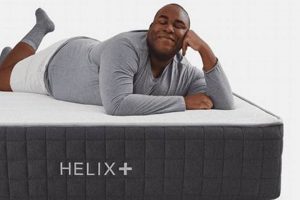
A sleeping surface employing time-tested construction methods and materials, typically featuring innerspring coils, cotton, wool, or latex padding, represents a classical approach to bedding. These mattresses prioritize support and durability, aiming for a balance between firmness and comfort. An example would be an innerspring mattress with a tightly quilted cotton cover, designed to provide consistent support and breathability.
The enduring appeal of this bedding style stems from its proven reliability and affordability. Its straightforward construction facilitates ease of maintenance and often translates to a longer lifespan compared to more complex designs. Historically, such mattresses were the industry standard, providing a foundation for the evolution of sleep technology and offering a familiar and dependable option for consumers.
Understanding the qualities, construction, and suitability of different options within this established category is crucial for informed decision-making. The subsequent sections will explore the specific attributes, compare various constructions, and guide consumers towards selecting a model aligned with individual needs and preferences, ensuring a restful and supported sleep experience.
Tips for Selecting a Superior Innerspring Bed
Choosing the right innerspring mattress requires careful consideration of several factors to ensure optimal comfort, support, and longevity. Prioritizing quality materials and construction methods is paramount for a worthwhile investment.
Tip 1: Coil Count and Gauge: Examine the coil count, which generally indicates the level of support. Higher coil counts often correlate with better contouring and reduced motion transfer. Also, consider the coil gauge; lower gauge numbers signify thicker, firmer coils, suitable for individuals requiring more robust support.
Tip 2: Material Quality: Evaluate the quality of materials used in the comfort layers. Natural fibers like cotton and wool offer enhanced breathability and moisture-wicking properties compared to synthetic alternatives. High-density foams contribute to improved durability and resistance to sagging.
Tip 3: Edge Support: Assess the mattress’s edge support, particularly if sharing the bed. Strong edge support prevents roll-off and maximizes the usable sleep surface.
Tip 4: Quilting and Ticking: The quilting pattern and ticking material influence the surface feel and airflow. Tightly quilted surfaces may feel firmer, while looser quilts offer a plusher initial sensation. Opt for breathable ticking fabrics to regulate temperature.
Tip 5: Warranty and Trial Period: Review the manufacturer’s warranty for coverage against defects and premature wear. A generous trial period allows for in-home testing to ensure satisfaction before making a final commitment.
Tip 6: Box Spring Compatibility: Ensure the chosen mattress is compatible with the existing or intended box spring. An incompatible foundation can compromise support and void the warranty.
Selecting a well-constructed mattress translates to improved sleep quality, reduced pressure points, and prolonged product lifespan. Adhering to these guidelines facilitates a more informed decision, leading to a greater return on investment.
The subsequent section will delve into the long-term maintenance strategies designed to preserve the integrity and comfort of this product.
1. Coil Count

Coil count, within the context of a traditional innerspring mattress, refers to the total number of individual coils contained within its support core. This metric is a primary indicator of the mattress’s potential for both support and contouring. A higher coil count generally suggests a greater capacity to conform to the body’s unique shape, distributing weight more evenly and reducing pressure points. For example, a mattress with 800 individually wrapped coils may offer superior support compared to one with 400 coils, particularly for individuals with sensitivities to pressure.
The relationship between coil count and perceived quality directly affects the selection of a mattress. Mattresses marketed as offering enhanced comfort or improved spinal alignment often feature higher coil counts, accompanied by specialized coil designs such as pocketed coils or zoned support systems. However, coil count alone does not guarantee superior performance. The gauge (thickness) of the wire used to form the coils, the type of steel, and the quality of the surrounding comfort layers also contribute significantly to the overall sleep experience. A mattress with a high coil count using low-gauge steel might not provide the same level of support as one with a lower coil count using high-gauge steel.
Therefore, the consideration of coil count should be balanced with an assessment of other construction elements. While a higher number of coils can indicate enhanced contouring and support capabilities, a holistic evaluation of materials and design is crucial to determine the mattress’s long-term performance and suitability. Misinterpreting coil count as the sole determinant of quality can lead to selecting a mattress that ultimately fails to deliver the expected comfort and support. The goal is to seek a harmony between coil quantity and overall structural integrity.
2. Spring Gauge

Spring gauge, in the context of a mattress, specifically an innerspring model, denotes the thickness of the wire used to construct the coils. Measured numerically, a lower gauge indicates a thicker, more robust wire, while a higher gauge signifies a thinner, more flexible wire. Within a mattress, spring gauge directly influences the overall firmness, support, and durability. A thicker wire, typical of lower gauge springs, provides greater resistance to compression, resulting in a firmer feel and enhanced support, particularly beneficial for individuals requiring substantial spinal alignment. Conversely, a higher gauge wire offers increased compressibility, leading to a softer feel and greater contouring to the body’s shape. The choice of spring gauge is therefore a critical factor in determining the suitability of a mattress for individual needs. For example, an individual with a higher body mass or a preference for a firm sleeping surface would likely benefit from a mattress utilizing lower gauge springs.
The interplay between spring gauge and coil count contributes significantly to the overall performance of the best traditional mattress. While coil count determines the number of support points, spring gauge dictates the level of resistance provided by each individual coil. A high coil count combined with a lower spring gauge offers a balance between contouring and support, adapting to the body’s curves while preventing excessive sinking. This combination is often found in mattresses designed to alleviate pressure points and promote proper spinal alignment. In contrast, a lower coil count with a hi
gher spring gauge results in a firmer, more rigid sleeping surface. This configuration is often preferred by individuals seeking maximum support and minimizing motion transfer. A practical illustration is a mattress designed for athletes recovering from strenuous activity; such mattresses often incorporate lower gauge springs to provide the firm support necessary for optimal recovery.
Ultimately, the optimal spring gauge is subjective, depending on individual preferences and requirements. Understanding the correlation between spring gauge, coil count, and overall construction allows consumers to make informed decisions that align with their specific needs. Ignoring the significance of spring gauge can result in selecting a mattress that fails to provide adequate support, leading to discomfort and potentially exacerbating existing back problems. Therefore, when evaluating a mattress, it is crucial to consider not only the quantity of coils but also the thickness of the wire used to construct them. A comprehensive understanding of this factor significantly enhances the likelihood of selecting a product that promotes restful sleep and long-term spinal health.
3. Material Density

Material density, in the context of a mattress, particularly a traditional innerspring model, signifies the mass per unit volume of the materials used within its construction, most notably in the comfort layers. This metric directly influences the mattress’s durability, support characteristics, and overall longevity. Higher density materials generally resist compression and deformation more effectively than lower density counterparts, leading to improved performance over time.
- Foam Density and Support
Foam density is a crucial attribute, as it determines the foam’s ability to provide sustained support. High-density foams, often found in the comfort layers of a mattress, conform to the body’s contours while preventing excessive sinking. This characteristic helps maintain proper spinal alignment and reduce pressure points. Low-density foams, while offering initial softness, tend to degrade more rapidly, leading to sagging and a compromised sleep surface. A mattress marketed as providing orthopedic support, for instance, will typically incorporate high-density memory foam or latex to ensure consistent support over the long term.
- Fiber Density and Breathability
The density of natural fibers such as cotton or wool, used in quilting or as a fire retardant, impacts both comfort and breathability. Denser fibers, while potentially offering greater durability, can restrict airflow, leading to heat buildup. Lower-density, more open weaves promote air circulation, helping regulate temperature and wick away moisture. The ideal balance depends on the specific climate and individual sleeping preferences. An example would be a mattress employing a loosely woven, low-density wool layer to enhance breathability in warmer climates.
- Impact on Durability
Material density is a key determinant of a mattress’s lifespan. Higher density materials resist compression and sagging, extending the usable life of the product. A mattress constructed with low-density foams or fibers will exhibit signs of wear and tear more quickly than one utilizing higher density materials. This is particularly relevant in areas of high pressure, such as the hips and shoulders. Therefore, a mattress with a higher density foam core and comfort layers will generally provide better long-term support and resist deformation, making it a more durable option.
- Density and Cost
Material density often correlates with the cost of a mattress. Higher density materials typically require more resources and specialized manufacturing processes, resulting in a higher price point. However, the increased cost is often justified by the improved durability, support, and overall performance of the mattress. While lower-density options may be more budget-friendly, their reduced lifespan and potential for compromised comfort may ultimately make them a less economical choice in the long run. Investing in a mattress with appropriate material density contributes to a more comfortable and supportive sleep experience over an extended period.
In conclusion, material density is an essential consideration in the selection of a suitable innerspring mattress. Its influence on support, durability, breathability, and overall cost necessitates careful evaluation. Opting for a mattress with appropriate material densities ensures long-term comfort, reduces the risk of premature wear, and ultimately contributes to a more restful sleep experience. Understanding these nuances enables informed decision-making and maximizes the investment in a high-quality product.
4. Edge Support
Edge support refers to the structural reinforcement along the perimeter of a mattress, designed to prevent collapse or excessive compression when weight is applied near the edges. Within the context of a traditional innerspring mattress, adequate edge support is a critical attribute that contributes significantly to the overall sleep surface usability and the product’s longevity. Insufficient edge support leads to a sensation of rolling off the bed, reducing the accessible sleeping area. For example, couples sharing a bed often require strong edge support to maximize usable space and minimize disturbance from a partner’s movements. A poorly supported edge can also degrade more rapidly over time, leading to sagging and an uneven sleep surface.
The construction of edge support in a traditional mattress commonly involves the incorporation of high-density foam rails, reinforced coils, or metal supports along the perimeter. These features counteract the natural tendency of the coils to compress outwards under pressure. Without adequate edge reinforcement, activities such as sitting on the edge of the bed for dressing or leaning over to reach a bedside table can cause significant and irreversible damage to the mattress’s structure. A practical example involves a mattress used regularly by an individual who sits on the edge to work; without robust edge support, this area will likely exhibit premature wear and compression, affecting the mattress’s overall comfort and support.
Therefore, strong edge support is an integral component of a high-quality traditional innerspring mattress. It not only expands the usable sleep surface and prevents roll-off but also extends the mattress’s lifespan by minimizing edge sagging and structural degradation. Consumers should evaluate edge support by sitting firmly on the mattress’s edge and observing the degree of compression. A well-designed mattress will exhibit minimal compression and maintain a stable, supportive edge. In summation, considering edge support is crucial when assessing the suitability of a traditional innerspring mattress, ensuring long-term comfort, maximized usability, and enhanced product durability. Neglecting this aspect can lead to dissatisfaction and a reduced return on investment.
5. Quilting Design
Quilting design, as applied to the surface of a traditional innerspring mattress, significantly impacts the overall comfort, breathability, and durability of the product. The p
attern and density of the quilting stitches influence the feel of the mattress surface, affecting the initial sensation of softness or firmness. A tighter quilting pattern generally produces a firmer surface, while a looser pattern allows for greater plushness. Moreover, the choice of quilting materials, such as cotton, wool, or synthetic fibers, directly affects the mattress’s ability to regulate temperature and wick away moisture, crucial factors for maintaining a comfortable sleep environment. For instance, a mattress with a diamond-pattern quilting using breathable cotton will likely promote better airflow and reduce heat retention compared to a tightly packed, synthetic quilting design.
The quilting design also plays a vital role in securing the underlying comfort layers and preventing shifting or bunching of materials. A well-executed quilting pattern distributes pressure evenly across the mattress surface, minimizing the development of localized wear spots and extending the product’s lifespan. The stitching acts as an anchor, maintaining the integrity of the comfort layers and preventing them from migrating or compressing unevenly over time. An example is a channel-quilted mattress, where parallel lines of stitching create distinct channels that keep the filling materials evenly distributed, reducing the likelihood of sagging or lumpiness. Furthermore, the depth and complexity of the quilting pattern can add to the mattress’s perceived quality and aesthetic appeal, influencing the consumer’s purchasing decision.
In summary, quilting design is not merely a superficial aesthetic element; it is an integral component that affects the performance and longevity of a traditional innerspring mattress. The choice of pattern, materials, and stitching density directly influences the mattress’s comfort, breathability, and structural integrity. Understanding the relationship between quilting design and these key attributes allows consumers to make more informed purchasing decisions, selecting a mattress that provides optimal support, temperature regulation, and durability for a restful sleep experience. Neglecting the importance of quilting design can result in dissatisfaction with the mattress’s performance and a reduced lifespan, underscoring its practical significance in achieving a truly high-quality sleeping surface.
6. Breathability

Breathability, in the context of a traditional innerspring mattress, refers to the mattress’s capacity to allow air circulation through its various layers. This characteristic directly influences temperature regulation, moisture management, and overall sleeping comfort. A mattress with poor breathability can trap heat and humidity, leading to discomfort and potentially disrupting sleep. Conversely, enhanced breathability promotes a cooler, drier sleep environment, contributing to a more restful and restorative experience. The ability of a mattress to “breathe” is therefore a critical factor when evaluating its suitability and potential for long-term satisfaction.
- Material Composition and Airflow
The materials used in the construction of a mattress significantly influence its breathability. Natural fibers, such as cotton and wool, possess inherent breathability due to their open cellular structure, allowing for air circulation and moisture wicking. Synthetic materials, like certain types of memory foam, can restrict airflow, leading to heat retention. The arrangement of these materials within the mattress also plays a role; layered construction with strategically placed breathable materials can optimize airflow and enhance temperature regulation. A traditional innerspring mattress utilizing a cotton cover, wool batting, and open-cell foam in the comfort layers will typically exhibit superior breathability compared to a mattress with a synthetic cover and dense memory foam.
- Coil System and Ventilation
The coil system within a traditional innerspring mattress contributes to overall breathability by creating open spaces for air circulation. Innerspring mattresses, by their very nature, have more inherent breathability than solid foam mattresses due to the airspace within the coil system. However, the density and arrangement of the coils can affect airflow. Densely packed coils may restrict ventilation, while a more open coil design promotes better air circulation. Furthermore, some mattresses incorporate ventilation channels or perforations within the foam layers to further enhance breathability. A pocketed coil mattress, for example, allows for better airflow compared to a traditional interconnected coil system.
- Quilting Design and Surface Breathability
The quilting design on the surface of a mattress affects surface breathability and the transfer of heat away from the body. A looser quilting pattern, with more space between stitches, allows for greater airflow and reduces heat retention. Tightly quilted surfaces, on the other hand, can restrict airflow and create a warmer sleep surface. The materials used in the quilting also contribute to breathability; natural fibers like cotton are preferred over synthetic materials for their moisture-wicking properties. A mattress with a breathable cotton cover and a loose quilting pattern will generally provide a cooler sleep surface compared to a mattress with a synthetic cover and a tightly quilted design.
- Impact on Sleep Quality
The breathability of a mattress directly impacts sleep quality by influencing temperature regulation and moisture management. A mattress that retains heat can lead to overheating, causing restlessness and disrupting sleep patterns. Similarly, a mattress that traps moisture can create an uncomfortable and unhygienic sleep environment. Enhanced breathability promotes a cooler, drier sleep surface, reducing the likelihood of overheating and improving overall sleep quality. Individuals who tend to sleep hot or live in warmer climates often benefit significantly from a mattress with superior breathability. Therefore, breathability is a critical factor to consider when selecting a mattress to ensure a comfortable and restorative sleep experience.
In conclusion, breathability is a vital characteristic of a best traditional mattress, influencing comfort, temperature regulation, and sleep quality. Factors such as material composition, coil system design, and quilting pattern all contribute to a mattress’s ability to “breathe”. By prioritizing breathability, consumers can select a mattress that promotes a cooler, drier, and more restful sleep environment, maximizing the benefits of a traditional innerspring construction.
7. Durability
Durability constitutes a paramount consideration when evaluating a traditional mattress. It encapsulates the mattress’s capacity to withstand prolonged use and maintain its structural integrity and comfort characteristics over an extended period. A durable mattress represents a sound investment, delivering consistent performance and minimizing the need for premature replacement. The factors contributing to the durability of a traditional mattress are multifaceted and warrant careful examination.
- Coil System Integrity
The coil system forms the core support structure of a traditional innerspring mattress. The gauge of the steel, the coil density, and the method of interconnection all contribute to its overall durability. Higher gauge steel coils, while potentially offering less initial give, demonstrat
e greater resistance to deformation and sagging over time. Similarly, a coil system with a higher coil count generally provides more uniform support, reducing localized stress and extending the mattress’s lifespan. The method of interconnection, whether through individual pocketing or a continuous coil system, impacts motion transfer and overall stability. A robust coil system ensures consistent support and minimizes the development of indentations, contributing significantly to the mattress’s long-term durability. - Material Quality and Resilience
The quality and resilience of the materials used in the comfort layers of a traditional mattress directly influence its ability to resist compression and maintain its original shape. High-density foams and natural fibers, such as latex and wool, exhibit greater resistance to degradation and compression compared to lower-density synthetic alternatives. These materials retain their loft and support characteristics over extended periods, providing consistent comfort and preventing the development of sagging or body impressions. The selection of high-quality, resilient materials is therefore crucial for ensuring the long-term durability and performance of a traditional mattress.
- Construction Techniques and Reinforcements
The construction techniques employed in assembling a traditional mattress contribute significantly to its overall durability. Reinforced edge support, for example, prevents edge collapse and maximizes the usable sleep surface, extending the mattress’s lifespan. Proper quilting and stitching techniques secure the comfort layers and prevent shifting or bunching of materials, maintaining a uniform surface and reducing localized wear. The use of durable fabrics for the mattress cover protects the underlying materials from damage and extends the mattress’s overall longevity. Attention to detail in construction and the incorporation of reinforcements contribute to a more robust and durable mattress.
- Maintenance and Care
Even the most durable mattress requires proper maintenance and care to maximize its lifespan. Regular rotation and flipping (if applicable) distribute wear evenly and prevent the development of localized indentations. Protecting the mattress from spills and stains through the use of a mattress protector prevents damage to the comfort layers and extends its lifespan. Avoiding excessive weight or pressure on specific areas of the mattress minimizes the risk of structural damage. Adhering to recommended maintenance practices contributes significantly to the long-term durability and performance of a traditional mattress.
In conclusion, durability is a critical attribute of the traditional mattress, encompassing the coil system, material selection, construction techniques, and maintenance practices. A durable mattress represents a valuable investment, delivering consistent support, comfort, and performance over an extended period. Prioritizing durability ensures long-term satisfaction and minimizes the need for premature replacement, making it a paramount consideration in the selection of a best traditional mattress.
Frequently Asked Questions About Traditional Mattresses
The following addresses common inquiries regarding traditional innerspring mattresses, offering factual information to aid in informed decision-making.
Question 1: What defines a “traditional” mattress?
A traditional mattress typically refers to an innerspring mattress constructed with interconnected or individually wrapped coils and various comfort layers composed of materials such as cotton, wool, or foam. These mattresses prioritize support and affordability, representing a conventional approach to bedding.
Question 2: How does coil count affect the performance of a traditional mattress?
Coil count generally indicates the density of support within the mattress. A higher coil count, especially with individually wrapped coils, often provides better contouring to the body and reduced motion transfer. However, coil gauge and overall construction also significantly impact performance.
Question 3: What is the significance of spring gauge in a traditional mattress?
Spring gauge refers to the thickness of the wire used to create the coils. A lower gauge (thicker wire) typically results in a firmer, more supportive mattress, while a higher gauge (thinner wire) offers a softer feel. The appropriate gauge depends on individual preference and support needs.
Question 4: How important is edge support in a traditional mattress, and how can it be assessed?
Edge support is crucial for maximizing the usable sleep surface and preventing roll-off. It can be assessed by sitting on the edge of the mattress; a quality mattress will exhibit minimal compression and maintain a stable edge.
Question 5: What materials contribute to breathability in a traditional mattress?
Natural fibers such as cotton and wool promote breathability due to their inherent moisture-wicking properties. Open-cell foam and strategically placed ventilation channels can also enhance airflow within the mattress.
Question 6: How can the lifespan of a traditional mattress be extended?
Regular rotation, the use of a mattress protector, and appropriate foundation support contribute to the longevity of a traditional mattress. Avoiding excessive weight or pressure on specific areas can also prevent premature wear.
In summary, understanding the construction, materials, and maintenance requirements of a traditional mattress facilitates informed decision-making and ensures a more restful and supported sleep experience.
The following section will provide a comparison with other types of mattresses available in the market.
Conclusion
The preceding analysis has meticulously explored the attributes defining the best traditional mattress. Coil count, spring gauge, material density, edge support, quilting design, breathability, and durability have been examined as critical determinants of quality and performance. A comprehensive understanding of these elements empowers consumers to make discerning choices, aligning their bedding selection with specific needs and preferences.
The enduring legacy of the best traditional mattress rests on its proven reliability and affordability. As sleep technology advances, recognizing the fundamental principles of support and comfort remains paramount. Continued research and innovation are essential to refining this established design, ensuring it remains a viable and competitive option for individuals seeking a restful and supported sleep experience for years to come.
![Top Best Affordable Mattress Companies of [Year] Reviewed | Organic & Natural Mattress Buyer’s Guide: Non-Toxic Sleep Solutions](https://mattressworldpa.com/wp-content/uploads/2025/07/th-7840-300x200.jpg "Top Best Affordable Mattress Companies of [Year] Reviewed Organic & Natural Mattress Buyer’s Guide: Non-Toxic Sleep Solutions")

![Top-Rated: Best Firm Innerspring Mattress [Guide & Reviews] | Organic & Natural Mattress Buyer’s Guide: Non-Toxic Sleep Solutions](https://mattressworldpa.com/wp-content/uploads/2025/07/th-7838-300x200.jpg "Top-Rated: Best Firm Innerspring Mattress [Guide & Reviews] Organic & Natural Mattress Buyer’s Guide: Non-Toxic Sleep Solutions")

![Top Spots: Best Place to Buy Twin Mattress [Guide] | Organic & Natural Mattress Buyer’s Guide: Non-Toxic Sleep Solutions](https://mattressworldpa.com/wp-content/uploads/2025/07/th-7836-300x200.jpg "Top Spots: Best Place to Buy Twin Mattress [Guide] Organic & Natural Mattress Buyer’s Guide: Non-Toxic Sleep Solutions")