A twin XL mattress, dimensionally longer than a standard twin, when paired with an adjustable bed frame, offers individualized comfort and support. The combination allows for customizable sleeping positions, potentially alleviating pressure points and promoting spinal alignment. For example, an individual recovering from surgery might find the elevated head and leg positions offered by the pairing advantageous.
The significance of this pairing lies in its adaptability to diverse needs and preferences. Historically, adjustable beds were primarily found in hospital settings; however, advancements in design and technology have made them increasingly popular for home use. The result is a market demand for mattresses that can effectively conform to the contours of an adjustable base without compromising support or durability. The benefits extend to enhanced sleep quality, improved circulation, and increased comfort for activities such as reading or watching television in bed.
The following sections will explore key features to consider when selecting a compatible mattress, including factors such as material composition, flexibility, thickness, and motion isolation. Furthermore, a discussion of specific mattress types and their suitability for use with adjustable bed frames will be provided, offering insights into making an informed purchasing decision.
Selection Guidance
The selection of a suitable mattress for use with an adjustable bed requires careful consideration of several factors. These tips aim to provide guidance in navigating the options and identifying a mattress that meets individual needs.
Tip 1: Prioritize Flexibility: Mattresses intended for adjustable beds must possess sufficient flexibility to conform to the various angles and positions of the base. Latex and memory foam constructions typically exhibit greater flexibility than traditional innerspring models.
Tip 2: Assess Mattress Thickness: Extremely thick mattresses may impede the adjustable bed’s articulation, preventing it from achieving its full range of motion. Conversely, excessively thin mattresses might lack adequate support and comfort. A moderate thickness, typically between 10 and 14 inches, is generally recommended.
Tip 3: Evaluate Material Composition: Different materials offer varying degrees of support, contouring, and temperature regulation. Memory foam provides excellent pressure relief, while latex offers a more responsive and breathable surface. Hybrid models, combining elements of both, can provide a balance of comfort and support.
Tip 4: Consider Motion Isolation: If the bed is shared, motion isolation becomes a crucial factor. Mattresses with good motion isolation minimize the transfer of movement, preventing disturbances caused by a partner’s shifting or repositioning.
Tip 5: Verify Warranty Compatibility: Ensure that using a particular mattress with an adjustable bed does not void the manufacturer’s warranty. Certain mattresses may not be designed for use with adjustable bases, and using them in such a manner could invalidate the warranty coverage.
Tip 6: Read Customer Reviews: Gathering insights from other consumers who have used the mattress with an adjustable bed can provide valuable information regarding its performance, durability, and overall satisfaction.
Tip 7: Check Edge Support: Reinforced edges offer greater stability and prevent sagging when sitting on the side of the mattress. This feature can be particularly beneficial for individuals who require assistance getting in and out of bed.
By carefully considering these factors, individuals can increase the likelihood of selecting a mattress that provides optimal comfort, support, and compatibility with an adjustable bed.
The following section will delve into specific mattress types and their compatibility, providing further clarity in the selection process.
1. Flexibility

The capacity of a twin XL mattress to conform to the contours of an adjustable bed frame is paramount. This attribute, termed flexibility, dictates the degree to which the mattress can bend and articulate without compromising its structural integrity or comfort. Inadequate flexibility can lead to reduced adjustability, uneven support, and premature wear of the mattress.
The cause-and-effect relationship is direct: greater flexibility permits a wider range of adjustable bed positions, maximizing the therapeutic benefits of elevation and articulation. Conversely, a rigid mattress restricts the bed’s movement, potentially causing discomfort or preventing the user from achieving desired sleep positions. For instance, a memory foam or latex mattress inherently possesses higher flexibility compared to a traditional innerspring model, allowing it to mold more readily to the adjustable frame. Consider a scenario where an individual seeks to elevate their legs to improve circulation; a flexible mattress would seamlessly adapt to this position, providing consistent support, while a stiff mattress might create pressure points and discomfort.
Understanding the practical significance of flexibility in mattress selection for adjustable beds is crucial. Choosing a mattress designed for adjustable base compatibility ensures optimal performance and extends the lifespan of both the mattress and the adjustable bed frame. The ultimate goal is to facilitate restorative sleep and improve overall well-being by providing a comfortable and supportive sleeping surface that fully utilizes the capabilities of the adjustable base. Challenges may arise when manufacturers don’t clearly specify flexibility ratings, necessitating thorough research and consideration of material composition and construction techniques.
2. Material Composition

Material composition significantly impacts the suitability of a twin XL mattress for adjustable bed frames. The inherent properties of various materials determine the mattress’s flexibility, support, temperature regulation, and durability, all of which are critical factors in ensuring a comfortable and functional sleep experience on an adjustable base.
- Memory Foam
Memory foam is known for its ability to contour to the body, providing pressure relief and support. Its viscoelastic properties allow it to compress and distribute weight evenly, making it a suitable choice for adjustable beds. The conforming nature of memory foam ensures that the mattress adapts to the various positions of the adjustable base without creating pressure points. However, some memory foam mattresses can retain heat, which may be a concern for some users.
- Latex
Latex mattresses, whether natural or synthetic, offer a balance of support and responsiveness. Natural latex, in particular, is known for its durability and breathability. Its inherent elasticity allows it to conform to the adjustable bed frame while providing a supportive sleep surface. Latex also tends to sleep cooler than memory foam, which can be advantageous for individuals who sleep hot. The responsiveness of latex makes it easier to change positions on the mattress, an important consideration for adjustable beds.
- Innerspring
Traditional innerspring mattresses may not be the best choice for adjustable beds due to their rigid construction. The coils within the mattress may not be able to conform to the angles of the adjustable base, leading to uneven support and potential damage to the mattress. However, some innerspring mattresses are designed with individually wrapped coils, which can offer greater flexibility and contouring. The suitability of an innerspring mattress for an adjustable bed depends on its specific construction and flexibility.
- Hybrid
Hybrid mattresses combine the features of memory foam or latex with innerspring coils. This design aims to provide a balance of comfort, support, and breathability. The suitability of a hybrid mattress for an adjustable bed depends on the type and construction of the coils and the thickness and density of the foam layers. Hybrid mattresses with individually wrapped coils and flexible foam layers can be a good option for adjustable beds, offering both contouring and support.
The selection of materials influences a twin XL mattress’s adaptability to adjustable beds, emphasizing that careful consideration of material properties and construction methods is important when seeking compatible options. Evaluating a mattress’s composition provides insights into its likely performance and suitability for adjustable bed use, ensuring a more satisfactory sleep experience.
3. Thickness
Thickness plays a critical role in determining the suitability of a twin XL mattress for an adjustable bed. Mattress thickness directly influences its flexibility, support, and overall compatibility with the adjustable base. An improperly chosen thickness can lead to diminished adjustability, discomfort, and even damage to the mattress or bed frame. The cause-and-effect relationship is evident: excessively thick mattresses can impede the adjustable bed’s articulation, preventing it from achieving its full range of motion, while excessively thin mattresses may lack sufficient cushioning and support, resulting in pressure points and an unsatisfactory sleep experience. The practical significance lies in ensuring that the mattress can conform to the adjustable base’s various positions without compromising comfort or structural integrity.
For example, a mattress exceeding 14 inches in thickness may encounter difficulty bending at the joints of the adjustable bed, thereby reducing the range of achievable positions. Conversely, a mattress thinner than 8 inches might not provide adequate support, particularly in areas where the adjustable base creates a significant angle. A moderate thickness, generally between 10 and 14 inches, is typically recommended as it offers a balance of flexibility and support. Furthermore, the internal construction of the mattress, such as the density of foam layers or the type of coil system, can further impact how thickness contributes to overall performance on an adjustable base.
In conclusion, selecting an appropriate thickness is essential when choosing a twin XL mattress for an adjustable bed. The goal is to strike a balance between flexibility, support, and compatibility to maximize the benefits of the adjustable base. Challenges may arise when manufacturers do not explicitly state the recommended thickness range for adjustable bed compatibility, necessitating careful consideration of the mattress’s construction and consulting with knowledgeable retailers. This understanding contributes to informed consumer choices, facilitating improved sleep quality and long-term satisfaction with the mattress and adjustable bed combination.
4. Motion Isolation

Motion isolation is a critical attribute to consider when selecting a twin XL mattress for an adjustable bed, particularly for co-sleepers. It refers to the mattress’s ability to minimize the transfer of movement across its surface. In the context of an adjustable bed, where one individual might adjust their sleeping position without necessarily wanting to disturb their partner, effective motion isolation becomes paramount.
- Minimizing Partner Disturbance
The primary role of motion isolation is to prevent disturbances caused by a partner’s movements during sleep. This is particularly important on an adjustable bed, where raising or lowering the head or foot of the bed could create significant motion. For example, if one person adjusts the bed to read while the other is sleeping, a mattress with poor motion isolation would transmit that movement, potentially waking the sleeping partner. In contrast, a mattress with excellent motion isolation would absorb the movement, allowing the other person to continue sleeping undisturbed.
- Material Contribution to Isolation
The material composition of the mattress significantly influences its motion isolation capabilities. Memory foam and latex mattresses are generally superior at isolating motion compared to traditional innerspring mattresses. The dense, viscoelastic properties of memory foam effectively absorb movement, while latex offers a more responsive but still isolating surface. Innerspring mattresses, particularly those with interconnected coils, tend to transfer motion more readily. Hybrid mattresses that combine foam layers with individually wrapped coils can offer a compromise between support and motion isolation.
- Construction and Layering Effects
Mattress construction also plays a vital role. Thicker comfort layers, especially those made of high-density foam, tend to provide better motion isolation. The layering of different materials can also contribute to the overall effectiveness. For instance, a mattress with a thick layer of memory foam over a supportive base of high-density polyfoam will likely offer excellent motion isolation. Conversely, a mattress with minimal comfort layers or a thin layer of low-density foam will be less effective at absorbing movement.
- Impact on Sleep Quality
Effective motion isolation directly impacts sleep quality. By minimizing disturbances caused by a partner’s movements, it allows both individuals to sleep more soundly and experience deeper, more restorative sleep. This is especially critical for individuals who are light sleepers or who have medical conditions that make them more susceptible to sleep disruptions. Choosing a mattress with good motion isolation can significantly improve overall sleep quality and well-being.
In summary, motion isolation is an essential consideration when selecting a twin XL mattress for an adjustable bed, particularly for co-sleepers. Mattresses constructed with dense, motion-absorbing materials like memory foam or latex, and those with thicker comfort layers, tend to provide superior motion isolation. Selecting a mattress with effective motion isolation can minimize partner disturbances and promote higher sleep quality, maximizing the benefits of the adjustable bed.
5. Edge Support
Edge support, referring to the reinforcement of a mattress’s perimeter, directly influences the overall usability and longevity, particularly when paired with an adjustable bed. The significance of edge support as a component of a suitable mattress stems from its contribution to structural integrity and sleep surface maximization. Insufficient edge support causes mattress sagging along the borders, reducing the usable sleeping area and potentially leading to a feeling of instability, especially when sitting on the edge of the bed. In the context of an adjustable bed, where various positions can place increased stress on different sections of the mattress, robust edge support becomes even more crucial.
Consider a scenario where an individual relies on the edge of the mattress for support while getting in and out of bed; a mattress with poor edge support would compress significantly, making the task more difficult and potentially unsafe. Conversely, a mattress with reinforced edges provides a stable surface for sitting or transferring, promoting independence and reducing the risk of falls. Furthermore, strong edge support helps maintain the mattress’s shape over time, preventing premature sagging and ensuring consistent support across the entire surface, even as the adjustable bed is manipulated into different positions. This contributes to increased durability and a longer lifespan for the mattress.
Therefore, evaluating edge support is a critical step in selecting a twin XL mattress for an adjustable bed. Options with reinforced coils, high-density foam encasements, or specialized edge support systems offer greater stability and prevent premature wear. The practical significance of this understanding lies in optimizing comfort, safety, and the long-term performance of both the mattress and the adjustable bed. Neglecting edge support during mattress selection can lead to reduced usability, discomfort, and ultimately, a less satisfactory sleep experience.
6. Warranty Compatibility
Warranty compatibility represents a critical consideration when selecting a twin XL mattress for use with an adjustable bed frame. Understanding the terms and conditions of the mattress warranty is essential to ensure that using the mattress on an adjustable base does not invalidate the coverage.
- Adjustable Base Restrictions
Many mattress manufacturers include specific clauses in their warranties that address the use of their products with adjustable bed frames. Some warranties may be voided if the mattress is used on an incompatible adjustable base. The incompatibility often stems from concerns about the adjustable base placing undue stress on the mattress, potentially leading to premature wear, sagging, or structural damage. Checking for these restrictions is paramount before purchasing a mattress for use with an adjustable bed.
- Support Requirements and Frame Types
Mattress warranties frequently outline specific support requirements to maintain coverage. These requirements may include the type of foundation or frame that must be used with the mattress. Adjustable bed frames may need to meet particular specifications, such as having a certain number of support slats or a specific type of center support, to comply with the warranty terms. Failure to adhere to these support requirements can result in the warranty being voided, leaving the consumer responsible for any repair or replacement costs.
- Damage Exclusion Clauses
Warranty documents often contain damage exclusion clauses that identify circumstances under which the warranty will not apply. These clauses might explicitly exclude damage caused by using the mattress with an adjustable bed, particularly if the mattress is not designed or approved for such use. For example, if the mattress develops indentations or sagging due to the adjustable base not providing adequate support, the warranty may not cover the defect. Scrutinizing these exclusion clauses can help consumers avoid unexpected warranty issues.
- Claim Procedures and Documentation
Understanding the claim procedures outlined in the mattress warranty is crucial for effectively addressing any potential warranty claims. The claim process typically involves providing documentation, such as proof of purchase, photographs of the damage, and details about the adjustable bed frame being used. Failing to follow the prescribed claim procedures or lacking the necessary documentation can result in the claim being denied. Familiarizing oneself with these procedures ensures that warranty claims can be processed smoothly and efficiently.
The relationship between warranty compatibility and the selection of a twin XL mattress for an adjustable bed highlights the need for thorough research and careful consideration of warranty terms. Choosing a mattress that is explicitly approved for use with adjustable bases and ensuring compliance with all warranty requirements can protect the consumer’s investment and provide peace of mind.
Frequently Asked Questions
The following addresses common inquiries regarding the selection and use of twin XL mattresses with adjustable bed frames, providing clarity on critical considerations.
Question 1: What distinguishes a twin XL mattress from a standard twin mattress, and why is this relevant for adjustable beds?
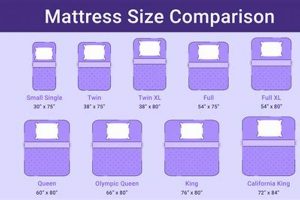
A twin XL mattress measures five inches longer than a standard twin. This additional length provides greater comfort for taller individuals. For adjustable beds, the increased length ensures that the user’s legs are fully supported, even when the bed is in a raised position, optimizing ergonomic benefits.
Question 2: Is every mattress type compatible with an adjustable bed frame?
No. Traditional innerspring mattresses with interconnected coils often lack the flexibility required to conform to the contours of an adjustable bed. Memory foam, latex, and hybrid mattresses with individually wrapped coils generally offer greater compatibility, although warranty stipulations should be verified.
Question 3: What mattress thickness is most appropriate for an adjustable bed?
A moderate thickness, typically between 10 and 14 inches, is generally recommended. Excessively thick mattresses may impede the adjustable bed’s articulation, while excessively thin mattresses might lack adequate support.
Question 4: How does motion isolation affect the experience of co-sleepers on an adjustable bed?
Effective motion isolation minimizes the transfer of movement across the mattress surface. This is particularly important when one individual adjusts the bed’s position, preventing disturbance to a sleeping partner. Memory foam and latex mattresses generally exhibit superior motion isolation compared to innerspring models.
Question 5: Why is edge support a crucial consideration for adjustable beds?
Adequate edge support prevents sagging along the mattress perimeter, maximizing the usable sleep surface and providing stability when sitting on the edge of the bed. This is particularly beneficial for individuals who require assistance getting in and out of bed or rely on the edge for support.
Question 6: How can one ensure that using a specific mattress with an adjustable bed will not void the manufacturer’s warranty?
The mattress warranty document should be carefully reviewed to determine if any restrictions apply regarding the use of the mattress with adjustable bed frames. Contacting the manufacturer directly to clarify any ambiguities is recommended. Compliance with all warranty requirements is essential to maintain coverage.
Understanding these points contributes to informed decision-making, optimizing the comfort and functionality of the adjustable bed and mattress combination.
The following section will summarize the key considerations for selecting a suitable mattress and reinforce the importance of informed consumer choices.
Conclusion
This exploration of the optimal sleeping surface for adjustable beds has underscored several crucial aspects: flexibility, material composition, thickness, motion isolation, edge support, and warranty compatibility. Each element contributes significantly to the overall functionality and user satisfaction when pairing a sleep system with an adjustable base. Selecting the incorrect sleeping surface can negate the ergonomic and therapeutic benefits that are inherent to the adjustable design.
Therefore, careful consideration of these factors is paramount when making a purchasing decision. Prioritizing material and construction methods that support flexibility and conforming capabilities is essential for a harmonious pairing. The long-term benefits of a properly matched sleep system are considerable. Potential purchasers are encouraged to thoroughly research and compare models, consult with sleep specialists, and understand manufacturers’ warranty stipulations. This will ensure an appropriate investment and contribute to restful sleep and well-being.
![Best Firm Mattress Twin XL [For Support & Comfort] | Organic & Natural Mattress Buyer’s Guide: Non-Toxic Sleep Solutions](https://mattressworldpa.com/wp-content/uploads/2025/07/th-916-300x200.jpg "Best Firm Mattress Twin XL [For Support & Comfort] Organic & Natural Mattress Buyer’s Guide: Non-Toxic Sleep Solutions")