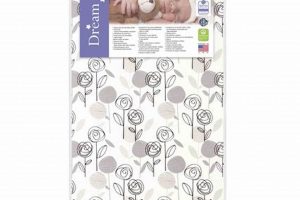
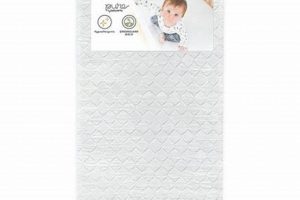
Infant bedding designed to promote air circulation and reduce the risk of overheating is a growing category within the juvenile products market. These textiles typically utilize specialized weaves or materials that enhance ventilation, aiming to maintain a more consistent temperature for the sleeping infant. An example would be a sheet constructed from a loosely woven cotton or a synthetic fiber known for its moisture-wicking properties, designed to be used with a standard-sized crib mattress.
The use of such bedding is driven by concerns regarding infant safety and comfort. Research suggests that overheating can be a contributing factor to Sudden Infant Death Syndrome (SIDS). Enhanced airflow can mitigate this risk by helping to regulate the infant’s body temperature during sleep. Historically, parents relied on layering blankets for warmth, but contemporary recommendations emphasize a minimalist approach to crib furnishing, prioritizing breathability to improve infant wellbeing.
The following sections will delve into the specific materials used in the manufacture of these breathable textiles, explore the regulatory standards that govern their production and sale, and examine the scientific evidence supporting their purported benefits. Furthermore, this analysis will consider the perspectives of pediatricians and sleep safety experts on the appropriate use and selection of such infant bedding products.
Guidance on Selecting Breathable Crib Mattress Sheets
Optimal selection of infant bedding requires careful consideration of material composition, construction, and safety certifications. Prioritizing breathable options can contribute to a safer and more comfortable sleep environment for infants.
Tip 1: Verify Material Composition: Natural fibers like cotton or linen are often favored for their inherent breathability. Synthetics such as polyester microfiber should be assessed for their air permeability and moisture-wicking properties.
Tip 2: Examine Weave Density: Loosely woven fabrics allow for greater airflow compared to tightly woven materials. Consider muslin or jersey knit options for enhanced ventilation.
Tip 3: Confirm Certifications: Look for certifications such as OEKO-TEX Standard 100, indicating that the fabric has been tested for harmful substances and is safe for infant use.
Tip 4: Assess Mattress Fit: Ensure that the bedding fits snugly on the crib mattress without any looseness or bunching, which could pose a suffocation hazard.
Tip 5: Prioritize Washability: Infant bedding should be easy to clean and launder. Select options that are machine washable and dryer-safe for convenient hygiene maintenance.
Tip 6: Consider Absorbency: While breathability is paramount, absorbency is also important to manage potential spills or leaks. Balanced consideration of both qualities is advisable.
Tip 7: Avoid Excessive Embellishments: Refrain from using bedding with excessive embellishments, such as ribbons or ties, which can present a choking hazard.
The implementation of these guidelines promotes a safer sleep environment for infants, minimizing the risk of overheating and ensuring optimal comfort.
Further discussion will focus on the scientific evidence supporting the use of breathable bedding and expert recommendations for its appropriate application.
1. Material Composition

The selection of materials directly influences the breathability of crib mattress sheets. Material composition determines factors such as fiber structure, moisture-wicking capability, and air permeability, all of which affect the infant’s thermal regulation during sleep. For example, densely woven synthetic fabrics can restrict airflow, leading to potential overheating, whereas loosely woven natural fibers, such as cotton or linen, facilitate air circulation, thereby reducing the risk of thermal stress.
Consider the difference between a sheet made from tightly woven polyester and one made from open-weave cotton muslin. The polyester sheet, while potentially durable, will inherently possess lower breathability due to its compact fiber structure. The cotton muslin, on the other hand, allows for greater air movement, enabling the dissipation of heat and moisture away from the infant’s body. This difference in material properties significantly impacts the sheet’s ability to maintain a comfortable and safe sleep environment. Furthermore, specific treatments applied to the fabric, such as those designed to enhance moisture-wicking, can also affect breathability.
In conclusion, the material composition of crib mattress sheets is a critical determinant of their breathability. Choosing materials known for their inherent air permeability and moisture management capabilities is essential for mitigating the risk of infant overheating. Understanding this connection empowers caregivers to make informed decisions when selecting bedding, contributing to a safer and more comfortable sleep environment for infants. The interplay of weave, fiber type, and any applied treatments dictates the overall performance of the bedding concerning breathability.
2. Airflow Properties
Airflow properties are a critical characteristic of infant bedding, directly influencing the thermal comfort and safety of a sleeping infant. The capacity of crib mattress sheets to facilitate air circulation determines the extent to which heat and moisture can dissipate away from the infant’s body, thereby mitigating the risk of overheating, a known factor associated with Sudden Infant Death Syndrome (SIDS).
- Fabric Permeability
Fabric permeability refers to the measure of how easily air can pass through a material. Bedding with high permeability allows for greater convective heat transfer, enabling warm air trapped between the infant and the mattress to escape. A tightly woven synthetic sheet, for example, would exhibit low permeability, hindering airflow and potentially leading to a build-up of heat. Conversely, an open-weave cotton sheet demonstrates high permeability, facilitating air movement and temperature regulation.
- Weave Construction
The method by which fabric is woven significantly affects airflow. Loosely constructed weaves, such as muslin or jersey knit, create larger spaces between fibers, promoting air circulation. Conversely, tightly woven fabrics, such as percale or sateen, restrict airflow due to their compact structure. The choice of weave impacts the sheet’s ability to regulate temperature and wick away moisture.
- Fiber Composition and Structure
The type of fiber and its inherent structure influence airflow properties. Natural fibers, such as cotton and linen, generally exhibit better breathability than synthetic fibers like polyester. This is due to the natural structure of the fibers, which allows for greater air passage. Moreover, certain fiber modifications, such as those designed to wick away moisture, can further enhance airflow by preventing the fabric from becoming saturated and impeding ventilation.
- Air Gap Creation
The design of some sheets incorporates features that create an air gap between the infant and the mattress. This gap acts as a buffer zone, promoting air circulation and reducing the risk of direct contact with a potentially overheated mattress surface. Three-dimensional spacer fabrics or quilted designs can contribute to the creation of such air gaps, improving overall breathability and thermal comfort.
In summary, airflow properties, dictated by fabric permeability, weave construction, fiber composition, and air gap creation, are paramount in determining the suitability of crib mattress sheets. Selecting bedding that prioritizes these attributes promotes a safer and more comfortable sleep environment for infants, reducing the risks associated with overheating and restricted ventilation. Consideration of these factors empowers caregivers to make informed choices that support infant well-being.
3. Safety standards

The implementation of safety standards in the production of breathable crib mattress sheets directly influences infant well-being. These standards are designed to mitigate risks associated with chemical exposure, flammability, and physical hazards, each of which can compromise the safety and health of infants during sleep. Without adherence to these standards, sheets marketed as “breathable” may inadvertently introduce dangers outweighing the purported benefits of enhanced airflow. For instance, a sheet treated with non-compliant flame retardants could release harmful chemicals, negating any positive impact of its breathable design. Thus, safety standards serve as a foundational component ensuring the overall safety profile of such products.
One example is the OEKO-TEX Standard 100 certification, which tests textiles for harmful substances. A breathable crib sheet bearing this certification assures parents that the materials used have been screened for chemicals known to be detrimental to infant health. Similarly, compliance with federal flammability regulations ensures that the sheet meets minimum standards for fire resistance, reducing the risk of ignition and spread of flames. The Consumer Product Safety Commission (CPSC) also sets standards for crib mattress sheets, including requirements for proper fit to prevent entrapment hazards. These standards collectively create a framework designed to protect infants from a range of potential dangers associated with their sleep environment.
In conclusion, the adherence to stringent safety standards is not merely an adjunct to the concept of breathable crib mattress sheets but an integral and indispensable element. These standards provide a baseline for safety, mitigating risks that would otherwise render the sheets potentially harmful despite their enhanced airflow properties. Understanding and prioritizing bedding that meets these standards is crucial for ensuring infant safety and well-being, reinforcing the importance of informed decision-making in the selection of crib mattress sheets.
4. Moisture wicking
The capability of crib mattress sheets to wick moisture is intrinsically linked to their overall breathability and impact on infant comfort. Moisture wicking, the ability of a fabric to draw moisture away from the skin’s surface, acts as a critical component of a comprehensive breathable design. If a sheet effectively wicks away sweat or spills, it prevents the build-up of dampness, thereby reducing the likelihood of skin irritation, discomfort, and potential temperature fluctuations. The relationship between moisture wicking and breathability is synergistic; a sheet might possess inherent airflow properties, but its effectiveness is compromised if it becomes saturated with moisture, blocking air passage and increasing the risk of overheating or chilling. Consider, for instance, an infant who sweats during sleep. A sheet that lacks moisture-wicking capabilities will quickly become damp, creating a humid microclimate around the infant’s body. This can lead to discomfort, restlessness, and potential skin irritation. In contrast, a moisture-wicking sheet will draw the sweat away from the skin, allowing it to evaporate more readily and maintain a more consistent temperature.
The practical significance of understanding this connection lies in the ability to make informed decisions when selecting crib mattress sheets. For example, certain fabrics, such as microfiber or treated cotton, are specifically engineered for enhanced moisture wicking. These fabrics utilize capillary action to pull moisture away from the skin, spreading it across a larger surface area for faster evaporation. This feature can be particularly beneficial for infants prone to sweating or living in warmer climates. Furthermore, the choice of detergent used to launder the sheets can also impact their moisture-wicking properties. Residue from certain detergents can coat the fibers, reducing their ability to effectively draw moisture away from the skin. Therefore, selecting a mild, residue-free detergent is essential for maintaining the moisture-wicking capabilities of the sheets.
In summary, moisture wicking plays a vital role in the overall performance and comfort of breathable crib mattress sheets. By effectively drawing moisture away from the skin, these sheets help to regulate temperature, prevent discomfort, and reduce the risk of skin irritation. The synergy between moisture wicking and breathability ensures that the infant’s sleep environment remains dry, comfortable, and safe. The selection of fabrics with inherent moisture-wicking capabilities and the use of appropriate laundry practices are crucial considerations for maximizing the benefits of breathable crib mattress sheets. While selecting breathable bedding offers multiple benefits, understanding and maximizing moisture wicking capabilities offers extra benefits in creating the perfect sleep environment for babies.
5. Proper fit
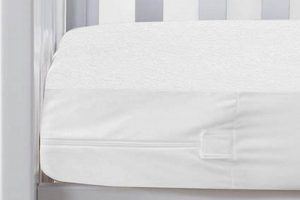
The term “proper fit,” when applied to crib mattress sheets, transcends mere aesthetic considerations; it represents a critical safety parameter directly impacting infant well-being, particularly when coupled with the selection of breathable materials. A sheet exhibiting a proper fit conforms snugly to the mattress, eliminating any slack, bunching, or looseness. The absence of these features is paramount because excess fabric poses a significant risk of entanglement, suffocation, or strangulation hazards that are antithetical to the intent of using breathable sheets to promote safer sleep. The use of breathable materials, while beneficial for airflow, does not negate the dangers associated with an ill-fitting sheet. A breathable sheet that is too large or loose presents the same entanglement risks as a non-breathable sheet with similar fit issues. Consider the scenario where an infant rolls onto a loose portion of a breathable sheet during sleep; the fabric could obstruct the infant’s airway, nullifying any benefits derived from the sheet’s breathability. Therefore, a snug and secure fit is a prerequisite for realizing the safety advantages offered by breathable crib mattress sheets.
The practical application of this understanding necessitates a meticulous approach to sheet selection and maintenance. Parents and caregivers must verify that the dimensions of the crib mattress sheet precisely match those of the crib mattress. Elasticized edges or fitted corners should exhibit sufficient tension to maintain a secure and smooth surface. Regular inspection for signs of wear and tear, such as stretched elastic or fabric degradation, is essential. Over time, washing and drying can cause sheets to lose their elasticity, compromising the fit. If a sheet no longer maintains a snug fit, it should be replaced immediately. Furthermore, the practice of layering multiple sheets on the crib mattress should be avoided, as this can increase the risk of bunching and entanglement. A single, properly fitted breathable sheet is the optimal configuration for ensuring infant safety. The integration of breathable materials and snug fit ensures the airflow properties offer true comfort.
In summary, the connection between proper fit and breathable crib mattress sheets is one of essential interdependence. While breathable materials contribute to a safer sleep environment by promoting airflow and reducing the risk of overheating, their benefits are contingent upon the sheet exhibiting a secure and snug fit. A properly fitted sheet minimizes the risk of entanglement, suffocation, and strangulation, thereby complementing the breathability features and maximizing infant safety. Challenges remain in educating caregivers about the importance of proper fit and in ensuring that all crib mattress sheets on the market adhere to stringent sizing and safety standards. Ongoing vigilance and informed decision-making are crucial for safeguarding infants from the potential hazards associated with ill-fitting crib mattress sheets, even those designed with breathability in mind.
Frequently Asked Questions
This section addresses common inquiries concerning breathable crib mattress sheets, providing concise and evidence-based answers to promote informed decision-making.
Question 1: Are breathable crib mattress sheets effective in preventing Sudden Infant Death Syndrome (SIDS)?
While breathable crib mattress sheets may reduce the risk of overheating, a contributing factor to SIDS, they are not a guaranteed preventative measure. Safe sleep practices, including placing infants on their backs to sleep, using a firm mattress, and avoiding loose bedding, remain paramount. Breathable sheets should be considered as one component of a comprehensive safe sleep strategy.
Question 2: What materials are most suitable for breathable crib mattress sheets?
Natural fibers such as cotton muslin, linen, and bamboo are often recommended for their inherent breathability. Synthetic fibers engineered for moisture-wicking properties can also be suitable. The weave density and overall fabric construction play a significant role in determining airflow, irrespective of the specific material.
Question 3: How do breathable crib mattress sheets differ from standard crib mattress sheets?
Breathable crib mattress sheets are specifically designed to promote air circulation and reduce the risk of overheating. This is achieved through the use of specialized weaves, looser fabric constructions, or materials with enhanced air permeability, differentiating them from standard sheets that may prioritize other qualities like durability or cost-effectiveness.
Question 4: Do breathable crib mattress sheets require special care or cleaning instructions?
Care and cleaning instructions vary depending on the specific material composition of the sheet. Following the manufacturer’s guidelines is crucial to maintain the sheet’s breathability and structural integrity. Harsh detergents or high heat drying may damage fibers and reduce airflow properties.
Question 5: Are there any safety certifications to look for when purchasing breathable crib mattress sheets?
Certifications such as OEKO-TEX Standard 100 indicate that the fabric has been tested for harmful substances and meets safety standards for infant products. These certifications provide an added layer of assurance regarding the sheet’s safety and suitability for use with infants.
Question 6: How does mattress fit impact the effectiveness of breathable crib mattress sheets?
A snug and secure fit is essential for the safe use of any crib mattress sheet, including breathable varieties. A loose-fitting sheet can pose a suffocation or entanglement hazard, negating the benefits of its breathable design. Ensuring a proper fit is paramount for maximizing the safety and effectiveness of the sheet.
Key takeaways include the importance of prioritizing safe sleep practices, carefully selecting breathable materials, adhering to care instructions, and verifying safety certifications. A properly fitted breathable sheet can contribute to a safer and more comfortable sleep environment for infants when used in conjunction with other recommended safety measures.
The next section explores the current market landscape for breathable crib mattress sheets, providing an overview of available product options and key considerations for consumers.
Conclusion
This exploration of breathable crib mattress sheets has illuminated several critical aspects, from material composition and airflow properties to adherence to stringent safety standards and the importance of a proper fit. The analysis underscores that the selection of these sheets is not merely a matter of preference but one of informed decision-making, directly impacting infant safety and comfort. Breathable crib mattress sheets, when thoughtfully chosen and correctly utilized, can contribute to a sleep environment that minimizes risks associated with overheating and restricted airflow.
The information provided emphasizes the multifaceted nature of this seemingly simple product. Ongoing awareness of evolving safety standards, advancements in material technology, and the continued dissemination of evidence-based guidance are essential. The dedication to prioritizing infant safety necessitates diligent evaluation and a commitment to utilizing all available resources to create the safest possible sleep environment. While no product can guarantee complete safety, the responsible selection and use of breathable crib mattress sheets represent a significant step in promoting infant well-being.
![Best Organic Crib Mattress Protector [Safe Sleep] | Organic & Natural Mattress Buyer’s Guide: Non-Toxic Sleep Solutions](https://mattressworldpa.com/wp-content/uploads/2025/07/th-1363-300x200.jpg "Best Organic Crib Mattress Protector [Safe Sleep] Organic & Natural Mattress Buyer’s Guide: Non-Toxic Sleep Solutions")