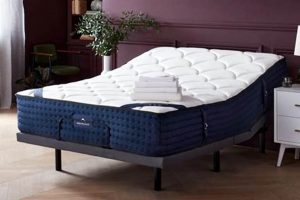
The compatibility of a mattress with an adjustable bed frame is a crucial consideration for optimizing comfort and functionality. Not all mattresses are designed to withstand the articulation and bending inherent in adjustable bed operation. Utilizing an incompatible mattress can lead to damage to both the mattress and the bed frame, while also diminishing the benefits of adjustability.
Selecting a suitable mattress ensures full utilization of the adjustable bed’s features, promoting proper spinal alignment and personalized comfort. Historically, innerspring mattresses were the standard, but their rigid construction often proved unsuitable for adjustable frames. The evolution of mattress technology has led to more flexible and durable options better suited for these beds. Using a compatible mattress enhances user experience and prolongs the lifespan of both the mattress and adjustable base, protecting the investment.
Therefore, an informed decision requires understanding the properties of different mattress types, factors influencing compatibility, and potential consequences of improper selection. Consideration must be given to mattress construction, flexibility, and support capabilities to achieve optimal performance and longevity.
Tips for Selecting a Mattress Compatible with Adjustable Beds
Choosing a mattress that functions effectively with an adjustable bed frame requires careful consideration. The following tips provide guidance on making an informed decision to ensure optimal performance and longevity.
Tip 1: Prioritize Flexibility: Mattresses designed for adjustable beds must possess adequate flexibility to conform to the frame’s contours without damage. Memory foam and latex mattresses are typically more flexible than traditional innerspring models.
Tip 2: Assess Mattress Construction: Examine the mattress’s construction. A multi-layered design with flexible materials is preferable. Avoid mattresses with tightly packed coils or rigid borders, as these may hinder articulation.
Tip 3: Consider Mattress Thickness: Thicker mattresses may resist bending, potentially impacting the adjustable bed’s functionality. A moderately thick mattress, generally between 10 and 14 inches, often strikes a good balance between comfort and flexibility.
Tip 4: Review Warranty Information: Scrutinize the mattress warranty. Verify that using the mattress on an adjustable bed frame does not void the warranty. Some manufacturers specify approved bed frames for optimal performance and warranty coverage.
Tip 5: Consult Manufacturer Specifications: Review the adjustable bed frame’s specifications. The manufacturer typically recommends compatible mattress types and sizes. Adhering to these recommendations ensures proper functionality and prevents potential damage.
Tip 6: Test Before Purchase: Whenever possible, test the mattress on an adjustable bed frame before purchasing. This allows assessment of its flexibility and comfort levels in various positions.
Tip 7: Factor in Weight Capacity: Consider the weight capacity of both the mattress and the adjustable bed frame. Exceeding the weight limit can compromise performance and potentially cause damage.
Selecting a mattress compatible with an adjustable bed frame enhances comfort, promotes proper spinal alignment, and ensures the longevity of both components. A well-informed decision safeguards the investment and maximizes the benefits of adjustability.
Following these tips will contribute to a well-informed decision that protects the longevity of both the mattress and the adjustable base.
1. Flexibility

Flexibility serves as a primary determinant when evaluating if a mattress can be used on an adjustable bed. Adjustable beds function by altering the angle and contour of the sleeping surface. Consequently, a mattress lacking sufficient flexibility will resist bending, inhibiting the bed’s articulation capabilities. This resistance can lead to several negative outcomes, including damage to the mattress core, stress on the adjustable bed frame’s mechanical components, and compromised user comfort.
An example of this incompatibility is observed with traditional innerspring mattresses. Their tightly-coiled spring systems and rigid perimeter support often restrict bending, rendering them unsuitable for adjustable beds. Conversely, memory foam and latex mattresses, due to their inherent elasticity, readily conform to the adjustable frame’s shape without significant resistance. This conformity allows for full utilization of the bed’s features, enabling customized sleep positions and alleviating pressure points effectively. Moreover, greater flexibility translates to reduced strain on the bed frame’s motors and hinges, potentially prolonging its operational lifespan.
In summary, mattress flexibility is integral to the proper functioning of an adjustable bed. Selecting a mattress with adequate flexibility ensures compatibility, maximizes user comfort, and prevents potential damage to both the mattress and the adjustable base. The practical significance of understanding this relationship lies in making informed purchasing decisions that optimize the long-term performance and value of the adjustable bed system.
2. Construction
Mattress construction significantly impacts its suitability for use with an adjustable bed frame. The materials, design, and assembly methods determine the mattress’s flexibility, durability, and ability to conform to the bed’s articulating surface without damage or compromised support.
- Coil Systems
Traditional innerspring mattresses often employ interconnected coil systems that resist bending, making them generally unsuitable for adjustable beds. Pocketed coil systems, where each coil is individually wrapped, offer greater flexibility and contouring, making them a more compatible option. However, the gauge and arrangement of the coils still play a role in overall flexibility.
- Foam Density and Composition
Mattresses constructed primarily of foam, such as memory foam or latex, tend to be more flexible than innerspring models. However, the density and composition of the foam layers are crucial. High-density foams, while durable, may exhibit less flexibility than lower-density alternatives. The layering of different foam types can also influence the mattress’s ability to conform to the adjustable base.
- Edge Support
Reinforced edge support systems, commonly found in many mattresses, can restrict flexibility along the perimeter. While edge support enhances stability and prevents sagging, a rigid edge can hinder the mattress’s ability to bend evenly with the adjustable frame. Mattresses designed specifically for adjustable beds often feature flexible edge designs to mitig
ate this issue. - Cover Materials and Stitching
The outer cover material and stitching patterns also affect the mattress’s flexibility. A tightly woven or stiff cover can limit the mattress’s ability to bend and conform. Stretchable knit fabrics and flexible stitching patterns are preferable for adjustable bed compatibility.
In summary, mattress construction is a critical factor determining its suitability for adjustable beds. Evaluating the coil system (if applicable), foam density and composition, edge support design, and cover materials ensures the chosen mattress possesses the necessary flexibility and durability to function effectively with an adjustable frame, maximizing comfort and minimizing the risk of damage.
3. Thickness

Mattress thickness plays a significant role in determining compatibility with an adjustable bed frame. A mattress that is excessively thick may exhibit reduced flexibility, impeding its ability to conform effectively to the contours of the adjustable base. This resistance can lead to increased stress on the bed frame’s articulation mechanisms, potentially shortening its lifespan or causing mechanical failure. Conversely, a mattress that is too thin may lack adequate support and cushioning, diminishing the comfort benefits typically associated with adjustable beds.
Consider, for example, a very thick pillow-top mattress exceeding 15 inches in depth. The substantial volume of material within such a mattress can create stiffness, preventing it from readily bending at the articulation points of the adjustable base. This can result in uneven pressure distribution across the sleeping surface and reduced effectiveness of the adjustable features. On the other hand, a very thin mattress, such as some low-profile foam models, may bottom out or provide insufficient support when the adjustable bed is inclined, leading to discomfort and potential pressure sores over time.
Therefore, selecting a mattress with a thickness appropriate for the specific adjustable bed frame is crucial. Manufacturers often provide guidelines specifying the ideal thickness range for their adjustable bases. Adhering to these recommendations ensures optimal functionality, maximizes comfort, and minimizes the risk of damage to either the mattress or the adjustable frame. The practical implication is that careful consideration of mattress thickness is a necessary step in optimizing the adjustable bed experience.
4. Warranty

The warranty associated with a mattress is directly influenced by its use on an adjustable bed. Mattress manufacturers often stipulate specific requirements regarding foundation types to maintain warranty validity. Using a mattress on an adjustable base not explicitly approved by the manufacturer can void the warranty, rendering the consumer liable for repair or replacement costs resulting from structural damage or performance issues.
For example, a mattress with a ten-year warranty might have a clause specifying that it must be used with a solid, non-flexing foundation. Placing this mattress on an adjustable base, which inherently flexes and changes shape, could be considered misuse according to the warranty terms. If the mattress subsequently develops sagging, tears, or other structural problems, the manufacturer may deny a warranty claim due to the violation of the foundation requirements. Conversely, mattresses specifically designed and warrantied for use with adjustable bases acknowledge and accommodate the dynamic stresses imposed by these frames, ensuring warranty coverage remains intact.
Therefore, careful examination of the mattress warranty is crucial before using it on an adjustable bed. Understanding the specified foundation requirements and ensuring compatibility with the adjustable base prevents potential warranty invalidation. Consumers should seek clarification from the manufacturer regarding approved foundation types to safeguard their investment and maintain eligibility for warranty coverage throughout the mattress’s lifespan.
5. Compatibility

The question of whether any mattress can be used on an adjustable bed inherently centers on compatibility. Compatibility, in this context, refers to the degree to which a mattress’s structural characteristics align with the functional requirements of an adjustable bed frame. A high degree of compatibility ensures optimal performance, longevity, and user comfort, while a lack thereof can lead to damage, discomfort, and diminished functionality. The cause-and-effect relationship is clear: an incompatible mattress will not conform properly to the adjustable bed’s contours, resulting in uneven support and potential structural compromise. The importance of compatibility stems from its direct impact on the user experience and the lifespan of both the mattress and the bed frame itself.
Consider, for instance, the use of a traditional innerspring mattress with an adjustable bed. The rigid coil system and often reinforced edges are designed to provide uniform support on a flat surface. When subjected to the bending and articulation of an adjustable frame, these mattresses resist conforming, creating pressure points and potentially damaging the coils or the bed frame’s lifting mechanism. A practical application of this understanding is found in the increasing prevalence of memory foam and latex mattresses designed specifically for adjustable beds. These mattresses possess the necessary flexibility and conformability to work seamlessly with the adjustable frame, providing uniform support and maximizing the benefits of the bed’s adjustability features.
In summary, compatibility is not merely a desirable attribute but a fundamental requirement for the successful integration of a mattress with an adjustable bed. Failing to consider compatibility can lead to compromised comfort, reduced product lifespan, and potential financial losses. The challenges lie in understanding the specific properties of different mattress types and matching them to the functional demands of adjustable bed frames, ensuring a harmonious and beneficial sleep experience. This understanding directly addresses the core question of whether any mattress can be used, definitively concluding that careful consideration of compatibility is paramount.
Frequently Asked Questions
The following questions address common concerns regarding mattress selection for adjustable bed frames, providing clarity on compatibility and performance.
Question 1: Does the type of mattress significantly affect adjustable bed functionality?
The type of mattress fundamentally influences the adjustable bed’s functionality. Mattresses lacking sufficient flexibility can impede articulation, reducing the bed’s capacity to conform to desired positions. Memory foam and latex mattresses are generally more suitable than traditional innerspring models.
Question 2: Can any innerspring mattress be used on an adjustable bed?
Not all innerspring mattresses are appropriate for adjustable beds. Traditional innerspring models often possess limited flexibility, restricting their ability to conform to the bed frame’s contours. Pocketed coil systems offer improved flexibility compared to interconnected coil systems, but
overall compatibility should be carefully assessed.
Question 3: How does mattress thickness influence adjustable bed performance?
Mattress thickness affects flexibility and conforming ability. Excessively thick mattresses may resist bending, hindering the adjustable bed’s articulation. Moderately thick mattresses, typically between 10 and 14 inches, generally strike a balance between comfort and flexibility.
Question 4: Is the mattress warranty voided by using it on an adjustable bed?
Warranty implications vary by manufacturer. Using a mattress on an unapproved adjustable base can void the warranty if the manufacturer specifies foundation requirements. Consumers should verify compatibility with the manufacturer to ensure warranty coverage.
Question 5: What role does edge support play in adjustable bed compatibility?
Rigid edge support systems can hinder mattress flexibility, particularly at the perimeter. Mattresses specifically designed for adjustable beds often incorporate flexible edge designs to allow for unrestricted articulation.
Question 6: Where can compatibility information between mattress and adjustable bed frame?
Consultation with both the mattress and adjustable bed frame manufacturers is crucial. Manufacturer specifications offer clear guidelines and recommendations for compatible pairings, ensuring optimal performance and warranty adherence.
In conclusion, understanding the nuances of mattress construction, thickness, and warranty terms is essential for selecting a suitable mattress for an adjustable bed frame. Prioritizing flexibility and adhering to manufacturer recommendations ensures long-term performance and user satisfaction.
Considerations regarding alternative sleep surfaces, such as mattress toppers, are discussed in the subsequent section.
Can You Use Any Mattress on an Adjustable Bed
The preceding analysis has demonstrated that universal compatibility between mattresses and adjustable beds is a misconception. Successful integration necessitates careful consideration of mattress construction, flexibility, thickness, and warranty stipulations. Incompatible pairings can lead to compromised support, structural damage, and voided warranties. The selection process requires informed evaluation rather than generalized assumptions.
Therefore, prospective adjustable bed users are advised to prioritize detailed product research and manufacturer consultations to ensure optimal mattress selection. Investing in a compatible sleep system maximizes both comfort and the longevity of the bed frame and mattress, securing the intended health and lifestyle benefits. Neglecting these considerations undermines the functional potential of an adjustable bed.