A comparison of mattress options is a common consideration for individuals seeking improved sleep quality and comfort. Two prominent brands frequently evaluated are Casper and Purple. These manufacturers utilize distinct construction materials and designs, resulting in differing performance characteristics related to support, temperature regulation, and motion isolation.
The significance of selecting an appropriate mattress stems from its direct impact on spinal alignment, pressure point relief, and overall restfulness. A well-chosen mattress can contribute to reduced back pain, minimized tossing and turning, and enhanced sleep duration, thereby promoting physical and cognitive well-being. The evolution of mattress technology reflects a growing understanding of the relationship between sleep surfaces and health outcomes.
The subsequent discussion will delve into the specific features of each mattress, examining their respective constructions, performance attributes, and suitability for various sleep preferences. A detailed analysis will provide a foundation for informed decision-making based on individual needs and priorities.
Guidance for Mattress Selection
The process of selecting a mattress involves careful consideration of individual needs and preferences. Evaluating key performance indicators and construction materials is essential for optimizing sleep quality.
Tip 1: Assess Sleep Position. Side sleepers typically benefit from mattresses with enhanced pressure relief, particularly in the shoulder and hip areas. Back sleepers generally require firmer support to maintain spinal alignment. Stomach sleepers often need the firmest option to prevent excessive sinking and potential back strain.
Tip 2: Consider Body Weight. Individuals with higher body weights tend to require mattresses with greater support and durability. Heavier individuals may experience premature sagging or inadequate support with mattresses designed for lighter individuals. A mattress with a higher coil count or denser foam construction is generally recommended.
Tip 3: Evaluate Temperature Regulation. Some mattress materials retain more heat than others. Individuals who tend to sleep hot should consider mattresses with cooling features, such as gel-infused foam, breathable covers, or open-cell construction. Latex mattresses are often cited for their inherent breathability.
Tip 4: Examine Motion Isolation. Couples sharing a bed should prioritize motion isolation to minimize sleep disturbances caused by movement. Memory foam and individually wrapped coils are known for their ability to absorb and isolate motion transfer.
Tip 5: Analyze Edge Support. Strong edge support is crucial for individuals who sit on the edge of the bed or prefer to sleep near the perimeter. Mattresses with reinforced edges provide greater stability and prevent the feeling of rolling off.
Tip 6: Investigate Material Composition. Mattress materials vary significantly in terms of durability, comfort, and potential off-gassing. Researching the composition of each layer, including the cover, comfort layers, and support core, is essential for making an informed decision.
Tip 7: Utilize Trial Periods. Many mattress companies offer trial periods, allowing customers to test the mattress at home before committing to a purchase. Utilizing this opportunity is highly recommended to assess comfort and suitability over an extended period.
Careful evaluation of these factors contributes to a well-informed mattress selection process, enhancing the likelihood of achieving optimal sleep quality and long-term satisfaction.
The subsequent sections will provide a comparative analysis of specific mattress models, further aiding in the decision-making process.
1. Construction Materials

The composition of a mattress fundamentally dictates its performance characteristics, influencing factors such as support, comfort, and durability. When evaluating Casper and Purple mattress options, understanding their respective construction materials is crucial. Casper mattresses typically incorporate multiple layers of foam, often including a combination of memory foam for pressure relief and denser support foam for spinal alignment. These materials contribute to a conforming feel that cushions the body. In contrast, Purple mattresses utilize a proprietary Hyper-Elastic Polymer grid, designed to provide a responsive and supportive surface. This grid allows for air circulation and adapts to varying pressure points. The selection of these distinct materials directly affects the sleeper’s experience.
A key difference arising from these construction methods is the firmness level. The multi-layered foam construction of Casper mattresses tends to offer a more traditional conforming feel, potentially appealing to those accustomed to memory foam. The Purple mattress, with its grid structure, provides a unique floating sensation, diverging from the typical foam mattress experience. Furthermore, material selection impacts temperature regulation. While Casper often incorporates cooling technologies within its foam layers, the Purple grid’s open design promotes enhanced airflow, potentially mitigating heat retention more effectively. Examining the construction materials provides insight into these comparative performance aspects.
Ultimately, the construction materials employed by Casper and Purple directly determine the feel, support, and overall suitability of each mattress for individual sleepers. Assessing the specific needs and preferences of the userincluding factors like sleep position, body weight, and sensitivity to temperatureis essential in determining which construction approach offers the most appropriate solution. While foam-based designs offer localized pressure relief, grid systems provides a responsive option that is also breathable. By understanding the direct influence of construction materials, one can evaluate mattresses more effectively.
2. Firmness Options

The availability of firmness options represents a crucial differentiating factor when considering the Casper versus Purple mattress comparison. Mattress firmness directly impacts spinal alignment, pressure point relief, and overall sleep comfort. A mattress that is too soft may lead to spinal misalignment, particularly for back and stomach sleepers. Conversely, a mattress that is too firm may create excessive pressure on hips and shoulders, especially for side sleepers. Therefore, the capacity of a mattress brand to offer a range of firmness levels addresses the diverse needs of potential consumers.
Casper offers multiple mattress models, each with varying degrees of firmness. This approach allows consumers to select a mattress that corresponds with their preferred sleep position and body weight. For example, lighter individuals or those who prefer a plush feel might opt for a softer Casper model, while heavier individuals or those requiring more support could choose a firmer option. In contrast, the original Purple mattress possessed a distinctly firmer feel due to its Hyper-Elastic Polymer grid design. While Purple has since introduced variations with differing firmness levels, the brand initially catered to a narrower segment of the market. The effect of firmness choices in these brands impact the comfort of users overall.
Understanding the firmness options available within the Casper and Purple product lines is essential for making an informed decision. The practical significance lies in the ability to select a mattress that optimizes sleep quality and minimizes discomfort. While Casper’s diverse range of firmness levels offers broad applicability, Purple’s unique construction and resulting feel may appeal to those seeking a different experience. Therefore, evaluating firmness options in relation to individual sleep preferences and physical characteristics is paramount for achieving satisfactory sleep outcomes.
3. Temperature Regulation

Temperature regulation is a critical aspect of mattress performance, directly influencing sleep quality and overall comfort. When evaluating mattress options, particularly in the context of Casper versus Purple, understanding the mechanisms of heat retention and dissipation is essential. The inherent material properties and construction techniques employed by each brand impact their respective abilities to regulate temperature during sleep.
- Material Breathability and Airflow
Mattress materials vary significantly in their capacity to allow air to circulate. Open-cell foam structures and breathable covers facilitate airflow, promoting heat dissipation and reducing the likelihood of overheating. The Hyper-Elastic Polymer grid utilized in Purple mattresses inherently allows for greater airflow compared to the denser foam layers found in many Casper models. This difference can be particularly significant for individuals prone to night sweats or those living in warmer climates. Examples include comparing the density of memory foam in Casper’s comfort layer to the open grid structure in Purple, which allows for greater air circulation. In the context of “casper vs purple mattress” evaluations, this facet is vital for consumers prioritizing thermal comfort.
- Heat Absorption and Dissipation
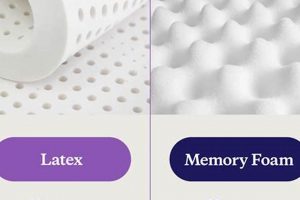
Different materials exhibit varying degrees of heat absorption and dissipation. Memory foam, while conforming to the body, tends to retain more heat compared to materials such as latex or the Hyper-Elastic Polymer used by Purple. The capacity of a mattress to dissipate heat effectively prevents the buildup of thermal energy, contributing to a more comfortable sleep environment. For instance, comparing the rate at which memory foam in a Casper mattress absorbs and releases heat versus Purple’s grid system helps demonstrate the differences in temperature regulation. The implications affect sleep patterns, especially for individuals with heightened sensitivity to temperature changes.
- Cooling Technologies and Infusions
Mattress manufacturers often incorporate cooling technologies, such as gel infusions or phase-change materials, to mitigate heat retention. These technologies aim to regulate temperature by absorbing and releasing heat as needed. Casper often utilizes gel-infused memory foam in its mattresses, intended to draw heat away from the body. While these technologies can improve temperature regulation, their effectiveness may vary depending on the specific implementation and the sleeper’s individual characteristics. The impact of these cooling technologies affects consumer perception and overall satisfaction with these mattress choices.
- Cover Material and Construction
The cover material and its construction play a role in temperature regulation. Breathable fabrics, such as cotton or bamboo, promote airflow and allow for moisture evaporation, contributing to a cooler sleep surface. A tightly woven cover may restrict airflow and impede heat dissipation. When comparing “casper vs purple mattress”, the fabric composition and weave density of the cover materials influence the thermal properties of each mattress. The type of fiber used and its effect on thermal comfort is thus important for consumers to understand.
The interplay of these factors underscores the importance of considering temperature regulation when selecting a mattress. While both Casper and Purple employ strategies to address heat retention, their distinct material choices and construction methods result in varying levels of thermal performance. Individuals should carefully evaluate their personal temperature preferences and sleep habits when weighing the potential benefits of each mattress option. By understanding the influence of material breathability, heat absorption, cooling technologies, and cover construction, consumers can make a more informed decision regarding their mattress purchase and achieve optimal sleep comfort.
4. Motion Isolation

Motion isolation, the capacity of a mattress to minimize the transfer of movement across its surface, represents a crucial factor in the context of “casper vs purple mattress” evaluations, particularly for couples or individuals sharing a bed. The structural design and material composition of a mattress directly influence its motion isolation capabilities. Mattresses with poor motion isolation can result in significant sleep disturbances, as movement from one sleeper is readily transferred, disrupting the rest of the other. The impact of this transfer on sleep quality is directly linked to the structure and materials in casper vs purple mattress designs. For example, consider a scenario where one partner frequently tosses and turns during the night; a mattress with inadequate motion isolation will transmit these movements, potentially awakening or preventing the other partner from achieving deep sleep. The practical significance of motion isolation lies in its ability to promote uninterrupted and restful sleep for both individuals sharing the bed.
Casper mattresses, primarily constructed from various densities of foam, generally offer good motion isolation. The viscoelastic properties of memory foam effectively absorb movement, limiting its transmission across the mattress surface. In contrast, Purple mattresses, featuring the Hyper-Elastic Polymer grid, present a different approach to motion isolation. While the grid structure provides unique pressure relief and support, its ability to isolate motion is often perceived differently compared to traditional foam mattresses. Some individuals find that the responsive nature of the grid allows for slightly more motion transfer than memory foam, while others appreciate the decoupled feel that the grid provides in terms of individual movement accommodation. Understanding the material properties related to movement is important for a proper casper vs purple mattress comparison.
In summary, motion isolation is a key performance indicator when assessing mattresses for shared sleeping arrangements. While both Casper and Purple mattresses aim to minimize motion transfer, their differing construction methods result in distinct experiences. Casper’s foam-based design generally provides effective motion isolation, while Purple’s grid structure offers a unique, though potentially less isolating, feel. Individuals should consider their sensitivity to motion disturbance and their partner’s sleep habits when determining which mattress offers the optimal balance of comfort and motion isolation for their specific needs. Further considerations for casper vs purple mattress include the size and weight of sleeping partners.
5. Price Point

Price point represents a significant determinant in the mattress selection process. Its influence is particularly pronounced in the context of “casper vs purple mattress” considerations. The initial financial outlay associated with each brand can directly affect accessibility and perceived value. Higher-priced options necessitate greater financial commitment, potentially limiting the consumer base to those with higher disposable incomes or a willingness to invest in perceived long-term benefits. Lower-priced options, conversely, may broaden accessibility but could also raise concerns regarding material quality, durability, and overall performance. As such, the price point acts as a primary filter in the decision-making framework.
The comparative analysis of price points between Casper and Purple mattresses reveals varying cost structures depending on model, size, and promotional offerings. Casper’s pricing strategy generally positions its mattresses within the mid-range category, while Purple’s offerings, particularly those incorporating the Hyper-Elastic Polymer grid, may command a slightly higher price point. Real-life examples often demonstrate consumers weighing the perceived benefits of the Purple’s unique construction against the relatively lower cost of Casper’s foam-based designs. Furthermore, sales events and promotional discounts can significantly alter the price landscape, necessitating diligent comparison shopping across various retailers and online platforms. The practical significance of understanding these price dynamics lies in the ability to optimize value for money and align mattress selection with budgetary constraints.
Ultimately, the interplay between price point and brand perception is pivotal in the “casper vs purple mattress” evaluation. While cost should not be the sole determining factor, it undeniably shapes consumer preferences and purchasing decisions. A comprehensive assessment requires balancing price considerations with factors such as comfort, support, durability, and individual sleep needs. Navigating this complexity requires careful research, comparison shopping, and a clear understanding of one’s own priorities. By integrating price point into a broader evaluative framework, consumers can enhance the likelihood of selecting a mattress that delivers optimal value and contributes to improved sleep quality.
Frequently Asked Questions
This section addresses common inquiries regarding the selection of mattresses, particularly in the context of comparing distinct brands. It aims to provide objective and informative answers to assist individuals in making informed decisions.
Question 1: What factors contribute to the overall comfort of a mattress?
Mattress comfort is influenced by a combination of factors, including firmness level, material composition, and construction techniques. Firmness should align with sleep position and body weight. Material composition dictates pressure relief and temperature regulation, while construction contributes to support and durability. The interplay of these factors determines the perceived comfort of a mattress.
Question 2: How does mattress firmness affect spinal alignment?
Mattress firmness directly impacts spinal alignment. A mattress that is too soft may allow the spine to sag, particularly for back and stomach sleepers. Conversely, a mattress that is too firm may create pressure points and hinder natural spinal curvature. Selecting an appropriate firmness level promotes proper spinal alignment and reduces the risk of back pain.
Question 3: What are the implications of poor motion isolation in a mattress?
Poor motion isolation can disrupt sleep, especially for couples. When one sleeper moves, the motion is readily transferred across the mattress surface, potentially awakening or disturbing the other sleeper. Mattresses with good motion isolation minimize this transfer, promoting uninterrupted sleep for both individuals sharing the bed.
Question 4: How does temperature regulation influence sleep quality?
Temperature regulation is crucial for maintaining a comfortable sleep environment. Mattresses that retain excessive heat can lead to overheating and restlessness. Mattresses with breathable materials and cooling technologies promote airflow and dissipate heat, contributing to a more restful and consistent sleep experience.
Question 5: What is the expected lifespan of a typical mattress?
The lifespan of a mattress depends on various factors, including material quality, construction, and usage patterns. Generally, a well-maintained mattress can last between seven and ten years. Sagging, loss of support, and persistent discomfort are indicators that a mattress may need replacement.
Question 6: How should one properly care for a mattress to extend its lifespan?
Proper mattress care involves regular rotation and flipping (if applicable), the use of a mattress protector, and periodic cleaning. Rotating the mattress helps distribute wear evenly, while a mattress protector safeguards against spills and stains. Vacuuming the mattress can remove dust mites and allergens, contributing to both hygiene and longevity.
In conclusion, a multitude of considerations factor into effective mattress selection. Consumers are encouraged to prioritize their individual needs and preferences when evaluating available options.
The subsequent section offers a comparative summary of the key attributes associated with specific brands.
Casper vs Purple Mattress
The preceding analysis has explored critical distinctions between Casper and Purple mattress options. Key performance indicators, including construction materials, firmness options, temperature regulation, and motion isolation, were examined. Price considerations were also addressed. Ultimately, the optimal choice hinges on individual needs and preferences.
The selection of a mattress constitutes a significant decision affecting long-term sleep quality and overall well-being. Careful consideration of the factors outlined herein, coupled with thorough personal assessment, will contribute to a more informed and satisfactory purchasing outcome. Further research and objective evaluation are encouraged.