![Best Compact Crib Mattress Size Guide: [Year]](data:image/svg+xml;base64,PHN2ZyB4bWxucz0iaHR0cDovL3d3dy53My5vcmcvMjAwMC9zdmciIHdpZHRoPSI0NzQiIGhlaWdodD0iOTUiIHZpZXdCb3g9IjAgMCA0NzQgOTUiPjxyZWN0IHdpZHRoPSIxMDAlIiBoZWlnaHQ9IjEwMCUiIHN0eWxlPSJmaWxsOiNjZmQ0ZGI7ZmlsbC1vcGFjaXR5OiAwLjE7Ii8+PC9zdmc+ "Best Compact Crib Mattress Size Guide: [Year] Organic & Natural Mattress Buyer’s Guide: Non-Toxic Sleep Solutions")
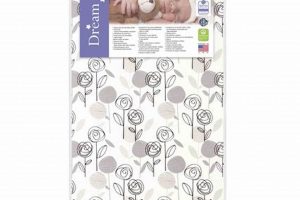
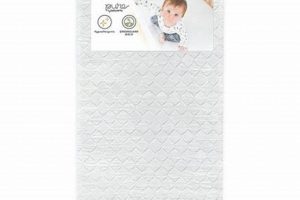
A smaller than standard-sized mattress, designed specifically for compact cribs, offers a sleeping surface typically measuring around 24 inches wide by 38 inches long. These mattresses provide a secure and comfortable foundation for infants within the confines of cribs built to maximize space, often utilized in apartments, smaller nurseries, or when portability is a factor.
The reduced dimensions can be particularly advantageous in urban dwellings or situations where square footage is limited. A compact crib allows for parental proximity without overwhelming the room’s layout. Furthermore, the lighter weight and smaller profile of the mattresses designed for these cribs enhances movability, simplifying rearrangement or relocation of the baby’s sleeping area.
Understanding the specifications and advantages of mattresses tailored for smaller cribs is paramount when preparing for a newborn. The subsequent sections will delve deeper into the considerations, materials, and safety standards associated with choosing the appropriate mattress for this specific crib type.
Essential Considerations
Selecting a suitable mattress necessitates careful evaluation. Several key factors should be considered to ensure the infant’s safety and comfort.
Tip 1: Confirm Exact Dimensions. Measure the interior of the compact crib precisely. Variances, even slight ones, can compromise safety and proper fit.
Tip 2: Prioritize Firmness. Infants require a firm sleeping surface to reduce the risk of suffocation. Avoid overly plush or soft mattresses.
Tip 3: Scrutinize Material Composition. Opt for hypoallergenic and non-toxic materials. Certifications such as GREENGUARD Gold indicate low chemical emissions.
Tip 4: Examine Cover Waterproofing. A waterproof cover protects the mattress core from spills and accidents, maintaining hygiene and extending lifespan.
Tip 5: Assess Weight and Portability. If frequent relocation is anticipated, consider the mattress’s weight and ease of handling.
Tip 6: Check for Compliance. Ensure the product meets all applicable safety standards set by regulatory bodies.
Tip 7: Inquire About Warranty. A reputable manufacturer will typically offer a warranty, demonstrating confidence in their product’s durability.
Adhering to these guidelines provides a foundation for informed decision-making. Prioritizing safety and material quality benefits the infant’s well-being and promotes restful sleep.
The subsequent sections will explore material choices and safety certifications in greater detail.
1. Exact Dimensions

The relevance of exact dimensions is paramount when considering a mattress for a compact crib. Mismatched sizes introduce safety hazards, and negate space-saving intentions of the crib. Precision in measurements is critical for ensuring a secure and functional sleep environment.
- Crib Interior Measurement
Accurate measurement of the crib’s interior is the initial step. Small differences between the specified mattress size and the actual interior dimensions, even fractions of an inch, may result in gaps between the mattress edge and the crib frame. This creates a potential entrapment hazard for infants. Examples include using a measuring tape to assess length and width, cross-checking with manufacturer specifications, and accounting for corner post intrusions within the frame.
- Mattress Specification Verification
Comparing the manufacturers stated mattress size against actual measured dimensions is crucial. Discrepancies can arise due to manufacturing tolerances. For instance, a mattress labeled as 24″ x 38″ could measure slightly smaller or larger. Verifying these measurements prior to purchase prevents the aforementioned entrapment risk. This step involves using a measuring tape on the physical mattress before placement within the crib.
- Impact on Crib Functionality
Exact dimensions affect the intended functionality of a compact crib. An improperly sized mattress may hinder folding mechanisms in portable models or obstruct access to storage compartments. The inability to fold a crib correctly, or an obstructed storage area, defeats the space-saving advantages and portability features associated with smaller crib designs. This underscores the need for precise fit assessment.
- Safety Standard Compliance
Adherence to safety standards relies on maintaining proper fit within the crib. Regulatory bodies like the Consumer Product Safety Commission (CPSC) establish guidelines predicated on minimizing entrapment risks. Deviations from the specified dimensions invalidate safety compliance. This means that even if a mattress is certified as meeting safety requirements, using it in a crib where it doesn’t fit properly could compromise the infant’s safety.
In conclusion, attention to detail during the measurement and verification process is paramount to ensuring the mattress will fit inside a compact crib to promote safety, functionality, and compliance with established standards. Investing time in accurately assessing dimensions prevents potential harm and promotes the intended benefits of compact crib designs.
2. Appropriate Firmness

The selection of a mattress for a compact crib mandates adherence to specific firmness criteria to mitigate potential infant safety risks. The reduced dimensions of compact cribs amplify the significance of correct mattress firmness because improper support can exacerbate hazards. An overly soft mattress, irrespective of the crib’s size, increases the risk of suffocation and Sudden Infant Death Syndrome (SIDS) by creating an unstable sleep surface where an infant’s face may become trapped.
The primary function of adequate firmness is to provide consistent support, preventing the infant from sinking into the mattress. In a compact crib setting, where space is already restricted, a firm mattress ensures proper spinal alignment and reduces the likelihood of airway obstruction. For instance, a newborn placed on a too-soft mattress may experience difficulty turning their head, increasing the risk of rebreathing exhaled carbon dioxide. The reduced surface area in a compact crib further concentrates this risk. Therefore, the mattress should maintain its structural integrity under the infant’s weight, offering resistance rather than conforming excessively to the body’s contours.
Ultimately, the appropriate firmness of a mattress for a compact crib represents a critical safety component, mitigating hazards inherent in early infant development. Compliance with established safety standards, such as those recommended by pediatric health organizations, is essential for minimizing risks within a confined sleep environment. Choosing a mattress that maintains its firmness and structural integrity contributes significantly to the overall safety and well-being of the infant, emphasizing the practical importance of understanding and adhering to firmness specifications.
3. Material Safety

The confined dimensions of a compact crib emphasize the criticality of material safety in mattress selection. The proximity between the infant and the mattress elevates the risk of exposure to potentially harmful substances. Consequently, material composition dictates the health implications within the constrained environment of a compact crib.
- Flame Retardants
The presence of chemical flame retardants in mattress materials raises concerns due to potential health effects. Some flame retardants have been linked to endocrine disruption and developmental issues. Due to the close and prolonged contact inherent in a compact crib setup, avoiding mattresses containing these chemicals becomes paramount. Examples include mattresses certified as free from PBDEs or those utilizing inherently flame-resistant materials like wool.
- Volatile Organic Compounds (VOCs)
VOCs emitted from mattress materials can contribute to indoor air pollution and potentially impact infant respiratory health. The smaller volume of air within the vicinity of a compact crib may lead to higher concentrations of these compounds. Selecting mattresses with low-VOC certifications, such as GREENGUARD Gold, minimizes this risk. Examples encompass mattresses made with natural latex or those using water-based adhesives.
- Phthalates
Phthalates, commonly used as plasticizers, have been associated with developmental and reproductive health concerns. Infants may be exposed through direct contact or off-gassing. The restricted space of a compact crib amplifies potential exposure. Choosing phthalate-free mattress components, such as covers and waterproof barriers, reduces health risks. Examples include mattress protectors made from polyurethane laminate (PUL) that are certified phthalate-free.
- Allergenic Substances
Materials such as certain synthetic fibers or adhesives can trigger allergic reactions in sensitive infants. The limited airflow within a compact crib may exacerbate these reactions. Opting for hypoallergenic materials, such as organic cotton or natural latex, minimizes exposure to potential allergens. Examples include mattress covers made from certified organic cotton and mattresses constructed with hypoallergenic latex.
The interconnectedness of the mattress with “compact crib mattress size” material selection emphasizes that prioritizing material safety protects the infant’s well-being. The restricted space concentrates potential risks; therefore, vigilance in sourcing safe materials is of utmost importance. This reduces health risks associated with prolonged exposure to harmful substances in the crib setting.
4. Waterproof covering
The incorporation of a waterproof covering significantly affects the hygiene and longevity of mattresses designed for compact cribs. The restricted dimensions inherent in compact cribs intensify the impact of spills and accidents, underscoring the necessity of effective moisture protection.
- Barrier Against Liquid Penetration
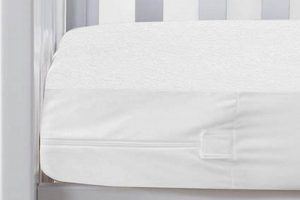
A waterproof covering acts as a primary defense against liquid intrusion into the mattress core. Without this barrier, fluids such as urine, formula, or spit-up can saturate the mattress, creating a breeding ground for bacteria and mold. This is especially problematic in compact cribs where ventilation is often limited. The protective layer prevents absorption, maintaining a sanitary sleep surface. Examples include polyurethane laminate (PUL) or polyethylene film coverings that impede liquid passage while remaining flexible.
- Hygiene Maintenance
The ease of cleaning offered by a waterproof surface directly contributes to overall hygiene. Wiping away spills promptly prevents staining, odor retention, and the propagation of allergens. In the confined space of a compact crib, cleanliness becomes even more crucial. Regular cleaning maintains a healthy environment for the infant, minimizing exposure to pathogens. Examples encompass covers that can be readily wiped down with a damp cloth and mild detergent.
- Mattress Longevity
By preventing moisture damage, a waterproof covering extends the lifespan of the mattress. Liquid penetration can degrade internal materials, compromising structural integrity and support. This is of particular importance in compact cribs, where replacement options may be limited. A robust waterproof layer preserves the mattress’s firmness and shape, ensuring consistent performance over time. Examples include coverings that are resistant to cracking or peeling after repeated cleaning.
- Material Compatibility
The selection of a waterproof material must consider compatibility with other mattress components and infant safety. The covering should be non-toxic, hypoallergenic, and free from harmful chemicals such as phthalates or BPA. This is critical in compact cribs, where the infant is in close proximity to the mattress surface. Examples include waterproof layers that are certified to meet or exceed safety standards for chemical emissions and skin sensitivity.
The connection between a waterproof covering and “compact crib mattress size” highlights its importance. Choosing appropriate materials is key to guaranteeing mattress hygiene and longevity. This leads to a safe environment for the infant in the compact crib setting.
5. Overall weight
The overall weight of a mattress designed for a compact crib is intrinsically linked to its purpose and functionality. This characteristic is not merely a byproduct of manufacturing but a deliberate consideration that impacts portability, ease of handling, and the structural integrity of the crib itself. A lighter mattress, while facilitating easier movement and setup, must still provide adequate support and safety, creating a balance that defines the effectiveness of the mattress within the confines of a compact crib.
Excessive weight, conversely, negates the space-saving and portability advantages associated with compact cribs. For instance, parents residing in apartments or frequently relocating the crib would find a heavy mattress cumbersome. Real-world scenarios include caregivers struggling to lift and position a bulky mattress during sheet changes or assembly/disassembly of the crib. This increased physical strain diminishes the appeal of compact cribs as practical solutions. Therefore, mattress construction methods and material selections directly influence weight. A core composed of lightweight, high-density foam exemplifies a design choice that addresses both weight concerns and support requirements. The impact of this design balances portability with functionality.
The connection between “overall weight” and “compact crib mattress size” is a carefully calibrated engineering equation. A weight that is too light could imply substandard materials or insufficient structural support, while an excessive weight undermines the portability benefit of a compact crib design. Successfully balancing these factors is key to delivering a mattress that is safe, convenient, and aligned with the intended use case. It contributes to a design that is helpful for people with babies and small spaces.
Frequently Asked Questions
The following section addresses common inquiries regarding mattress dimensions tailored for compact cribs. Clarity on these matters is essential for informed purchasing decisions and ensuring infant safety.
Question 1: What are the standard dimensions for a mattress?
Typical dimensions approximate 24 inches in width and 38 inches in length. However, precise measurements may vary slightly between manufacturers. Verifying exact specifications against the interior crib dimensions is crucial.
Question 2: How does firmness affect infant safety?
A firm surface minimizes suffocation risks. Soft mattresses can allow an infant to sink, potentially obstructing breathing. Selection of mattresses offering consistent support is imperative.
Question 3: What materials should be avoided?
Materials containing chemical flame retardants, phthalates, and high levels of volatile organic compounds (VOCs) pose potential health hazards. Opting for certified low-emission and non-toxic materials is advised.
Question 4: Why is a waterproof covering important?
A waterproof layer protects the mattress core from liquid damage, preventing bacterial growth and extending mattress life. This feature also simplifies cleaning and hygiene maintenance.
Question 5: How does mattress weight impact usability?
The mattress should be light enough to facilitate easy sheet changes and transport, yet substantial enough to provide adequate support. Striking a balance between portability and structural integrity is essential.
Question 6: What safety certifications are relevant?
Certifications like GREENGUARD Gold indicate low chemical emissions. Verifying compliance with Consumer Product Safety Commission (CPSC) standards ensures adherence to established safety protocols.
In conclusion, a combination of precise measurements, appropriate firmness, safe materials, protective features, manageable weight, and adherence to safety certifications defines an appropriate mattress selection. These considerations serve to ensure the well-being of infants utilizing compact cribs.
The subsequent section will provide resources and tools for the best compact crib mattress size.
Conclusion
The preceding exploration of “compact crib mattress size” has underscored the critical considerations inherent in selecting a safe and suitable sleeping surface for infants. Precise dimensions, appropriate firmness, material safety, a waterproof covering, and manageable weight are paramount factors. Understanding and prioritizing these aspects directly impacts the infant’s health, comfort, and overall well-being within the confined space of a compact crib.
Ultimately, selecting the correct mattress represents a fundamental aspect of responsible infant care. Thorough research, diligent evaluation of product specifications, and adherence to established safety standards are essential. The informed application of this knowledge ensures a secure and supportive sleep environment, contributing to the healthy development of the infant.
![Best Organic Crib Mattress Protector [Safe Sleep] | Organic & Natural Mattress Buyer’s Guide: Non-Toxic Sleep Solutions](https://mattressworldpa.com/wp-content/uploads/2025/07/th-1363-300x200.jpg "Best Organic Crib Mattress Protector [Safe Sleep] Organic & Natural Mattress Buyer’s Guide: Non-Toxic Sleep Solutions")