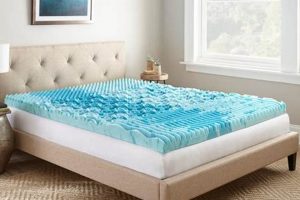
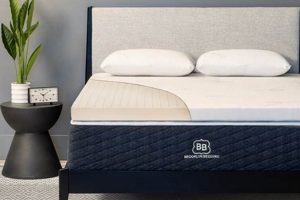
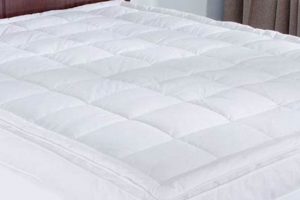
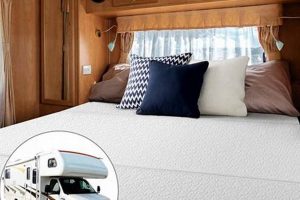
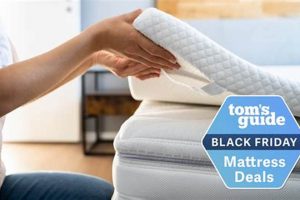
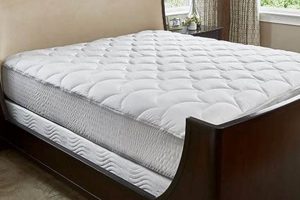
This bedding accessory is designed to enhance sleep comfort by mitigating heat retention on the sleep surface. Typically constructed from materials like memory foam infused with gel particles, it is placed atop a mattress to provide a cooler sleeping experience. For example, individuals who experience night sweats or live in warmer climates might find this addition beneficial.
Its significance lies in its potential to improve sleep quality. Excessive heat can disrupt sleep cycles and lead to restlessness. By dissipating body heat, these products aim to create a more comfortable sleep environment. Historically, efforts to regulate sleep temperature involved using natural materials like cotton or wool. However, advancements in material science have led to the development of gel-infused foam, offering improved thermal management properties.
The following sections will delve into the specific materials used in construction, examine the different types available, and discuss factors to consider when selecting one to meet individual needs, alongside maintenance and care guidelines.
Optimizing Use
To maximize the benefits and longevity of the cooling gel enhanced mattress overlay, consider the following guidelines:
Tip 1: Proper Mattress Foundation: Ensure the mattress the overlay is placed upon offers adequate support. An unsupportive mattress can negate the benefits of the overlay and lead to premature wear.
Tip 2: Initial Off-Gassing Period: Upon unpacking, allow the overlay to air out in a well-ventilated room for at least 24 hours. This mitigates any residual manufacturing odors.
Tip 3: Use a Mattress Protector: Covering the overlay with a thin, breathable mattress protector shields it from spills, stains, and dust mites, extending its lifespan.
Tip 4: Rotate Regularly: Rotating the overlay 180 degrees every few months promotes even wear and prevents indentation from concentrated pressure points.
Tip 5: Proper Cleaning Procedures: Consult the manufacturer’s instructions for cleaning. Most overlays should only be spot cleaned with mild detergent and water, avoiding harsh chemicals or excessive moisture.
Tip 6: Avoid Direct Sunlight: Prolonged exposure to direct sunlight can degrade the materials and diminish the cooling properties of the gel-infused foam.
Tip 7: Consider Sheet Material: Opt for breathable bedding materials such as cotton, linen, or bamboo to further enhance the cooling effect of the overlay.
Adhering to these recommendations will help maintain the performance and comfort of the cooling gel enhanced mattress overlay, ensuring restful sleep for an extended period.
The subsequent section will provide a comprehensive overview of different product options and considerations for choosing the optimal selection based on individual sleep preferences and requirements.
1. Material Composition
The material composition of a cooling gel mattress topper is paramount to its effectiveness and overall performance. The primary material is typically viscoelastic foam, commonly known as memory foam, due to its pressure-relieving properties. However, the integration of cooling gel directly impacts the foam’s thermal behavior. The gel, often comprised of phase-change materials or gel beads, is infused throughout the foam structure. This infusion is designed to absorb and dissipate body heat, preventing the mattress topper from becoming excessively warm during sleep. Without this deliberate material engineering, the inherent insulating properties of memory foam would trap heat, negating any cooling benefits. For example, a standard memory foam topper will likely retain heat and cause discomfort for individuals prone to night sweats, whereas a gel-infused counterpart mitigates this issue.
The proportion and type of gel used significantly influence the cooling effect. Higher concentrations of gel generally result in greater heat absorption capacity. Furthermore, the inclusion of phase-change materials allows the topper to actively regulate temperature by absorbing heat when the sleeper is warm and releasing it when the sleeper is cool. In practice, this means the topper strives to maintain a consistent and comfortable sleeping temperature. The quality of the foam itself also plays a critical role. Lower-density foam may not provide sufficient support and can degrade more quickly, diminishing both the comfort and cooling effectiveness of the topper. Therefore, the specific blend of foam density and gel technology is crucial for achieving optimal results.
In conclusion, material composition is not merely a passive characteristic of a cooling gel mattress topper; it is the fundamental determinant of its functionality. The deliberate combination of memory foam with cooling gel technology creates a targeted solution for temperature regulation during sleep. While variations in gel concentration, foam density, and the incorporation of phase-change materials offer a range of options, the underlying principle remains the same: carefully selected materials are essential for achieving the desired cooling effect and enhancing overall sleep quality. Choosing a topper with subpar materials often leads to dissatisfaction and negates the intended benefits.
2. Thickness Options
The thickness of a cooling gel mattress topper significantly influences its overall impact on sleep quality and comfort. The primary relationship stems from the increased material volume associated with thicker toppers. This increased volume allows for a greater concentration of cooling gel, potentially enhancing heat dissipation. For example, a 4-inch thick topper generally provides a more substantial cooling effect than a 2-inch thick model, assuming comparable gel concentrations and foam densities. Thicker options also alter the sleep surface’s feel more dramatically, offering increased cushioning and pressure relief.
However, the correlation between thickness and cooling effectiveness is not always linear. A very thick topper might compress excessively, reducing airflow and negating some of the gel’s cooling properties. Furthermore, an overly thick topper could raise the sleep surface to an uncomfortable height, impacting ergonomics. The ideal thickness depends on individual preferences, mattress firmness, and body weight. For instance, individuals with softer mattresses might prefer a thinner topper to avoid excessive sinkage, while those with firmer mattresses might benefit from the added cushioning of a thicker option. A real-world example includes side sleepers who often find thicker toppers (3-4 inches) provide better pressure relief for their shoulders and hips.
In summary, while thickness is a critical factor in the performance of a cooling gel mattress topper, it must be considered in conjunction with other parameters such as gel concentration, foam density, and
individual sleep needs. The right thickness contributes to enhanced cooling and comfort, but an unsuitable choice can compromise these benefits. A balanced approach that takes all relevant factors into account is crucial for selecting the optimal topper.
3. Density Variations

Density variations in a cooling gel mattress topper directly influence its performance, longevity, and support characteristics. Density, measured in pounds per cubic foot (PCF), refers to the mass of the foam material. Higher density indicates more material packed into the same volume, resulting in a firmer, more durable topper. In a cooling gel-infused topper, density affects how effectively the gel particles can dissipate heat and how well the topper maintains its shape over time. A low-density topper, for example, may compress quickly, reducing airflow and hindering the gel’s cooling capabilities. Conversely, a high-density topper offers enhanced support and retains its form for longer, potentially maximizing the cooling gel’s lifespan and effectiveness.
The selection of an appropriate density depends on individual weight and sleeping position. Lighter individuals may find lower-density toppers sufficient, whereas heavier individuals generally require higher-density options for adequate support and to prevent bottoming out, which can negate the cooling benefits by restricting airflow. Similarly, side sleepers benefit from higher-density toppers to properly align the spine. Consider two products: a 2.5 PCF topper, suitable for a lightweight individual, and a 4.0 PCF topper, designed for heavier users needing enhanced support and durability. Choosing inappropriately leads to compromised comfort and a reduced lifespan of the product.
In conclusion, density variation is a crucial factor when evaluating a cooling gel mattress topper. It impacts not only the level of support and durability but also the efficacy of the cooling technology. Selecting a topper with appropriate density, based on body weight and sleep preferences, is essential for maximizing both comfort and the longevity of the investment. Overlooking this aspect can lead to premature wear, inadequate support, and a diminished cooling effect, undermining the intended purpose of the topper.
4. Cooling Technology
Cooling technology represents the core functional component responsible for the temperature-regulating properties inherent in a cooling gel mattress topper. It dictates the degree to which the topper can mitigate heat retention and promote a cooler sleep environment, influencing user comfort and sleep quality. Understanding the specific technologies employed is crucial when evaluating product effectiveness.
- Gel Infusion
Gel infusion involves incorporating gel particles, typically composed of silica-based materials, directly into the memory foam structure. These gel particles possess a higher thermal conductivity than standard memory foam, enabling more efficient heat absorption and dissipation. A real-world example is a topper using open-cell memory foam with a high concentration of gel beads; this construction is more effective at maintaining a lower surface temperature compared to a topper with a low gel concentration.
- Phase Change Materials (PCMs)
Phase change materials are substances that absorb or release heat as they transition between solid and liquid states. When integrated into a cooling gel mattress topper, PCMs absorb excess body heat, remaining cool until they reach their melting point. Once saturated, they release heat, returning to a solid state. For instance, a topper containing micro-encapsulated PCMs within the foam can actively regulate temperature throughout the night, adapting to changing body heat levels.
- Open-Cell Foam Structure
Traditional memory foam often features a closed-cell structure, restricting airflow and trapping heat. Cooling gel mattress toppers often utilize open-cell foam, which allows for greater air circulation. This enhanced airflow facilitates heat dissipation and prevents the buildup of moisture, contributing to a cooler sleep surface. An example is a topper that combines open-cell foam with gel infusion, creating a synergistic effect that maximizes cooling capabilities.
- Ventilation Channels
Some cooling gel mattress toppers incorporate ventilation channels within the foam structure. These channels further enhance airflow, allowing heat to escape more effectively. This design improves breathability and reduces the likelihood of heat buildup, particularly in areas of high pressure. Consider a topper with strategically placed vertical channels; these channels enable consistent airflow, contributing to a more comfortable and cooler sleep experience.
The effectiveness of a cooling gel mattress topper is determined by the interplay of these technologies. While gel infusion provides a baseline level of cooling, the addition of PCMs, open-cell foam, and ventilation channels can significantly enhance the thermal regulation capabilities of the topper. Selection should be based on individual needs and preferences, considering the relative strengths of each technology and their combined impact on sleep comfort.
5. Support Characteristics
Support characteristics are integral to the functionality and efficacy of a cooling gel mattress topper. The degree of support provided directly influences spinal alignment, pressure distribution, and overall sleep comfort, factors that, in turn, can either enhance or diminish the benefits of the cooling gel technology. For example, a topper lacking adequate support may cause the sleeper to sink excessively, compressing the material and impeding airflow. This compression reduces the gel’s ability to dissipate heat, negating the intended cooling effect. Conversely, a properly supportive topper maintains spinal alignment, allowing for optimal pressure distribution and unhindered airflow, thereby maximizing the cooling gel’s effectiveness. The correlation, therefore, is not merely additive; rather, supportive structure enables the cooling function to operate at its intended capacity.
Different support characteristics manifest in varying firmness levels and construction techniques. A firmer topper offers greater resistance to compression, which is beneficial for individuals requiring enhanced spinal support. Conversely, a softer topper provides increased pressure relief, which is advantageous for those experiencing joint pain or pressure sores. The choice between firmness levels should align with individual sleeping positions and body weight. For instance, side sleepers often benefit from a softer topper to alleviate pressure on the shoulders and hips, while back sleepers typically require a firmer option to maintain proper spinal alignment. Furthermore, the internal construction, such as zoned support regions or convoluted foam designs, can contribute to enhanced support and pressure distribution, optimizing both comfort and the cooling gel’s performance. An understanding of these nuanced differences allows for a more tailored selection process, ensuring that the chosen topper meets specific individual needs.
In summary, the c
onnection between support characteristics and a cooling gel mattress topper is critical to achieving optimal sleep quality. Adequate support is not merely a comfort feature; it is an enabling factor that allows the cooling gel technology to function effectively. Understanding the interplay between firmness, construction techniques, and individual sleep requirements ensures that the selected topper provides both the necessary support and the desired cooling effect, maximizing the potential for restful and restorative sleep. Failure to prioritize support characteristics can compromise the cooling function, leading to discomfort and negating the intended benefits of the product.
6. Maintenance Requirements

The longevity and consistent performance of a cooling gel mattress topper are inextricably linked to its maintenance requirements. Inadequate care directly impacts its structural integrity, hygiene, and the efficacy of the cooling gel itself. A failure to adhere to proper cleaning protocols, for instance, can lead to the accumulation of dust mites, allergens, and body fluids within the topper’s porous structure. This accumulation degrades the foam and compromises the thermal properties of the gel, diminishing its capacity to regulate temperature effectively. For example, a topper not regularly cleaned may harbor trapped moisture, fostering mold growth and impeding airflow, thus negating the intended cooling benefits. The adherence to appropriate maintenance procedures is, therefore, not merely aesthetic; it is critical for preserving the topper’s functional properties.
Different types of cooling gel mattress toppers exhibit varying maintenance needs, depending on their construction and materials. Certain toppers feature removable, washable covers, facilitating easier cleaning and hygiene maintenance. Others necessitate spot cleaning with mild detergents and water, avoiding harsh chemicals that can damage the foam and gel. The frequency of cleaning also depends on individual usage patterns and environmental factors. Individuals with allergies or those who perspire heavily during sleep may require more frequent cleaning. Furthermore, proper storage practices are essential. When not in use, the topper should be stored in a cool, dry place, protected from direct sunlight and extreme temperatures, which can degrade the foam and alter the gel’s properties. One practical application involves vacuuming the topper regularly to remove surface debris, preventing the build-up of dirt and allergens that compromise performance and hygiene.
In conclusion, diligent adherence to specified maintenance requirements is paramount for maximizing the lifespan and sustaining the performance of a cooling gel mattress topper. Neglecting these requirements accelerates degradation, reduces cooling efficacy, and compromises hygiene. The challenges associated with maintenance underscore the importance of understanding material-specific cleaning instructions and adopting proactive care practices. By prioritizing proper upkeep, users can ensure long-term comfort, hygiene, and sustained cooling performance, effectively safeguarding their investment and optimizing sleep quality.
Frequently Asked Questions
This section addresses common inquiries regarding the functionality, suitability, and care of cooling gel mattress toppers.
Question 1: How does a cooling gel mattress topper function to reduce heat retention?
Cooling gel mattress toppers typically integrate gel particles, often silica-based, within the memory foam matrix. These gel particles exhibit higher thermal conductivity compared to standard memory foam, facilitating heat absorption and dissipation away from the sleeper’s body.
Question 2: What is the expected lifespan of a cooling gel mattress topper?
The lifespan varies based on material quality, usage, and maintenance practices. Generally, a high-quality topper can provide three to five years of consistent performance with proper care.
Question 3: Are cooling gel mattress toppers suitable for all types of mattresses?
Cooling gel mattress toppers can be used on most mattress types, including innerspring, memory foam, and latex. However, the overall comfort and support will be influenced by the underlying mattress characteristics.
Question 4: What cleaning procedures are recommended for a cooling gel mattress topper?
Most manufacturers recommend spot cleaning with mild detergent and water. Removable covers, if present, should be machine washed according to the care label instructions. Avoid harsh chemicals and excessive moisture.
Question 5: Can a cooling gel mattress topper completely eliminate night sweats?
While a cooling gel mattress topper can significantly reduce heat retention and improve sleep comfort, it may not entirely eliminate night sweats caused by underlying medical conditions.
Question 6: How does the density of the foam impact the performance of the cooling gel?
Higher-density foam generally provides better support and durability, allowing the cooling gel to function more effectively over time. Lower-density foam may compress excessively, reducing airflow and hindering the gel’s cooling capabilities.
In summary, cooling gel mattress toppers offer a practical solution for mitigating heat retention during sleep. However, individual results may vary depending on factors such as material quality, maintenance practices, and underlying medical conditions.
The subsequent section will address potential limitations and drawbacks associated with cooling gel mattress toppers, providing a balanced perspective.
Conclusion
This exploration of the cooling gel mattress topper has illuminated critical facets, encompassing material composition, thickness options, density variations, cooling technology, support characteristics, and maintenance requirements. Each element contributes to the overall effectiveness of the product in mitigating heat retention and enhancing sleep comfort. Understanding these parameters enables informed decision-making, aligning product selection with individual needs and preferences.
The long-term value of a cooling gel mattress topper rests on a commitment to proper maintenance and a realistic expectation of its capabilities. While these products offer a viable solution for temperature regulation during sleep, they are not a panacea for all sleep-related issues. Continued innovation in materials and design promises further refinement in cooling technologies, offering potential improvements in sleep quality for a broader range of individuals. Further research and development will determine long term effectiveness for diverse populations.