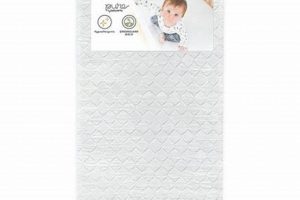
A sleeping arrangement involving a standard-sized infant mattress placed directly on the floor provides an alternative to traditional cribs or bassinets. This setup allows infants and toddlers greater freedom of movement and accessibility. For example, parents might choose this option to promote independent sleep habits or to simplify the transition from co-sleeping to solitary sleep.
The primary advantage lies in the increased autonomy granted to the child. This arrangement eliminates the physical constraints of crib walls, potentially fostering self-soothing skills and reducing feelings of confinement. Historically, similar ground-based sleeping solutions have been utilized across various cultures, prioritizing accessibility and a more natural sleep environment for young children.
The subsequent discussion will explore factors to consider when implementing this sleeping arrangement, including safety precautions, mattress selection criteria, and appropriate age guidelines. Furthermore, the text will address potential drawbacks and offer strategies for ensuring a secure and comfortable sleep space for the child.
Essential Considerations for Crib Mattress Floor Bed Usage
Implementing a floor-based sleeping arrangement requires careful planning and adherence to safety guidelines. The following tips address critical aspects to ensure a secure and beneficial environment for the child.
Tip 1: Prioritize Mattress Safety: Ensure the infant mattress meets current safety standards and is specifically designed for infant sleep. Verify the mattress is firm and flat, minimizing the risk of suffocation. Avoid using older mattresses with potential indentations or compromised structural integrity.
Tip 2: Maintain a Clutter-Free Zone: The immediate area surrounding the mattress must be clear of any potential hazards. Remove loose bedding, pillows, toys, and other items that could pose a suffocation or tripping risk. Regularly inspect the space for small objects that the child could ingest.
Tip 3: Employ Close Supervision: Constant monitoring is crucial, especially during the initial transition period. Frequent checks ensure the child is safe and comfortable. Video monitors can provide an additional layer of surveillance, particularly during periods when direct observation is not possible.
Tip 4: Childproof the Room Extensively: Implement comprehensive childproofing measures throughout the entire room. Cover electrical outlets, secure furniture to the walls, and remove any sharp or potentially dangerous objects. The child’s ability to freely move around necessitates a fully secure environment.
Tip 5: Gradual Transition is Recommended: Introduce the floor-based mattress gradually. Begin with naps and short periods of supervised play on the mattress to acclimate the child to the new sleeping arrangement. A sudden transition may cause anxiety or resistance.
Tip 6: Regularly Inspect Mattress Condition: Routinely check the mattress for signs of wear and tear, including rips, tears, or sagging. Replace the mattress immediately if any damage is detected to maintain a safe and supportive sleep surface.
A meticulous approach to safety, environment, and monitoring enhances the potential benefits of this sleeping solution. Proper implementation minimizes risks and promotes a secure sleep experience for the child.
The following section will discuss age appropriateness and other key considerations for employing this method.
1. Safety Protocols

Adherence to rigorous safety protocols is non-negotiable when utilizing a crib mattress floor bed. The absence of traditional crib walls necessitates heightened vigilance and specific preventative measures to safeguard the infant or toddler.
- Suffocation Hazard Mitigation
Given the proximity of the mattress to the floor and the unrestricted access available to the child, the risk of suffocation from loose bedding or surrounding objects is amplified. Protocols include maintaining a completely clear sleep surface, ensuring no blankets, pillows, or toys are present within the immediate vicinity of the mattress. This preventative measure directly reduces the potential for accidental airway obstruction.
- Entrapment Prevention
The room environment must be meticulously assessed for potential entrapment hazards. Spaces between the mattress and walls, or under furniture, present a risk of the child becoming wedged or trapped. Safety protocols mandate that the mattress be positioned a safe distance from walls or furniture, or that any such gaps be effectively blocked. This prevents accidental entrapment, a critical safety consideration.
- Fall Risk Reduction
Although the mattress is positioned on the floor, a potential for falls still exists, particularly as the child learns to navigate the surrounding environment. Safety protocols entail padding sharp edges of nearby furniture, securing unstable objects, and ensuring adequate lighting to prevent trips and falls. These measures minimize injury potential as the child explores the room.
- Constant Monitoring Implementation
Due to the increased accessibility afforded by a floor-based sleep arrangement, consistent monitoring is essential. Safety protocols dictate the use of a reliable baby monitor, preferably one with video capabilities, to enable continuous observation of the child. Frequent physical checks are also necessary, especially during the initial stages of adjustment, to promptly address any potential safety concerns.
The effectiveness of a crib mattress floor bed is contingent on the diligent implementation of these safety protocols. Failure to adhere to these guidelines significantly increases the risk of adverse events, negating any potential benefits associated with this type of sleeping arrangement. Strict adherence is vital to ensure the child’s well-being.
2. Mattress Firmness

Mattress firmness plays a critical role in the safety and developmental appropriateness of a crib mattress floor bed. Selecting the correct firmness level directly impacts infant well-being and mitigates potential risks associated with this sleep arrangement.
- Suffocation Risk Mitigation
A firm mattress minimizes the risk of suffocation. An infant lacks the muscle strength to reposition themselves if their face becomes pressed against a soft surface. A yielding mattress can create an indentation, potentially obstructing the airway. A firm surface, however, maintains its shape and reduces this hazard. This is particularly crucial in a floor bed setting, where unrestricted access increases the likelihood of the infant rolling onto their stomach.
- SIDS Prevention
Research indicates a correlation between firm sleep surfaces and a reduced risk of Sudden Infant Death Syndrome (SIDS). While the exact mechanisms are not fully understood, it is hypothesized that a firmer mattress promotes better airflow and reduces the chance of rebreathing exhaled carbon dioxide. Using a firm mattress in a crib mattress floor bed aligns with SIDS prevention guidelines established by pediatric organizations.
- Spinal Development Support
A firm mattress provides appropriate support for an infant’s developing spine. A soft mattress can lead to spinal misalignment and discomfort. The firmness ensures proper posture during sleep, contributing to healthy musculoskeletal development. This is particularly important for infants spending extended periods on the mattress.
- Mobility and Motor Skill Development
A firm surface facilitates movement and encourages motor skill development. An infant can more easily push up, roll over, and crawl on a firm mattress. This promotes strength and coordination, essential for developmental milestones. A soft mattress, in contrast, can impede movement and hinder the development of these crucial skills.
The selection of a sufficiently firm mattress is paramount when opting for a crib mattress floor bed. It directly addresses safety concerns, supports healthy development, and facilitates motor skill acquisition. Deviation from this principle can compromise the infant’s well-being and negate potential advantages of this sleeping arrangement.
3. Room Preparation

The implementation of a crib mattress floor bed is inextricably linked to comprehensive room preparation. The absence of confining crib walls necessitates a meticulously safe and controlled environment to mitigate potential hazards. Adequate room preparation is not merely a suggestion; it is a prerequisite for the safe and responsible use of this sleeping arrangement.
A primary cause-and-effect relationship exists between room preparation and infant safety. For example, unsecured furniture can pose a significant tipping hazard, potentially resulting in serious injury should a child attempt to climb or pull themselves up. Therefore, securing all furniture to the walls is a vital component of room preparation, directly reducing the risk of accidents. Similarly, exposed electrical outlets present a risk of electrocution. Covering these outlets is another essential element, preventing a potential electrical hazard. The effectiveness of the crib mattress floor bed is contingent upon the thoroughness of these preparatory measures.
In conclusion, adequate room preparation is an indispensable component of a successful crib mattress floor bed setup. The safety and well-being of the child directly depend on the implementation of these measures. Without proper room preparation, the risks associated with this sleeping arrangement far outweigh any potential benefits. This understanding is of paramount practical significance for parents and caregivers considering this alternative sleep solution.
4. Age Appropriateness

Age appropriateness is a pivotal factor when considering a crib mattress floor bed. The developmental stage of the infant or toddler dictates the suitability and safety of this sleeping arrangement. Premature implementation can present risks, while delayed adoption might negate potential benefits.
- Motor Skill Development Threshold
The infant must possess sufficient motor skills before transitioning to a floor bed. This generally includes the ability to roll over independently, push up on their arms, and exhibit some degree of head control. An infant lacking these skills is at increased risk of positional asphyxia if they become trapped in an unfavorable position on the mattress. Premature placement on a floor bed before these motor milestones are achieved can therefore be detrimental.
- Cognitive Understanding and Safety Awareness
As the child becomes mobile, a degree of cognitive understanding of boundaries and potential hazards is required. The toddler needs to comprehend the concept of safe exploration and exhibit some level of obedience to parental guidance regarding boundaries within the room. Without this cognitive awareness, the child may be more prone to wandering unsupervised or interacting with potentially dangerous objects within their reach. This cognitive threshold typically emerges around 12-18 months of age.
- Reduced Risk of Suffocation
Older infants and toddlers generally have a lower risk of suffocation compared to newborns, assuming they have developed necessary motor skills. This reduced risk makes them suitable candidates for a floor bed, where constant repositioning and independent movement are key to their comfort and safety. Infants with torticollis or other physical limitations, however, may still present a higher suffocation risk and are not ideally suited for a floor bed.
- Development of Independence and Self-Soothing
The floor bed arrangement promotes a degree of independence in older infants and toddlers. It allows them to move freely, explore their environment, and develop self-soothing skills. This autonomy can facilitate the transition from co-sleeping to independent sleep. However, this benefit is contingent on the child being developmentally ready to manage this newfound freedom responsibly.
In summary, age appropriateness is a multifaceted consideration for a crib mattress floor bed. It encompasses motor skill development, cognitive understanding, and relative risk factors. A careful assessment of these developmental milestones is crucial to ensure the child’s safety and maximize the potential benefits of this sleeping arrangement. A blanket recommendation for all infants is inappropriate; individual development must guide the decision-making process.
5. Accessibility benefits

The accessibility benefits associated with a crib mattress floor bed represent a significant factor in its adoption. This configuration facilitates both the child’s interaction with their surroundings and parental access for caregiving tasks. The reduced barrier to entry, compared to a traditional crib, yields distinct advantages.
- Enhanced Child Autonomy
A floor bed allows the child to independently enter and exit the sleeping space. This freedom encourages exploration and promotes self-reliance as the child can choose when to engage with their environment. For example, a toddler waking early can quietly play with toys within the room, rather than being confined and potentially becoming distressed within a crib.
- Facilitated Parental Interaction
The absence of crib rails simplifies parental access for comforting, feeding, or simply checking on the child. Bending or lifting the child out of a crib can be physically demanding; a floor bed eliminates this strain. For instance, a parent recovering from childbirth might find a floor bed significantly easier to manage than a traditional crib.
- Simplified Co-Sleeping Transition
For families transitioning from co-sleeping, a floor bed can serve as an intermediate step toward independent sleep. The proximity of the mattress to the floor allows for easy parental presence during the initial stages of separation. For example, a parent can lie down next to the child until they fall asleep and then quietly leave the room.
- Adaptability for Diverse Needs
A floor bed configuration offers flexibility for families with diverse needs, such as physical limitations or space constraints. The low profile of the mattress minimizes the risk of falls for children with mobility issues. In smaller living spaces, a floor bed can be easily integrated without the bulk of a traditional crib. These reasons enable to provide care more effectively.
These accessibility benefits collectively contribute to a more child-centered and family-friendly sleep environment. The ease of interaction, enhanced autonomy, and adaptability offered by a crib mattress floor bed underscore its potential as a viable alternative to traditional sleep arrangements.
Frequently Asked Questions
This section addresses common inquiries and concerns regarding the implementation and safety of a crib mattress floor bed setup.
Question 1: What constitutes a suitable mattress for a floor bed?
A firm, certified crib mattress is essential. It should meet current safety standards for infant mattresses, possess a tightly woven cover, and be free of any tears or indentations. Avoid using repurposed mattresses of unknown origin due to potential hygiene and safety concerns.
Question 2: At what age is a floor bed generally considered appropriate?
The child should exhibit sufficient motor skills, including the ability to roll over independently and push up on their arms. Cognitive awareness of boundaries and basic safety concepts is also important. Most children are developmentally ready between 12 and 18 months of age, but individual readiness varies.
Question 3: What safety precautions are paramount with a floor bed?
A clutter-free sleep environment is essential to minimize suffocation risks. All furniture in the room must be securely anchored to prevent tipping. Electrical outlets should be covered, and any potential hazards, such as sharp objects or choking hazards, must be removed.
Question 4: How does a floor bed impact sleep training?
It can potentially foster independence and self-soothing skills, but requires diligent monitoring and consistent sleep routines. Parental presence and consistent boundaries are crucial for successful sleep training within this arrangement.
Question 5: What are the potential drawbacks of a floor bed?
The increased accessibility can lead to wandering or exploration during sleep times if the child is not adequately supervised. Maintaining a consistently safe environment necessitates constant vigilance and adaptation as the child’s mobility increases.
Question 6: How often should the floor bed area be cleaned?
The area should be cleaned regularly to prevent the buildup of dust, allergens, and bacteria. Vacuuming or sweeping the floor and wiping down the mattress cover with a mild detergent is recommended at least weekly.
Prioritizing safety, proper developmental timing, and consistent monitoring is critical for the successful and responsible implementation of a crib mattress floor bed.
The subsequent section will delve into practical tips for creating an inviting and safe sleep space using this method.
Conclusion
The preceding discussion has provided a comprehensive examination of the crib mattress floor bed, encompassing its potential benefits, inherent risks, and essential safety considerations. The analysis has underscored the significance of meticulous planning, adherence to established safety protocols, and a thorough understanding of the child’s developmental stage. The information presented allows for informed decisions regarding the suitability of this alternative sleeping arrangement.
The implementation of a crib mattress floor bed should not be undertaken lightly. Further investigation and consultation with pediatric professionals are strongly advised before making a final determination. The well-being of the child is paramount, and any decision must prioritize their safety and developmental needs above all else. The informed and cautious approach constitutes the foundation of responsible childcare.
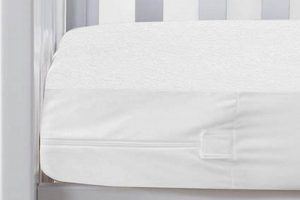

![Best Organic Crib Mattress Protector [Safe Sleep] | Organic & Natural Mattress Buyer’s Guide: Non-Toxic Sleep Solutions](https://mattressworldpa.com/wp-content/uploads/2025/07/th-1363-300x200.jpg "Best Organic Crib Mattress Protector [Safe Sleep] Organic & Natural Mattress Buyer’s Guide: Non-Toxic Sleep Solutions")