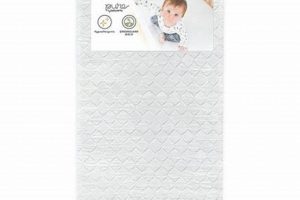
The practice of placing a sleep surface intended for infants directly upon the ground, rather than within the confines of a traditional crib structure, represents a departure from conventional nursery setups. This arrangement involves a specific type of mattress, designed to support the weight and developmental needs of a baby, being positioned without elevation. This can be observed in minimalist parenting approaches and adaptations made in situations where space is limited or alternative sleeping arrangements are preferred.
The primary motivations behind such setups often include fostering a sense of independence and freedom of movement for the infant. Proponents suggest it allows the child to explore their environment more readily and may contribute to improved motor skill development. Historically, variations of floor sleeping arrangements have been practiced across diverse cultures, reflecting different philosophies regarding infant care and parental proximity. Benefits cited often revolve around accessibility for the child and ease of parental monitoring.
Understanding the implications of this practice necessitates a comprehensive consideration of safety protocols, potential developmental advantages, and practical considerations for implementation. Further analysis will delve into the crucial aspects of mattress selection, environmental preparation, and risk mitigation strategies to ensure a secure and nurturing sleep environment for the child.
Practical Considerations for a Floor-Based Infant Sleep Surface
Careful planning and execution are paramount when implementing a floor-based sleep arrangement for an infant. The following guidelines address key considerations to promote safety and well-being.
Tip 1: Mattress Selection: Opt for a firm, appropriately sized infant mattress. The dimensions must be precise to minimize gaps between the mattress and surrounding walls or furniture, preventing potential entrapment hazards. A new mattress is preferable to ensure it meets current safety standards and has not degraded over time.
Tip 2: Room Preparation: The sleep environment must undergo thorough hazard assessment. Remove any loose objects, including small toys, blankets, pillows, and cords, that could pose a choking or strangulation risk. Secure all furniture to the walls to prevent tipping.
Tip 3: Surface Cleanliness: Regular cleaning of the floor surface is essential to maintain hygiene. Use non-toxic cleaning agents. Ensure the floor is dry and free of any potential irritants before placing the mattress.
Tip 4: Temperature Regulation: Monitor the room temperature to prevent overheating or chilling. Dress the infant in appropriate sleepwear suitable for the room’s ambient temperature, avoiding excessive layers or loose blankets.
Tip 5: Continuous Monitoring: Close and constant supervision of the infant is crucial, especially during the initial transition to the floor-based sleep arrangement. Consider using a baby monitor equipped with audio and video capabilities to facilitate remote observation.
Tip 6: Consistent Placement: Establish a designated sleep area. Consistently placing the mattress in the same location can help the infant develop a sense of routine and security, promoting better sleep habits. The area should be free from distractions and adequately ventilated.
Implementing these precautions can mitigate potential risks associated with a floor-based sleeping arrangement and create a safer environment for infant rest and development.
Following these tips provides a strong foundation for a safe and comfortable sleeping arrangement. Further research into current safe sleep guidelines, including those from the American Academy of Pediatrics, is highly recommended before implementation.
1. Safety Standards Adherence
Compliance with established safety standards is of utmost importance when considering the use of a crib mattress directly on the floor as a sleep surface for infants. These standards are designed to minimize risks associated with infant sleep environments and promote optimal safety.
- Mattress Firmness and Support
Safety regulations dictate that crib mattresses must meet specific firmness criteria to reduce the risk of Sudden Infant Death Syndrome (SIDS) and suffocation. A mattress placed on the floor must still maintain this firmness to provide adequate support and prevent the infant from sinking into the surface, which could obstruct breathing. For instance, guidelines often specify the degree of compression a mattress should exhibit under a certain weight, ensuring it is firm enough for safe infant sleep.
- Material Toxicity and Off-Gassing
Adherence to safety standards involves ensuring that the materials used in the construction of the mattress are non-toxic and free from harmful chemicals. Mattresses must undergo testing to verify they do not emit volatile organic compounds (VOCs) or other substances that could pose a health risk to the infant. Certifications such as GREENGUARD Gold indicate compliance with stringent emissions standards and confirm the mattress is safe for indoor use.
- Size and Fit Considerations
Although used directly on the floor, the mattress’s dimensions must still be considered relative to the surrounding environment. Safety standards address the potential for entrapment hazards. While a crib frame isn’t present, the mattress should fit snugly against walls or other barriers to prevent the infant from becoming wedged between the mattress and a hard surface. Specific measurements are often stipulated to minimize such risks.
- Flame Retardancy Compliance
Safety regulations commonly mandate that crib mattresses meet certain flame retardancy requirements to reduce the risk of fire-related injuries. While the specific chemicals used to achieve flame retardancy have been scrutinized, the standards themselves remain relevant. Mattresses placed on the floor must still comply with these fire safety measures, as they are designed to provide a degree of protection in the event of a fire.
These facets of safety standards adherence collectively contribute to creating a safer sleep environment when utilizing a crib mattress on the floor. Regular review of updated safety guidelines from organizations like the Consumer Product Safety Commission (CPSC) and the American Academy of Pediatrics (AAP) is recommended to ensure continued compliance and awareness of evolving best practices.
2. Environmental Hazard Mitigation

Environmental hazard mitigation assumes critical importance when a crib mattress is placed directly on the floor, moving beyond the confines of a traditional crib structure. This necessitates a comprehensive assessment and modification of the surrounding environment to ensure infant safety and well-being.
- Securing Tipping Hazards
Furniture within the room, such as dressers, bookshelves, and lamps, presents a tipping hazard if not properly secured. Infants, as they gain mobility, may attempt to pull themselves up using these objects, potentially leading to injury. Mitigation involves anchoring all freestanding furniture to the walls using appropriate hardware, effectively preventing accidental tip-overs. This safeguard is particularly crucial when the mattress is at floor level, affording the infant unrestricted access to these potential dangers.
- Eliminating Suffocation Risks
Loose bedding, including blankets, pillows, and plush toys, poses a suffocation risk to infants. Placing a crib mattress on the floor amplifies this concern due to the infant’s increased accessibility to these items. Mitigation requires a strict adherence to bare-crib practices. This means maintaining a sleep environment devoid of any soft objects that could obstruct breathing. Only a fitted sheet should be used on the mattress.
- Managing Electrical Hazards
Electrical cords and outlets within reach of the floor-level mattress pose electrocution and strangulation hazards. Mitigation involves ensuring that all electrical outlets are covered with childproof protectors and that any accessible cords are either shortened, secured, or completely removed from the infant’s vicinity. Particular attention must be paid to cords associated with lamps, baby monitors, and other electronic devices commonly found in nurseries.
- Addressing Air Quality Concerns
The floor environment can accumulate dust, allergens, and potential mold spores, impacting air quality. Mitigation involves regular vacuuming with a HEPA filter-equipped vacuum cleaner and consistent monitoring of humidity levels within the room. Additionally, ensuring adequate ventilation through open windows or air purifiers can help minimize the concentration of airborne irritants, creating a healthier sleep environment for the infant on the floor mattress.
By meticulously addressing these environmental hazards, parents and caregivers can create a safer and more conducive sleep space for infants using a crib mattress on the floor. The proactive implementation of these mitigation strategies is essential for minimizing potential risks and promoting infant health and well-being.
3. Proper mattress firmness

Proper mattress firmness is a critical element in ensuring infant safety, particularly when a crib mattress is placed directly on the floor. Unlike crib-based setups where the frame provides some structural support, a floor-based mattress relies solely on its inherent firmness to provide a safe sleep surface. Inadequate firmness can lead to hazardous sleeping conditions, increasing the risk of suffocation and other adverse outcomes.
- Role in Reducing Suffocation Risk
A firm mattress minimizes the likelihood of an infant’s face sinking into the sleep surface, thereby reducing the risk of suffocation. Soft mattresses can create pockets that impede airflow, especially if the infant rolls onto their stomach. Real-world examples include instances where infants have been found unresponsive due to airway obstruction on excessively soft surfaces. In the context of a floor-based setup, the absence of a crib frame exacerbates this risk, making mattress firmness even more crucial.
- Support for Spinal Development
Adequate firmness is essential for providing proper support for the infant’s developing spine. A mattress that is too soft can lead to spinal misalignment and discomfort. Studies in pediatric biomechanics have demonstrated the importance of a firm, flat surface for healthy skeletal development during infancy. Placing a non-supportive mattress directly on the floor can compromise posture and contribute to long-term musculoskeletal issues.
- Compliance with Safety Standards
Regulatory bodies, such as the Consumer Product Safety Commission (CPSC), establish specific firmness standards for crib mattresses. These standards are designed to ensure that mattresses provide a safe sleep environment for infants. While regulations primarily target crib mattresses, the principles of firmness remain applicable when the mattress is used on the floor. Failure to adhere to these guidelines increases the risk of non-compliance and potential liability.
- Impact on Infant Mobility and Motor Skills
A firm mattress supports the development of gross motor skills by providing a stable surface for movement. Infants need a solid base to practice rolling, crawling, and eventually standing. A mattress that is too soft can hinder these movements, delaying motor skill development. In a floor-based arrangement, where the infant has direct access to the surrounding environment, a firm mattress provides a safe and supportive platform for exploration and learning.
In summation, the selection of a crib mattress with proper firmness is paramount when implementing a floor-based sleep arrangement. Its role in reducing suffocation risk, supporting spinal development, ensuring compliance with safety standards, and promoting infant mobility underscores its importance. Neglecting mattress firmness in this context can have significant and potentially dangerous consequences for infant well-being.
4. Consistent monitoring practices

Consistent monitoring practices are indispensable when utilizing a crib mattress on the floor as a sleep surface for infants. The absence of traditional crib barriers necessitates heightened vigilance to ensure infant safety and well-being. These practices serve as a critical safeguard against potential hazards arising from the infant’s unrestricted access to the surrounding environment.
- Visual Surveillance Frequency
Regular visual checks of the infant are paramount. The frequency of these checks should be increased compared to when the infant is in a traditional crib. These checks are to ensure the infant’s face is not obstructed, they have not rolled into a potentially hazardous position, and their breathing is regular. Real-world examples include instances where infants have rolled onto their stomachs and, without immediate intervention, experienced breathing difficulties. Increased visual surveillance frequency helps mitigate these risks.
- Audio Monitoring Integration
Employing audio monitoring systems provides an additional layer of oversight. These systems allow caregivers to hear any distress calls or unusual sounds emanating from the infant, even when not in the immediate vicinity. This is especially useful during nighttime hours or when the caregiver is engaged in other tasks. Audio monitoring integration offers a supplementary means of detecting potential problems that may not be immediately visible.
- Responsive Intervention Protocols
Establishing clear protocols for responding to potential issues is essential. These protocols should outline the steps to take if the infant is found in a compromising position, exhibits signs of distress, or experiences a medical emergency. The ready availability of emergency contact information and first aid supplies is critical. Responsive intervention protocols ensure a coordinated and effective response to any situation that may arise.
- Environmental Hazard Reassessment
Continuous reassessment of the surrounding environment is necessary to identify and mitigate any new or overlooked hazards. As the infant grows and develops, their reach and mobility will increase, potentially exposing them to previously inaccessible dangers. Regular inspections of the sleep area are essential to ensure that all potential hazards are addressed proactively. Environmental hazard reassessment ensures that the sleep environment remains safe and conducive to infant well-being.
These facets of consistent monitoring practices, when diligently implemented, significantly enhance the safety profile of a crib mattress on the floor sleeping arrangement. The integration of visual surveillance, audio monitoring, responsive intervention protocols, and environmental hazard reassessment collectively contributes to a more secure and nurturing sleep environment for the infant.
5. Hygienic maintenance protocols

The establishment and consistent application of stringent hygienic maintenance protocols are critical when a crib mattress is positioned directly on the floor. This practice deviates from traditional crib setups, necessitating heightened attention to cleanliness and sanitation due to the mattress’s direct contact with the floor surface and the surrounding environment.
- Regular Vacuuming of the Sleep Area
Consistent vacuuming of the floor surface beneath and around the mattress is imperative. Floors accumulate dust, allergens, and potential pathogens, which can readily transfer to the mattress and impact infant health. Vacuuming should be performed using a HEPA filter-equipped vacuum cleaner to effectively capture fine particles. This practice minimizes the infant’s exposure to respiratory irritants and potential sources of infection.
- Routine Cleaning of the Mattress Surface
The mattress itself requires regular cleaning to remove spills, stains, and accumulated debris. Cleaning should be performed using non-toxic, hypoallergenic cleaning agents specifically designed for use on infant products. Harsh chemicals should be avoided to prevent skin irritation or respiratory distress. Spot cleaning is recommended for minor stains, while more extensive cleaning may be necessary for larger spills or messes. Ensure the mattress is thoroughly dried before placing it back into use to prevent mold growth.
- Protective Mattress Covering Implementation
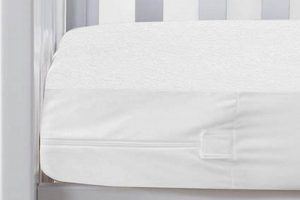
The use of a waterproof and hypoallergenic mattress protector is essential. This covering acts as a barrier against liquids, allergens, dust mites, and other potential contaminants. The protector should be easily removable and washable, allowing for frequent cleaning without damaging the mattress itself. Selecting a protector that is specifically designed for crib mattresses ensures a proper fit and optimal protection.
- Floor Surface Sanitization Frequency
The floor surface should be regularly sanitized to eliminate bacteria, viruses, and other pathogens. Sanitization should be performed using a non-toxic disinfectant that is safe for use around infants. Particular attention should be paid to areas where the infant spends the most time, such as directly beneath and around the mattress. Proper ventilation is essential during and after sanitization to minimize exposure to fumes.
Adherence to these hygienic maintenance protocols provides a safer and healthier sleep environment for infants using a crib mattress placed on the floor. These practices mitigate the risks associated with direct floor contact and contribute to the overall well-being of the infant. Neglecting these protocols can lead to increased exposure to allergens, pathogens, and other irritants, potentially impacting infant health and development.
Frequently Asked Questions
The following addresses prevalent inquiries regarding the practice of placing a crib mattress directly on the floor for infant sleep. This information aims to provide clarity and promote informed decision-making.
Question 1: Is placing a crib mattress directly on the floor a safe sleep practice for infants?
Safety depends heavily on adherence to strict protocols. Mattress firmness, environmental hazard mitigation, and consistent monitoring are crucial. If these are rigorously followed, the practice can be relatively safe. However, it deviates from recommended crib-based sleep guidelines and carries inherent risks requiring diligent management.
Question 2: Does placing a crib mattress on the floor increase the risk of Sudden Infant Death Syndrome (SIDS)?
While no direct causal link has been definitively established, deviating from established safe sleep guidelines, like those promoted by the American Academy of Pediatrics (AAP), introduces potential risks. SIDS risk is multifactorial, and an environment not optimized for safety may contribute to increased vulnerability. Strict adherence to guidelines regarding mattress firmness, absence of loose bedding, and prevention of overheating is paramount.
Question 3: What type of crib mattress is best suited for floor placement?
A new, firm crib mattress that meets current safety standards is preferable. The mattress should be free from harmful chemicals and off-gassing. Its dimensions must be precise to minimize gaps between the mattress and surrounding walls or furniture, preventing potential entrapment hazards.
Question 4: How often should a crib mattress on the floor be cleaned?
The mattress should be vacuumed regularly, at least weekly, using a HEPA filter-equipped vacuum cleaner. The surface should be spot-cleaned as needed with a non-toxic, hypoallergenic cleaning agent. A waterproof mattress protector is essential and should be laundered frequently according to manufacturer instructions.
Question 5: What environmental hazards need to be addressed when using a crib mattress on the floor?
Primary hazards include unsecured furniture that could tip over, electrical cords and outlets within reach, and the presence of loose bedding or small objects that could pose a choking or suffocation risk. Additionally, floor-level air quality must be considered, necessitating regular vacuuming and attention to potential allergens or mold.
Question 6: What are the benefits of using a crib mattress on the floor?
Proponents suggest that it fosters independence and freedom of movement for the infant. It may also be a practical solution in limited-space environments. However, these potential benefits must be carefully weighed against the increased safety risks requiring meticulous management.
In conclusion, while using a crib mattress on the floor can present some advantages, it also introduces a range of safety concerns that demand careful and consistent mitigation. Informed decision-making based on current safety guidelines is essential.
The next section will delve into case studies and real-world examples to illustrate the practical application of these principles.
Conclusion
The preceding examination of the “crib mattress on floor” configuration has illuminated critical considerations for infant safety and well-being. This arrangement, while potentially offering certain practical advantages, fundamentally alters the established parameters of safe infant sleep environments. The necessity for rigorous adherence to safety protocols, meticulous environmental control, and unwavering vigilance cannot be overstated. The potential benefits of independence and spatial freedom for the infant must be carefully weighed against the heightened risks inherent in this deviation from standard crib practices.
Ultimately, the decision to utilize a “crib mattress on floor” rests with the caregiver. However, this decision must be predicated upon a comprehensive understanding of the associated risks and a demonstrable commitment to implementing and maintaining the highest standards of safety. Continued research and adherence to evolving safe sleep guidelines are essential to ensure the well-being of infants in any sleep environment. The information presented serves as a call to responsible action and a reminder of the paramount importance of prioritizing infant safety above all other considerations.

![Best Organic Crib Mattress Protector [Safe Sleep] | Organic & Natural Mattress Buyer’s Guide: Non-Toxic Sleep Solutions](https://mattressworldpa.com/wp-content/uploads/2025/07/th-1363-300x200.jpg "Best Organic Crib Mattress Protector [Safe Sleep] Organic & Natural Mattress Buyer’s Guide: Non-Toxic Sleep Solutions")