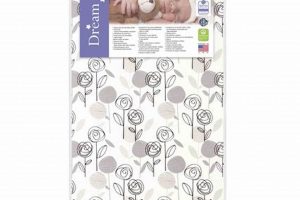
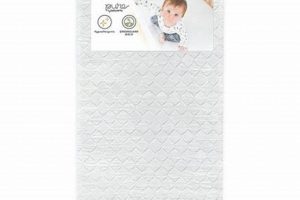
The dimensions of a sleep surface designed for infants differ significantly from those intended for toddlers and young children transitioning out of a crib. The former are standardized to ensure safety within the confines of a crib frame, while the latter offer increased length and width to accommodate growing bodies and evolving sleep needs. As an example, the typical interior dimension of a crib is approximately 28 inches wide and 52 inches long, dictating the corresponding size of its appropriate mattress. In contrast, a standard bed for a child, often the first step after a crib, measures around 38 inches wide and 75 inches long.
Understanding these dimensional variations is crucial for parents and caregivers. Selecting the correct mattress size not only ensures the child’s comfort but also plays a vital role in their safety. Historically, the move from a crib to a larger bed has marked a significant developmental milestone, signifying increased independence and requiring adjustments in sleep routines and environment. This transition underscores the importance of providing appropriate support and space for restful sleep, contributing to overall well-being and healthy development.
This article will delve deeper into the specific measurements, construction materials, and considerations for selecting the ideal sleeping surface for each stage of a child’s growth. It will explore the factors influencing the decision-making process when choosing between these two common sleeping arrangements, providing a clear understanding of their distinct characteristics and intended uses.
Considerations for Selecting Infant and Child Sleeping Surfaces
Selecting the appropriate sleep surface for a child requires careful consideration of safety, comfort, and developmental stage. The following tips provide guidance for navigating the choices between infant and toddler bed options.
Tip 1: Verify Standard Dimensions: Confirm the dimensions of the crib interior prior to purchasing a mattress. Standard cribs are designed to accommodate mattresses of approximately 28 inches wide and 52 inches long. A properly fitting mattress minimizes the risk of entrapment.
Tip 2: Assess Mattress Firmness: Infant mattresses should be firm to reduce the risk of sudden infant death syndrome (SIDS). A firm surface prevents the infant from sinking into the mattress, which can obstruct breathing.
Tip 3: Evaluate Transition Readiness: The transition to a larger bed should occur when the child exhibits signs of readiness, such as attempting to climb out of the crib or expressing a desire for a “big kid” bed. Premature transitions can lead to safety concerns and sleep disruptions.
Tip 4: Prioritize Safety Features: When transitioning to a twin-sized bed, ensure the bed frame is sturdy and equipped with side rails or bumpers to prevent falls. The height of the mattress should be appropriate for the child’s size and developmental stage.
Tip 5: Consider Mattress Material: Evaluate the materials used in the construction of both crib and twin mattresses. Opt for hypoallergenic and non-toxic materials to minimize the risk of allergic reactions and chemical exposure. Look for certifications such as GREENGUARD Gold, which indicate low chemical emissions.
Tip 6: Evaluate Room Space: Assess the space available in the child’s bedroom. A standard twin mattress requires significantly more floor space than a crib mattress. Ensuring adequate space allows for safe movement and play within the room.
Tip 7: Understand Long-Term Investment: While a crib and crib mattress are crucial for the first few years, a well-chosen twin mattress can last well into adolescence. Considering the long-term use and durability will inform the purchasing decision.
Selecting the correct mattress size and type is essential for ensuring child safety and promoting healthy sleep habits. These considerations will aid in creating a secure and comfortable sleep environment.
The following sections will discuss specific product features and recommendations to assist in making an informed decision regarding the best sleep surface for the child.
1. Standard Dimensions

Adherence to standardized measurements dictates the safe and effective use of both crib and beds. Discrepancies between prescribed dimensions and actual mattress size can result in hazardous conditions. Specifically, a crib mattress must precisely fit the interior dimensions of the crib frame. Gaps between the mattress and the frame create a risk of infant entrapment, potentially leading to suffocation. Conversely, these beds, with their significantly larger and more varied size options, allow for greater flexibility but necessitate appropriate frame selection to ensure stability and support. Regulatory bodies such as the Consumer Product Safety Commission (CPSC) enforce these standards to minimize risks associated with infant sleep environments. Deviation from these standards, whether through the use of ill-fitting mattresses or non-compliant crib frames, can have severe consequences.
The correlation between standard dimensions and safe sleep practices extends to the materials and construction of the mattresses themselves. Minimum firmness standards for crib mattresses are established to reduce the risk of Sudden Infant Death Syndrome (SIDS). A firm surface prevents the infant from sinking into the mattress, which could impede breathing. In contrast, mattresses intended for use in beds offer a wider range of firmness options to accommodate the preferences and developmental needs of older children. Selection of an appropriately sized and constructed mattress is thus a critical aspect of ensuring a safe and supportive sleep environment for children of all ages. For example, a bed mattress that is too soft can lead to discomfort or inadequate spinal support for a growing child, highlighting the importance of age-appropriate design and construction.
In summary, standard dimensions serve as a foundational element of safe sleep environments for infants and children. The rigorous enforcement of these standards for cribs and crib mattresses aims to mitigate risks associated with entrapment and suffocation. While offers greater flexibility in size and material choices, careful consideration must be given to ensure the selected mattress provides adequate support and safety features for the child’s age and developmental stage. Understanding and adhering to these standards presents a challenge to parents and caregivers, but is a critical component of responsible childcare.
2. Age Appropriateness

The suitability of a sleep surface is directly linked to a child’s age and developmental stage. The selection between a standardized sleep surface for infants and a larger surface for older children necessitates a comprehensive understanding of the physical, cognitive, and behavioral milestones achieved at different ages.
- Physical Development
Infants, due to their limited motor skills and underdeveloped musculoskeletal systems, require a firm, flat sleep surface to minimize the risk of injury or suffocation. Conversely, older children possess greater motor control and bone density, allowing for a wider range of mattress options with varying degrees of firmness and support. The dimensions must accommodate the childs height and weight to ensure comfort and proper spinal alignment during sleep.
- Cognitive Development
The transition from a confined sleeping environment to a more open setting corresponds with advancements in cognitive understanding and self-awareness. Infants lack the cognitive ability to recognize and respond to potential hazards, necessitating the secure boundaries of a crib. As children mature, their understanding of spatial awareness and personal safety increases, enabling them to navigate a larger sleep surface with greater independence and reduced risk.
- Behavioral Considerations
Sleep patterns and behaviors evolve significantly throughout childhood. Infants typically exhibit unpredictable sleep schedules and may require frequent parental intervention. As children grow, their sleep patterns become more regular and their ability to self-soothe increases. The move to a larger sleeping surface often coincides with increased independence and a desire for personal space, reflecting these behavioral shifts.
- Safety Regulations and Recommendations
Safety standards and guidelines are age-dependent and designed to protect children at each stage of development. Regulations governing crib design and mattress firmness are specifically tailored to mitigate risks associated with infant sleep, such as SIDS and entrapment. As children transition to a larger bed, safety considerations shift to preventing falls and ensuring the bed frame and mattress are appropriately sized and constructed.
These facets of development underscore the importance of aligning the sleep environment with a child’s current age and capabilities. The appropriateness of a specific size is not merely a matter of comfort or convenience but a critical factor in ensuring the child’s safety and well-being. Parents and caregivers must carefully assess their child’s developmental milestones before making a decision about the type of sleep surface provided.
3. Safety Regulations

The connection between safety regulations and the dimensions of infant versus toddler/child sleep surfaces is paramount. Regulations directly influence the prescribed sizes and construction of crib mattresses to minimize risks such as entrapment and suffocation, hazards particularly acute for infants with limited mobility. These regulations, often enforced by governmental bodies like the Consumer Product Safety Commission (CPSC), set specific requirements for crib dimensions, mattress firmness, and the permissible gap between the mattress and crib frame. Failure to adhere to these standards can result in product recalls and legal liabilities for manufacturers, highlighting the critical importance of compliance.
In contrast, the safety regulations governing bed mattresses and frames are less stringent regarding dimensions, reflecting the increased mobility and cognitive abilities of older children. However, regulations still address flammability, the use of non-toxic materials, and the stability of bed frames to prevent falls. For example, side rails or guardrails are often recommended for beds to prevent children from rolling off during sleep, particularly during the transition from a crib. The absence of such safety measures can increase the risk of injury, underscoring the need for parents to consider these factors when selecting bedding for older children. Another practical example is mattress flammability standards, ensuring that mattresses can resist ignition from small open flames, potentially providing crucial extra time in case of a fire.
In summary, safety regulations play a crucial role in dictating the design and manufacturing of both infant and child sleep surfaces. Strict adherence to these regulations is necessary to mitigate potential hazards and ensure the well-being of children. The practical implications of understanding these regulations are significant, empowering parents to make informed decisions when purchasing mattresses and bedding, ultimately contributing to a safer sleep environment for their children. While challenges remain in continuously updating and enforcing these regulations, the ongoing effort is essential for safeguarding vulnerable populations.
4. Room Configuration

Room configuration significantly influences the selection between infant and standard mattresses. The available space, layout, and existing furniture within a room directly impact the feasibility and practicality of accommodating either a crib or a larger bed. Therefore, careful assessment of the spatial constraints and opportunities is essential for optimizing the sleep environment.
- Available Floor Space
The most immediate consideration is the square footage of the room. A standard crib typically requires a smaller footprint than a bed. Smaller rooms may only accommodate a crib comfortably, while larger rooms offer the flexibility to incorporate a bed with additional furniture such as dressers or desks. For example, an apartment nursery may necessitate a crib due to space limitations, whereas a larger bedroom in a house could readily accommodate a twin-sized bed.
- Room Layout and Traffic Flow
The arrangement of furniture and the flow of movement within a room must be considered. A bed may obstruct pathways or create safety hazards in a confined space. A well-configured room promotes easy access to the sleep surface and minimizes the risk of accidents. For instance, placing a bed near a window could present a fall risk, while positioning a crib away from high-traffic areas ensures a quieter sleep environment.
- Storage Solutions and Organizational Needs
The room’s storage capacity affects the choice of sleep arrangement. Cribs often feature built-in storage or allow for under-crib storage solutions, maximizing the use of limited space. A standard mattress necessitates separate storage units, which require additional room. For example, a small nursery lacking closet space may benefit from a crib with integrated drawers to store diapers and clothing.
- Future Adaptability and Room Functionality
Long-term considerations about the room’s evolving function impact the selection process. A room designated as a nursery may eventually transition to a child’s bedroom or a guest room. The ability to adapt the room’s furniture and layout to meet changing needs is a critical factor. Choosing a bed offers greater flexibility in repurposing the room, whereas a crib is limited to infant use.
Considering these facets of room configuration ensures that the selected sleep surface is not only safe and comfortable but also complements the overall functionality and aesthetics of the space. Balancing spatial constraints, traffic flow, storage needs, and future adaptability is essential for creating an optimal sleep environment that meets both the child’s and the caregiver’s requirements.
5. Longevity Of Use
The duration for which a sleep surface can effectively serve a child is a significant factor when evaluating cribs versus larger beds. Consideration of the product’s lifespan, adaptability, and potential for future use informs a cost-effective and practical decision-making process.
- Crib Transition Limitations
Cribs are inherently limited in their usability by the child’s growth rate. Typically, a child will outgrow a crib within approximately two to three years. This necessitates a subsequent investment in a larger bed, such as a toddler bed, a twin, or even a full-sized bed. The initial investment in a crib, therefore, represents a relatively short-term solution. For example, a family purchasing a crib for a newborn must anticipate the need to acquire a different sleep surface within a few years, factoring this into their overall budget and long-term planning.
- Adaptability of Convertible Cribs
Convertible cribs offer a degree of extended use by transforming into toddler beds or even full-sized beds. While this provides some added longevity, the converted bed may not always be ideal or practical for older children. The dimensions, aesthetics, or structural integrity of a converted crib may not adequately meet the needs of a growing child or teenager. A practical example is a convertible crib that transforms into a full-sized bed but lacks the robust frame and weight capacity required for an adult, limiting its long-term viability.
- Twin Bed’s Extended Lifespan
A bed offers a significantly longer lifespan than a crib, accommodating children from toddlerhood through adolescence and even into early adulthood. The larger dimensions and sturdy construction of a bed make it a more durable and versatile option. A child transitioning directly from a crib to a bed bypasses the need for intermediate sleep surfaces, potentially saving money and reducing clutter. For instance, a well-maintained bed can serve a child for ten years or more, providing a consistent and comfortable sleep environment throughout their formative years.
- Resale Value and Repurposing Potential
The potential for resale or repurposing also influences the longevity of use. Cribs, due to stringent safety standards and concerns about wear and tear, may have limited resale value. Beds, however, can often be resold, donated, or repurposed for use in guest rooms or other areas of the home. A durable bed, properly maintained, can be passed down to younger siblings or relatives, extending its useful life and providing additional value. An example is a solid wood bed frame that, even after years of use, can be refinished and repurposed, offering continued utility beyond its initial function.
These facets highlight that the choice between crib and the other type is not solely a matter of initial cost or immediate convenience but also a long-term investment in a child’s sleep environment. The extended lifespan, adaptability, and potential for resale or repurposing make the latter a more sustainable and practical choice for many families. Ultimately, a comprehensive understanding of these factors allows parents to make informed decisions that align with their budget, lifestyle, and long-term planning goals.
Frequently Asked Questions
The following section addresses common inquiries concerning the dimensional differences and safety considerations surrounding infant and child mattresses.
Question 1: What are the standard dimensions of a crib mattress?
Standard crib mattresses typically measure approximately 28 inches wide by 52 inches long. These dimensions are designed to fit standard-sized cribs and adhere to safety regulations aimed at preventing infant entrapment.
Question 2: How does the size of a mattress compare to a standard crib mattress?
mattresses are significantly larger than crib mattresses, generally measuring around 38 inches wide by 75 inches long. This increased size accommodates older children and provides greater comfort and room for movement during sleep.
Question 3: Are there safety concerns associated with using a mattress in a crib?
Using a larger mattress in a crib poses significant safety risks. The size disparity can create gaps between the mattress and crib frame, potentially leading to infant entrapment, suffocation, or falls. Adherence to recommended mattress sizes is crucial for infant safety.
Question 4: At what age is it appropriate to transition a child from a crib to a bed?
The appropriate age for transitioning a child from a crib to a larger bed varies but generally occurs between 18 months and 3 years. Readiness is determined by the child’s physical development, cognitive abilities, and behavioral cues, such as attempting to climb out of the crib or expressing a desire for a bed.
Question 5: What factors should be considered when selecting a mattress for a child transitioning from a crib?
When choosing a mattress for a child transitioning from a crib, factors such as firmness, material composition, safety features (e.g., guardrails), and overall comfort should be considered. Opting for a mattress that provides adequate support and is free from harmful chemicals is essential for the child’s well-being.
Question 6: Are there specific guidelines for mattress firmness for older children, similar to the recommendations for infant mattresses?
While strict firmness guidelines are less emphasized for older children, selecting a mattress that provides appropriate support for their growing bodies is crucial. A medium-firm mattress generally offers a balance of comfort and support, promoting proper spinal alignment and restful sleep.
In conclusion, understanding the differences in dimensions and safety considerations associated with each type of mattress is crucial for ensuring the child’s well-being. Parents and caregivers are encouraged to prioritize safety, comfort, and age-appropriateness when selecting a sleep surface for their child.
The next section will provide recommendations for specific mattress brands and models to assist in making an informed purchasing decision.
Conclusion
This article has provided a detailed exploration of the critical distinctions between sleep surfaces designed for infants and those intended for older children. The dimensions, safety regulations, age appropriateness, room configuration, and longevity of use have been examined to underscore the importance of making informed decisions when selecting bedding. Adherence to safety standards and guidelines regarding size, firmness, and material composition remains paramount in ensuring the well-being of infants and children. A comprehensive understanding of these factors enables caregivers to create sleep environments that promote both safety and comfort.
As families navigate the transitions of childhood, the selection of appropriate sleep surfaces represents a significant responsibility. Further research and ongoing awareness of evolving safety standards are encouraged to provide the best possible environment for healthy development. The considerations outlined herein serve as a foundation for responsible decision-making in this essential aspect of childcare.

![Best Organic Crib Mattress Protector [Safe Sleep] | Organic & Natural Mattress Buyer’s Guide: Non-Toxic Sleep Solutions](https://mattressworldpa.com/wp-content/uploads/2025/07/th-1363-300x200.jpg "Best Organic Crib Mattress Protector [Safe Sleep] Organic & Natural Mattress Buyer’s Guide: Non-Toxic Sleep Solutions")