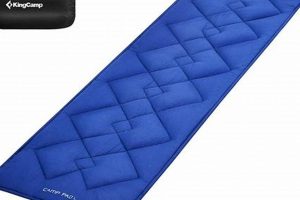
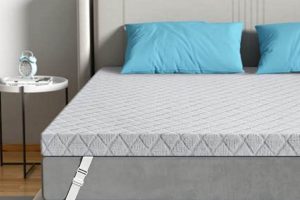
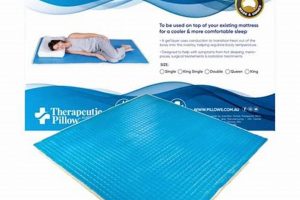
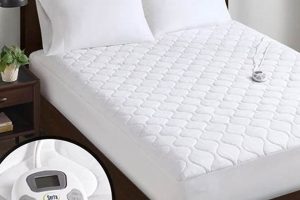
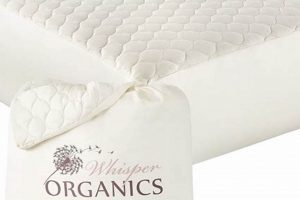
A bedding component designed to protect and enhance the comfort of a mattress, tailored dimensions are created to precisely fit mattresses that deviate from standard industry sizes. These might include mattresses for antique beds, RVs, boats, or those crafted to unique, non-standard specifications. For instance, a mattress protector crafted for an antique three-quarter bed exemplifies this personalized approach.
The significance of a properly fitted mattress protector lies in its ability to safeguard the underlying mattress from spills, stains, and wear, thereby extending its lifespan. Furthermore, customized dimensions ensure optimal comfort and prevent shifting or bunching, issues commonly encountered with ill-fitting, standard-sized alternatives. Historically, these bespoke bedding solutions addressed the diverse range of mattress sizes predating modern standardization, and continue to serve a vital function for uniquely sized mattresses today.
This discussion will explore the advantages of protectors with non-standard dimensions, examining material choices, construction methods, and factors to consider when selecting an appropriate product to ensure both protection and comfort.
Guidance on Obtaining Protectors With Non-Standard Dimensions
Selecting a protector that corresponds to the exact measurements of a non-standard mattress requires careful consideration. The following guidelines offer insights into ensuring an appropriate fit and maximizing the benefits of this specialized bedding accessory.
Tip 1: Accurate Measurement is Crucial: Precise dimensions of the mattress are essential before initiating a purchase. Measure the length, width, and depth of the mattress with accuracy, noting any irregularities in shape. A slight discrepancy in measurements can lead to an improper fit.
Tip 2: Material Selection Considerations: The material composition influences both the protector’s performance and suitability for individual needs. Options range from cotton and microfiber to specialized waterproof or hypoallergenic fabrics. Assess the materials breathability, durability, and ease of care.
Tip 3: Explore Customization Options: Many manufacturers offer bespoke tailoring services, allowing for protectors to be crafted to precise specifications. Inquire about customization options, including non-standard shapes, such as rounded corners or cut-outs for bed frames.
Tip 4: Evaluate Construction Quality: Examine the stitching and overall construction of the protector. Reinforcements at seams and edges enhance durability and prevent premature wear. Look for features like elasticized edges or anchor bands to secure the protector in place.
Tip 5: Waterproofing Needs Assessment: If spill protection is a primary concern, opt for a protector with a waterproof membrane. Ensure that the waterproof layer is breathable to prevent heat buildup and discomfort. Consider protectors with laboratory testing certification.
Tip 6: Hypoallergenic Properties: For individuals with allergies or sensitivities, hypoallergenic materials and construction are advisable. Look for protectors that are dust mite resistant and free from allergenic chemicals. Regularly launder the protector to maintain its hypoallergenic properties.
Tip 7: Review Warranty and Return Policies: Before finalizing a purchase, carefully review the manufacturers warranty and return policies. Custom-made items may be subject to different terms and conditions. Understanding the return process in case of an unsatisfactory fit is essential.
Adhering to these tips will facilitate the selection of a protector that accurately fits a non-standard mattress, providing optimal protection, comfort, and longevity. The investment in a properly fitted protector yields long-term benefits by safeguarding the mattress and promoting restful sleep.
The subsequent sections will delve into specific material characteristics and construction techniques, further informing the selection process for a specialized mattress accessory.
1. Precise Measurements

Accurate determination of mattress dimensions constitutes a foundational element in the successful utilization of a mattress protector designed for non-standard sizes. The effectiveness of such a protector hinges directly on the precision with which its measurements correspond to those of the mattress it is intended to cover. Any deviation, however minor, can compromise the protector’s intended function, leading to issues such as improper fit, reduced protection against spills and stains, and diminished comfort due to bunching or slippage. For instance, a protector designed for a 75-inch by 80-inch mattress that is manufactured with a one-inch discrepancy will likely fail to adequately cover the mattress corners, leaving them vulnerable to damage.
The cause-and-effect relationship between measurement accuracy and protector performance is straightforward. Inaccurate measurements negate the benefits associated with custom-sized protectors, essentially rendering them equivalent to poorly fitting, standard-sized alternatives. This is particularly critical in scenarios involving irregularly shaped mattresses, such as those found in recreational vehicles or antique beds, where deviations from rectangular shapes necessitate highly precise measurements to ensure complete coverage and a secure fit. The practical significance of this understanding lies in its direct impact on consumer satisfaction and the longevity of the mattress being protected.
In summation, the attainment of precise measurements is not merely a preliminary step but a critical determinant of the ultimate success of a mattress protector designed for unique mattress sizes. Failure to prioritize accuracy in this initial phase invariably leads to diminished performance and compromised mattress protection. The challenge lies in consistently achieving a high degree of precision in measurement, particularly with irregularly shaped mattresses, underscoring the need for careful attention to detail and the utilization of appropriate measuring tools and techniques.
2. Material Composition
The composition of materials used in a mattress protector directly influences its performance characteristics, particularly when tailored to non-standard mattress dimensions. The protector’s ability to safeguard the mattress, provide comfort, and maintain hygiene is fundamentally tied to the properties inherent in its constituent materials.
- Fiber Type and Performance
The type of fiber employed dictates breathability, moisture-wicking capability, and overall comfort. Natural fibers, such as cotton or bamboo, offer breathability and softness, whereas synthetic fibers, like polyester or microfiber, provide durability and resistance to shrinking. The suitability of a given fiber depends on the intended use and desired
performance characteristics of the protector. The application of these materials on a custom mattress pad will determine its core functions. - Waterproof Membrane Technology
The inclusion of a waterproof membrane is crucial for spill protection. Materials such as polyurethane or thermoplastic polyurethane (TPU) are commonly used for their waterproof qualities. The membrane’s breathability is a critical factor; a non-breathable membrane can trap heat and moisture, leading to discomfort and potential mold growth. Consider a custom fitted mattress pad that features TPU lining to best protect the mattress.
- Allergen Barrier Properties
For individuals with allergies, the material’s ability to act as a barrier against dust mites and other allergens is significant. Tightly woven fabrics and hypoallergenic materials, such as those treated with antimicrobial agents, can reduce allergen exposure. A mattress protector made with such materials will need to be specially crafted to fit any specific mattress dimensions.
- Fabric Weight and Durability
The weight and weave of the fabric contribute to its overall durability and resistance to wear and tear. Heavier fabrics generally offer greater protection and longevity, while lighter fabrics may provide enhanced breathability. Selecting a fabric weight appropriate for the intended use ensures optimal balance between protection and comfort.
Understanding the interplay between these facets of material composition is essential for selecting a mattress protector that effectively meets specific needs and preferences. Whether prioritizing breathability, waterproofness, allergen protection, or durability, the choice of materials significantly impacts the protector’s performance and longevity. The same considerations apply irrespective of mattress dimensions, making material selection equally crucial for both standard and non-standard sizes. This can be applicable when manufacturing a custom size mattress pad.
3. Customization Options

The availability of customization options is intrinsically linked to the very concept of a mattress protector designed for non-standard dimensions. The inherent requirement for a custom size mattress pad stems from the inability of standardized products to adequately fit mattresses that deviate from typical dimensions. Consequently, the degree and nature of customization directly determine the suitability and effectiveness of the resulting product. The absence of adequate customization renders the notion of a non-standard mattress protector moot. For instance, a manufacturer offering only limited size adjustments, failing to accommodate specific mattress shapes or thicknesses, would be unable to provide a truly custom solution. A practical example involves an antique bed with unusual proportions; only a protector tailored precisely to its dimensions offers effective protection.
The range of customization options extends beyond mere dimensional adjustments. It encompasses material selection, construction techniques, and specialized features. Customers may require specific fabric types for enhanced breathability or hypoallergenic properties, demanding the ability to select materials according to their needs. Similarly, construction features such as reinforced seams, elasticized edges, or anchor bands can be crucial for ensuring a secure and comfortable fit. The ability to specify these elements, alongside precise dimensions, transforms a generic product into a bespoke solution optimized for a particular mattress and user. The option to integrate waterproof barriers or thermal regulation layers further exemplifies the importance of extensive customization capabilities. For example, those with mobility issues can benefit significantly from having a custom mattress pad produced for them, and that features easy to maintain elements.
In summary, customization options are not merely an added benefit but an essential component of a mattress protector intended for non-standard mattresses. The ability to tailor dimensions, materials, and construction features to precise specifications is the defining characteristic that differentiates these products from standard alternatives. Challenges lie in ensuring accurate measurement, managing production costs, and providing sufficient customer support throughout the customization process. A successful implementation of customization hinges on striking a balance between offering a wide range of options and maintaining efficient manufacturing practices. This is applicable to any manufacturer producing a custom size mattress pad.
4. Construction Quality

Construction quality represents a critical determinant of the performance and longevity of a mattress protector, particularly when designed to accommodate non-standard dimensions. Unlike mass-produced, standard-sized protectors, those tailored for unique mattress sizes necessitate meticulous attention to detail during manufacturing to ensure a precise fit and sustained durability. Compromised construction can negate the benefits of customized sizing, resulting in premature wear, reduced protection, and diminished comfort.
- Seam Integrity
Seam integrity is paramount, as seams represent potential points of failure, especially under the stress of frequent use and laundering. Reinforced stitching and durable thread types are essential to prevent seam separation. The consequence of substandard seam construction in a custom size mattress pad is accelerated degradation, leading to compromised protection against spills and allergens. Poor seam construction can lead to the protector ripping apart, and becoming useless.
- Material Compatibility
The compatibility of different materials used in the protector’s constructionsuch as the outer fabric, waterproof membrane, and fillingdirectly impacts its overall durability and performance. Incompatible materials can lead to delamination, reduced breathability, or diminished waterproof capabilities. For instance, a poorly bonded waterproof membrane can separate from the outer fabric after repeated washing, rendering the protector ineffective. This creates an unsanitary enviroment.
- Edge Reinforcement
Edge reinforcement is crucial for preventing fraying and maintaining the protector’s shape over time. Binding or hemming the edges with a durable material provides added strength and resistance to wear, particularly along the perimeter. The absence of adequate edge reinforcement can lead to unraveling, distorting the protector’s fit and exposing the mattress to damage.
- Attachment Mechanisms
The design and construction of attachment mechanisms, such as elastic bands or corner straps, significantly influence the protector’s ability to stay securely in place. Durable and well-constructed attachment mechanisms are essential to prevent shifting and bunching, ensuring consistent protection and comfort. Inadequate attachment mechanisms can result in the protector slipping off the mattress, compromising its intended function. For instance, a poorly attached band will snap from normal use.
These facets of construction quality are interconnected and collectively determine the efficacy of a mattress protector designed for non-standard dimensions. The investment in a well-constructed protector yields long-term benefits by safeguarding t
he mattress, prolonging its lifespan, and providing a comfortable and hygienic sleep environment. The construction quality of the mattress protector should be checked to ensure its longlasting use and the health of the users who are sleeping on the bed.
5. Waterproof Capabilities
The implementation of effective waterproofing represents a critical attribute for a mattress protector, particularly when designed for non-standard mattress dimensions. The necessity for this feature extends beyond mere spill protection, encompassing the preservation of mattress integrity and hygiene over extended periods. A properly implemented waterproof barrier safeguards against a range of potential contaminants, prolonging the mattress’s lifespan and maintaining a sanitary sleeping environment.
- Waterproof Membrane Integrity
The integrity of the waterproof membrane is paramount. Materials such as polyurethane (PU) or thermoplastic polyurethane (TPU) are commonly employed for their impermeable qualities. However, the effectiveness of these materials hinges on their consistent coverage and resistance to degradation. A compromised membrane, characterized by pinholes or delamination, negates the protector’s primary function. Real-world examples include protectors failing after a single incident of liquid exposure, leading to irreversible mattress staining. The proper integration of this membrane into a custom size mattress pad ensures its reliability.
- Breathability Considerations
Waterproof capabilities must be balanced with breathability. A completely impermeable membrane traps heat and moisture, creating an uncomfortable sleeping surface and fostering an environment conducive to microbial growth. Breathable waterproof membranes, often achieved through microporous structures or hydrophilic coatings, allow for vapor transmission while preventing liquid penetration. The absence of breathability leads to discomfort and potential health concerns, undermining the benefits of a custom-fitted protector. A well-designed custom size mattress pad should possess effective waterproofing but allow air to flow through to prevent sweating.
- Seam Sealing Techniques
Seams represent vulnerable points in a waterproof mattress protector. Liquid can penetrate through needle holes or gaps in the seam construction, circumventing the waterproof barrier. Effective seam sealing techniques, such as taping or welding, are crucial for maintaining complete impermeability. Failure to properly seal seams renders the protector susceptible to leaks, particularly along edges and corners. This is especially important for protectors manufactured for uniquely shaped mattresses. Leaks render the mattress protector worthless.
- Durability and Laundering Resistance
The waterproof membrane and seam sealing must withstand repeated laundering without compromising their integrity. Washing and drying cycles can degrade certain waterproof materials, leading to diminished performance over time. Protectors designed for long-term use should employ durable materials and construction techniques that resist degradation from repeated washing. A protector that loses its waterproof capabilities after a few washes offers limited long-term value. As such, the custom size mattress pad must be able to hold up against common washing machines.
The interconnectedness of these facets underscores the complexity of implementing effective waterproof capabilities in a mattress protector. For custom size mattress pad applications, these considerations are further amplified due to the need for precise fit and potentially complex shapes. The selection of materials, construction methods, and seam sealing techniques must be carefully evaluated to ensure both impermeability and long-term durability, safeguarding the mattress and promoting a hygienic sleeping environment.
6. Hypoallergenic Properties

The integration of hypoallergenic properties into mattress protectors designed for non-standard dimensions constitutes a significant consideration for individuals with sensitivities or allergies. The ability of a mattress protector to mitigate allergen exposure directly influences sleep quality and overall well-being, particularly given the close proximity of bedding to the respiratory system during sleep.
- Material Selection and Allergen Resistance
The choice of materials significantly impacts a mattress protector’s ability to resist allergens. Tightly woven fabrics, such as microfiber, create a physical barrier against dust mites, a common allergen trigger. Natural materials like organic cotton or bamboo offer inherent hypoallergenic properties and reduced chemical exposure. For example, a custom size mattress pad crafted from tightly woven organic cotton provides a dual benefit of allergen resistance and reduced exposure to synthetic chemicals, making it suitable for sensitive individuals. The tightness of the woven material is a deciding factor on whether the custom size mattress pad is a good choice to use.
- Barrier Against Dust Mites and Pet Dander
Effective hypoallergenic protectors act as a barrier against dust mites and pet dander, preventing these allergens from penetrating the mattress. The protector’s design should fully encase the mattress, preventing allergens from accumulating within the mattress fibers. A mattress protector with a secure zipper closure and tightly sealed seams effectively blocks allergen migration. In instances where pets are allowed on the bed, the role of an effective allergen barrier becomes even more critical. Without these properties, the effects of allergens can be long lasting and detrimental to one’s health.
- Washability and Allergen Removal
The ability to regularly launder a mattress protector is essential for maintaining its hypoallergenic properties. Frequent washing removes accumulated allergens, preventing them from building up over time. The protector’s construction should withstand repeated washing cycles without compromising its integrity or allergen barrier properties. A custom size mattress pad that is easily washable and retains its shape and protective qualities after laundering provides a sustained defense against allergens. For effective allergen control, washing the protector in hot water is recommended.
- Certification and Testing Standards
Third-party certifications and testing standards provide assurance of a mattress protector’s hypoallergenic claims. Certifications such as Oeko-Tex Standard 100 or asthma & allergy friendly indicate that the protector has been tested and verified to meet specific allergen control criteria. These certifications offer consumers confidence in the product’s ability to reduce allergen exposure and promote a healthier sleep environment. Protectors bearing these certifications have undergone rigorous testing to ensure their hypoallergenic properties. Purchasing a custom mattress pad with these certifications can assure users of the protector’s effectiveness.
In conclusion, the integration of hypoallergenic properties into a custom size mattress pad directly contributes to improved sleep quality and reduced allergy symptoms. Careful material selection, effective barrier design, washability, and adherence to certification standards are all critical factors in ensur
ing a protector’s ability to mitigate allergen exposure and promote a healthier sleep environment. The ability to customize these features further enhances the suitability of such protectors for individuals with specific needs and sensitivities.
Frequently Asked Questions About Custom Size Mattress Pad
This section addresses common inquiries regarding the functionality, selection, and maintenance of mattress protectors designed for non-standard mattress dimensions. The information presented is intended to provide clarity and guidance to consumers seeking tailored bedding solutions.
Question 1: What distinguishes a custom size mattress pad from a standard-sized one?
A protector designed for non-standard mattresses is manufactured to dimensions that deviate from conventional industry sizes (e.g., twin, full, queen, king). These protectors are specifically tailored to fit mattresses found in antique beds, RVs, boats, or those crafted to unique specifications. Standard sizes will not fit.
Question 2: Why is accurate measurement essential when purchasing a custom size mattress pad?
Precise mattress dimensions are crucial for ensuring a proper fit. Even minor discrepancies can result in bunching, shifting, or incomplete coverage, compromising the protector’s ability to safeguard the mattress against spills, stains, and allergens. Accurate measurements ensure optimal performance.
Question 3: What material characteristics are most important to consider?
Key material characteristics include breathability, waterproofness, allergen resistance, and durability. The ideal material composition depends on individual needs and preferences. Prioritize materials that offer a balance of comfort, protection, and ease of care. It is also important to consider how the materials will react to regular washing.
Question 4: How does the construction quality impact the longevity of the mattress pad?
Robust construction techniques, such as reinforced seams, durable stitching, and secure attachment mechanisms, enhance the protector’s resistance to wear and tear. Superior construction translates to prolonged lifespan and sustained performance, justifying the initial investment. The long-term investment will save a lot of expenses in replacing the protector.
Question 5: Is waterproofing always necessary in a custom size mattress pad?
The necessity of waterproofing depends on individual needs and risk factors. If spill protection is a primary concern, a waterproof membrane is advisable. However, it is essential to ensure that the waterproof layer is breathable to prevent heat buildup and discomfort. Waterproofing is useful for individuals with medical conditions.
Question 6: How does one maintain a custom size mattress pad to ensure its effectiveness?
Regular laundering is essential for removing accumulated allergens and maintaining hygiene. Follow the manufacturer’s instructions regarding washing and drying procedures. Proper maintenance ensures the protector’s continued performance and prolongs its lifespan. Regular cleaning will also protect the mattress beneath it.
In conclusion, selecting and maintaining a protector with non-standard dimensions requires careful consideration of measurements, materials, construction, and maintenance practices. Prioritizing these factors ensures optimal protection, comfort, and longevity.
The following sections will explore specific scenarios and applications of protectors with unique dimensions, providing practical insights into their use in various settings.
Conclusion
This exploration has underscored the critical role of custom size mattress pad in providing tailored protection and comfort for mattresses deviating from standard dimensions. The effectiveness of these specialized bedding components hinges upon accurate measurements, appropriate material selection, robust construction, and consistent maintenance. Understanding the interplay of these factors enables informed decision-making and ensures optimal product performance.
The continued demand for mattresses of non-standard dimensions necessitates a corresponding focus on the availability and quality of custom-fitted protectors. Emphasizing the long-term benefits of investing in tailored solutions, including enhanced mattress longevity and improved sleep hygiene, remains paramount. Manufacturers and consumers alike must prioritize precision and quality to ensure the continued relevance and efficacy of the custom size mattress pad within the bedding industry.