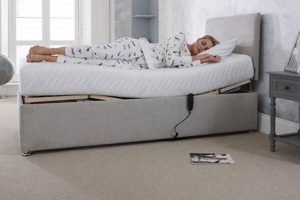
The dimensions of a mattress intended for a daybed are a critical factor in ensuring both comfort and proper fit. These mattresses, typically designed to accommodate the unique structure of a daybed frame, often adhere to specific measurements. As an example, a twin-size mattress, frequently measuring approximately 39 inches wide by 75 inches long, is a common choice for daybeds.
Selecting a mattress with appropriate dimensions is vital for maximizing the daybed’s functionality. A correctly sized mattress provides optimal support for seating and sleeping, while also preventing unsightly gaps or overhang. Historically, daybeds served dual purposes, acting as seating during the day and transforming into beds for rest. The correct dimensions of the accompanying mattress are therefore important in supporting both intended purposes, thereby maximizing value and utility.
The following sections will delve into specific size considerations, material options, and factors influencing the overall suitability of mattress choices for daybed applications. Examining these aspects allows for informed decision-making when furnishing a space with a daybed.
Essential Considerations for Daybed Mattress Selection
Selecting an appropriately dimensioned mattress is paramount for optimal daybed functionality and aesthetic integration. The following tips offer critical insights to ensure a suitable choice.
Tip 1: Accurate Measurement is Crucial: Before purchasing, meticulously measure the daybed frame’s interior dimensions. This step ensures that the chosen mattress will fit snugly, preventing movement and maximizing comfort.
Tip 2: Standard Twin Size as a Baseline: While variations exist, the standard twin mattress is frequently employed for daybeds. Familiarize oneself with the typical twin dimensions (approximately 39″ x 75″) as a starting point for the selection process.
Tip 3: Account for Frame Style: Daybeds with armrests or a back may require a slightly thinner mattress to maintain a comfortable seating height. Consider the frame’s structure when determining the ideal mattress thickness.
Tip 4: Prioritize Support and Comfort: The chosen mattress should offer adequate support for both sitting and sleeping. Evaluate factors such as coil count, foam density, and overall firmness to ensure long-term comfort.
Tip 5: Consider Mattress Material: Explore different mattress materials, such as innerspring, memory foam, or latex. Each material offers unique characteristics in terms of support, temperature regulation, and durability. Assess individual needs and preferences to determine the most suitable option.
Tip 6: Check Mattress Height and Thickness: Determine the best day bed mattress height that fits with the day bed to be comfortable when sitting. The best mattress height can give aesthetic benefits and maximize comfort.
Adhering to these considerations contributes to the selection of a mattress that enhances both the practicality and aesthetic appeal of a daybed. A properly sized and supportive mattress maximizes the utility of the furniture piece.
With a firm understanding of mattress size considerations, the subsequent sections will address the selection of appropriate materials and the maintenance practices necessary to prolong the life of a daybed mattress.
1. Standard Twin Dimensions

Standard twin dimensions are foundational in the context of day bed mattresses. Their prevalence dictates many design and purchasing decisions. The commonality of the twin size serves as an initial point of reference when selecting a mattress for a day bed frame, though adherence to this standard is not universally mandated.
- Widespread Availability
The ubiquity of twin-sized mattresses leads to a wide range of options in terms of material, construction, and price point. This availability benefits consumers seeking a day bed mattress, as they are more likely to find a suitable product within their desired specifications and budget. Retailers stock a greater variety of twin mattresses, simplifying the purchasing process.
- Frame Design Considerations
Many day bed frames are explicitly designed to accommodate standard twin mattresses. This design choice simplifies the mattress selection process. However, variations in frame construction, such as the presence of arms or a back panel, may necessitate adjustments in mattress thickness to maintain comfortable seating and sleeping heights. Deviation from standard twin dimensions in the frame design mandates careful measurement and potentially custom mattress solutions.
- Space Optimization
The dimensions of a standard twin mattress are conducive to space-saving configurations, a crucial factor for day beds typically placed in multi-functional rooms or smaller living areas. The relatively compact footprint allows for comfortable seating and sleeping arrangements without overwhelming the space. Alternate sizes might sacrifice crucial floor space.
- Cost-Effectiveness
Due to their popularity and mass production, standard twin mattresses generally offer a more cost-effective solution compared to custom sizes. This affordability makes them an attractive option for consumers seeking to furnish a day bed without incurring significant expenses. Custom-sized mattresses often require specialized manufacturing processes and command a premium price.
In summary, the standard twin dimensions significantly influence the landscape of day bed mattress selection. Their prevalence in manufacturing, impact on frame design, contribution to space optimization, and cost-effectiveness converge to make them a pivotal consideration when furnishing a day bed. While not universally applicable, the twin-size standard offers a valuable starting point for informed decision-making.
2. Mattress Thickness Options

The selection of mattress thickness is integral to optimizing the overall utility of a daybed. Thickness influences not only comfort and support but also the daybed’s aesthetic integration within a given space. Considerations must extend beyond mere personal preference to encompass functional requirements dictated by the daybed frame itself.
- Seating Height and Ergonomics
Thickness directly affects the seating height of the daybed. A mattress that is too thick can result in an uncomfortably elevated seating surface, making it awkward for daytime use. Conversely, an insufficient mattress thickness may lead to a seating height that is too low, compromising ergonomic comfort. An appropriate thickness ensures a comfortable transition between seating and sleeping configurations.
- Frame Compatibility and Aesthetics
Daybed frames often possess design elements t
hat dictate optimal mattress thickness. Some frames incorporate armrests or a back panel, which must be considered when selecting a mattress. A mattress that is too thick might obscure these features, detracting from the daybed’s overall aesthetic appeal. The dimensions of the frame’s inner cavity limit the maximum permissible mattress thickness. - Support and Durability
While thickness is not the sole determinant of support, it plays a role. Thicker mattresses, particularly those incorporating multiple layers of foam or padding, can potentially offer increased support and pressure relief. However, the quality of the materials and the construction methods are equally important. A thicker mattress does not automatically equate to superior durability; material composition and manufacturing processes are key factors.
- Weight Distribution and Comfort Levels
Mattress thickness and layering affect weight distribution across the surface. Thicker mattresses with varying foam densities can provide differential support, contouring to the body and alleviating pressure points. Selecting the appropriate thickness and material composition ensures the day bed mattress promotes restorative sleep.
In conclusion, mattress thickness is a critical element influencing the functionality and aesthetics of a daybed. A careful evaluation of the frame’s design, desired seating height, and the mattress’s support characteristics is necessary to arrive at an optimal selection. Striking a balance between comfort, support, and visual integration is paramount for maximizing the utility of this versatile furniture piece.
3. Frame Compatibility

Frame compatibility represents a critical determinant in the selection of a day bed mattress. The interior dimensions of a day bed frame dictate the permissible range of mattress dimensions, particularly length, width, and thickness. Failure to adhere to these dimensional constraints can result in a mattress that is either too large to fit within the frame or too small, creating unsightly and potentially hazardous gaps. The direct consequence of mismatched dimensions is a compromise in both the aesthetic appeal and the functional integrity of the day bed. For example, a mattress exceeding the frame’s internal width will prevent proper installation, while one that is significantly undersized may shift during use, diminishing comfort and safety. Frame compatibility is, therefore, an essential component of a suitable mattress choice.
The impact of frame compatibility extends beyond simple dimensional fit. The style and design of the day bed frame influence the optimal mattress thickness. Day beds with integrated armrests or back panels require thinner mattresses to maintain a comfortable seating height. In contrast, frames with a minimalist design may accommodate a thicker mattress, enhancing both comfort and visual appeal. Ignoring these design considerations can lead to a seating surface that is either too high for comfortable lounging or too low to provide adequate support. Furthermore, frame construction materials affect the required mattress support characteristics. A frame constructed from lightweight materials may necessitate a firmer mattress to prevent sagging, while a more robust frame can support a softer mattress. Precise adherence to frame specifications, as provided by the manufacturer, is critical.
The concept of frame compatibility in conjunction with dimension understanding is essential to day bed utility. Successful mattress selection hinges on a thorough evaluation of the frame’s dimensions, design, and construction materials. Addressing the limitations of dimensional constraints and accounting for design features in day bed mattress applications enables informed purchasing decisions. Adherence to frame size guidelines serves to optimize comfort, maximize aesthetic appeal, and prevent premature wear or damage to the day bed frame and the mattress itself.
4. Weight Capacity and Day Bed Mattress Size

Weight capacity is inextricably linked to day bed mattress size, impacting both the structural integrity of the day bed and the user’s safety and comfort. The dimensions of a day bed mattress, in terms of length, width, and particularly thickness, directly influence its ability to distribute weight effectively. A larger mattress, designed with appropriate internal support structures, inherently possesses the capacity to accommodate a greater load without compromising its structural integrity. Conversely, a smaller or thinner mattress may exhibit limitations in weight distribution, leading to premature sagging, reduced support, and potential frame damage. For example, a twin-size mattress with a limited thickness will likely be unsuitable for supporting two adults, increasing the risk of mattress deformation and compromised sleep quality.
The relationship between weight capacity and mattress size extends to material selection and internal construction. A larger mattress, intended for heavier use, necessitates a more robust internal structure, often incorporating higher-density foams, reinforced coil systems, or a combination thereof. These structural elements are crucial for maintaining consistent support across the entire surface area and preventing localized compression under concentrated weight. Consider a scenario where a day bed is intended for use as both a seating area and a sleeping surface for multiple individuals. In such cases, a larger mattress with a high weight capacity, constructed from durable materials, becomes essential for ensuring long-term performance and preventing premature wear and tear. This is particularly important in settings such as guest rooms or shared living spaces, where the day bed may experience frequent and varied usage.
In summary, the correlation between weight capacity and day bed mattress size is a paramount consideration in selecting a suitable mattress. Mattress dimensions, in conjunction with material selection and internal support structures, directly influence the mattress’s ability to withstand weight, maintain its structural integrity, and provide consistent support. Neglecting this connection can result in compromised comfort, reduced mattress lifespan, and potential damage to the day bed frame. A thorough assessment of intended usage patterns and weight requirements, coupled with careful consideration of mattress size and construction, is essential for making an informed purchasing decision. This understanding links directly to the broader theme of optimizing both the functionality and longevity of daybeds, as well as the user’s overall satisfaction.
5. Sleeping Space Requirements

Sleeping space requirements fundamentally dictate day bed mattress size. The intended occupant’s size and sleep preferences are key determinants. For example, a day bed primarily used by a single child necessitates a smaller mattress, typically a standard twin. Conversely, if the day bed is intended for use by adults or couples, a larger mattress may be required to provide adequate room for comfortable sleep. The practical significance of aligning mattress size with sleeping space requirements lies in ensuring restful
sleep and preventing physical discomfort. Mismatched dimensions lead to cramped conditions and disrupted sleep patterns, negating the day bed’s intended functionality. This principle impacts not just the width and length of the mattress, but also its thickness, which can affect ease of entry and exit, particularly for individuals with mobility limitations.
The link between sleeping space needs and mattress size is further exemplified in the context of multi-purpose rooms. A day bed in a guest room may need to accommodate individuals of varying sizes and sleep preferences. In such situations, a balance must be struck between maximizing sleeping space and maintaining the day bed’s aesthetic integration with the room’s design. The choice of mattress size directly influences the day bed’s utility as both a seating area and a sleeping surface. A mattress that is too large can dominate the room, while one that is too small may compromise comfort. Therefore, understanding sleeping space expectations allows for informed decisions regarding day bed dimensions.
In conclusion, sleeping space requirements and day bed mattress size are inextricably linked. Considering intended occupants, room dimensions, and desired functionality is crucial for selecting a mattress that provides both comfort and practicality. While aesthetic considerations are important, prioritizing adequate sleeping space ensures the day bed fulfills its primary purpose: to offer a comfortable and restful sleep environment. Disregarding this fundamental connection leads to compromised sleep quality and diminished utility. Therefore, a thorough assessment of sleeping space demands is paramount to making informed day bed mattress selections.
6. Daytime Seating Height

Daytime seating height, a critical component of day bed usability, is directly influenced by day bed mattress size, particularly mattress thickness. An inappropriately thick mattress raises the seating surface, potentially creating ergonomic challenges for individuals attempting to use the day bed for seating. Conversely, a thin mattress results in a seating height that may be too low for comfortable use. The effect is analogous to selecting a chair of improper height; prolonged use can lead to discomfort and strain. A suitable mattress thickness yields a seating height that facilitates easy ingress and egress, promoting comfortable sitting postures for reading, conversing, or relaxing. For example, a day bed intended for a living room setting requires a mattress thickness that allows it to function seamlessly as both a seating and sleeping surface, without compromising comfort in either configuration.
Furthermore, the frame design significantly moderates the impact of mattress thickness on daytime seating height. A day bed frame with a raised platform inherently necessitates a thinner mattress to achieve a comfortable seating height. Conversely, a frame with a lower profile allows for a thicker mattress, potentially enhancing comfort without sacrificing ergonomics. The interaction between mattress thickness and frame design necessitates careful consideration during the selection process. A common challenge arises when replacing an existing mattress; selecting a replacement with an incorrect thickness can disrupt the day bed’s intended functionality and aesthetic harmony. Specific frames may even require custom-sized mattresses to achieve the ideal seating height. Measurements must be performed accurately.
In summary, optimizing daytime seating height is paramount for ensuring day bed usability and ergonomics, the size of mattress is very important factor. The correlation between mattress thickness and the resulting seating height necessitates careful consideration of frame design and intended usage patterns. Neglecting this connection can result in a day bed that is either aesthetically unappealing or ergonomically unsound. A meticulous assessment of these factors promotes informed decision-making and contributes to a more comfortable and functional living space.
7. Custom Size Availability

The availability of custom-sized day bed mattresses directly addresses variations in day bed frame dimensions and specific user needs. Recognizing that standardized mattress sizes may not always align with individual frame designs or comfort preferences, the option for custom dimensions offers a tailored solution. This capability is particularly relevant for antique, repurposed, or uniquely designed day bed frames where off-the-shelf mattresses prove incompatible.
- Addressing Non-Standard Frames
Many day bed frames deviate from standard dimensions due to age, design idiosyncrasies, or custom construction. Custom size availability enables owners of such frames to acquire mattresses that precisely fit, eliminating unsightly gaps or the need for makeshift solutions. This ensures both aesthetic harmony and optimal support across the sleeping surface.
- Accommodating Unique Space Constraints
In some living spaces, the dimensions of the day bed are dictated by the available area. Custom mattress sizes allow for maximizing sleeping or seating space within these limitations. A mattress tailored to the precise dimensions of the frame and room optimizes functionality without compromising comfort.
- Meeting Specific Comfort Preferences
Customization extends beyond length and width; thickness and material composition can also be tailored to individual comfort preferences. Users may opt for specific foam densities or layering configurations to achieve desired levels of support and pressure relief. This level of personalization ensures optimal sleep quality.
- Restoring Antique Day Beds
Antique day bed frames often feature unusual dimensions and unique design elements. Custom size availability is crucial for restoring these pieces to their original functionality while preserving their historical integrity. Matching the mattress precisely to the frame’s specifications ensures an authentic restoration.
In summary, custom size availability provides a practical solution for addressing the diverse range of day bed frame dimensions and user preferences. It allows for the creation of a mattress that seamlessly integrates with the frame, optimizes sleeping or seating space, and provides personalized comfort, ensuring that the day bed fulfills its intended purpose.
Frequently Asked Questions
This section addresses common inquiries regarding the appropriate dimensions of mattresses intended for day bed use.
Question 1: What is the standard size for a day bed mattress?
The most common mattress size for day beds is the twin, measuring approximately 39 inches wide by 75 inches long. However, variations may exist depending on the specific day bed frame design.
Question 2: How does mattress thickness affect day bed functionality?
Mattress thickness impacts both seating height and aesthetic integration. A thickness that is too great can result in an uncomfortably elevated seating surface, while insufficient thickness may compromise support and visual appeal.
Question 3: What should be considered when choosing a day bed mattress for a multi-purpose room?
In multi-purpose rooms, prioritize versatility. Select a mattress that balances comfort for both sit
ting and sleeping, considering factors such as support, material composition, and overall dimensions.
Question 4: Are custom-sized mattresses available for day beds?
Yes, custom-sized mattresses can be manufactured to accommodate unique day bed frame dimensions. This is particularly beneficial for antique or non-standard frames.
Question 5: How important is weight capacity when selecting a day bed mattress?
Weight capacity is a critical factor. The mattress must be capable of supporting the intended users without compromising structural integrity or comfort. Exceeding the weight limit can lead to premature sagging and damage.
Question 6: How can one accurately measure a day bed frame for mattress selection?
Utilize a measuring tape to determine the interior dimensions of the frame precisely. Account for any internal structures or design elements that may restrict mattress size. Consider these dimensions when selecting a mattress.
Selecting the appropriately sized mattress ensures the day bed provides comfortable seating, restful sleep, and optimal aesthetic integration within the living space. These considerations allow for making informed decisions.
The next section will explore specific material options for day bed mattresses, further refining the selection process.
Conclusion
The preceding sections have outlined the critical considerations associated with day bed mattress size. From standard twin dimensions to custom options, mattress thickness, weight capacity, and frame compatibility, these factors collectively determine the suitability of a mattress for day bed applications. Emphasis has been placed on the importance of accurate measurement, ergonomic considerations, and the alignment of mattress characteristics with intended usage patterns. A comprehensive understanding of these elements is essential for maximizing both the comfort and functionality of a day bed.
The selection of an appropriate day bed mattress size transcends mere aesthetic preference. It represents a commitment to ergonomic well-being, optimized space utilization, and the preservation of structural integrity. Future advancements in material science and design may further refine mattress options, but the fundamental principles governing size and its relationship to usability will remain paramount. It is therefore incumbent upon purchasers to prioritize these factors when making informed decisions.

![Best Queen Murphy Bed Mattress [Guide] | Organic & Natural Mattress Buyer’s Guide: Non-Toxic Sleep Solutions](https://mattressworldpa.com/wp-content/uploads/2025/07/th-7290-300x200.jpg "Best Queen Murphy Bed Mattress [Guide] Organic & Natural Mattress Buyer’s Guide: Non-Toxic Sleep Solutions")
![Bed Bug Proofing: Protecting Your Mattress [Guide] | Organic & Natural Mattress Buyer’s Guide: Non-Toxic Sleep Solutions](https://mattressworldpa.com/wp-content/uploads/2025/07/th-7289-300x200.jpg "Bed Bug Proofing: Protecting Your Mattress [Guide] Organic & Natural Mattress Buyer’s Guide: Non-Toxic Sleep Solutions")