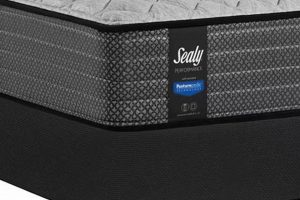
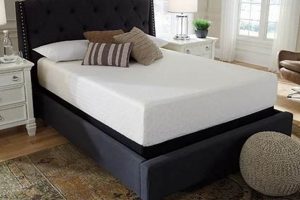
A foundational support system used in conjunction with a mattress is the central topic. Historically, this support, often a box-like structure, elevated the mattress, providing height and absorbing shock. A traditional configuration involved a coil-supported frame encased in fabric. An understanding of this system’s necessity is critical for optimal sleep and mattress longevity. Examples include comparing sleep quality on a mattress directly on the floor versus one with appropriate support.
The importance of a mattress foundation lies in several key areas. It provides crucial support, preventing sagging and premature wear. Elevation facilitates airflow, reducing moisture build-up and potential mold growth. Further, adequate support contributes to proper spinal alignment, promoting comfortable and restful sleep. The evolution of these support systems reflects a growing awareness of the correlation between sleep environment and overall well-being. The benefits extend to the lifespan of the mattress itself, representing a cost-effective investment over time.
Therefore, understanding factors such as mattress type, bed frame construction, and individual preferences is paramount in determining the most suitable support system. Evaluating various options, from traditional box springs to modern platform beds and adjustable bases, ensures an informed decision aligned with specific needs and priorities.
Guidance Regarding Mattress Support Systems
The following recommendations provide insights into optimizing mattress support and overall sleep quality, focusing on whether a supplemental foundation is necessary.
Tip 1: Assess Mattress Type: Innerspring mattresses typically require a foundation for proper support and to prevent premature wear. Memory foam or latex mattresses may function adequately on a platform bed or slatted frame, contingent on the manufacturer’s specifications.
Tip 2: Evaluate Bed Frame Compatibility: Platform beds with closely spaced, rigid slats often eliminate the need for a separate box spring. However, traditional bed frames with minimal support structures necessitate a foundation to evenly distribute weight.
Tip 3: Consider Manufacturer Recommendations: Adhering to the mattress manufacturer’s guidelines regarding support systems is crucial. Deviating from these recommendations may void warranties and compromise mattress performance.
Tip 4: Analyze Height Preferences: A foundation adds height to the bed. Individuals should consider their preferred bed height and the ease of getting in and out of bed when selecting a support system.
Tip 5: Examine Weight Distribution: The support system must adequately distribute weight to prevent sagging and maintain proper spinal alignment. Individuals with higher body weights may require a more robust foundation.
Tip 6: Prioritize Airflow: Adequate airflow beneath the mattress is essential to prevent moisture accumulation and mold growth. Certain support systems, like traditional box springs, promote better airflow compared to solid platform beds.
Tip 7: Inspect Foundation Quality: When opting for a foundation, prioritize quality construction and durable materials. A substandard foundation can negatively impact mattress lifespan and sleep quality.
In summation, determining the necessity of a mattress foundation involves a comprehensive assessment of mattress type, bed frame compatibility, and individual needs. Understanding these factors ensures optimal support, longevity, and sleep comfort.
Careful consideration of these tips contributes to a well-informed decision, leading to an enhanced sleep experience and preservation of the mattress investment.
1. Mattress type

The mattress type significantly influences the need for a box spring or alternative foundation. Different internal constructions and materials necessitate varying levels of support to ensure longevity and comfort.
- Innerspring Mattresses
Innerspring mattresses, characterized by their coil-based support system, generally require a box spring. The box spring provides a stable, uniform surface that absorbs shock and prevents the coils from sagging prematurely. Without a box spring, an innerspring mattress placed directly on a slatted frame or the floor may experience uneven wear and reduced lifespan. An example includes observing the diminished support and increased sagging of an innerspring mattress after prolonged use without a proper foundation.
- Memory Foam Mattresses
Memory foam mattresses, composed of dense viscoelastic foam, often exhibit compatibility with platform beds or adjustable bases that offer firm, even support. A box spring may be unnecessary, provided the underlying structure prevents sagging and adequately distributes weight. Real-world scenarios demonstrate that memory foam mattresses perform well on solid or closely spaced slatted platforms, maintaining their shape and comfort without the added height or support of a box spring.
- Latex Mattresses
Latex mattresses, similar to memory foam, can function effectively without a traditional box spring if placed on a suitable platform. The inherent density and resilience of latex contribute to its ability to maintain its shape and provide adequate support. However, the platform must provide sufficient support to prevent sagging, especially for heavier individuals. Evidence suggests that latex mattresses maintain optimal performance on stable, non-yielding surfaces.
- Hybrid Mattresses
Hybrid mattresses, combining elements of innerspring and foam constructions, present a more nuanced consideration. The presence of coils often necessitates a box spring or similar support system to maintain the integrity of the coil layer and prevent uneven wear. Analyzing the specific construction of the hybrid mattress and consulting the manufacturer’s recommendations are crucial in determining the necessity of a box spring. Cases where hybrid mattresses are used without proper support show premature breakdown of the coil system and reduced overall comfort.
In conclusion, the composition and construction of the mattress are primary determinants in assessing the need for a box spring. While innerspring models typically benefit from the added support, foam and latex mattresses may function adequately on alternative platforms. Adhering to manufacturer guidelines and considering individual support requirements are essential for maximizing mattress lifespan and comfort.
2. Frame compatibility

Frame compatibility plays a critical role in determining the need for a box spring. The structural design and support system of a bed frame directly influence how a mattress performs and whether supplemental support is required.
- Slatted Frames
Slatted bed frames consist of horizontal bars spaced across the width of the bed. Closely spaced, rigid slats can provide sufficient support for many mattresses, potentially eliminating the need for a box spring. Conversely, widely spaced or flexible slats may not adequately distribute weight, necessitating a box spring to prevent sagging and uneven wear. Consider the example of a memory foam mattress placed on a frame with wide slats; the mattress may conform to the gaps, leading to discomfort and reduced lifespan.
- Platform Beds
Platform beds feature a solid or nearly solid surface, offering substantial support. These beds often eliminate the need for a box spring, as the platform provides a stable and uniform foundation for the mattress. However, the material and construction of the platform are important. A poorly constructed platform may sag or warp over time, compromising support and negating the advantage of eliminating the box spring. An instance of this is a platform bed constructed from low-quality particleboard, which can degrade and lose its structural integrity.
- Metal Frames with Support Wires
Basic metal frames often utilize a grid of support wires to hold the mattress. These wires may offer insufficient support, especially for heavier mattresses or individuals. The gaps between the wires can cause the mattress to sag, reducing comfort and potentially damaging the internal components. In such cases, a box spring is essential to provide a solid surface and prevent premature wear. Observing the deformation of an innerspring mattress on a wire support frame highlights the need for a box spring.
- Adjustable Beds
Adjustable beds, designed to elevate the head and feet, typically do not require a traditional box spring. These beds incorporate a built-in support system that conforms to the adjustable frame. Attempting to use a conventional box spring with an adjustable bed is generally incompatible and can impede the bed’s functionality. However, some low-profile foundations are specifically designed for use with adjustable beds, offering additional support without compromising adjustability.
In conclusion, frame compatibility is a key determinant in the necessity of a box spring. The design, materials, and support system of the bed frame must be considered in relation to the mattress type and the user’s individual needs. Proper frame compatibility ensures optimal support, prolongs mattress lifespan, and enhances overall sleep quality.
3. Warranty requirements
Mattress warranties often stipulate specific support systems required to maintain coverage. Deviation from these requirements can invalidate the warranty, resulting in loss of protection against manufacturing defects or premature wear. Understanding these stipulations is crucial when determining appropriate support for a mattress.
- Foundation Type Specifications
Mattress warranties frequently specify the type of foundation required, such as a box spring, platform bed with particular slat spacing, or adjustable base. Failure to use the specified type can void the warranty. For example, a warranty may explicitly require a traditional box spring for an innerspring mattress, and using a slatted frame instead would nullify the coverage. This is due to the potential for inadequate support leading to premature sagging, a condition often excluded from warranty coverage when an unapproved foundation is used.
- Support Structure Integrity
Warranties often mandate that the support system provides consistent and adequate support across the entire mattress surface. Gaps or insufficient support can lead to uneven weight distribution and subsequent damage, which may not be covered if the support system fails to meet the warrantys standards. An example includes a warranty stipulation requiring slats to be no more than a certain distance apart on a slatted frame. Exceeding this distance could lead to sagging and void the warranty.
- New vs. Used Foundations
Some warranties stipulate that the mattress must be used with a new foundation to ensure optimal support and prevent pre-existing issues from affecting the mattress. Using an old or damaged foundation could invalidate the warranty, as it may be difficult to determine whether any issues arose from the mattress itself or from the inadequate support provided by the used foundation. For instance, a mattress warranty might be voided if the mattress is paired with a visibly sagging or damaged box spring.
- Proper Bed Frame Utilization
A warranty may require the use of a proper bed frame in conjunction with the mattress and foundation (if a foundation is required). This requirement ensures that the entire system is stable and adequately supported. Using only a mattress and foundation on the floor, without a bed frame, might void the warranty. A scenario illustrating this is where a mattress warranty is voided because the mattress and box spring were used directly on the floor, leading to moisture accumulation and mold growth, issues often excluded when proper bed frame usage is not followed.
Compliance with warranty requirements is paramount to protecting the investment in a mattress. Careful review of the warranty documentation and adherence to the specified support system ensures that the mattress remains covered against potential defects or premature wear. Deviation from these requirements can lead to significant financial loss should an issue arise.
4. Height preference

Height preference directly influences the decision regarding a mattress foundation. The presence or absence of a box spring alters the overall bed height, impacting ease of access and aesthetic alignment within the bedroom environment. Individual physical characteristics, such as height and mobility, dictate the preferred bed height for comfortable ingress and egress. For instance, taller individuals may favor a higher bed profile, often achieved with a box spring, to minimize strain on their joints. Conversely, individuals with mobility limitations may find a lower bed profile, achieved without a box spring, more accessible and safer.
The selection of a mattress foundation based on height preference extends beyond mere physical comfort. A bed’s height can significantly affect the perceived size and spatial dynamics of a bedroom. A higher bed can create a sense of grandeur and dominance, while a lower bed can promote a more minimalist and open feel. The practical implications involve considering existing bedroom furniture, such as nightstands, to ensure harmonious proportions and prevent ergonomic imbalances. A mattress placed directly on a platform bed, for example, may result in a nightstand being positioned significantly higher than the mattress surface, creating an awkward and potentially inconvenient reach.
In summary, height preference serves as a critical component in determining the need for a mattress foundation. This decision must balance individual physical needs, aesthetic considerations, and functional ergonomics. Careful assessment of these factors ensures a comfortable, safe, and visually appealing sleep environment. Overlooking height preferences can lead to discomfort, accessibility challenges, and an aesthetically discordant bedroom arrangement.
5. Support needs

The physical requirements for adequate mattress support are paramount when evaluating the necessity of a box spring or alternative foundation. Varied body types, sleeping positions, and pre-existing physical conditions influence the support system required for optimal spinal alignment and pressure distribution.
- Weight Distribution
Individuals with higher body weights exert greater pressure on a mattress, necessitating a robust support system to prevent sagging and maintain structural integrity. A box spring, with its coil or solid construction, can provide the necessary reinforcement to distribute weight evenly across the mattress surface. Without adequate support, heavier individuals may experience premature mattress degradation and compromised sleep quality. Consider the scenario of an overweight individual using an innerspring mattress on a flimsy slatted frame; the mattress is likely to sag significantly, leading to discomfort and potential back pain.
- Sleeping Position
Different sleeping positions place varying demands on mattress support. Side sleepers, for example, require a support system that allows for adequate shoulder and hip sinkage to maintain spinal alignment. Back sleepers need consistent support to prevent the hips from sagging excessively. Stomach sleepers typically require a firmer surface to avoid over-extension of the spine. A box spring can contribute to the overall firmness and support level of a mattress, accommodating diverse sleeping position needs. For instance, a back sleeper using a memory foam mattress might find that a box spring provides the necessary firmness to prevent excessive sinkage and maintain proper alignment.
- Spinal Alignment
Proper spinal alignment is crucial for preventing back pain and promoting restful sleep. An inadequate support system can lead to misalignment, exacerbating existing conditions or creating new ones. A box spring can enhance the ability of a mattress to maintain proper spinal alignment by providing a stable and uniform base. Individuals with pre-existing back problems, such as scoliosis or herniated discs, may particularly benefit from the added support provided by a box spring. This is especially true when considering that a consistent, level sleep surface is essential for minimizing stress on the spinal column and surrounding muscles.
- Pressure Point Relief
Excessive pressure on certain areas of the body, such as the shoulders and hips, can lead to discomfort and disrupt sleep. A supportive foundation, like a box spring, can enhance the pressure-relieving properties of a mattress by distributing weight more evenly. This is particularly relevant for individuals with conditions like arthritis or fibromyalgia, who are more sensitive to pressure points. A box spring, in conjunction with a pressure-relieving mattress material like memory foam or latex, can significantly reduce discomfort and promote a more restful sleep experience for these individuals.
In summary, the assessment of individual support needs is fundamental in determining whether a box spring is necessary. Factors such as body weight, sleeping position, spinal alignment requirements, and pressure point sensitivity dictate the level and type of support required for optimal sleep. Failure to adequately address these support needs can lead to discomfort, compromised sleep quality, and premature mattress wear, ultimately diminishing the value of the mattress investment.
6. Airflow consideration
Airflow beneath a mattress directly impacts its longevity and the overall sleep environment. The presence or absence of a box spring influences air circulation, affecting moisture accumulation, temperature regulation, and potential allergen build-up. Mattresses, particularly those constructed with dense materials such as memory foam, can trap heat and moisture. Adequate airflow mitigates this effect, reducing the risk of mold growth and dust mite proliferation. A traditional box spring, with its open internal structure, facilitates greater air circulation compared to a solid platform bed. Consider the scenario of a memory foam mattress placed directly on a platform bed in a humid climate; the lack of airflow can lead to moisture accumulation, creating an environment conducive to mold and mildew growth. This can lead to health problems and a reduction in the lifespan of the mattress.
The connection between airflow and the necessity of a box spring becomes particularly relevant when considering individuals with allergies or sensitivities to environmental allergens. Dust mites thrive in humid environments, and their presence within a mattress can exacerbate allergic reactions. Enhanced airflow reduces moisture levels, thereby inhibiting dust mite populations. In such cases, a box spring or a slatted platform bed with sufficient spacing between the slats becomes a crucial component in maintaining a healthy sleep environment. Furthermore, the type of bed frame material itself can play a role. Wooden frames, for example, may be more susceptible to trapping moisture than metal frames, further emphasizing the need for adequate ventilation.
Ultimately, airflow consideration is an integral component in determining whether a box spring is required. While solid platform beds offer aesthetic appeal and robust support, they may compromise air circulation. The decision should be based on a holistic assessment of climate, mattress type, individual sensitivities, and the potential for moisture accumulation. Prioritizing airflow contributes to a healthier sleep environment, prolonged mattress lifespan, and overall improved well-being. The decision to use a box spring or an alternative support system should therefore include an evaluation of its capacity to promote effective air circulation and minimize the risks associated with moisture retention.
7. Budget constraints

Budget constraints frequently influence decisions concerning mattress support systems. The perceived necessity of a box spring is often weighed against its cost relative to alternative solutions, impacting overall affordability.
- Box Spring Cost vs. Alternative Foundations
The upfront expense of a traditional box spring can be a significant factor for budget-conscious consumers. Exploring alternative foundation options, such as platform beds or slatted frames, may present a more cost-effective initial investment. However, the long-term durability and suitability of these alternatives must be carefully evaluated. Choosing a less expensive option that prematurely damages the mattress can result in higher replacement costs in the future. For example, opting for a cheap, poorly constructed slatted frame instead of a box spring may lead to sagging and a shortened mattress lifespan.
- Mattress Warranty Requirements and Long-Term Value
Certain mattress warranties mandate the use of a specific type of foundation to maintain coverage. Disregarding these requirements to save money can invalidate the warranty, leaving the consumer responsible for repair or replacement costs if issues arise. A seemingly economical decision to forgo a required box spring could prove more expensive in the long run if the mattress develops defects covered under warranty. An example includes forgoing a box spring explicitly required by a mattress warranty and then facing non-covered sagging issues after a short period.
- Used vs. New Box Springs
Purchasing a used box spring can appear to be a budget-friendly option; however, it poses several risks. Used box springs may harbor allergens, pests, or structural damage that compromise their ability to provide adequate support. The potential for transferring these issues to a new mattress outweighs the initial cost savings. A used box spring may also lack the necessary support for the new mattress, leading to premature wear and invalidating the warranty. The risk of bed bugs or hidden damage is always a concern with pre-owned items.
- DIY Bed Frame Options
Individuals with carpentry skills may consider constructing their own bed frames or platforms to reduce expenses. While this can be a viable option, it requires careful planning and execution to ensure adequate support and stability. A poorly constructed DIY frame can damage the mattress and pose safety hazards. The cost of materials, tools, and time must be factored into the overall budget to determine if this approach is truly more economical than purchasing a commercially available foundation.
In conclusion, budget constraints should not be the sole determining factor in choosing a mattress support system. While cost is a significant consideration, it must be balanced against the need for adequate support, warranty compliance, and long-term value. A thorough assessment of all available options and their potential implications is crucial to making an informed decision that protects both the mattress investment and overall sleep quality.
Frequently Asked Questions
The following addresses common inquiries regarding the need for a box spring or alternative mattress foundation.
Question 1: Is a box spring universally required for all mattresses?
No, the necessity of a box spring depends on the mattress type, bed frame design, and manufacturer recommendations. Innerspring mattresses often benefit from the added support of a box spring, while memory foam or latex mattresses may function adequately on platform beds or slatted frames.
Question 2: Can a mattress be placed directly on the floor?
Placing a mattress directly on the floor is generally discouraged. It can restrict airflow, leading to moisture accumulation, mold growth, and allergen buildup. Additionally, it may void the mattress warranty and reduce overall comfort and support.
Question 3: What is the purpose of a box spring?
A box spring provides support, absorbs shock, and elevates the mattress. It helps prevent sagging, promotes airflow, and contributes to proper spinal alignment. The traditional design typically consists of a coil-supported frame encased in fabric.
Question 4: Do platform beds require a box spring?
Platform beds with closely spaced, rigid slats often eliminate the need for a box spring. The solid or nearly solid surface provides adequate support and evenly distributes weight. However, the material and construction quality of the platform bed are crucial factors.
Question 5: How does mattress warranty influence the decision?
Mattress warranties often specify the required support system. Deviating from these requirements can invalidate the warranty, resulting in loss of coverage for manufacturing defects or premature wear. Review the warranty documentation carefully.
Question 6: Can any type of foundation be used with an adjustable bed?
Standard box springs are generally incompatible with adjustable beds. Adjustable beds require a specific type of foundation designed to conform to the adjustable frame. Using an incompatible foundation can impede the bed’s functionality and potentially damage the mattress or the adjustable bed mechanism.
A thorough understanding of these factors ensures an informed decision regarding mattress support.
The subsequent section explores specific foundation alternatives and their suitability for various mattress types.
Determining the Necessity of a Mattress Foundation
The preceding discussion has explored the multifaceted considerations involved in the question “do I need a box spring with a mattress.” Key factors, including mattress type, bed frame compatibility, warranty stipulations, individual support needs, and budget limitations, all contribute to this determination. A definitive answer necessitates a comprehensive evaluation of these interdependent elements. The information presented herein provides a framework for informed decision-making.
The ultimate choice rests on the prudent assessment of individual circumstances. Recognizing the interplay between mattress characteristics, support requirements, and budgetary constraints is paramount. Continued research and consultation with sleep professionals are encouraged to optimize the sleep environment and ensure the longevity of the mattress investment. Prioritizing informed decision-making will yield long-term benefits in terms of both sleep quality and financial prudence.

![Boxed Bliss? Are Mattress in a Box Good [Review] | Organic & Natural Mattress Buyer’s Guide: Non-Toxic Sleep Solutions](https://mattressworldpa.com/wp-content/uploads/2025/07/th-3503-300x200.jpg "Boxed Bliss? Are Mattress in a Box Good [Review] Organic & Natural Mattress Buyer’s Guide: Non-Toxic Sleep Solutions")